

5 Checks for Choosing Vintage Furniture With Confidence
A beautiful finish isn’t enough to make a vintage piece the right choice. Avoiding buyer's remorse with vintage furniture starts with five checks: assess the materials, inspect the condition, compare the price with similar pieces, estimate any restoration needed, and decide whether it suits your space and daily life. Character matters, but so do comfort, stability and practicality.
It’s easy to be drawn to the grain of old timber, the shape of a chair or the story a piece seems to carry. Looking more closely helps you see beyond first impressions and decide whether its history comes with repairs or compromises you’re willing to accept.
This guide covers what to look for in materials and construction, how to spot wear, and how to compare asking prices with similar furniture. It also explains the restoration questions to consider before buying, so you can choose with confidence or leave a piece for someone else to love.
Key Takeaways
- Look beyond a striking finish: consider the materials, craftsmanship and care the piece may need.
- Test stability and function, and inspect surfaces, drawers and upholstery for signs of wear or lingering odours.
- Measure your room and access routes, then consider whether the piece suits your everyday needs as well as your taste.
- Research the style and construction, then compare similar pieces to judge whether the asking price feels fair.
- Weigh likely repair or reupholstery work against the time, effort and finished result you want before deciding.
1. Assessing materials used in different periods
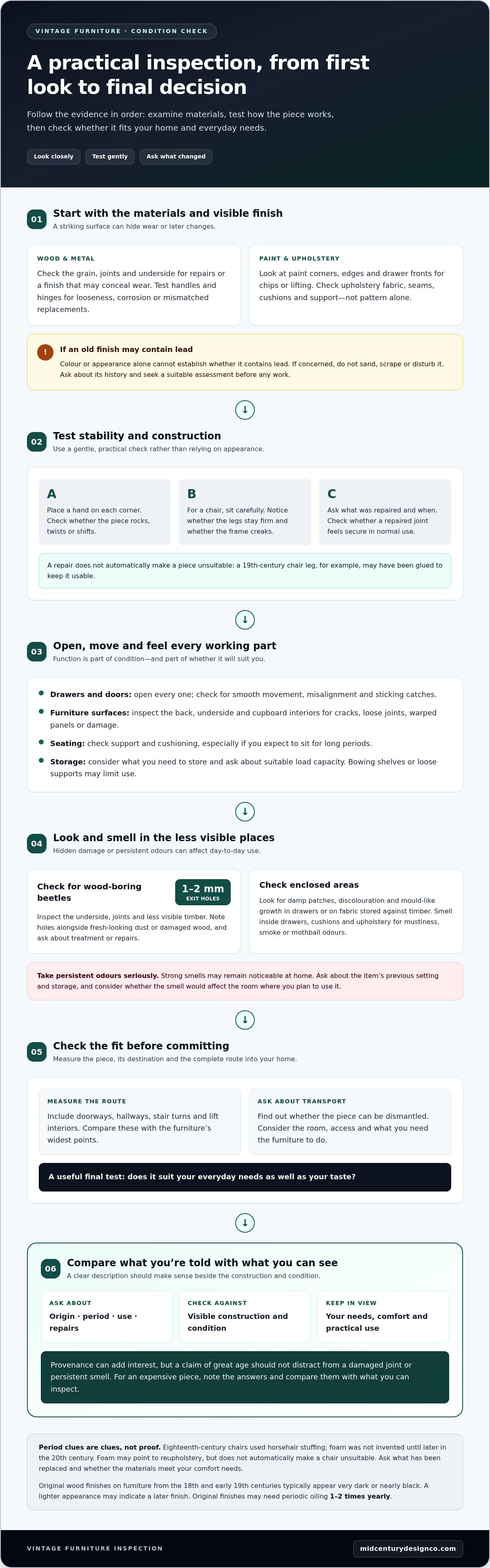
Start with the material, not just the silhouette. Solid wood, leather and quality fabrics can last, but their current condition matters as much as their original quality. On a wooden table, inspect the grain, joints and underside for repairs or a finish that may conceal wear. Check metal handles and hinges for looseness, corrosion and mismatched replacements. These details can show whether a beautiful piece has retained its character or needs more care than expected.
Paint deserves a close inspection too. A fresh coat may look polished, but poor-quality paint can fail with everyday use. Check corners, edges and drawer fronts, where chips and lifting often appear first. In the UK, colour or appearance alone cannot establish whether an old finish contains lead. If you’re concerned, don’t sand, scrape or disturb it. Ask about its history and seek a suitable assessment before any work.
Period materials offer clues, but don’t treat them as proof of age or originality. Eighteenth-century chairs used horsehair for stuffing, as foam was not invented until later in the 20th century. A chair with foam may therefore have been reupholstered, though that change doesn’t automatically make it unsuitable. Ask what has been replaced and whether the current materials meet your comfort needs. For an upholstered piece, inspect the fabric in person and consider whether you’d still want it if replacement became necessary.
Wood finishes also reflect their history. Furniture from the 18th- and early 19th-century with its original surface typically appears very dark or nearly black. A lighter appearance may indicate a later finish, so ask what has changed before judging the asking price. Original wood finishes may need periodic oiling 1-2 times yearly. Consider whether that routine suits your home, rather than choosing a finish only for its colour.
Test function as well as appearance. Sit in a chair and check its support and cushioning, especially if you’ll use it for long periods. Open drawers and doors, and check that handles feel secure and move smoothly. Storage, comfort and durability all matter: a beautiful chest that can’t hold what you need may not earn its place. These simple checks help you avoid choosing on photographs or decorative details alone.
With upholstered furniture, assess the fabric’s wear, seams and feel, not just its pattern. Check beneath cushions for fading or damage, and see whether the seat still feels supportive. Leather needs attention too: its surface, softness and signs of drying affect the care it may need. If you like the material but its condition doesn’t suit everyday use, weigh that as carefully as its age and appearance.
2. Checking furniture stability and condition
Start with a practical test. Place a hand on each corner and gently check whether the piece rocks, twists or shifts. For a chair, sit down carefully and notice whether the legs remain firm and the frame creaks. A repair doesn’t automatically make a piece unsuitable: a 19th-century chair leg may have been glued to keep it usable. Ask what was repaired, when, and whether the joint feels secure under normal use.
Inspect case furniture from several angles. Open every drawer and door, checking for smooth movement, misalignment and sticking catches. Look at the back, underside and inside cupboards for cracks, loose joints, warped panels or surface damage. Smell inside drawers, particularly if the piece has been stored outdoors. Mustiness may indicate storage conditions that deserve a closer look before you bring it home.
Check upholstered areas and enclosed spaces for smoke or mothball odours. Smell the fabric, cushions and inside of drawers, not just the air around the piece. Strong, persistent odours may remain noticeable at home. Ask about the item’s previous setting and storage, then consider whether the smell would affect the room where you plan to use it.
Look closely for signs of wood-boring beetles. Exit holes typically measure 1-2mm in diameter, so inspect the underside, joints and less visible timber. Note whether holes appear alongside fresh-looking dust or damaged wood, and ask the seller about any treatment or repairs. Also check for damp patches, discolouration and mould-like growth, especially in enclosed drawers or on fabric stored against timber.
Measure the furniture, room and route into your home before deciding. Include doorways, hallways, stair turns and lift interiors, then compare them with the piece’s widest points. Ask whether it can be dismantled for transport. For shelves, drawers or cupboards, consider what you’ll store and ask about suitable load capacity. Bowing shelves or loose supports can limit practical use, even when the piece looks impressive.
Finally, ask according to the seller’s records about the piece’s origin, period, use and repairs. Provenance can add interest, but a confident description should still make sense beside visible construction and condition. A claim of great age shouldn’t distract from a damaged joint or a persistent smell. For expensive pieces, take time to note each answer and compare it with what you can see. Exploring examples of vintage furniture can also help you recognise the details that matter to your own home.
Deciding when there is enough information to choose
Before deciding, write down what you need the piece to do and why it appeals to you. A dining chair, for example, should suit the table and feel comfortable, not simply look beautiful beside it. Compare its purpose with what you’ve learned about its construction and condition. If you’re drawn only to a photograph or romantic story, gather more information before committing. If it meets your needs and still feels right in person, you have a sounder basis for choosing.
Let personal style guide the decision more than nostalgia. A cabinet that reminds you of a relative’s home may stir strong memories, but your room, storage needs and daily habits may have changed. Picture it alongside the furniture you use now, and ask whether its shape and finish belong there. Imagine living with it after the initial excitement fades, rather than trying to recreate a room from a past home or holiday.
You don’t need certainty about every detail of an antique’s history to trust your taste. Period and provenance help explain a piece, but they aren’t the only reasons to choose it. Notice what appeals: perhaps tapered legs, a warm wood tone or a carefully made joint. Separate that attraction from claims about age or rarity. A piece can suit your home because you enjoy its form and character, even if its story is incomplete.
Choose lasting appeal over a trend that may soon feel dated. Consider whether you’d still welcome the piece if a popular colour, shape or decorating style fell out of favour. Timeless construction and materials you genuinely enjoy are stronger guides than a look currently filling social feeds. Waiting can help: one buyer described taking as long as 3 years to find the right decorating piece. You needn’t wait that long, but shopping without a deadline can keep urgency from making the decision.
Lighting calls for the same balance of appearance and use. Torchiere lamps direct light upwards and can feel clunky, so consider whether that effect suits the room. A fussy vintage lamp may work better in a bedroom than a busy living or dining room, unless you want a full time-capsule effect. Think about where you read, work or relax, then match the lamp’s character to the activity and atmosphere you want.
When the details, practical purpose and personal response align, you may have enough information to decide. If you’re drawn to a one-of-a-kind antique that suits your home and feels reasonably priced, don’t assume it will still be there later. If you’re uncertain, ask the seller to hold it for 24 hours while you consider the choice. Use that pause to revisit your room, intended use and reasons for buying, not to chase absolute certainty.
4. Researching furniture styles and comparable prices
Research the style before buying instead of relying on a seller’s label alone. Search for the maker, period and construction details, then compare them with photographs and descriptions of similar pieces. Google Lens or Google Search can help identify a design while you shop. Treat a visual match as a starting point: differences in timber, fittings, finish or later alterations can affect how closely two pieces compare.
There’s no single fair price for vintage furniture in the UK. Compare pieces by maker, period, materials, condition, construction and restoration, then judge the asking price in light of those differences. A well-preserved antique and a similar-looking piece with repairs aren’t equivalent comparisons. Look at several examples rather than one striking listing, and remember that an asking price is what a seller hopes to receive, not necessarily what a buyer paid.
For an antique, research its period and construction as well as its appearance. A chair’s joinery, timber and fittings can help you assess whether its description is plausible. Ask the dealer about provenance, including the piece’s origin, previous use and repairs. A documented history adds context, but it should complement what you can inspect. If a flea-market description makes a strong claim, compare it with the visible details before treating it as fact.
Assess a dealer’s reputation through clear descriptions, consistent photographs and useful answers about the piece. Compare details across listings for the same maker or design, noting differences in condition and completeness. If you’re buying a style you already own, use your current piece as a reference while accounting for its wear and alterations. A rare name alone doesn’t establish value; the materials, condition and evidence matter.
Before purchase, read the seller’s warranty and returns policy carefully. Returns terms can vary, so establish them before committing. A generous returns policy may allow an exchange or return if the furniture doesn’t meet expectations. Keep the listing description and purchase details, and make sure you understand which conditions apply. Don’t assume a flea market, online listing and specialist dealer offer the same terms.
Use a simple comparison note while shopping. Record each piece’s maker or attributed style, dimensions, materials, condition, repairs, asking price and return terms. This makes it easier to compare like with like. If similar pieces differ widely in price, investigate why: age, provenance, finish and restoration can all affect value. For example, compare a refinished cabinet cautiously with one that retains its original surface. A careful record helps distinguish lasting appeal from a price driven mainly by a label.
5. Estimating restoration and reupholstery costs
A vintage piece can look ready for your living room while hiding work beneath its finish. Before buying, consider structural repairs, refinishing, upholstery and delivery separately. Inspect visible damage, then ask what repairs have been made and what work remains. If a piece has been extensively cleaned or refinished, request photographs from before the work. They can reveal its earlier condition and help you judge whether the current appearance reflects its original surface.
Start with the structure. Woodworm, instability and broken joints can be costly to address, so look for holes, movement and gaps around joints. A loose leg or split frame may affect safety and daily use, not just appearance. Ask what a repair would involve and whether it would preserve the details you value. A small surface mark and a failing joint are different problems, even when both are visible in photographs.
For refinishing, identify what needs attention: a damaged top, a worn finish or a piece that has been heavily stripped. Properly refinishing a dresser can take 20 to 40 hours of work, so the labour involved matters alongside materials. Original finishes may need care rather than replacement. Think about whether the finish you like is worth preserving, and whether a new surface would change the character you want in your home.
Upholstery calls for a practical assessment too. Check the fabric, seams, padding and frame, then ask yourself whether you’d still want the piece if its fabric needed replacing. Reupholstery involves more than choosing a colour: the fabric, furniture shape and work required all affect the scope. Decide what result you want, from retaining an aged textile to choosing a fresh covering, before treating the current fabric as part of the piece’s appeal.
Consider delivery separately from repairs. Ask what it includes, then assess the furniture’s dimensions, access through doorways and stairs, and whether it can be dismantled. A large sideboard needs different handling from a small chair. Include any required packing or extra handling in your decision rather than comparing asking prices alone. These details help you understand what it will take to get the piece into your home.
Use a simple threshold to weigh the decision: think carefully if restoration costs exceed 50% of the price of a similar piece in good condition. Compare like with like, including age, materials and finish, then add delivery and the work needed to reach your preferred result. If the total and the time involved still feel worthwhile, the piece may suit your plans. For a ready-to-place alternative, explore vintage sideboards and storage.
The Mid Century Design: Sideboards & Storage
The Mid Century Design Co. offers Sideboards & Storage for readers seeking a vintage focal point with practical purpose. If your checks have clarified the size, condition and style you want, browsing its curated furniture can help you picture a piece in your home. Consider how a sideboard might organise dining essentials, or how a chest of drawers could bring considered storage to a bedroom. The range also includes Dining Sets and Coffee Tables & Occasional Tables, offering distinct ways to bring vintage character into everyday rooms. Use the assessment steps in this guide to focus on the materials, condition and function that matter most to you. For a closer look at the furniture, visit midcenturydesignco.com.
Choose a piece that feels at home
The best vintage find isn’t simply the one with the most compelling story. It’s the piece you can imagine living with, using and appreciating as your home changes. Avoiding buyer's remorse with vintage furniture means balancing careful judgement with delight: let the evidence inform you, then trust the details that genuinely speak to your taste.
If you’re still shaping a room, consider what kind of presence it needs. A sideboard can anchor a dining space, while a chest of drawers adds useful character to a bedroom. A dining set may become the natural centre of shared meals. Let the room guide your next discovery instead of choosing a piece simply because it’s available to admire.
Explore the collection and see what might suit your home, or contact The Mid Century Design Co. to continue your search. There’s no need to hurry; the right piece is one you’ll be glad to live with.
Frequently Asked Questions
So how can you avoid buyers’ remorse?
Choose for your home, not just the moment. Before paying, write down what the piece must do, where it will go and which qualities matter most. Compare that list with what you’ve seen in person, including any drawbacks you’d need to accept. To avoid buyer's remorse with vintage furniture, pause if urgency, nostalgia or fear that someone else will buy it is your main reason.
How can I tell if expensive furniture is worth the investment?
Judge furniture by its condition, workmanship, usefulness and the evidence behind its description, not just its asking price. A well-made table that fits your room and serves daily meals may offer more lasting value than a striking piece needing work you don’t want to take on. Compare examples with similar materials and construction, then consider how long you expect to use the item. A prestigious name alone doesn’t establish value.
What should I measure before buying a sofa or dining table?
Measure the available floor space, then allow room to move around and use nearby doors, drawers or chairs. For a sofa, note its full width, depth and height, including projecting arms. For a dining table, measure the top and leave space to pull chairs back. Mark the outline on the floor with tape: it makes the scale easier to judge than a listing photograph.
How do I inspect vintage furniture for structural damage before buying?
Look underneath and behind the piece, where repairs and stress may be less visible. Check whether the legs meet the frame evenly, joints have gaps, or a tabletop flexes under gentle pressure. Open and close doors and drawers, watching for sagging or sticking. Sit carefully in a chair and shift your weight slightly. Don’t force a loose joint; ask what caused the movement and how it was repaired.
What signs indicate woodworm, damp, mould or other hidden damage in vintage furniture?
Look for small, round exit holes in timber; wood-boring beetle holes typically measure 1-2mm across. Fresh-looking dust near holes or soft, crumbling wood merits closer attention. Damp may leave tide marks, swelling, a musty smell or warped panels, while mould can appear as patchy growth on wood or fabric. Inspect drawer interiors, backs and undersides in good light, not just the visible front.
How can I check whether vintage furniture has been repaired or restored?
Compare the finish and fittings across the whole piece. Uneven colour, mismatched handles, fresh glue, filled holes or different timber around a joint can indicate later work. Look inside drawers and beneath the furniture for less visible changes. Ask the seller to describe repairs and, if the surface has been extensively refinished, request photographs from before restoration. A careful repair can preserve usefulness, but its quality and effect on character matter.
How do I measure vintage furniture and check it will fit through UK doorways and staircases?
Measure the item at its widest, tallest and deepest points, then record the narrowest points along its route, including door openings, hallway turns and stair landings. Include handles or other projections that cannot be removed. Check the route from the entrance to the intended room, not just the front door. Ask whether the piece separates into manageable sections, and don’t assume it will turn through a tight space just because the doorway is wide enough.
How can I verify a vintage furniture seller and avoid scams in the UK?
Look for clear business details, photographs of the actual piece and a description that answers practical questions. Compare the images with the wording, and ask for a close-up if an important joint or mark isn’t visible. Read the payment, collection, delivery and returns terms before sending money. Be cautious if a seller pressures you to pay quickly or unexpectedly changes payment arrangements. Keep written records of the listing and agreement.