

An Elegant Guide to Buying Vintage Danish Coffee Tables
What if the most significant piece of art in your home wasn't hanging on the wall, but sitting at the very heart of your living room? A genuine vintage Danish coffee table is far more than a convenient surface for a morning tea; it's a sculptural anchor that bridges generations through superior joinery and organic warmth. You've likely felt the pull of mid-century aesthetics, yet the fear of accidentally purchasing a flat-pack reproduction or a poorly restored imitation can make the search feel daunting. It's frustrating to decipher the subtle differences between the golden colour of teak and the deep, chocolate swirls of rosewood without a steady hand to guide you.
We believe your home should be a sanctuary of authenticity. In this guide, you'll discover how to identify the hallmarks of master designers like Grete Jalk or Hans Wegner whilst understanding the 2026 market landscape for these sought-after pieces. We'll show you how to assess structural integrity and wood quality so you can invest with confidence. By the end, you'll possess the knowledge to select a piece of functional history that doesn't just fill a space, but breathes life into it.
Key Takeaways
- Learn to distinguish between the golden warmth of teak and the dramatic, luxurious grain of rosewood to find a material that resonates with your interior palette.
- Master the art of authentication by identifying genuine manufacturer stamps and the prestigious "Danish Control" mark on your vintage Danish coffee table.
- Discover how to select the perfect silhouette, from sculptural surfboard shapes to versatile nests of tables, to beautifully complement your sofa configuration.
- Use our expert checklist to inspect finer details such as finger joints and solid wood edges, ensuring you invest in a piece of enduring craftsmanship.
- Gain practical insights into preserving the soul of mid-century timber whilst styling your find alongside contemporary textiles for a curated, sanctuary-like home.
The Enduring Appeal of the Vintage Danish Coffee Table
The living room is a landscape of stories. For decades, the British home was defined by the heavy, imposing silhouettes of Victorian and Edwardian timber; dark mahogany and oak pieces that commanded space with a stern, formal presence. Then came a shift. A breath of fresh air arrived from the north, replacing rigid corners with the fluid, rhythmic lines of the Danish Modern design movement. This wasn't merely a change in fashion. It was a revolution of the spirit. Owning a vintage Danish coffee table today is a statement of intent. It suggests a preference for the enduring over the ephemeral, and the handcrafted over the mass-produced. These pieces are investment-grade assets that transcend fleeting trends, holding their value whilst anchoring a room with a quiet, sculptural soul.
Why Danish Design Captured the World
Danish designers looked at the human form before they looked at the wood. They prioritised a human-centric approach that felt radical in the mid-twentieth century. Construction was honest. Nothing was hidden behind thick layers of varnish or ornate carvings. Instead, the wood was allowed to breathe. Teak and rosewood were treated as living materials, their grains celebrated as natural art. This honesty in design meant that every finger joint and tapered leg served a purpose. It created furniture that felt light, almost as if it were floating, yet possessed a structural integrity that has allowed it to survive for over seventy years.
The Coffee Table as a Room’s Narrative Anchor
In the modern home, the coffee table is the social hub. It's the place where the day's rhythm slows down. A low-profile vintage Danish coffee table does something remarkable to a room; it creates an illusion of height and air. Because these pieces sit closer to the floor, the sightlines of your living space remain uninterrupted. There's a deep psychological comfort in their organic, curved edges too. Unlike the sharp, aggressive corners of contemporary glass or steel, the soft radius of a Danish edge invites touch. It turns a functional object into a tactile sanctuary, providing a sense of calm that anchors the entire interior.
Materials of Character: Teak, Rosewood, and Sculptural Form
The soul of a piece lives in its timber. The tactile warmth of a vintage Danish coffee table is a direct result of the materials chosen by mid-century masters. Whilst the form is sculptural, the material provides the heartbeat. Every swirl of grain acts as a unique fingerprint for each table, ensuring that your piece is truly one of a kind. This reverence for material was celebrated in the Designmuseum Danmark exhibition, highlighting how timber defines the very essence of the movement. Beyond the wood, designers often introduced elements like woven cane, smoked glass, or hand-painted tiles to add layers of texture and narrative to their occasional tables.
Teak: The Golden Standard of Mid-Century Design
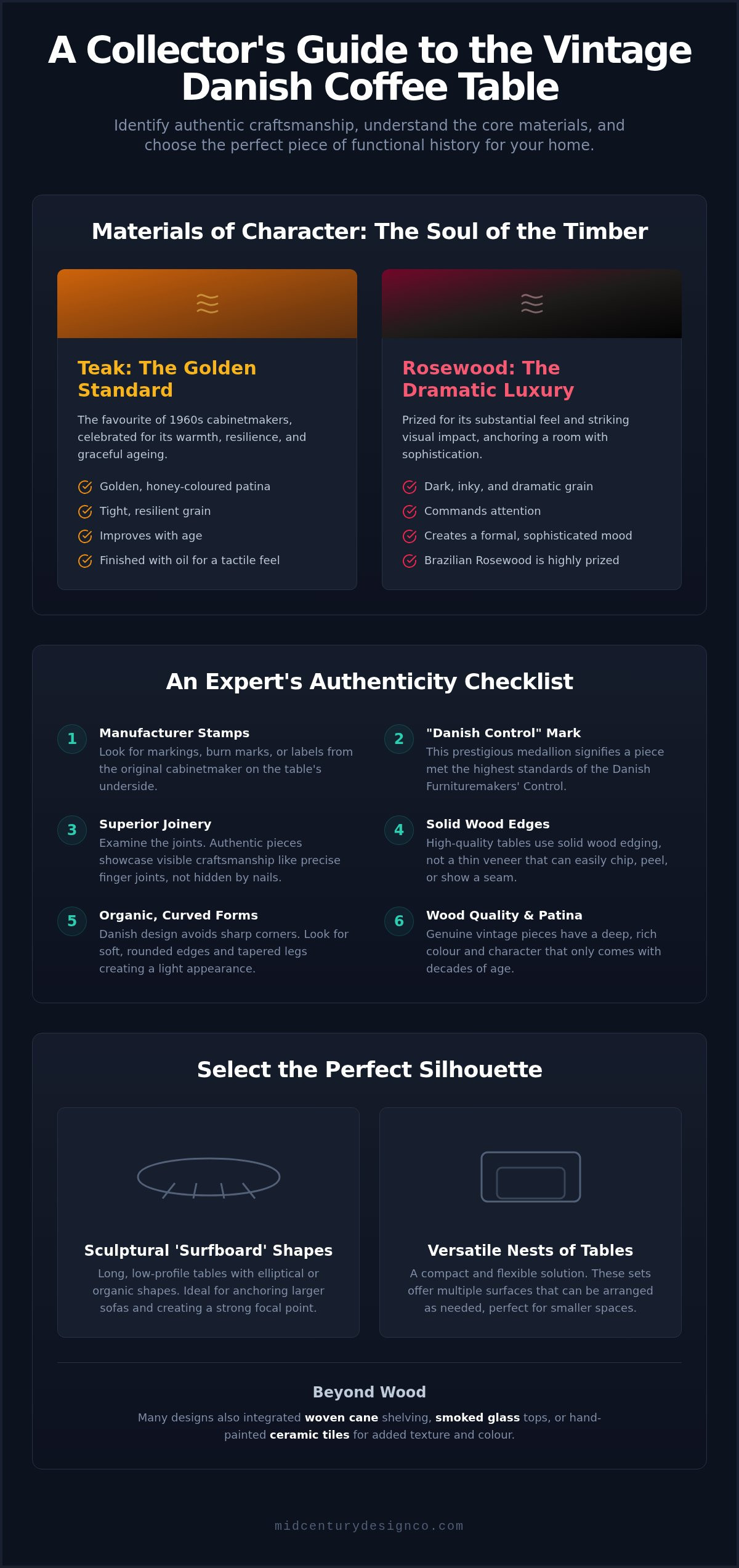
Teak was the undisputed favourite of 1960s Danish cabinetmakers. Its tight grain and honey-coloured patina offer a sense of longevity that few other woods can match. It's resilient. It's warm. It ages with a grace that only improves as the decades pass. Unlike the heavy lacquers of earlier eras, teak pieces were often finished with a simple oil. This allows the wood to breathe and remain tactile under your fingertips. If you're looking to start your collection, our curated selection of Danish coffee tables and occasional tables often features these iconic teak forms.
Rosewood and Oak: The Alternative Textures
If teak is the golden standard, rosewood is the dramatic luxury. Brazilian Rosewood is particularly prized for its dark, inky grain and striking visual impact. It feels substantial. It commands attention. These pieces often anchor a room with a more formal, sophisticated mood. In contrast, oak offers a lighter, more rustic aesthetic. Some of the most compelling designs use oak and teak combinations, creating a masterclass in contrasting tones. This interplay of light and dark wood can significantly alter the weight and mood of your interior, moving from airy minimalism to rich, textured warmth.
Danish design didn't stop at wood. Many designers integrated secondary materials to add texture. Woven cane shelves provided a delicate, airy storage solution for magazines. Smoked glass tops offered a glimpse into the joinery below. Hand-painted ceramic tiles added a splash of mid-century colour to otherwise monochromatic surfaces. These elements weren't just decorative; they were functional choices that enhanced the table's role as a sensory centrepiece.
Choosing the Right Silhouette for Your Living Space
Selection is a dialogue between form and floorplan. A vintage Danish coffee table shouldn't just exist in a room; it should choreograph the movement around it. Whilst the materials provide the warmth, the silhouette provides the rhythm. Whether you're working with a sprawling Victorian terrace or a compact city flat, the geometry of your furniture dictates how people interact. The Danish Modern design movement mastered this balance between sculptural beauty and spatial economy, ensuring that even the most substantial pieces feel light and unobtrusive. Choosing the right vintage Danish coffee table involves more than just measuring the gap between your armchairs; it's about understanding the narrative of the space.
Sofa configuration is your primary guide. For those with a traditional straight three-seater, an elongated rectangular form is the classic choice. However, if your home features a contemporary L-shaped or corner sofa, a square or circular piece often works better to maintain accessibility from every seat. There's also the ingenious "nest of tables." These are the ultimate Danish space-saving solution. They offer three distinct surfaces that tuck away into a single footprint, perfect for hosting whilst keeping your floor space clear for daily life.
The Surfboard Table: Long and Lean
The surfboard table is the grandest expression of mid-century elegance. These elongated, rectangular pieces are best suited for spacious rooms where they can act as a true centrepiece. Their defining characteristic is the tapered, "aerodynamic" edge that mimics the curve of a surfboard. This detail isn't just for show. It lightens the visual weight of the timber, making a large table feel graceful rather than bulky. When styling these surfaces, keep it curated. A single art book and a small ceramic vase are often enough to let the wood grain tell its own story.
Circular and Oval Tables: Softening the Lines
Rooms filled with sharp angles benefit immensely from the "Astro" effect of a circular table. Round and oval silhouettes encourage flow. They remove the physical and visual barriers of corners, making them ideal for high-traffic areas or homes with young children. Many Danish designs feature iconic cross-base frames that provide stability without the need for heavy, thick legs. These tables act as a social catalyst, drawing people in and encouraging conversation. They're a sophisticated way to break up the "boxy" feel of modern architecture, creating a sanctuary that feels soft, inviting, and harmoniously balanced.
Authenticity and Craftsmanship: Identifying a True Danish Original
The search for a vintage Danish coffee table is an act of curation that requires a discerning eye. In a market flooded with mass-produced look-alikes, the ability to distinguish between an echo and an original is vital. Whilst a "Danish style" table is a contemporary reproduction that merely mimics a silhouette, an "original Danish" piece is a verified mid-century artifact crafted in a Danish workshop with the heritage and soul of the era. Understanding this distinction is the first step toward owning a piece of functional art that will hold its value for decades to come.
Look beneath. The underside of a table often tells the most honest story. Modern reproductions rely on hidden screws and cam locks, but mid-century originals rely on the elegant marriage of timber and gravity. To ensure you are investing in a genuine piece, use this curator's checklist during your search:
- Solid Wood Edging: Run your fingers along the rim. High-quality Danish pieces feature thick, solid wood "lipping" rather than thin, papery laminate.
- Finger Joints: Look for visible joinery on the legs or frame. Dovetail or finger joints are hallmarks of a master cabinetmaker's hand.
- Book-Matched Veneers: Premium tables use veneers that are mirrored across the surface, creating a symmetrical, rhythmic grain pattern that flows like water.
- The "Danish Control" Stamp: Search for the iconic circular or triangular mark, a badge of quality once reserved for Denmark’s elite furniture exporters.
The Marks of a Master Cabinetmaker
Authenticity is often found in the finer details of construction. Inspect the underside for paper labels or burnt-in stamps from manufacturers such as France & Søn or Fritz Hansen. These marks are more than just logos; they are signatures of a specific design philosophy. You should also look for "book-matched" veneers, where the timber has been sliced and laid out to create a perfectly balanced visual narrative. If you see modern Phillips-head screws or rough, unfinished undersides, the piece is likely a later imitation. To learn more about the nuances of verification, explore our guide on identifying original mid century furniture pieces.
Condition and Character: What to Embrace
When you are assessing a vintage Danish coffee table, it is essential to differentiate between patina and damage. Patina is the gentle darkening of teak or the subtle "sun-kissed" fading of rosewood that happens over sixty years. It is the history of the object made visible. We often advise collectors to prize an original, well-cared-for finish over a piece that has been aggressively stripped and over-restored. A total restoration can sometimes erase the "spirit" of the wood, leaving it looking flat and modern. Small rings or light surface scratches are part of the narrative, whereas deep gouges or structural wobbles require a more cautious approach. If you are ready to find your own centrepiece, view our authentic vintage Danish coffee tables to see how character and quality intersect.
Curation and Care: Bringing a Piece of History Home
The arrival of a vintage Danish coffee table marks the transformation of a living room into a curated gallery of personal expression. It isn't just an addition to the floorplan; it's a commitment to a slower, more intentional way of living. Once you've secured a piece with a genuine sculptural soul, the focus shifts to how it interacts with your existing treasures. A well-placed table doesn't just sit in a room. It breathes with it. By blending the organic warmth of mid-century timber with contemporary textiles and art, you create a space that feels both historically grounded and effortlessly modern.
Styling the Scandi Way
Danish interiors are famous for their "less is more" philosophy. To let your table's grain truly sing, avoid the temptation to cover the entire surface with books and trays. Instead, choose two or three meaningful objects that provide a contrast in texture. A heavy, hand-tufted wool rug placed beneath the tapered legs provides a soft foundation that grounds the wood's golden hue. On the surface, a single matte ceramic vase or a glass bowl can highlight the rhythmic patterns of the veneer. If you're looking for more inspiration on integrating these pieces into your workspace, our guide on styling an authentic mid century modern desk offers deeper insights into creating a cohesive aesthetic.
Preserving Your Investment
Caring for vintage timber is an act of stewardship. Teak and rosewood are hardy, but they are sensitive to the environment of a modern UK home. Direct sunlight is the most common cause of uneven fading, so position your table away from south-facing windows where possible. For daily protection, always use coasters to prevent the dreaded white rings caused by heat and moisture. Cleaning requires a light touch. Avoid the high-gloss silicone polishes found in supermarkets; they can build up a sticky residue that suffocates the wood. A simple, slightly damp lint-free cloth is usually enough to remove dust whilst preserving the spirit of the original finish. For more detailed advice on maintaining larger timber surfaces, refer to our guide to authentic mid century modern sideboards.
At The Mid Century Design Co., we don't just sell furniture. We curate history. Our promise is to provide the UK's finest collection of original pieces, each selected for its narrative and craftsmanship. We invite you to envision your home as a sanctuary, anchored by a centrepiece that has already stood the test of time. There's a profound comfort in knowing your coffee table isn't just a mass-produced item, but a piece of functional art that will continue to grow in character and value as it becomes part of your own family story.
Creating Your Mid-Century Sanctuary
Finding the perfect piece is a journey of discovery. You've explored the golden allure of teak, the dramatic depth of rosewood, and the sculptural silhouettes that define the 1950s and 60s. By looking for the honest marks of craftsmanship, such as finger joints and manufacturer stamps, you ensure your investment is a true piece of history. A genuine vintage Danish coffee table doesn't just fill a gap in your floorplan; it provides a narrative anchor for your home, inviting a sense of calm and sophistication into your daily life.
At The Mid Century Design Co., we believe in the power of the original. We exclusively source original 1950s and 60s pieces, each expertly curated for its unique character and enduring quality. With nationwide UK delivery, bringing a piece of Danish soul into your living space has never been more accessible. We invite you to explore our curated collection of authentic vintage Danish coffee tables and find the centrepiece your home deserves. Your sanctuary awaits.
Frequently Asked Questions
How can I tell if a coffee table is truly Danish?
Authenticity is often revealed on the underside of the piece. Look for the "Danish Control" circular mark or burnt-in manufacturer stamps from makers like France & Søn or Fritz Hansen. A genuine vintage Danish coffee table will also display specific construction hallmarks; these include solid wood lipping on the edges and hand-finished finger joints rather than modern screws. These details confirm the piece was born in a mid-century Danish workshop.
Is teak or rosewood better for a vintage coffee table?
The choice depends on your desired interior mood and lifestyle. Teak is the golden standard for its warm patina and exceptional durability; it’s perfect for a bustling household. Rosewood offers a darker, more dramatic aesthetic for a sophisticated space. Be mindful of regulations; Brazilian rosewood is banned from commercial trade, whilst other species require specific documentation. Teak remains a versatile, accessible choice that ages beautifully with simple oiling and minimal fuss.
Are vintage Danish coffee tables a good investment?
These pieces are widely considered investment-grade furniture that holds or increases in value over time. The Denmark furniture market is projected to grow at a CAGR of 5.9% between 2026 and 2032; this reflects a global appreciation for authentic mid-century design. As original inventory becomes rarer, well-maintained pieces serve as functional art that transcends fleeting high-street trends. They are tangible assets for your personal collection.
How do I clean an original 1960s teak table?
Maintaining the wood’s integrity requires a gentle touch. For daily maintenance, a slightly damp, lint-free cloth is usually sufficient to remove dust and light debris. Avoid supermarket silicone-based polishes; these create a sticky build-up that can suffocate the natural timber. If the surface begins to look parched, a light application of high-quality teak oil will restore its golden glow. Always use coasters to protect the finish from heat and moisture rings.
What should I look for in terms of joinery on a Danish table?
Quality joinery is the heartbeat of Danish craftsmanship. Inspect the corners for visible finger joints or dovetails; these indicate a piece was hand-finished by a master cabinetmaker. You should also look for "book-matched" veneers where the wood grain flows symmetrically across the surface. Unlike modern flat-pack alternatives that rely on glue and hidden cam locks, an original table uses the structural integrity of the wood itself to remain stable.
Can I use a vintage coffee table every day in a busy home?
These tables were originally designed for functional, everyday living. Teak is naturally oily and resilient, making it a robust choice for a family living room. Whilst the wood is durable, it is still a living material that requires basic stewardship. Using felt pads under decorative objects and employing coasters for mugs will protect the finish from scratches and stains. With minimal maintenance, a vintage piece can easily survive another sixty years.
Why are original Danish pieces more expensive than reproductions?
The price reflects superior materials and the soul of the creator. Original pieces feature solid wood edges and premium veneers that modern reproductions simply cannot replicate with cheap laminate or MDF. You are also paying for the historical narrative and the hand-finished joinery of a specific era. Unlike mass-produced items that depreciate immediately, an original piece of Danish history is a finite resource that retains value through rarity.
How do I style a large "surfboard" coffee table?
A surfboard table acts as a sculptural anchor, so the styling should remain minimal and curated. Embrace the "less is more" philosophy by choosing three objects of varying heights, such as a tall ceramic vase, a small art book, and a tactile wooden bowl. This creates visual interest without obscuring the rhythmic grain of the timber. Positioning the table on a neutral wool rug allows its elongated, tapered edges to stand out.