

An Expert Buying Guide to the Staples Ladderax Shelving Unit
What if your furniture wasn't just a place to store books, but a living, breathing architecture for your walls? The Staples Ladderax shelving unit is more than mere storage; it is structural poetry. A mid-century icon. It represents a moment in 1964 when Robert Heal redefined the British home with a system that felt both weightless and permanent. You likely recognise the silhouette. Those slender metal ladders and warm teak cabinets have become the definitive hallmark of a sophisticated, curated interior.
It's natural to feel a sense of hesitation when sourcing vintage pieces. You might worry about missing support pins, or perhaps you're confused by the various ladder colours and wood types available. We understand that desire for perfection. This guide will show you how to select, configure, and source a genuine system that fits your space with absolute precision. We'll explore the nuances of authentic 1960s components and configuration strategies to help you architect a storage masterpiece that holds its value and resonates with the soul of your home.
Key Takeaways
- Understand the historical significance of the Ladderax system and how Robert Heal's Bauhaus-inspired design transformed British interiors into functional art.
- Learn to identify the core components of an authentic Staples Ladderax shelving unit, from the specific weld patterns on metal ladders to the rich textures of teak and rosewood.
- Discover how to measure your space accurately to accommodate the modular nature of the system, ensuring a perfect fit for single-bay nooks or expansive wall displays.
- Master the "Condition Checklist" to spot original 1960s craftsmanship whilst avoiding common pitfalls like shelf sag or missing support rods.
- Gain the confidence to source investment-grade pieces that hold their value, backed by the expertise of a curated collection and national UK delivery.
The Architectural Legacy of Staples Ladderax: Why it Remains a Design Icon
In the mid-1960s, British homes underwent a quiet but profound revolution. Out went the dark, cumbersome mahogany wardrobes that had dominated interiors for generations. In their place came a lightness of touch. The 1964 launch of the Staples Ladderax shelving unit marked a pivotal shift in how we inhabit our spaces. It wasn't just furniture; it was a structural philosophy. Staples of London, a company previously renowned for high-quality bedding, pivoted toward a vision of the modern home that was airy, adaptable, and profoundly elegant.
The Genius of Robert Heal and Staples of London
Robert Heal was the visionary behind this shift. His work was deeply informed by the Bauhaus movement, which championed the marriage of industrial utility and aesthetic purity. Heal's concept was "furniture that breathes." He wanted to replace the oppressive weight of traditional storage with something that felt almost weightless against the wall. By using the Ladderax modular shelving system, homeowners could finally reclaim their floor space. It turned the wall into a canvas. This transition from static, heavy pieces to a dynamic, modular framework allowed for a level of personalisation previously unheard of in mass manufacturing. The Staples brand brought precision engineering to the project, ensuring that every weld and hook was built to last a lifetime.
Why Modular Design is the Ultimate Interior Investment
The true magic of the system lies in its ladders. These vertical elements provide more than just support. They create a sense of rhythm and architectural height in a room. Whether you opt for the classic black metal or the rarer white finishes, the ladders draw the eye upward, making even small apartments feel more expansive. This is the enduring appeal of the Staples Ladderax shelving unit. It doesn't just sit in a room; it defines it.
Ladderax bridges the gap between functional storage and fine art. It's a system that grows with you. You can start with a single bay for a focused home office nook and eventually expand into an expansive full-wall library. Because it's modular, it's also portable. When you move home, the system moves with you, reconfiguring itself to suit a new layout. This adaptability ensures that each piece remains an investment-grade component of design history. It doesn't just hold your books and treasures. It frames your life.
Understanding the Modular Anatomy: Components, Materials, and Finishes
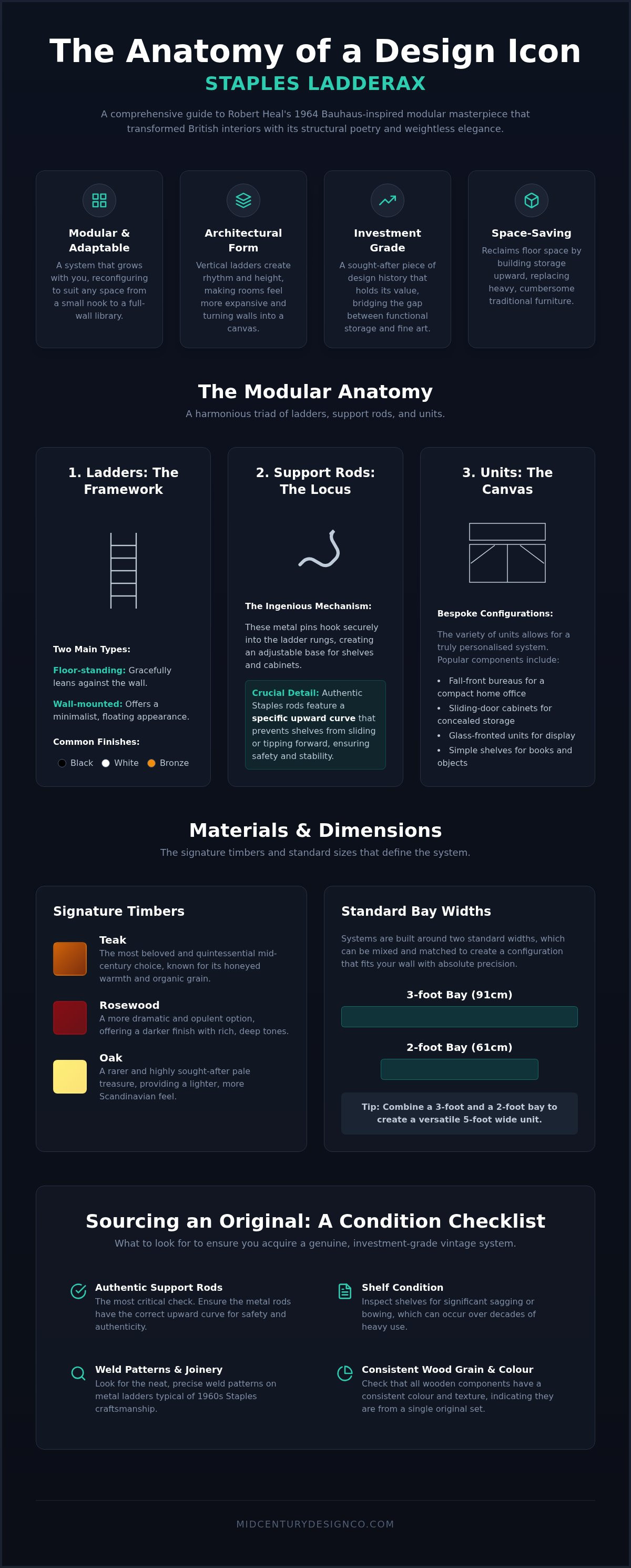
To truly appreciate a Staples Ladderax shelving unit, you must first understand its modular DNA. It's a triad of components. Ladders, support rods, and the units themselves. These elements work in harmony to create a structure that is both robust and visually light. It's the ultimate toolkit for the domestic architect. It allows you to build upward rather than outward, reclaiming the vertical space of your home with a sense of grace and purpose.
Teak remains the most beloved timber for its honeyed warmth and organic grain. It's the quintessential mid-century choice. For those seeking more drama, rosewood offers a darker, more opulent finish, whilst oak is a rare, pale treasure. The ladders provide the frame. Classic black is the definitive choice for many, but pristine white or the elusive gold-tone bronze ladders add a unique sculptural quality to a room. Most systems are designed around 3-foot (91cm) or 2-foot (61cm) bays, allowing you to mix and match widths to suit your wall with absolute precision.
Ladders and Support Rods: The Backbone of the System
The ladders are the essential uprights. You will encounter two main types. Floor-standing ladders lean gracefully against the wall, whilst wall-mounted uprights offer an even more minimalist, floating appearance. The genius of the design lies in the metal support rods. These pins hook into the ladder rungs, creating a secure base for shelves and cabinets. It's vital to ensure these pins are original. Authentic Staples rods have a specific curve that prevents the shelf from sliding or tipping. This simple mechanism allows for infinite height adjustments. You can move a shelf by a single rung to accommodate a tall vase or a new collection of books in seconds.
Cabinets and Shelves: From Bureaus to Drinks Units
The variety of units available is what makes the system truly bespoke. The fall-front bureau is perhaps the most iconic component. It's a self-contained home office that hides away your laptop and papers behind a beautiful wood grain. Glass-fronted display units and sliding-door cupboards provide elegant storage for ceramics or glassware. For the specialist collector, the record cabinet is a prized addition, whilst the corner shelf remains a sought-after rarity for awkward alcoves. If you're looking for an investment-grade piece, browsing a curated selection of Staples Ladderax systems can help you visualise how these different components come together in a cohesive, beautiful arrangement.
Choosing Your Configuration: A Framework for Every Interior
Designing your interior landscape with a Staples Ladderax shelving unit requires a blend of pragmatism and poetry. Before you fall in love with a particular teak bureau or rosewood cabinet, you must measure with precision. You're not just measuring the width of the shelves; you're measuring the soul of the room. Remember the ladders. They don't just sit flush. There's a subtle overhang to consider. Allow an extra few centimetres beyond the standard shelf width to ensure the uprights have room to breathe and don't feel crowded against your architecture.
A single bay is a focused statement. It's a sanctuary for a hallway or a bedroom corner. Conversely, the multi-bay masterpiece is a symphonic arrangement. It can span an entire wall, acting as a library or a sophisticated media centre. The key to a successful Staples Ladderax shelving unit configuration is the balance between "open" and "closed" storage. Too many cabinets can feel heavy. Too many shelves can look cluttered. Mixing them creates a textured, rhythmic visual harmony that invites the eye to linger.
The Home Office Configuration: The Bureau and Desk
The Ladderax desk is a triumph of small-space engineering. It provides a generous work surface without the footprint of a traditional pedestal desk. Pairing this with a fall-front bureau creates a tiered workspace that's as functional as it is beautiful. It's the perfect backdrop for professional calls, offering a curated glimpse into your personal aesthetic. If you're looking for broader inspiration on creating a sanctuary for work, you might explore how to source a mid century modern desk UK collectors adore. This setup allows you to tuck away the clutter of the workday behind a stunning teak grain at five o'clock.
The Living Room Statement: Media Centres and Drinks Cabinets
For the music enthusiast, the record cabinet is a rare and essential find. It's built specifically to withstand the weight of vinyl whilst maintaining the system's characteristic lightness. You can flank these with sturdy shelving to house your speakers and turntable, creating a dedicated analogue nook. A drinks cabinet, with its glass-fronted elegance, serves as a natural focal point for entertaining guests. Don't be afraid to mix wood finishes amongst your metal ladders. A teak shelf set against black uprights provides a striking contrast that celebrates the materials' individual characters, whilst organizing your collection into a cohesive display of functional art.
Sourcing Authenticity: What to Look for in a Vintage System
Sourcing a Staples Ladderax shelving unit requires a keen eye and a patient spirit. The vintage market is often a chaotic landscape of mismatched components and "Ladderax-style" imitations. Whilst these lookalikes might mimic the aesthetic at a distance, they lack the structural integrity and investment value of the 1964 Robert Heal original. Buying a curated set ensures that every component is compatible. It prevents the frustration of piecing together a system from disparate spares that may not align correctly.
Identifying Original Mid Century Furniture Pieces
Look for the hallmarks of 1960s craftsmanship. Genuine Staples of London pieces often feature specific joinery techniques, such as the dovetail joints found on the drawers of the bureau units. The patina of the wood is another vital indicator. After six decades, original teak should possess a rich, depth-filled glow that no modern stain can truly replicate. If the wood looks too uniform or lacks a certain sensory warmth, it may have been over-processed. To ensure your investment is protected, consult our original mid century furniture pieces checklist for a deeper dive into verification.
A thorough inspection is non-negotiable. Begin with the shelves. Look for "shelf sag," a common result of decades spent supporting heavy volumes. Check the edges for veneer chips, particularly on the corners of the cabinets. Examine the ladders for signs of pitting or rust, which can compromise the sleek metal finish. Most importantly, verify the support pins. Original pins are engineered with a precise hook. Third-party bolts or makeshift pins are a significant risk. They often don't distribute weight evenly, which can lead to the wood splitting or the entire unit becoming unstable.
Common Pitfalls When Buying Second-Hand
Warped ladders are a silent dealbreaker. If the metal uprights have bowed over time, the system will never sit flush against your wall, creating a precarious and unsightly lean. Always ensure that glass-fronted cabinets still possess their original sliding panels and that fall-front bureaus come with their original keys. A missing key is more than an inconvenience; it's a loss of historical completeness. Whilst some collectors are tempted by heavily restored pieces, well-preserved originals hold their soul and value far better. To avoid these risks, we invite you to explore our authentic, curated Staples Ladderax inventory, where every piece is inspected for historical integrity.
Curating Your Collection with The Mid Century Design Co.
Creating a home sanctuary requires more than just furniture; it requires a narrative. At The Mid Century Design Co., we believe that every Staples Ladderax shelving unit we source carries a piece of British design history. We don't just find items. We curate them. We look for pieces that possess a certain historical soul and structural integrity. This commitment to authenticity means you'll never find modern reproductions or compromised components in our collection. It's about providing you with an investment-grade masterpiece that will hold its value and beauty for decades to come.
A Curated Experience Over a Chaotic Search
Sifting through unverified marketplaces can be a draining experience. You might encounter missing pins, warped ladders, or mismatched wood grains that disrupt the visual harmony of your room. We act as your expert friend in this journey. Our selection process is rigorous. We prioritise grain quality and the sensory warmth of the timber. To create a truly cohesive interior, you might also consider how our range of mid century modern sideboards can sit alongside your modular system. Both pieces share a common design language of clean lines and functional elegance, allowing you to build a layered, sophisticated aesthetic.
Transporting these delicate vintage treasures requires more than just a standard courier. Our national UK delivery service is designed specifically for the safe transit of fragile glass panels and aged wood. We treat each component with the reverence it deserves. Whether you're in the heart of a bustling city or a quiet rural retreat, your Staples Ladderax shelving unit arrives ready to be styled. This ensures the structural poetry of Robert Heal's design remains intact from our gallery to your wall.
Bringing the Story Home
Owning an original vintage piece is a vote for sustainable, soulful design. These are objects that have already lived a full life and are ready for their next chapter in your home. You don't need to commit to a full-wall library immediately. Many collectors begin with a single bay. Perhaps a small bureau for a quiet corner or a single shelf for a hallway. Over time, you can expand. You can add shelves. You can swap cabinets. This modularity allows your furniture to evolve alongside your life. It's a living history. We invite you to view our current curated inventory and discover the piece that speaks to the spirit of your space.
Architecting Your Own Design Legacy
Choosing a Staples Ladderax shelving unit is an act of curation that transcends simple home organisation. It's about inviting a piece of structural history into your living space. We've explored the importance of verifying original 1960s components, from the specific curve of the support pins to the rich patina of authentic teak. By understanding the modular anatomy of these systems, you're now equipped to create a configuration that isn't just functional, but profoundly soulful. You've learned to look past the chaos of unverified listings to find pieces that truly hold their value.
Your journey doesn't have to be a solitary search amongst mismatched parts. We specialise in sourcing exclusively original vintage pieces, each expertly curated for its quality and spirit. With our specialist national UK delivery, you can be certain that your investment arrives with its integrity perfectly preserved. We invite you to explore our curated collection of authentic Staples Ladderax systems and envision how these timeless elements might transform your home. It's time to begin your own chapter with this mid-century masterpiece.
Frequently Asked Questions
Is Staples Ladderax shelving easy to assemble by myself?
The assembly process is remarkably straightforward and reflects the 1960s focus on functional domestic design. It's a tool-free system for the most part. The metal support rods simply hook into the ladder rungs, and the shelves or cabinets rest securely on top. Whilst you might need a second pair of hands to steady the taller ladders during the initial setup, the modular nature allows for a calm, methodical, and intuitive experience.
Can I mix different wood types, like teak and oak, in one Ladderax system?
You can certainly mix different wood types, though most collectors prefer the visual cohesion of a single timber like teak. Mixing teak shelves with a rosewood bureau can create a layered, eclectic look that feels more like a curated gallery than a showroom set. Because the metal ladders provide a consistent vertical frame, these different wood grains can coexist beautifully. It's a wonderful way to express your personal aesthetic.
How much weight can a Staples Ladderax shelf actually hold?
A Staples Ladderax shelving unit is surprisingly robust and built for longevity. Whilst there are no official historical weight limits, a standard 3-foot shelf can comfortably hold a full row of hardback books without bowing. The key is the integrity of the support rods. If you're storing heavier items like vinyl records, we recommend using the dedicated record cabinets. These are specifically engineered to distribute weight safely across the rungs.
Do I need to fix my Ladderax unit to the wall for safety?
It's highly recommended to fix your unit to the wall, especially if you have children or pets. Whilst the floor-standing ladders are designed to lean, a single screw through the pre-drilled holes at the top of the ladder provides essential peace of mind. For the wall-mounted uprights, secure fixing is mandatory as the wall supports the entire weight. Safety doesn't have to compromise the airy, floating aesthetic that makes this system so evocative.
What is the difference between gold, black, and white ladders?
The ladder finish defines the mood of the piece and its architectural impact. Classic black ladders offer a sharp, sophisticated contrast that highlights the warmth of the wood. White ladders provide a more minimalist, Scandinavian feel that blends into lighter walls. The rare gold or bronze-tone ladders are the most sought-after by collectors. These metallic finishes add a touch of mid-century glamour and warmth, turning the structural frame into a decorative statement.
How can I tell if a Ladderax unit is an original 1960s piece or a reproduction?
Identifying an original piece requires a close look at the finer details of the 1964 design. Authentic Staples units feature clean, precise weld patterns on the ladders and a specific curved hook on the support rods. You should also look for the Staples of London branding, often found inside drawers or on the underside of cabinets. Modern reproductions often lack the sensory depth of aged teak and the historical weight of Robert Heal's engineering.
Are spare parts like pins and rods still available for vintage systems?
Original spare parts are becoming increasingly rare as these systems are no longer in production. Whilst you might find occasional pins on secondary marketplaces, they are often mismatched or bent. This is why we focus on providing complete, curated systems. Sourcing a set with all its original hardware ensures the structural integrity of your shelving. Using third-party bolts can cause irreversible damage to the delicate wood veneer of the vintage cabinets.
How do I clean and maintain the teak cabinets on my Ladderax unit?
Maintaining the soul of your teak cabinets is a simple, rhythmic process. Avoid modern aerosol polishes, which can leave a waxy buildup. Instead, use a high-quality teak oil once or twice a year to replenish the wood's natural oils and enhance the grain. A soft, lint-free cloth is all you need for regular dusting. This gentle care ensures that your Staples Ladderax shelving unit retains its sensory warmth and historical character for decades.