

Buy Vintage Furniture Online in the UK: A Thoughtful Buyer’s Guide
When you buy vintage furniture online UK-wide, the detail that gives a piece its character can also help you judge whether it’s right for your home. A useful listing offers more than an attractive silhouette: it gives clear information about the piece’s age, condition and construction.
The appeal is easy to understand. A vintage sideboard, dining chair or coffee table can bring warmth and history into a room whilst fitting naturally into modern life. But photographs don’t always show wear, true scale or whether a piece is original rather than a reproduction. Delivery and returns arrangements can vary, too.
This guide sets out practical questions to ask as you compare listings. You’ll learn how to assess authenticity and condition, check dimensions, review seller information and confirm the arrangements that apply before ordering. A little preparation can help you find a piece that suits both your room and everyday needs.
Key Takeaways
- To buy vintage furniture online UK-wide with confidence, look for evidence in the listing rather than relying on styling or a single striking photograph.
- Read the description, study overall and detail images, and check the condition notes. Ask the seller about anything unclear, especially damage or repairs.
- Compare shortlisted pieces by dimensions, condition, materials and function. Check that each one will work in your room and routine.
- Before ordering, confirm the seller’s details, delivery terms and returns information for that specific listing.
- Use a consistent checklist to find original vintage furniture for dining, storage, living and working spaces.
Buy vintage furniture online in the UK: what to assess before you choose
A distinctive vintage piece can bring warmth, character and a sense of history to a room. Buying from a screen, however, means you can’t test the drawers, see how the finish catches the light or judge the furniture in your space before ordering. To buy vintage furniture online UK-wide, weigh the evidence in the listing rather than letting the styling or one beautiful photograph make the decision for you.
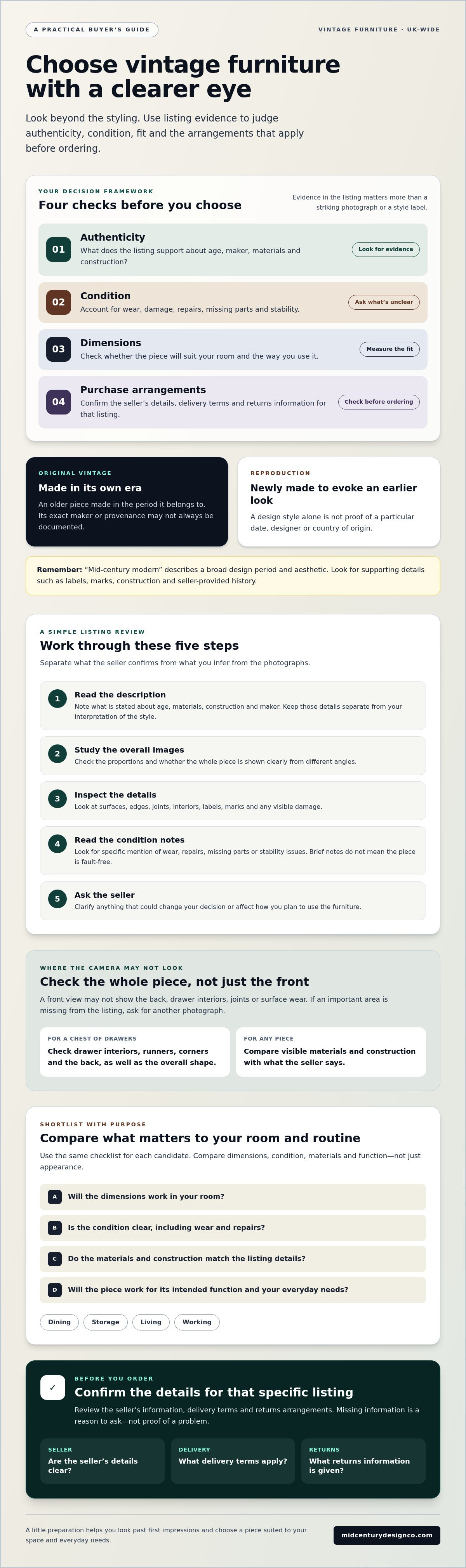
Start with four checks: authenticity, what the listing can support about the piece; condition, including wear, damage and repairs; dimensions, to see whether it will suit your room; and purchase arrangements, including delivery and returns information for that listing. Together, these details help you look beyond first impressions.
Original vintage furniture is an older piece made in its own era, rather than a newly made item inspired by an earlier design; its exact maker or provenance may not always be documented.
What makes original vintage furniture different from a reproduction?
An original piece belongs to the period in which it was made; a reproduction is newly manufactured to evoke an earlier look. “Mid-century modern” describes a broad design period and aesthetic, not proof of a particular date, designer or country of origin. Look for supporting details in the listing, such as labels, marks, construction and seller-provided history. A style description alone isn’t evidence of age or provenance. For wider historical context, explore key periods in English furniture design.
Why online listings need a closer look
A concise description or carefully composed image may leave practical questions unanswered. A front view, for example, might not show the back, drawer interiors, joints or surface wear. Without measurements, it can also be hard to picture a piece beside your existing furniture. Missing information isn’t proof of a problem, but it is a reason to ask the seller before deciding.
Focus on what the listing actually shows and states. If a sideboard catches your eye, check whether its construction and details align with the description, and ask about anything unclear. Our guide to authentic mid-century modern sideboards offers more focused context for this category. Apply the same approach to any piece: separate visible evidence from assumptions, then decide whether the unanswered questions matter to you.
How to assess vintage furniture authenticity and condition from a listing
A vintage piece needn’t look untouched to be worth considering. A softened finish or small surface marks may be part of its history. Loose joints, missing components or damage that hasn’t been described could affect how the furniture works in your home. Age-related character is what you can see and understand; condition is the full account of wear, repairs and faults you should request before buying.
Work through the listing in this order:
- 1. Read the description. Note what the seller confirms about age, materials, construction and maker. Keep these details separate from your own interpretation of the style.
- 2. Study the overall images. Check the proportions and whether the photographs show the whole piece clearly from different angles.
- 3. Inspect detail images. Look closely at surfaces, edges, joints, interiors and any visible labels, marks or damage.
- 4. Read the condition notes. Look for specific mention of wear, repairs, missing parts or stability issues. Brief notes don’t mean the piece is fault-free.
- 5. Ask the seller. Clarify anything that could change your decision or affect how you plan to use the furniture.
Which photographs and details should a buyer look for?
Images should help you assess more than the front-facing appearance. For a chest of drawers, useful views may include the drawer interiors, runners, corners and back, as well as the overall shape. Check whether the seller identifies the materials and construction or whether these are only suggested by the appearance. The Victoria and Albert Museum's furniture collection can offer useful visual context for comparing materials and craftsmanship. If an important area isn’t shown, politely ask for another photograph before proceeding.
How can you ask about age, maker and condition?
Keep questions courteous and specific. For example, ask, “What details support the stated age or maker?” or “Is there a label, stamp or other information behind that attribution?” A mark can be useful evidence, but it isn’t conclusive proof on its own. Ask whether repairs have been made, whether any parts are missing and whether there are stability concerns relevant to your intended use.
For a more detailed authenticity checklist, read the guide to identifying original mid-century furniture. As you buy vintage furniture online UK-wide, you can also explore The Mid Century Design Co.’s original vintage furniture and assess each listing using its stated details.
Compare vintage furniture listings by fit, function and evidence
Two pieces may have a similar silhouette but differ in the details that matter at home: dimensions, condition, materials and practical use. Compare listings side by side instead of letting polished photography decide for you. A listing with clear information may be more useful than a beautifully styled one that leaves basic questions unanswered.
Use the framework below for each piece you’re considering. Record what the seller states, and mark anything that needs clarification rather than filling gaps with assumptions.
| Dimensions | Condition evidence | Materials | Function | Unanswered questions |
|---|---|---|---|---|
| Are width, depth and height provided? | Are wear, repairs or damage described and shown? | What materials does the seller identify? | Does it suit your intended use? | What should you confirm before ordering? |
| Will it fit the room and access route? | Are areas important to your decision pictured? | Do visible details support the description? | Will it meet your storage, display or working needs? | Are dimensions, materials or condition unclear? |
Will the piece work in your room and everyday routine?
Measure the intended space, noting width, depth and height. Allow room for doors and drawers to open without obstruction. Then check the route into the room, as entrances, hallways and stairways can be tighter than the final position. Compare your measurements with the listing before ordering, and ask the seller to clarify any missing dimension.
Think about use as well as appearance. A dining set needs to suit the way you eat and gather. A sideboard may need to hold specific items, while a desk should suit your working habits. Choose for the role the piece will play, not just how well it might photograph in the room.
How should you compare materials and design details?
Compare materials and construction where the seller identifies them. Treat visible grain as a reason to ask a question, not proof of a particular material. Terms such as teak and Danish modern describe material or design context; neither automatically confirms a piece’s age, maker or quality. There’s no universally superior wood or period. The right choice depends on the listing evidence, your preferences and how you’ll use the furniture.
For a category-specific example, see this vintage coffee table buying guide. If you’re comparing modular storage, the Staples Ladderax shelving guide can help you assess the components stated in a listing. Don’t assume every arrangement is alike. For upholstered pieces, check the seller’s safety information and consult guidance on fire safety regulations for second-hand furniture.
A measured comparison helps you buy vintage furniture online UK-wide with your room and routine in mind. To explore furniture categories, visit The Mid Century Design Co. and review the details on each individual listing.
What to check before ordering vintage furniture online in the UK
Before committing, make sure the listing and purchase arrangements answer the practical questions as clearly as the photographs show the piece’s character. Delivery and returns information can vary between sellers and individual listings, so check the terms for the exact item rather than relying on assumptions or information you’ve seen elsewhere.
Which seller and delivery details deserve confirmation?
Check who is selling the furniture and how to contact them if you need clarification. Then review the listing and current retailer information for delivery coverage, arrangements and timing. Don’t assume delivery, collection or a particular returns option is available unless it’s stated. Ask about anything unclear before ordering and keep the response with your purchase information.
Use this pre-order checklist:
- Listing: Do you understand the stated dimensions, condition, materials and included components?
- Seller: Is the seller’s identity clear, and can you contact them with questions?
- Delivery: Are the delivery area, arrangements and timing confirmed for this item?
- Returns: Have you read the returns information that applies to this seller and listing?
- Access: Have you checked the route into your home and asked about any handling or access requirements?
Seller status can matter when you review the terms. Check whether you’re buying from a trader or a private individual rather than treating every online listing alike. If the returns information or another term is unclear, seek clarification before ordering.
How can you prepare your home for a vintage furniture delivery?
Measure the intended position, then check doorways, hallways and staircases along the route. Compare those measurements with the item’s listed width, depth and height. Consider whether tight turns or narrow entrances could make access difficult. A piece that fits beautifully in the room still needs a workable path to get there.
Plan where it will sit and clear obstacles from the route in advance. For a larger wardrobe or sideboard, ask the seller about handling and access arrangements, including anything you may need to organise yourself. Don’t assume delivery includes bringing furniture to a particular room or managing difficult access unless this has been confirmed.
Once you know what to confirm before you buy vintage furniture online UK-wide, explore the curated vintage furniture collection and review the details provided for each piece.
Find original vintage furniture online with a more confident eye
Start with a clear idea of what your home needs. Then check what each listing actually tells you, compare the dimensions with your room and access route, and confirm the seller’s practical terms before deciding. This process helps turn an appealing find into a considered choice, so you can buy vintage furniture online UK-wide without letting a striking photograph do all the persuading.
The Mid Century Design Co. is an independent UK specialist focused on curated, original vintage furniture. Its range includes pieces for dining, storage, living and working spaces, such as sideboards, dining sets, desks and Staples Ladderax systems. Begin with the role a piece should play in your home, rather than a trend or material alone.
Which furniture categories might suit your search?
Start with the room and function. If you need a place to gather, explore dining furniture. For a living space, consider coffee or occasional tables. For organisation, look at storage such as sideboards, chests of drawers or wardrobes. A desk may suit a work area, while a modular storage system could meet a different need. Let your available space, measurements and personal taste narrow the search. Check the current listing for the exact item and details, as a category doesn’t indicate what’s available at any given time.
How to take the next step without rushing the choice
Shortlist pieces that meet your needs, then revisit each listing with fresh eyes. Check that the description and photographs answer your key questions, take another look at your measurements, and read the delivery and returns information for that specific item. If an important detail remains uncertain, ask the seller before ordering. A brief pause can help you distinguish a piece you admire from one that will genuinely work in your home.
Vintage furniture rewards patience. The aim isn’t to find a flawless object, but one whose documented details, condition and practical qualities feel right for you. Picture it in its intended place, then explore at your own pace. Browse original vintage furniture at The Mid Century Design Co.
Choose a vintage piece with confidence
A considered choice begins with more than a style you love. Look for evidence in the listing, distinguish described condition from what you can only infer, and check that the piece fits your room, routine and access route. Before ordering, confirm the seller’s delivery and returns information for that specific item. These checks can help you buy vintage furniture online UK-wide with a clearer sense of what to expect.
The Mid Century Design Co. is an independent specialist focused exclusively on original vintage pieces, with furniture across storage, dining, living and office categories. Each listing lets you explore a piece’s visible details and consider how its character might work in your home. Take your time, revisit the questions that matter to you, and ask about anything the description or photographs leave uncertain.
Ready to explore? Browse the curated collection of original vintage furniture and see which pieces suit your space.
Frequently Asked Questions
Can you buy authentic vintage furniture online in the UK?
Yes, you can find original vintage furniture online in the UK, including through specialist retailers that focus on genuine older pieces. The Mid Century Design Co. focuses exclusively on original vintage furniture. Assess each listing individually: read the description, examine photographs for construction details and marks, and ask what supports any stated age or maker. A vintage label is useful context, but it isn’t proof of provenance on its own.
How can you tell whether online furniture is vintage or a reproduction?
Look for evidence that the item is an older piece, rather than newly made furniture inspired by a period style. Check the seller’s description, construction details, materials and any labels or marks, then ask how claims about its age or maker were established. A mid-century modern appearance alone doesn’t confirm when or where an item was made. If the listing leaves a key detail uncertain, ask the seller before deciding.
What should I check in photos before buying vintage furniture online?
Look for clear views of the whole piece, then inspect close-ups of surfaces, edges, joints, interiors and visible marks or damage. For a cabinet, check whether you can see inside and view the back as well as the front. Photos can’t show everything, so compare them with the written condition notes. If an area important to your decision isn’t pictured, politely request another image before ordering.
How do I know whether vintage furniture will fit through my doorway?
Compare the item’s listed width, depth and height with your entrance, hallway, staircase and final room position. Measure narrow points along the route, including turns, and consider how the furniture will be carried through them. Check whether the listing gives measurements for the whole piece and ask the seller to clarify anything missing. Confirm access and handling arrangements before ordering rather than assuming delivery includes difficult manoeuvres.
Can I return vintage furniture bought online in the UK?
Return options depend on whether you bought from a trader or a private seller, and on the circumstances. Under the Consumer Contracts Regulations, online purchases from traders generally include a 14-day cooling-off period to cancel after receiving the goods. The Consumer Rights Act also applies to second-hand goods bought from traders: they must be as described, fit for purpose and of satisfactory quality. Check the seller’s terms, especially for private sales or an item that’s faulty.
What should I ask a seller before buying vintage furniture?
Ask for clarification on details that could affect your decision or intended use. For example: “What supports the stated age or maker?”, “Are there repairs, missing parts or areas of damage?” and “Can you confirm the dimensions?” You can also request photographs of an unclear area and ask about stability or how drawers and doors function. Before paying, confirm delivery arrangements and any returns information that applies to that particular listing.
How is vintage furniture delivery arranged in the UK?
Arrangements vary by seller and listing, so check the current information rather than assuming delivery coverage, timing or handling is included. Confirm where the seller delivers, how the item will arrive and whether there are access requirements you need to plan for. Measure the route into your home and ask about concerns such as stairs or narrow entrances before ordering. Keep the seller’s confirmed delivery details for reference.