

Genuine 1970s Furniture Online: A Thoughtful Buyer’s Guide
Finding genuine 1970s furniture online is about more than spotting a familiar shape. A low profile, warm wood or sculptural curve might catch your eye, but photographs don’t always tell the whole story.
It’s natural to wonder whether a piece is truly vintage, what condition it’s in and how it will fit into your home. The decade’s furniture has a distinctive presence, from bold geometric forms to softer, organic lines, yet its variety can make choosing less straightforward.
This guide explains how to appreciate 1970s design and assess online listings with a considered eye. You’ll find practical ways to compare descriptions and photographs, assess condition, and judge scale and materials before deciding. We’ll also look at how storage, dining furniture, tables and seating can bring warmth and individuality to a contemporary interior. The aim is to find a piece whose character and practical use feel at home with you.
Key Takeaways
- Assess genuine 1970s furniture online by looking at the evidence in a listing, not just an era-inspired appearance.
- Use materials, silhouette and detailing to understand a piece’s character, but don’t treat any single feature as proof of age.
- Read the description, examine the photographs and weigh the visible condition against how you plan to use the furniture.
- Check measurements, doorway access and room circulation before choosing a piece.
- Compare original vintage storage, dining, living and office furniture by how it will work in your home.
What makes genuine 1970s furniture distinctive?
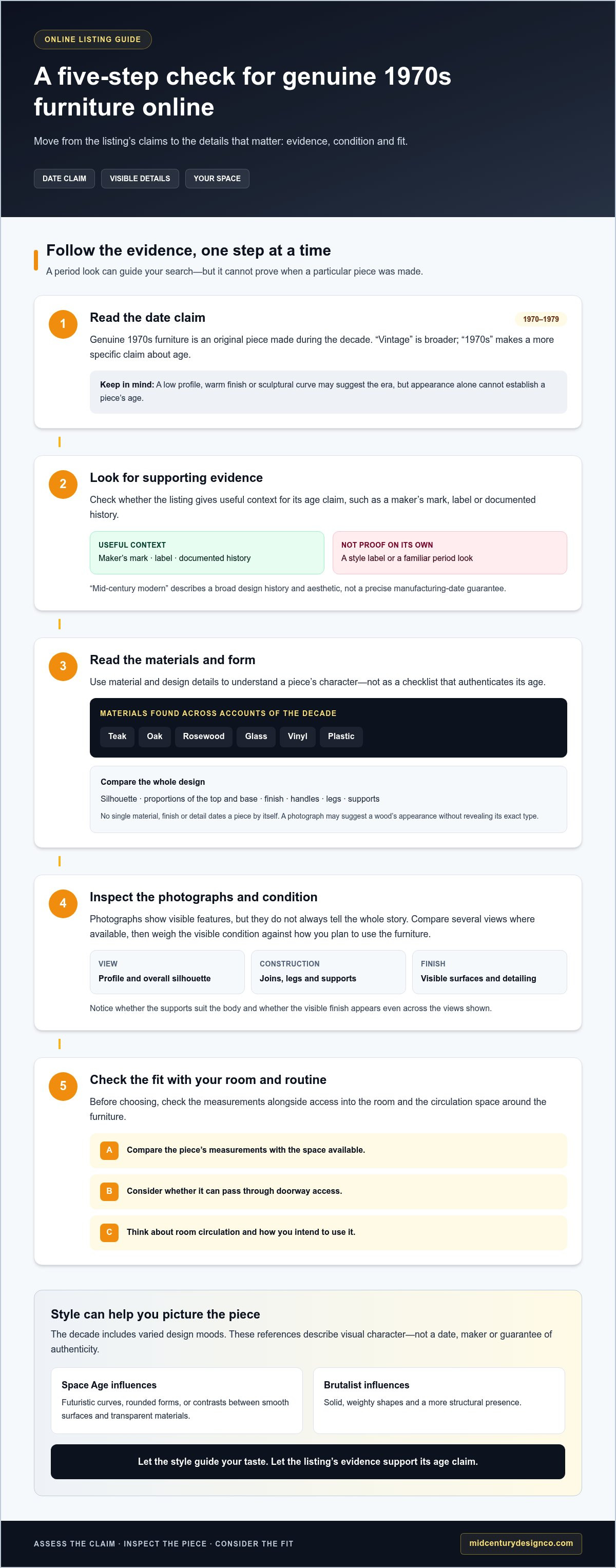
Genuine 1970s furniture is an original piece made during the decade from 1970 to 1979, rather than a later design that borrows its look. That distinction matters: “vintage” is a broad label, whilst “1970s” makes a more specific claim about a piece’s age. A low, sculptural profile or warm-toned finish may suggest the decade, but appearance alone can’t establish when an individual item was made. A maker’s mark, label or documented history can provide useful context for assessing a listing’s claim.
There isn’t one 1970s look. Design moved in several directions, from restrained and practical to dramatic, sculptural or playful. Teak, oak, rosewood, glass, vinyl and plastic all feature in accounts of the decade, but no single material belongs exclusively to it. Treat these as part of a broad design vocabulary, not a checklist that proves age.
This variety matters when searching for genuine 1970s furniture online. Two pieces from the same decade can have very different characters. An era label may help you find a visual direction you love, but it shouldn’t replace evidence about the date of the particular piece.
Is 1970s furniture always mid-century modern?
No. “Mid-century modern” describes a broad design history and aesthetic, not a precise manufacturing-date guarantee. A piece made in the 1970s may share clean lines or an emphasis on function with earlier mid-century furniture, whilst another may reflect a quite different mood. Treat the phrase as a style clue. To assess an individual item’s age, look for supporting details in its description and provenance rather than relying on the label alone.
The design moods that shaped the decade
Space Age and Brutalist influences offer two distinct reference points. Space Age-inspired design might suggest futuristic curves, rounded forms or a striking contrast between smooth surfaces and transparent materials. Brutalist references can bring to mind solid, weighty shapes and a more structural presence. These are illustrative design languages, not traits shared by every piece from the decade.
The overview in Furniture of the 1970s provides historical context for the period’s varied materials and styles. Use references like this to sharpen your eye, then return to the individual listing. Its stated age, visible construction and details should tell a more specific story than a broad aesthetic category can. This helps you appreciate a design’s spirit without mistaking resemblance for proof.
Read the materials, shapes and details of 1970s design
Materials give a piece much of its visual character. Wood can bring warmth and visible grain; glass may create a lighter, reflective surface; chrome can introduce a crisp, polished contrast. These qualities help you picture how an item might feel in a room, but they don’t date it by themselves. No single material, finish or design detail can authenticate a piece without supporting evidence about its age and provenance.
For a useful comparison, look beyond the material name. Notice the overall silhouette, the proportions of the top and base, the finish, and how the handles, legs or supports relate to the whole. A listing that identifies a wood or period gives you a claim to assess, not a conclusion to assume.
How wood, chrome and glass shape the look
If a listing identifies a piece as teak, consider how its grain and warm tone sit alongside the furniture’s form. Other woods create their own character, from quieter surfaces to pronounced grain patterns. The description should support a specific material identification. A photograph can suggest appearance, but may not reveal the exact wood.
Chrome and glass can shift a piece’s mood. A reflective metal detail might make a table feel sharper and more graphic, whilst a glass surface can keep the surrounding room visually present. Set against wood, either material can create a compelling contrast. These combinations can help you imagine a piece in your interior, but they aren’t exclusive to one decade. Compare how the materials meet, the finish and whether the design looks coherent from each angle shown.
Recognising Space Age and Brutalist influences
Some designs lean towards Space Age references, with rounded, futuristic shapes that can make a practical object feel playful or sculptural. Others draw on Brutalist influences, favouring a more solid, architectural presence. These are different visual languages, not labels that establish a piece’s date or maker. A listing needs evidence to support any specific attribution.
Consider how the form works as well as how it looks. Curved edges may soften a room’s outline; a weightier structure can give a dining or storage piece a strong visual anchor. In listing photographs, compare the profile, joins and detailing across several views. Look for consistency: do the supports suit the body, and does the finish appear even across the visible surfaces? The White House Decorative Arts in the 1970s offers another perspective on period interiors and decorative choices.
As you search for genuine 1970s furniture online, let material and form guide your taste, then use the listing’s specific evidence to assess its claims. Browse original vintage furniture and décor to compare how different forms and finishes could bring character to your home.
How to assess genuine 1970s furniture in an online listing
Shopping for genuine 1970s furniture online means making a decision from the clues a listing provides. Keep the process simple: read the description, inspect the photographs, assess the condition, then decide whether the piece suits your needs and space. Each step answers a different question. The description tells you what is claimed, photographs show visible features, and your requirements determine whether the piece is right for you.
What photographs and descriptions can tell you
Start with the full description. Look for stated dimensions, materials, condition and any explanation of age or provenance. Then study what the photographs actually show: the whole piece, its finish, edges, supports, handles and visible construction. An image may reveal a mark or uneven surface, but it can’t establish a maker or date on its own. Keep visual observations separate from the listing’s claims.
Look for several clear views rather than relying on one flattering angle. A side view can show depth and profile; close-ups may reveal the condition of edges, joints or fittings. If a feature mentioned in the description is hard to see, treat it as a claim rather than something the image proves. An identified material or period should be supported by the listing’s information, not inferred from colour, grain or style alone.
How to weigh condition against character
Age can leave visible traces, and these aren’t all equal. Surface wear is different from damage, a repair, a missing handle or a drawer that doesn’t function as intended. Consider how you plan to use the piece: a mark may matter less on a decorative sideboard than a structural issue on a dining chair used every day. Read condition notes carefully and weigh them against your priorities.
Pay attention to what is documented, not what you hope can be put right later. If the listing describes an altered finish, repaired section or absent component, factor that into your decision. Construction details can also help you understand how the piece is assembled, but a photograph may not show every joint or concealed area. Attractive styling is not a substitute for clear information.
For any online listing, read the claims, inspect what the photographs show, weigh the documented condition against your intended use, then check that the piece suits your space.
- Read: Note the stated age, provenance, materials, dimensions and condition.
- Inspect: Compare the photographs with the description, looking for clear views of the whole piece and its details.
- Assess: Consider wear, repairs, missing parts and any functional issues described.
- Decide: Ask whether its condition, size and purpose work for your home and routine.
This steady approach helps you separate visible evidence from description and decide what matters most before choosing. Character is part of a vintage piece’s appeal, but confidence comes from understanding what the listing shows, what it states and whether both fit your expectations.
Choose 1970s furniture that suits your room and routine
A striking piece earns its place through more than appearance. The right choice supports the way you live, fits the room comfortably and adds character without making the interior feel crowded. Before choosing genuine 1970s furniture online, start with the job you need it to do, then consider its scale and visual presence.
Match furniture categories to everyday needs
Think first about function. Sideboards and other storage furniture can keep everyday objects close whilst adding a strong line or useful surface to a room. A dining set needs to work for meals and gathering; a desk should suit how you use your working space. Coffee and occasional tables can bring a sculptural accent, but their height and position should still make sense for daily use. Browse by purpose, not trend alone.
For ideas on how a storage piece can balance utility and visual character, explore this guide to authentic mid-century sideboards. The same principle applies across categories: consider what the furniture will hold, support or make easier before deciding whether its look belongs in your home.
Check scale and imagine the piece in place
Measure the space where the furniture will sit, including its height, width and depth. Then measure the route into the room. Doorways, hallways, stair turns and narrow access points can all affect whether a piece can reach its intended position. Leave room for doors and drawers to open, chairs to move back and people to pass comfortably. A good fit is about circulation as much as dimensions.
Photographs can make an item appear larger or smaller depending on the angle and what surrounds it, so use the listing’s measurements rather than relying on visual impression. If helpful, mark out the footprint on the floor with tape or paper. This can show whether a broad sideboard will dominate a wall or a smaller occasional table will sit more naturally beside existing seating.
Scale is visual, too. A dark, solid form may feel more substantial than a lighter piece with open space beneath it, even if their measurements are similar. Consider how colour and material relate to your existing furniture, flooring and walls. A distinctive vintage focal point can sit comfortably amongst contemporary pieces when the room has breathing space and a few considered connections, such as a shared finish, tone or shape.
To create a room that feels collected rather than staged, balance a new arrival with what you already own. This guide to styling mid-century modern furniture offers ideas for making period design feel at ease in a lived-in home. When you’re ready to compare original vintage pieces across storage, dining, living and office categories, browse the furniture collection and picture how each might work in your room and routine.
Find original vintage furniture online with The Mid Century Design Co.
The Mid Century Design Co. is an independent specialist in curated, original vintage furniture. Its focus is on authentic vintage pieces, rather than modern reproductions designed to echo an earlier era. That offers a thoughtful starting point for your search: look for furniture whose appeal comes from its original design and character, then assess each listing on its own details.
A search for genuine 1970s furniture online can quickly open onto many different forms and functions. The Mid Century Design Co.’s furniture categories let you start with what your home needs, whether that’s considered storage, a place to gather over meals or a useful surface for work and everyday life. Individual pieces have their own period, materials and details, so use each listing for specifics rather than assuming every item belongs to the decade.
Browse by the way you want to live
Start with the room and your routine. Storage furniture, including sideboards, chests of drawers and wardrobes, can bring order as well as presence. Dining sets and chairs support shared meals; coffee and occasional tables provide practical surfaces in living spaces. Desks and office chairs can help shape a working area, whilst bedside cabinets and dressing tables serve quieter bedroom routines. Choose by purpose first, then consider which forms and finishes feel at home.
This approach keeps browsing grounded in everyday use. Think about what you need a piece to hold, support or make more comfortable, and how often you’ll use it. A useful object can still be a focal point, but it should feel connected to the life of the room, not chosen only because it signals a particular trend.
Bring a considered choice into your home
Before settling on a piece, bring together the checks from this guide: look for evidence supporting its stated period, read the listing details closely, assess the documented condition and compare its measurements with your room and access route. Then consider how its shape, colour and material will sit alongside your existing furniture. These details help you make an informed choice that still feels instinctive.
There’s no need to hurry. Original vintage furniture can bring distinctive character to a contemporary home, but the right piece is one that suits your space and routine, with a story you feel comfortable choosing. Browse with curiosity, compare thoughtfully and look for a piece that meets the practical needs of your home.
Explore original vintage furniture and discover a considered piece for your home.
Let your next piece shape the room
A well-chosen vintage piece can do more than complete a room. It can become the starting point for a new arrangement, bringing a distinctive presence into your home whilst leaving space for your taste to shape what surrounds it. Let that possibility guide your search for genuine 1970s furniture online: choose an object you’ll enjoy living with, not simply one that fits an era label.
The Mid Century Design Co.’s curated collection of authentic vintage furniture and décor offers a place to explore storage, dining, tables, seating and bedroom furniture. Each category opens a different possibility, from creating a more organised space to adding a considered focal point.
Take your time, follow what draws your eye and choose with both feeling and purpose. Explore original vintage furniture and find a piece that could feel entirely at home in yours.
Frequently Asked Questions
Is all furniture made in the 1970s considered mid-century modern?
No, not all furniture made in the 1970s is automatically mid-century modern. The labels describe overlapping design histories, not identical date ranges, and neither guarantees the provenance of a particular piece. A familiar silhouette or finish may suggest an aesthetic, but can’t establish when an item was made. When browsing genuine 1970s furniture online, compare the listing’s stated period with any maker, label or history details it provides.
Can genuine 1970s furniture work in a contemporary home?
Yes, an original vintage piece can sit comfortably in a contemporary home if its proportions and presence feel right for the room. For example, a distinctive cabinet can stand apart from simpler modern furnishings without requiring the rest of the interior to follow the same period. You could echo one detail, such as a warm tone or curved shape, in a smaller accessory. Let the room’s existing character guide your choice.
Are original 1970s furniture pieces always made from teak?
No, teak isn’t a universal identifier of 1970s furniture. Pieces from the decade vary in material and finish, so a teak-like colour or grain in a photograph can’t confirm the wood species or the age. Read the listing’s material description and compare it with the visible surface and construction. If the wording is broad, such as “wood”, treat it as less specific than a named material.
Does a 1970s furniture listing need a maker’s label to be genuine?
No, the absence of a maker’s label doesn’t by itself settle a piece’s age or authenticity. Labels can be useful evidence, but they may not be present or visible in listing photographs. Consider the description alongside construction details, any documented history and the images of the item. Keep observation separate from interpretation: a distinctive-looking design feature isn’t the same as documented information about its maker or date.
What should I measure before buying a large vintage piece online?
Measure the intended position, the route into the room and any tight points such as doorways, landings or stair turns. Compare those figures with the listing’s stated width, height and depth, allowing for handles or other parts that project. A paper outline or masking tape on the floor can help you picture the footprint, but photographs can’t replace measurements. Also leave room for doors and drawers to open fully.
Can vintage furniture from the 1970s be used every day?
It can, but suitability depends on the individual piece, its current condition and the demands of your routine. A sideboard used for occasional storage presents different considerations from a dining chair used daily. Read the condition description for wear or functional issues, then decide which details would affect your use. A surface mark may be acceptable to you; a fault that interferes with opening a drawer may not be.