

How much does vintage furniture cost, and is it worth it?
That range shows why convincing your partner to buy vintage furniture is easier when you look beyond the asking price and consider a piece’s condition, materials and craftsmanship.
It’s fair to ask whether a pre-loved piece offers better value than something new, especially when you’re making a shared purchase. Compare the furniture’s condition, construction and suitability for your home, not just its price. Character and careful craftsmanship can make a well-chosen piece worth enjoying for years. These practical checks can help you decide together, without letting nostalgia outweigh fit and function.
Key Takeaways
- Compare a vintage piece’s condition, materials and seller as well as its asking price, and factor in transport or any work it may need.
- Buying secondhand gives existing furniture another life; weigh that benefit alongside the piece’s practical value for your home.
- Look beyond a piece’s age to its design details, wear and provenance to understand the character it can bring to a room.
- Pair vintage and contemporary furniture thoughtfully, using a limited mix of design periods to keep the room feeling cohesive.
- Before buying, measure the furniture and your space, then inspect the joints, drawers and doors to assess everyday usefulness.
1. How much does vintage furniture cost?
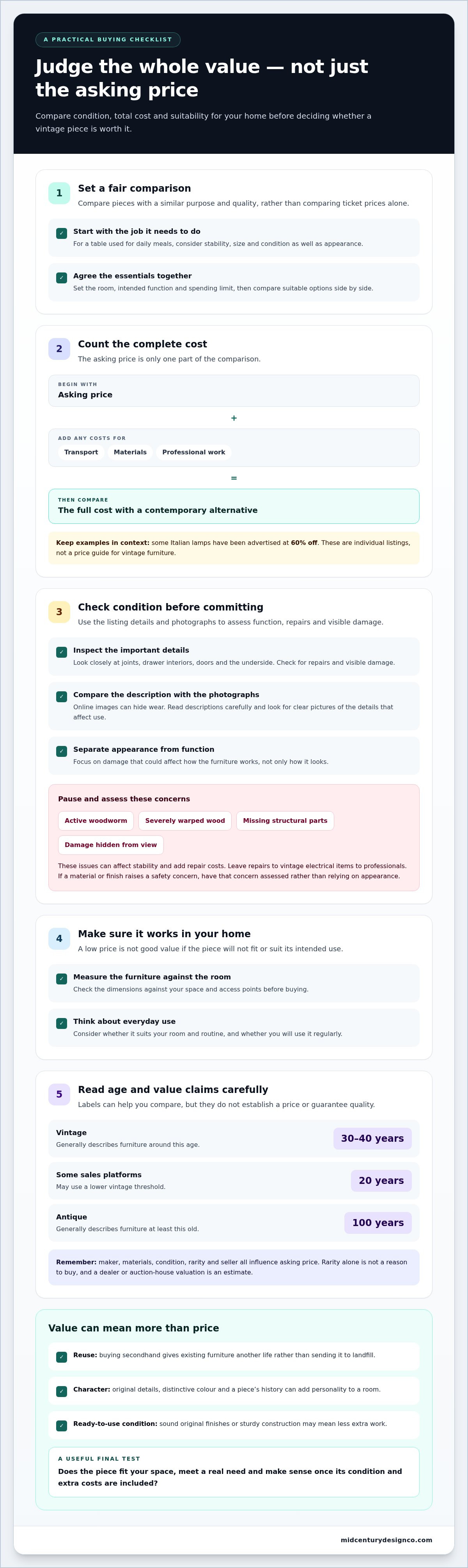
Vintage prices vary widely because age, rarity, condition, materials and seller all shape the asking price. Vintage generally describes furniture around 30 to 40 years old, while antique furniture is 100 years old or more. Some sales platforms use a lower threshold, classing pieces aged 20 years as vintage. These definitions help you compare like with like, but they don’t set a price.
Small decorative pieces show the range clearly. These are individual asking prices, not a universal scale: design, maker, condition and scarcity all influence what a buyer might pay.
Buying secondhand gives existing furniture another life rather than sending it to landfill. Reuse is a practical sustainability benefit, as well as a way to bring distinctive materials and colour into your home. A well-chosen vintage piece can also reduce the need to buy newly made furniture. Before agreeing on a budget, consider the full cost, including transport, materials and any professional work.
In the UK, you can find vintage furniture through independent dealers, vintage shops, flea markets, auctions and online marketplaces. Visit shops regularly to see how their stock changes, or explore a market where you can compare pieces in person. Online searches offer a broad selection, but photographs can hide wear. Read descriptions closely and look for clear images of important details.
Assess an online listing step by step. Check the dimensions against your room and access points, then examine photos of joints, drawer interiors, doors and the underside. Look for information about repairs and visible damage, and compare the description with the photographs. Focus on anything that could affect function, not just appearance. Before buying, make sure the piece will fit your home and suit its intended use.
Potential risks include active woodworm, severely warped wood, missing structural parts and damage hidden from view. These issues can affect stability and add repair costs. Vintage electrical items raise a separate concern: leave electrical repairs to professionals. If a material or finish raises a safety concern, don’t rely on appearance alone. Pause the purchase until that specific concern has been assessed.
Rarity can influence value, but it shouldn’t be the only reason to buy. The Kairos Collective founder recommends considering limited editions, small production runs and collaborations for their stories and possible investment appeal. Ask about a piece’s condition and history, and treat any dealer or auction-house valuation as an estimate. Choose something you’ll enjoy living with, whether it’s a practical find or a striking antique.
2. Affordability compared with new furniture
Vintage isn’t automatically the cheaper choice. Its price reflects the maker, materials, condition, rarity and seller, while a new piece’s cost reflects its construction and finish. Compare similar uses and quality, not just ticket prices. A table for daily meals, for example, should be judged by its stability, size and condition as well as its appearance.
There are lower-cost ways to begin. Some Italian lamps have been advertised at 60% off, showing how sale pricing can change the comparison. These are examples of individual listings, not prices for every vintage find.
Consider the full cost of buying furniture. Add delivery, materials and any professional work to the asking price before comparing it with a contemporary alternative. A piece that needs reupholstering may seem affordable at first, but fabric and labour change the final cost. Sound original finishes or sturdy construction, by contrast, can mean the piece is ready to use without extra work.
The benefit isn’t only financial. Buying secondhand gives existing furniture another life, while vintage pieces can bring original details, distinctive colour and a history that mass-produced contemporary designs may not share. A French accent or an unusually shaped table can add personality without making every item vintage. Compare both function and the atmosphere each piece would create in your home.
Antique furniture may command a higher price when its maker, materials, age or condition attract collectors. But not every older piece is valuable, and a high asking price doesn’t guarantee quality. Examine repairs, joints, drawers and wear. For an online listing, compare the written description with the photographs, and include transport and likely repairs in your budget.
Try this comparison before deciding: identify what the furniture needs to do, set a total budget, then compare condition and expected work. If you’re weighing an original piece against a new one, consider whether its dimensions suit your home and whether you’ll use it regularly. A bargain that doesn’t fit your room or routine isn’t good value.
In the 20th century, designers explored forms and materials that still sit comfortably beside contemporary furnishings. Less expensive pieces by mid-century modern designers can still be found for hundreds of pounds, though the maker and condition affect the asking price. For a shared decision, agree on the room, function and spending limit first. Then compare a few suitable options together, rather than arguing over vintage as an abstract idea.
3. Character and history in vintage furniture
A vintage piece can add more to a room than function alone: it can bring a sense of time and individuality. Its character might lie in a curved rail, hand-shaped detail, softened finish or pattern of wear. When shopping, notice which features make you want to live with that particular object. A beautiful table earns its place through daily use as well as its story.
Period clues help make that story more interesting. The Georgian era ran from 1714 to 1837, including William IV’s reign, whilst the Victorian era lasted from 1837 to 1901. Those dates can guide your questions about a piece, but a period label alone doesn’t establish when it was made. Compare the form, materials and finish before accepting a description as fact.
Materials offer useful evidence. Mahogany was first imported from the West Indies at the start of the 18th century, making it a familiar material in later furniture histories. Look at how the wood grain, joints and finish work together. Natural wear can add patina, but damage around joints or a warped surface may point to practical problems rather than appealing age.
Distinguish an original design from an item described as “in the style of”, “after” or “inspired by” another maker. These phrases describe different relationships to a design, so ask what supports the attribution. Useful evidence might include a maker’s mark, old paperwork or a clear account of the piece’s history. Treat a valuation as an estimate, not proof of provenance.
Scratches don’t automatically spoil a vintage find. Minor marks can be part of a piece’s history, while professional refinishing may suit furniture that needs a more polished appearance. Before sanding, painting or replacing original parts, research the design and inspect its details. Thin veneers and decorative features can be damaged by aggressive sanding, so preserve the details that give the piece its character.
Make the history part of a shared decision, not a sales pitch. Look for a piece with a detail you both notice, such as a cabinet’s colour or a chair’s back. Then consider where it will go and what it needs to hold or support. A well-chosen vintage piece can bring craftsmanship from another era into your present-day routines without making the room feel like a museum.
4. Combining vintage and contemporary pieces
A room feels considered when different eras share a visual thread. An interiors designer recommends limiting a room to three design decades, giving antique and vintage pieces space to stand out without making the mix feel crowded. For example, combine a mid-century sideboard with contemporary seating and a Victorian mirror. Repeated materials, shapes or colours can connect pieces made generations apart.
Start with one vintage piece as the anchor. A walnut cabinet, for instance, can set the room’s palette; choose contemporary cushions or a rug that echo its warm tones. If the cabinet has a strong silhouette, keep nearby furniture simple. This contrast lets the older piece stand out while modern forms keep the space practical for everyday living.
Scale matters as much as age. Measure the vintage table and surrounding chairs before arranging them, then check that doors and drawers open freely. A Victorian dining table may feel heavier in a room than a contemporary glass table, so balance its visual weight with lighter seating or open shelving. Even furniture in good condition can feel awkward if its proportions overwhelm the space.
Use colour to connect different eras. A contemporary neutral sofa can sit comfortably beside a vintage chair with patterned upholstery if the two share a shade. Alternatively, let a bold vintage piece lead, then repeat its colour in a smaller contemporary object. This deliberate repetition helps different finishes and makers feel connected, rather than like unrelated purchases collected by chance.
Mixing styles doesn’t mean matching every detail. Pair a clean-lined modern lamp with a vintage wooden desk, or hang contemporary artwork above an antique chest. Keep strong focal points under control: if the chest has carved details, choose quieter decoration nearby. Contrast gives a room depth, while a shared material or restrained palette keeps the overall effect calm.
Agree on a simple plan before buying. Choose the room, identify one vintage focal point, and select contemporary pieces that support its shape, colour or use. Then view the arrangement together, using a floor plan or photographs of the space. If a collection includes Georgian, Victorian and mid-century influences, keep other additions within those eras. This three-decade approach helps create a layered home that feels personal, not like a showroom from one period.
5. Craftsmanship and durability
Good construction shows in the details. On a chest of drawers, check that drawers slide smoothly, sit evenly and have sound runners. Look beneath the top and inside the cabinet for solid joints, not just a polished exterior. A dining chair should feel stable under weight, with no movement where its legs meet the frame. These checks reveal more than an attractive photograph can.
Materials can help explain why a piece has endured. Vintage furniture may use solid wood and natural fibres, including oak, mahogany and walnut. Examine the grain, edges and joins to see how the materials have been assembled. A solid frame doesn’t make every piece indestructible, but sound construction can support continued use when the structure remains in good condition.
One estimate puts the average lifespan of a vintage furniture piece at 50 years, compared with 3 years for a flat-packed piece. Treat those figures as broad estimates, not a promise about an individual item. Its future depends on construction, condition, care and how it’s used. A valuable piece with loose joints may need attention before it can serve reliably every day.
Check function before finish. Open every drawer, test doors and look for loose joints, damaged runners or missing structural parts. Check chairs for wobble and examine a table’s underside for repairs. Worn upholstery may be replaceable if the frame is sound, but sagging springs or damaged padding can mean extra work. Include that work in your decision instead of judging by fabric alone.
Original finishes, distinctive handles, beautiful wood and authentic patina can be worth protecting. Careful cleaning may reveal colour and detail, while aggressive sanding can damage thin veneers or decorative features. Before changing a distinctive piece, research its design and examine what makes it special. A painted surface, for example, might be an intentional finish rather than damage that needs stripping.
Social media images, including Instagram interiors, show styling, not structural condition. Use photographs to assess proportions or finish, then inspect the actual piece wherever possible. Ask for close views of joints, drawer interiors and the frame beneath upholstery. If buying online, compare these details with the description. A careful inspection helps distinguish age-related marks from faults that could affect daily use.
For a first purchase, consider a simple wooden chair or small side table with a sound structure. A manageable piece makes it easier to learn how finishes, joints and wear hold up over time. Keep original details where practical, and address functional faults such as loose joints before cosmetic changes. These checks make craftsmanship something you can assess, not simply admire.
The Mid Century Design: Sideboards & Storage
The Mid Century Design Company offers sideboards and storage for homeowners looking to combine vintage character with practical organisation. A sideboard can add useful storage while creating a distinctive focal point. The collection also includes chests of drawers, dining sets, coffee tables and occasional tables, with vintage options for different rooms and uses. The company’s genuine vintage pieces are eco-friendly and built to last.
Explore the collection when you’re ready to compare forms, materials and details with your home’s needs in mind. Consider a piece’s condition, dimensions and everyday function as well as its style, and find a vintage design you’ll enjoy living with.
For a closer look at vintage furniture, visit The Mid Century Design Co. website.
Make room for a piece you both love
A shared home doesn’t need one person to win an argument about style. Start with a room you both want to make more inviting, then agree on what the furniture needs to do. If you’re convincing your partner to buy vintage furniture, make the choice a joint discovery: compare silhouettes, finishes and practical details, and listen to what feels right to each of you.
Rather than imagining an entire room transformed, focus on one considered addition. Picture how it will work with your routines, what you’ll see when you walk in and whether you’ll still enjoy it as the room evolves. That conversation can turn uncertainty into a thoughtful decision, giving character and everyday function equal weight.
When you’re ready to explore pieces together, contact The Mid Century Design Co. and take the next step towards a home that feels distinctly yours.
Frequently Asked Questions
How much does vintage furniture cost?
Vintage furniture has no single set price in the UK. Cost depends on the piece, its condition, materials, maker and rarity. To judge an asking price, compare similar pieces with the same purpose and construction, then consider whether their differences explain the price. A scarce design or notable maker may command more, while visible wear or repairs can affect value.
How can I tell if the item is good quality when I can’t see it?
Ask for clear photographs in natural light and a short video showing the piece from every side. Request close-ups of joins, the underside, drawer interiors and any repaired areas. A tape measure beside the item can help you judge scale, while a continuous video may reveal wobble or doors that don’t sit evenly. Compare these details with the listing description, and ask what repairs have been made.
How much does vintage furniture cost in the UK compared with new furniture?
There’s no fixed price difference: a vintage piece may cost less or more than a new equivalent, depending on its design, condition and rarity. Compare items with the same function, size and storage capacity, then include delivery and any work needed. Vintage and new furniture may also differ in materials and construction, so weigh the overall value against how you’ll use the piece.
Is vintage furniture more sustainable than buying new furniture?
Buying secondhand supports reuse by keeping existing furniture in use instead of replacing it with newly made pieces. The environmental benefit is strongest when the furniture suits your home and needs little additional work. Include transport and any repair materials in your decision. Choosing a durable piece you’ll use for years makes reuse a practical part of a more considered home.
How can you persuade a partner to agree to buying vintage furniture?
To persuade your partner, start with a shared need rather than a debate about style. Agree on the room, function and budget, then shortlist a few pieces together. For example, compare a vintage dining table with contemporary options by comfort, dimensions and how well it suits your routines. Invite your partner to name their concerns and use them as criteria for choosing, not obstacles to overcome.