

Iconic British Mid-Century Furniture: A Thoughtful Buyer’s Guide
What if the right vintage piece could bring more than a mid-century look to your home? A search for iconic British mid century furniture often leads to clean lines, warm timber and clever storage, but the appeal lies in the individuality behind each design. British makers absorbed Scandinavian influence while developing their own responses to everyday living. The result isn’t simply a copy of another country’s style.
Knowing what you’re looking at can be harder than spotting the charm. Maker’s marks, provenance and signs of age can help you assess an original, but no single clue tells the whole story. Compare those details with the furniture’s construction and condition. Then consider whether its dimensions, materials and purpose suit your room and how you use it.
This guide explores the qualities of British mid-century design and how they relate to Scandinavian and broader mid-century styles. You’ll find practical ways to compare original pieces, assess their condition and decide whether a sideboard, dining chair or other distinctive find will work in your home.
Key Takeaways
- Recognise iconic British mid century furniture through its proportions, purpose, materials and character, rather than expecting one fixed look.
- Understand how designers, makers and manufacturers contribute to a piece’s story, and why those roles aren’t interchangeable.
- Use design cues as clues, not proof of origin. British and Scandinavian styles can overlap, so context matters.
- Compare purpose, proportions, construction, condition and provenance before choosing. Check dimensions and functional details as well as photographs.
- Let an original piece bring character to a contemporary room, balanced with modern colour, lighting and everyday objects.
What makes iconic British mid-century furniture distinctive?
Iconic British mid-century furniture is original furniture associated with Britain’s mid-twentieth-century design culture, valued for recognisable form, thoughtful function and lasting design influence, rather than for one prescribed look. Clean lines and practical thinking are part of the period’s design vocabulary, but they appear in many shapes, materials and levels of ornament. British design offers a distinct perspective on the wider mid-century movement. It isn’t a synonym for every piece made during the same era.
There isn’t one silhouette to look for. A well-proportioned sideboard can feel light on its feet while offering generous storage; a dining chair can be sculptural and still be comfortable and useful. Consider how the shape serves its purpose, then look at the material, grain, joinery and finish. The way a design uses timber or another material contributes to its character. For a wider overview of the movement’s characteristics and influences, see Mid-century modern design.
What does “iconic” mean in a furniture context?
Age alone doesn’t make an object iconic, nor does short-lived popularity. The word is most useful for a design with a distinctive, memorable form and a clear relationship between appearance and use. An iconic design has continued to shape how people recognise or think about furniture. Its influence may be cultural, practical or visual. Rather than relying on a definitive ranking, consider its design context, reception and enduring relevance.
For a buyer, this distinction separates a period piece from a design icon. Look beyond an appealing vintage appearance: ask what makes the outline recognisable, how well the piece serves its purpose and whether its details feel coherent rather than decorative for decoration’s sake. These are more useful points of comparison than age or a broad style label alone.
A British design sensibility beyond one look
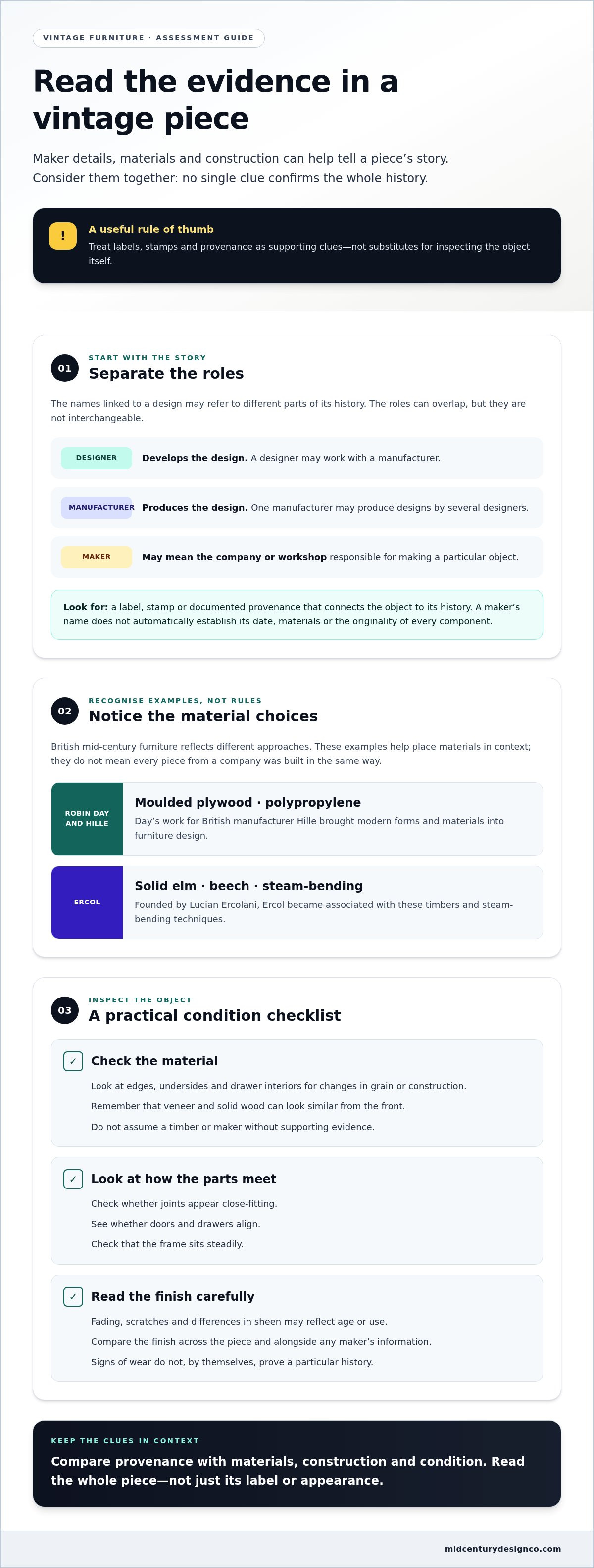
British mid-century design often gives attention to proportion, practical living and materials, but these are themes, not rules. The work associated with Robin Day and Hille, for instance, explored materials including moulded plywood and polypropylene. Ercol, founded by Lucian Ercolani, is closely associated with solid elm and beech, and with steam-bending techniques. These examples show different approaches, not a standard British template.
Designer, maker and manufacturer are related terms, but they aren’t interchangeable. A designer develops a form; a maker or manufacturer may produce and sell it, sometimes in collaboration with a named designer. A label or reliable provenance can help clarify those roles, while the design and construction offer clues to the piece’s purpose. British design also drew on ideas from elsewhere, including Scandinavia. That influence doesn’t establish where an individual object was made, and not every British design shares the same timber, shape or origin. Read each piece on its own terms.
Designers, makers, and materials behind British mid-century furniture
A piece’s silhouette reflects a chain of decisions: who conceived it, who made it, which materials were chosen and how it was built. Knowing a little about that history makes iconic British mid century furniture easier to understand. It also helps distinguish a design attribution from a claim about a particular piece’s manufacture.
How designers and manufacturers shaped the period
Robin Day’s work for British manufacturer Hille brought modern forms and materials, including moulded plywood and polypropylene, into furniture design. Lucian Ercolani founded Ercol, whose furniture became associated with solid elm and beech and steam-bending techniques. These examples connect a designer or founder, a manufacturer and a material-led contribution. They don’t mean every piece from either company shares the same construction.
The terms matter. A designer develops a design; a manufacturer produces it, and a maker may refer to the company or workshop responsible for making a particular object. The roles can overlap, but they aren’t interchangeable. A designer may work with a manufacturer, and one manufacturer may produce designs by several designers.
For a vintage piece, look for evidence connecting it to its history, such as a label, stamp or documented provenance. Weigh these clues alongside the object itself rather than treating them as a substitute for inspection. A maker’s name may support an attribution, but it doesn’t automatically establish the date, materials or originality of every component.
Materials, construction, and the feel of a piece
Material contributes to a design’s character, but appearance alone can’t confirm what lies beneath a finish. Teak, ash and other timbers have different grain and colour, while veneer and solid wood can look similar from the front. Inspect edges, undersides and drawer interiors for visible changes in grain or construction. Don’t assume a timber or maker without supporting evidence.
Look at how the parts meet. Check whether joints appear close-fitting, doors and drawers align, and the frame sits steadily. These details can tell you about construction and present condition. Fading, scratches and differences in sheen may reflect age or use, but they don’t prove a particular history. Compare the finish across the piece and consider it alongside any available maker’s information.
These observations connect a piece’s history with its everyday use. A beautifully grained cabinet may draw the eye, but its storage, proportions and working condition determine how well it serves your home. As you explore authentic vintage furniture, use material and construction to inform your appreciation while keeping visible evidence distinct from what remains uncertain.
British originals, Scandinavian influence, or modern reproduction?
Clean lines, timber and functional forms appear across British, Scandinavian and later furniture designs. The overlap reflects shared influences and changing tastes, but it doesn’t prove where or when a particular piece was made. “Mid-century” describes a period and design vocabulary; “British” points to a design or manufacturing context that needs evidence of its own.
British and Scandinavian design: where they meet and differ
Neither tradition has one uniform look. British designers and manufacturers responded to international ideas in their own ways, while Scandinavian design varies by maker, country and period. These comparisons are starting points, not rules for identifying an individual object.
| Consider | British context | Scandinavian context |
|---|---|---|
| Design history | Examples include Robin Day’s work for Hille and furniture associated with Ercolani’s Ercol. | A broad group of design traditions from Nordic countries, not a single style or maker. |
| Materials and form | Varied approaches, including Hille’s use of moulded plywood and polypropylene, and Ercol’s association with elm, beech and steam-bending. | Timber and pared-back forms are often associated with the category, but these cues aren’t exclusive to Scandinavian furniture. |
| What appearance tells you | A British-looking design may reflect influence rather than British manufacture. | A Scandinavian-style appearance alone can’t confirm Nordic origin. |
Use the table to frame questions, not to make a final attribution. An Ercol piece, for example, may be identified through its maker and design context, while another chair with a similar outline may have a different origin. Labels, documented history and construction details offer stronger clues than silhouette alone. This is useful when comparing Danish furniture with British designs shaped by Scandinavian influence.
Original vintage furniture versus a modern reproduction
A mid-century appearance doesn’t automatically make a piece an original period design. Later furniture may borrow familiar forms, and a reproduction may closely resemble an older design. Neither resemblance nor an age claim proves origin on its own. Assess the evidence together: maker’s marks, labels, available provenance, materials, construction and whether the details are consistent with the design being attributed.
Inspect the underside, joints, fixings, drawer interiors and backs as well as visible surfaces. Note whether the construction seems consistent throughout or whether components may have been changed. A label can help, but read it alongside the furniture. Labels can be missing, and a single mark doesn’t establish every detail of an object’s history.
Keep the distinction clear when deciding what matters to you. An original vintage piece is a period object with a history of use and making; a modern reproduction is a later interpretation. Both may appeal visually, but only the first is the period object itself. If you’re drawn to iconic British mid century furniture, compare the available evidence rather than relying on an appealing style alone.
How to compare and choose an iconic British mid-century piece
A piece can be compelling in a photograph and still prove impractical at home. Compare its purpose, condition and supporting evidence alongside its appearance, then picture it in the room you actually use. This checklist helps you weigh the story of an original against the everyday needs it has to meet.
- Purpose. Decide what the furniture needs to do. For a sideboard, consider what you’ll store and how often you’ll use its drawers or cupboards. For a chair, think about where it will sit and how you’ll use it.
- Proportions. Compare the stated dimensions with your space, including height, depth and width. A low, wide piece has a different presence from a tall, narrow one, even if both offer similar storage.
- Construction. Look at joints, drawer movement, door alignment and how the frame sits. Photographs of the underside, interior and edges can reveal details a front-on image won’t show.
- Condition. Separate signs of age from functional concerns. Fading or small marks may be part of a piece’s history; instability, sticking drawers or damaged surfaces affect how it works. Age isn’t a quality rating, and a pristine appearance doesn’t prove good construction.
- Provenance. Compare labels or maker’s marks with the description and available history. Consistent evidence is more useful than one clue in isolation. Missing paperwork creates uncertainty, but doesn’t by itself prove a piece isn’t original.
- Room fit. Consider the furniture’s scale, storage or seating role, and how it relates to what’s already in the room. A distinctive form can become a focal point without dictating the whole scheme.
Questions to ask of the piece itself
Compare photographs from several angles, noting what they show and what they leave out. Can you see the drawer interiors? Do the doors sit evenly? Are there close views of joints, surfaces and labels? If you inspect the piece in person, move functional parts gently and look for signs that components have been altered. Weigh a maker’s mark, construction detail or age claim alongside the other evidence, not as proof on its own.
Comparing more than one candidate can make your priorities clearer. Note each piece’s dimensions, visible wear, storage layout and functional details in the same way. Then you can judge them on more than a striking first impression.
Will the furniture work in your home?
Measure the intended position and the route into the room, including doorways, turns and narrow passages. Allow space for doors or drawers to open, chairs to move back and people to pass. For storage furniture, consider what it will hold and whether the interior arrangement suits those items. A mid-century sideboard should serve the room as well as anchor it visually.
For a closer look at original vintage furniture for living, dining and bedroom spaces, explore authentic mid-century furniture and compare the details with your checklist.
Bring British mid-century character into a considered home
A distinctive vintage piece doesn’t require you to recreate a room from another decade. Its history can sit comfortably alongside contemporary furniture and everyday objects. Start with one piece whose shape, material or colour appeals to you, then let the rest of the room respond rather than compete.
Start with one piece and build around it
A sideboard can anchor a living or dining space, adding useful storage and a strong horizontal line. A dining set gives a shared room a centre; a desk can give a corner purpose, while an occasional table adds a sculptural note without taking over. Decide what role the piece needs to play, then consider what you want it to contribute visually.
Give its form room to register. If a sideboard has a striking outline or richly grained finish, keep nearby surfaces and accessories relatively simple. Contemporary wall colour, a considered light fitting or a favourite vase can create contrast without turning the room into a period display. A clean-lined vintage table might sit comfortably with soft, modern upholstery, while an expressive chair can bring life to a restrained palette.
In a dining room, comfort and circulation matter as much as appearance. Allow chairs to move freely and consider how the table will work for meals, work or gatherings. For more dining-room ideas, explore a guide to retro dining tables and chairs.
Explore original vintage pieces for your own rooms
Original vintage furniture offers more than a familiar mid-century look. Variations in timber, finish and signs of use give each piece its own presence, while its design connects it to the people and homes it has served. A carefully chosen item can make a room feel more individual without requiring every furnishing to share the same era or style.
Think about the character and function you want to bring home. A sideboard or chest of drawers may suit a room that needs considered storage; dining furniture can shape how a space is used, while a desk, bedside cabinet or coffee table can add purpose in a smaller way. The best choice is distinctive and belongs in your everyday life, rather than simply completing a period look.
Explore iconic British mid century furniture with an open mind: a curated collection can include original vintage pieces from different design traditions. The Mid Century Design Co. specialises in authentic vintage furniture and décor, including sideboards, dining sets, desks, bedroom furniture and Staples Ladderax systems. Browse pieces for living, dining, working and bedroom spaces, and consider how their form and function might suit your home.
Choose a piece that feels like yours
The right find doesn’t need to transform your whole home. It might bring a new rhythm to a room, offer a welcoming place to gather or add a detail you’ll appreciate each day. Let your needs guide your eye, and allow the furniture’s history to become part of a home that reflects how you live now. That’s the lasting pleasure of iconic British mid century furniture: not recreating the past, but giving a distinctive design meaning in the present.
The Mid Century Design Co. brings together curated authentic vintage furniture and décor for customers across the UK, with pieces for dining, living, working and bedroom spaces. Consider which forms, materials and practical details will work in your rooms.
Explore authentic vintage mid-century furniture at The Mid Century Design Co.
Frequently Asked Questions
Does British mid-century furniture always mean furniture made in Britain?
No. The phrase can describe a design context or British influence, but a particular piece’s manufacturing origin is a separate question. Look for reliable maker information, labels and provenance, and consider whether the construction supports the account. A familiar silhouette doesn’t prove where an item was designed or made. British and Scandinavian traditions overlap, and neither can be identified by one fixed set of visual rules.
Is vintage furniture the same as antique furniture?
Not necessarily. “Vintage” and “antique” are commonly used to distinguish furniture from different historical periods, but their meanings can vary between sellers and sources. Rather than relying on a label alone, look for a documented date, maker information or history that helps place the piece. A seller’s description may use the word “vintage”, while production details provide more precise context for understanding its age.
Can British and Scandinavian mid-century furniture work together in one room?
Yes. Furniture from different traditions can work together when its proportions, materials and visual weight relate well. A shared timber tone or restrained colour palette can create a connection, while varied shapes keep the room from feeling overly matched. A British sideboard and a Scandinavian dining chair needn’t look as though they came from one range to sit comfortably together.
How should I care for vintage wooden furniture?
Dust gently with a soft cloth, and avoid harsh cleaners or treatments you haven’t tested. Finishes vary, so a product suitable for one surface may not suit another. Follow any care guidance supplied with the individual piece, and test an appropriate product discreetly before applying it more widely. If you’re unsure how a finish will respond, stick to gentle dusting until you have clearer guidance. Routine care isn’t the same as restoration.
Is every mid-century-looking piece an original vintage design?
No. Contemporary furniture can borrow mid-century forms, so a familiar outline alone doesn’t establish a piece’s age or origin. Consider maker’s marks, provenance, construction and materials together, looking for details that support a consistent account. For example, compare a label with the way the drawers, joints and back are made. Treat authenticity as an evidence-led judgement, since no single clue necessarily settles the question.
Are original mid-century pieces practical for everyday use?
Many were designed to be functional, but everyday suitability depends on the individual piece, its condition and how you plan to use it. A cabinet might offer the right storage yet have drawers that don’t move smoothly; a dining chair may suit occasional use better than long meals. Consider dimensions, access, storage needs and visible wear in your own household. Practical design doesn’t guarantee that every vintage item will suit every home.