

Ladderax Single Bay Unit: A Considered Buyer’s Guide
A Ladderax single bay unit can add useful storage and vintage character without taking over a room. The key is to match the specific configuration to your space and the things you want it to hold. A single bay may look compact in a photograph, but its actual proportions and components determine how well it works at home.
When comparing an original vintage piece, assess its dimensions, included components and visible condition together. This guide explains how to check the footprint, plan the storage and compare a single bay with a larger system or another type of furniture. You’ll be better placed to decide whether it offers the right balance of function, scale and mid-century character for your home.
Key Takeaways
- A single bay is one section of a modular Ladderax arrangement, and its usefulness depends on its specific configuration.
- Compare the listed components with your storage needs instead of judging a Ladderax single bay unit by its photograph alone.
- Weigh a single bay against a larger arrangement or another storage piece, considering footprint, capacity and visual presence.
- Use measurements and close-up photographs to assess surfaces, visible wear, repairs and apparent stability.
- Choose an authentic vintage piece when its room fit, intended use, components and condition work together for you.
Is a Ladderax Single Bay Unit the Right Fit for Your Room?
A single bay is one section of a Ladderax modular shelving arrangement. It can create a self-contained display and storage area without spanning a wall. However, “single bay” describes the scale of the arrangement, not a standard set of parts. Shelves and storage elements vary, so assess the specific configuration against your room and what you need it to do.
A single Ladderax bay is one section of a modular shelving arrangement, with its own combination of components rather than a universal set of shelves or cabinets. The Ladderax modular shelving system is adaptable, so judge each piece by its own details rather than assuming every single bay will look or function alike.
What does one Ladderax bay mean?
Think of a bay as one upright section of the overall arrangement. It may have shelves, a cabinet, a desk-style element or a combination, but don’t assume any particular component is included unless the listing shows or describes it. Read the details alongside the photographs to establish what comes with the individual piece and how its elements are arranged.
Look beyond the front view. Objects in a photograph may be styling props, while the angle may hide part of the unit’s depth. Note the components named in the description and compare them with what you can see. If the images and written details appear inconsistent, don’t fill the gap by relying on a different Ladderax example.
Will a single bay suit your storage needs?
Start with a list of what you want to store or display. Books, records, ceramics and everyday items call for different combinations of accessible shelving and concealed space. Open shelves keep objects visible and easy to reach; an enclosed or desk-style element serves a different purpose, but only if it is part of the unit shown and described.
Then measure the intended wall and the space the unit will occupy. Compare its listed width, height and depth with the available area, allowing for nearby furniture and clear routes through the room. Don’t estimate scale from a photograph alone, as perspective can distort proportions. Mark the footprint on the floor with removable tape, or sketch it on a floor plan beside a sofa, desk or doorway. This makes it easier to judge whether the bay will feel composed or crowded.
A single bay may work well when you want one focused display and its listed components meet your storage needs. If your list is longer than the configuration can reasonably serve, a compact footprint may come at the expense of everyday usefulness. Let the room, the contents and the actual arrangement guide your decision.
How Ladderax Components Shape a Single-Bay Configuration
“Modular” means there are different possible arrangements, not one standard recipe. A single bay might combine open shelves, enclosed storage or a desk-style element, but one listing’s configuration doesn’t define every Ladderax arrangement. The components determine what the piece can hold, how it works day to day and the visual balance it brings to a room.
The listing’s stated contents, rather than the system name alone, define the configuration being offered. Photographs may include styling objects, while the description specifies only the furniture components. Assess a Ladderax single bay unit using its own written details and images, not a similar-looking example elsewhere.
Read the listing as a record of one particular unit
Read the description alongside the photographs. Note each visible upright, shelf, cabinet, drawer unit or bureau, then compare that inventory with the components named in the listing. Don’t assume a particular shelf count or desk element is standard. If something appears in a photograph but isn’t described, or the written details don’t match the images, don’t assume it is included.
To keep the details clear, separate what you can see from what the listing explicitly describes:
- Shown and described: components that appear in the photographs and are named in the listing.
- Shown but not described: items that may be styling props or part of the offered arrangement. Don’t assume either way.
- Described but difficult to see: components named in the text but obscured or shown only from an unclear angle.
This comparison helps prevent another seller’s configuration from shaping your expectations. A photograph of a different single bay can offer visual inspiration, but it can’t establish what is included with the piece you’re considering.
Picture how the arrangement will work at home
Give each component a purpose. Open shelves might hold books and collected objects, while an enclosed cabinet could keep everyday items out of view. A desk-style element, if shown and described as part of the unit, may suit another use. Decide whether you want an airy display or storage that makes the room feel visually calmer.
Sketch the arrangement before choosing. Draw the uprights and each listed component in order, then label the intended use of each shelf or cabinet. This makes gaps in your storage plan easier to spot. The arrangement may offer display space where you need concealed storage, or a cabinet where you hoped to keep frequently used books within reach. Keep the sketch tied to the listing rather than adding imagined pieces.
For a sense of how original vintage arrangements bring function and character together, browse the Staples Ladderax systems offered by The Mid Century Design Co. Let the specific components guide your choice, then consider whether the configuration feels at home in your room.
Single Bay or Larger Ladderax System: Which Suits You Better?
There isn’t one right scale for every room. A single bay can provide a defined area for books or display objects, while a broader arrangement may suit a more varied storage brief. A chest of drawers or sideboard may work better if concealed storage matters more than open shelving. Compare each option with your room and intended use, rather than treating capacity as the only measure.
| Option | Footprint | Storage capacity | Visual presence and intended use |
|---|---|---|---|
| Single bay | A contained section of wall space, judged by the specific unit’s dimensions. | Depends on its listed components and arrangement. | A focused display or storage feature for a defined purpose. |
| Larger multi-bay arrangement | Uses a broader stretch of wall and has a greater overall presence. | Can offer more room for varied storage, depending on its configuration. | Suits a room that can accommodate a more expansive shelving feature. |
| Different storage piece | Depends on the individual piece and where it will sit. | May be more appropriate when the brief centres on drawers or enclosed storage. | Can provide storage without creating a wall-spanning shelving arrangement. |
A Ladderax single bay unit can be a considered choice, but it won’t suit every storage brief. List what needs a home, then compare it with the unit’s specific components. Also decide how much visual attention you want the furniture to claim. An open arrangement makes objects part of the room’s character; a larger configuration may become a stronger focal point.
When a single bay is the more considered choice
A single bay may suit a smaller room, a clear stretch of wall or a space where you want one deliberate display rather than a broad installation. Depending on its components, it could be enough for a selected run of books, a few collected objects or a focused mix of display and storage. Its scale can be part of its appeal: a contained arrangement can feel composed, not merely limited.
When to consider a broader storage solution
Consider a wider option if your storage list leaves essentials without a place, or if you’d need several separate pieces to make one bay work. A multi-bay arrangement uses more wall space and has greater visual weight, so consider its relationship to the rest of the room as well as its capacity. If you’re weighing up a complete system, An Expert Buying Guide to the Staples Ladderax Shelving Unit offers a wider buying perspective.
Choose the scale that supports the way you use the room. The right arrangement should feel useful and visually at ease, whether that means one carefully composed bay, a broader system or another kind of storage.
How to Assess a Vintage Ladderax Single Bay Before Buying
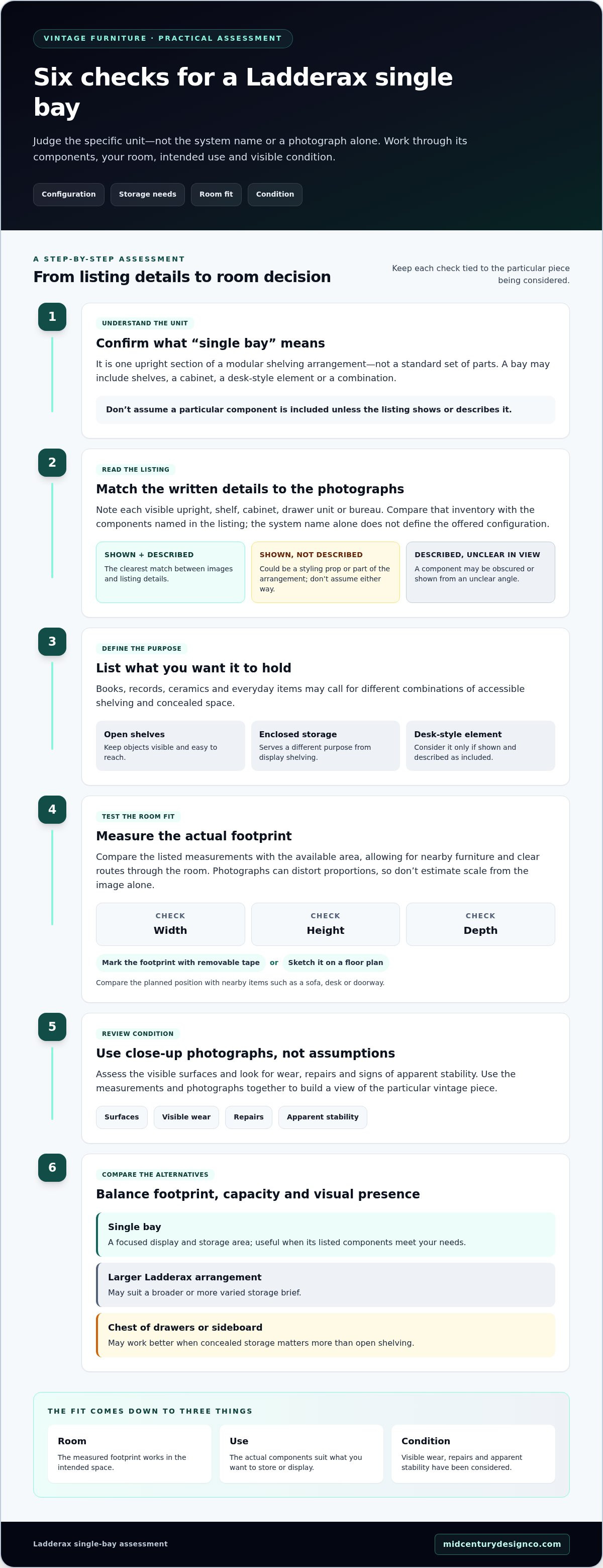
Start with evidence, not assumptions. For a Ladderax single bay unit, consider the measurements, component details and photographs together, then note what they show about fit and condition. Age can give a vintage piece warmth and character, but it is distinct from damage that may affect its appearance or everyday use.
Check dimensions, photographs and listed contents
Work through these checks in order. Keep notes as you go, especially when comparing more than one piece.
- Record the measurements. Note the stated width, height and depth, then compare each with the space you’ve measured at home. Check the depth against nearby furniture and the width against the wall area you intend to use.
- Match components to the description. Use the written listing to establish which uprights, shelves, cabinets or other elements are included. Don’t assume that a component shown in a different Ladderax arrangement comes with this unit.
- Review the full view and close-ups. A clear image of the complete unit helps you understand its overall appearance; close-ups can reveal details a distant photograph conceals. Look across the surfaces and individual elements rather than relying on one flattering angle.
- Look for visible wear or damage. Notice scratches, marks, chips, repairs, worn areas and differences in colour or finish between components. These may be part of a vintage piece’s history, but their extent matters to how you’ll feel about it at home.
- Consider apparent stability. Look for anything visibly out of alignment, leaning or uneven, and check whether the photographs show all the parts needed for the described arrangement. Images can’t establish how a unit feels in person, so don’t treat appearance alone as proof of stability.
If measurements are absent or photographs leave a component unclear, you don’t have enough information to make a confident comparison. Keep that uncertainty visible in your decision rather than filling it with assumptions.
Understand condition without assuming every mark is a fault
Patina, small surface marks and subtle changes in colour may contribute to a piece’s vintage character. Damage is a separate consideration: a deep crack, a loose-looking element or an uneven finish may affect how the unit looks or works. Notice whether wear is consistent across the piece or concentrated in one area. Differences between components may reflect their separate histories, but photographs alone can’t explain the cause.
For a broader perspective on recognising original mid-century furniture, compare the details with Identifying Original Mid Century Furniture Pieces. Use that context alongside the evidence for this particular unit. No single visual detail should replace a considered assessment of the whole piece.
Explore the original vintage Staples Ladderax systems available from The Mid Century Design Co. Choose a piece whose visible character and documented details feel right for your home.
Choosing an Authentic Ladderax Single Bay for a Thoughtful Home
A thoughtful choice brings several details together: the unit’s dimensions suit the room, its components serve your routine, and its condition feels acceptable to you. Appearance matters, but it shouldn’t be the only consideration. A Ladderax single bay unit works best when it has a clear purpose in your home and its vintage character complements the furniture around it.
Make the final decision against your room and routine
Return to your measurements and the way you intend to use the piece. Compare the exact configuration shown in the listing with what you want to store or display. If the shelves offer space for books and objects but your priority is keeping everyday items out of sight, decide whether the pictured arrangement genuinely meets that need.
Then picture the unit alongside your existing furniture. A restrained bay might sit comfortably beside a desk or chair, while a more visually assertive arrangement could become a focal point against a quieter wall. Consider colour, materials and scale, as well as whether you enjoy having objects on display. The right choice should feel considered, not squeezed into a room simply because the piece is striking.
Condition is part of that judgement. Look again at the visible surfaces and details, and decide whether their signs of age meet your expectations. Original vintage furniture carries a history in its materials and finish; choosing it means appreciating the particular piece as it is, rather than imagining a different one.
Explore original vintage Ladderax and related furniture
The Mid Century Design Co. curates and sells original vintage mid-century furniture, including Staples Ladderax systems. The collection focuses on authentic vintage pieces rather than modern reproductions. This history can bring depth to a room, while the unit still needs to earn its place through everyday usefulness.
For styling inspiration, explore How to Style Mid Century Modern Furniture: Debunking the Museum Myth. It’s a useful prompt to think beyond a period-perfect setting: vintage furniture can sit naturally among personal objects and furnishings from different eras, giving a room a more individual feel.
Before deciding, make one final check: do the measurements work, do the listed components suit your routine, and does the observed condition feel right? If each answer is yes, you can choose with confidence in both the function and character the piece brings home.
Explore the vintage furniture collection.
Choose a Piece That Feels at Home
Imagine how the piece will live with you, not simply how it looks in a listing. A well-chosen vintage shelving unit can give favourite books, collected objects or everyday essentials a thoughtful place, while adding a distinctive note to the room. Let your routines guide the decision, and leave space for your own character to shape the arrangement.
A Ladderax single bay unit needn’t solve every storage need to be worthwhile. Its value may lie in serving one clear purpose with presence and a sense of design history. Choose a configuration that feels useful now and at ease among the pieces you already love.
The Mid Century Design Co. curates authentic vintage mid-century furniture, including Staples Ladderax systems, for homes that appreciate original design. If you’re ready to find a piece with its own history and character, explore the vintage furniture collection.
Frequently Asked Questions
Is a Ladderax single bay unit enough storage?
It can be, if you have a focused storage or display need. A Ladderax single bay unit might suit a small book collection, a few ornaments or a selection of records, but may feel limited if you want to house several categories of belongings. Consider what you reach for daily, too: frequently used items may need to be easier to access than pieces intended mainly for display.
Can Ladderax single-bay components be rearranged?
Some Ladderax arrangements are described as reconfigurable, but that doesn’t mean every individual vintage unit can be rearranged in the same way. A particular listing may describe shelves and a bureau arranged in different configurations, for example. Treat that as information about that piece, not a universal feature. If you’re considering changing the layout, base your expectations on the specific components and details shown for the unit.
How do I measure for a Ladderax single bay unit?
Measure the available height, width and depth, then compare them with the dimensions given for the exact unit. Include practical details that can affect placement, such as skirting boards, a nearby desk or the swing of a door. Consider the whole wall, not just the empty patch, to judge how the unit will sit beside existing furniture.
What should I check when buying a vintage Ladderax unit?
Look at the complete piece and its details, including the surfaces, joints and visible finish. Compare the photographs with the written description so you can distinguish the included components from objects used for styling. Close-ups may show marks, wear or differences between elements. Consider whether any visible damage is acceptable for your intended use, and don’t assume an age-related mark will be repaired or refinished.
How much does a Ladderax single bay unit cost?
There isn’t one price that applies to every vintage unit. The asking price may reflect its particular components, condition and completeness, as well as the seller’s assessment. To compare listings meaningfully, look at pieces with a similar configuration and condition rather than relying on the Ladderax name alone. The current listing for a specific unit gives its asking price and described contents.
Is every Ladderax single bay unit the same size?
No. “Single bay” describes one section of a modular arrangement, not a standard set of dimensions. Individual pieces can differ, so a measurement quoted for one listing shouldn’t be treated as a specification for another. Check the stated height, width and depth for the exact unit you’re considering, and remember that a photograph’s perspective can make proportions difficult to judge.
What should I do if a Ladderax listing does not show every component clearly?
Don’t assume an obscured or unpictured component is included. Make a short inventory of the elements you can identify in the photographs, then compare it with the written description. Note any gap, such as a shelf mentioned in the text but not visible in the images. If that detail affects your decision, base it on clear information about that listing rather than extrapolating from another unit.