

Mid Century Bookcase UK: How to Choose an Authentic Vintage Piece
The most beautiful mid-century bookcase may still be the wrong one for your home. A striking silhouette can catch your eye, but choosing a mid century bookcase UK buyers can live with means looking beyond appearance to authenticity, condition and practical fit. The right piece should suit your room and work for the books and objects you need to store.
It’s understandable to feel unsure when a listing has only a few photographs or a broad description such as “vintage”. Period-inspired styling alone doesn’t confirm that a bookcase is an original vintage piece, and age tells you little about hidden wear or usable storage. This guide explains how to consider design details, materials, construction and condition, then compare dimensions and layout with your space. You’ll also find questions to ask before making an enquiry, so you can weigh up each option with a clearer sense of how it might work in your home.
Key Takeaways
- Recognise mid-century design cues, but don’t treat any single feature as proof of a piece’s age or origin.
- Consider provenance, construction and design details together when assessing whether a vintage bookcase is authentic.
- Compare open shelves, cupboards and modular systems with your storage habits, room dimensions and access routes.
- Before choosing a mid century bookcase UK listing, check its exact measurements, photographs and condition details, then prepare questions for the seller.
- Bring your style preferences, practical needs and condition checks together to find a piece that feels at home in your space.
What makes a mid-century bookcase distinctive, and what should it do?
A mid-century bookcase is vintage storage shaped by design principles associated with the mid-century period, where purposeful function meets a considered silhouette. It’s primarily designed to store and give access to books, though its shelves may also display ceramics, photographs or treasured objects. A mid century bookcase UK shoppers consider should do both jobs well: bring character to a room and suit the way they use storage every day.
There isn’t one defining leg, timber or finish that proves a piece belongs to the period. Makers, countries and construction methods varied, and mid-century design developed across several decades. The Mid-century modern movement is often associated with clean lines and simple forms, but assess an individual bookcase through its details as a whole rather than judging it by one fashionable feature.
Bookcase, cabinet or shelving system: what is the difference?
A bookcase usually has accessible shelves intended for books. A cabinet may combine open display shelves with doors or drawers, keeping some belongings out of sight. Modular shelving is built from components arranged to suit a space or storage need. It’s one option for vintage storage, not another name for every bookcase. Staples Ladderax, for example, is a modular storage system offered by The Mid Century Design Co.
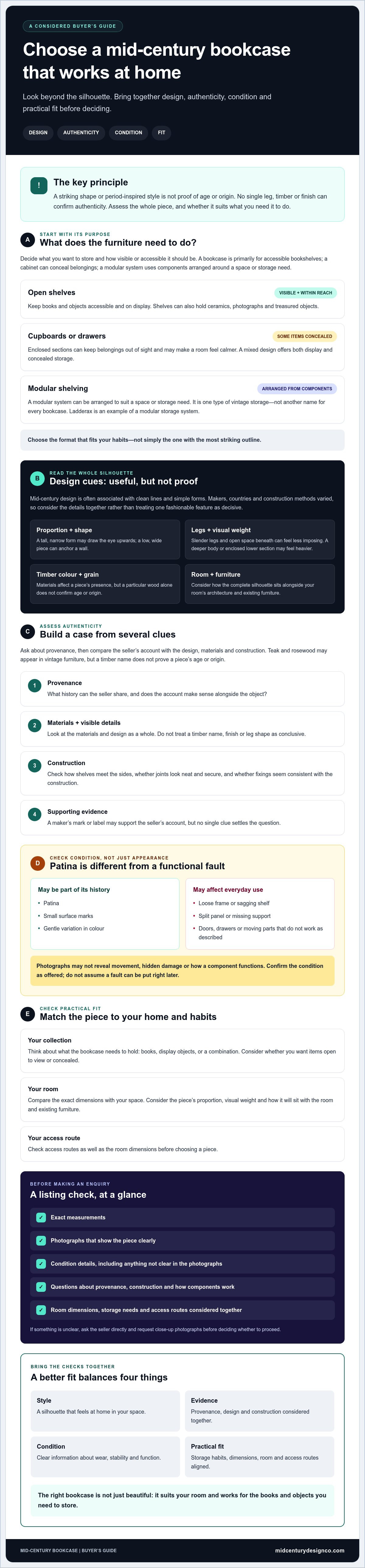
Start by deciding what the furniture needs to hold. Open shelves keep books and objects visible and within reach; enclosed sections can make a room feel calmer by concealing items. A mixed design offers both, whilst a modular arrangement may suit changing collections or display needs. Choose the format that fits your habits, not just the one with the most striking outline.
The design details that shape the look
Consider proportion, leg shape, materials and visual lightness together. Slender legs and open space beneath a cabinet can make a piece feel less imposing; a deeper body or enclosed lower section may give it greater visual weight. Timber colour and grain also affect its presence, but neither a particular wood nor a tapered leg alone confirms age or origin.
Think about how the whole silhouette will sit alongside your room’s architecture and existing furniture. A tall, narrow form may draw the eye upwards, whilst a low, wide piece can anchor a wall. In a room with substantial furniture, an open design may bring balance; amongst lighter pieces, a cabinet with concealed storage can add warmth without competing for attention. The piece needs character, but it also needs to suit what you’ll ask it to hold.
How to assess authenticity, materials and condition in a vintage bookcase
Assess authenticity by bringing several clues together, not by relying on an appealing silhouette or a timber name in a listing. Ask about provenance, then compare the seller’s account with the piece’s design, materials and construction. Background reading, such as Britannica’s overview of What is mid-century modern, can help you understand the movement, but it can’t verify the history of an individual item.
Teak and rosewood are among the materials buyers may encounter in vintage furniture, but being told a piece uses either doesn’t prove its age or origin. A mid century bookcase UK listing should give you enough information to assess the whole object, including details that aren’t immediately visible in a styled photograph.
Which materials and construction details should you inspect?
Check the veneer and edges for lifting, chips, mismatched repairs or wear that seems inconsistent across the piece. Examine how the shelves meet the sides, whether the joints appear neat and secure, and whether the fixings seem consistent with the construction. If possible, ask for photographs of the back, underside, shelf supports and any maker’s mark or label. These details may support the seller’s account, but no single clue is conclusive.
How to read wear without overlooking a problem
Patina, small surface marks and gentle variation in colour can be part of a vintage piece’s history. They’re different from a loose frame, sagging shelf, split panel or missing support, which may affect everyday use. Check whether doors and drawers open smoothly and whether adjustable shelves or other moving components work as described.
Photographs can’t replace clear condition information. They may not show movement, hidden damage or how a component functions. Ask the seller directly about anything unclear and request close-ups before deciding whether to proceed. Don’t assume a fault can be put right later. Confirm the condition as offered and consider whether you’re comfortable with it as it stands.
For a practical assessment, check:
- Whether the case feels stable and the shelves sit securely.
- Whether joints, veneer, fixings and the back are intact or show repairs.
- Which marks are cosmetic, and which could affect function.
- Whether doors, drawers and adjustable parts operate as intended.
- Whether the seller can explain the piece’s history and provide clearer images.
If you’re comparing original vintage storage, you can browse the vintage storage collection and apply the same checks to any piece that interests you.
Which vintage bookcase suits your room, collection and storage habits?
The right choice needs to work beyond the photograph. Think about what you’ll store, how often you’ll reach for it and how much visual presence you want the furniture to bring to the room. A broad, open bookcase can make a collection part of the décor, whilst a cabinet may keep paperwork and everyday clutter out of sight. A modular system offers another approach, with components arranged differently from a single fixed piece.
Open shelves or enclosed storage: which fits your everyday use?
Open shelves make books and objects easy to see and access, but they put everything on display and need regular dusting. Enclosed storage can keep paperwork, cables or other belongings out of view. Before deciding, estimate the space you need for books, decorative objects and household items. Consider their weight too, and check that the shelves are suitable for the contents you intend to store.
| Format | Benefits | Trade-offs | May suit |
|---|---|---|---|
| Open bookcase | Easy access; books and objects become part of the display. | Contents remain visible and collect dust. | Readers who enjoy arranging and regularly using their collection. |
| Enclosed cabinet | Conceals belongings and can create a calmer-looking room. | Contents are less visible and may be less convenient to reach. | Homes needing discreet space for paperwork or mixed household storage. |
| Modular shelving | Components can offer a different arrangement from a fixed bookcase. | Check the configuration and intended use carefully; it may not function like a conventional bookcase. | Those who want adaptable display and storage. |
Could modular vintage shelving be the more flexible choice?
Modular furniture is worth considering if a fixed bookcase doesn’t match your wall or changing storage needs. Staples Ladderax is a modular storage category, but it’s best understood as a shelving system rather than assumed to be a conventional bookcase. For further background, look for a Staples Ladderax shelving unit buying guide.
Measure the space before choosing a piece. Record the wall width, ceiling height and available depth, then check the route into the room, including doorways, stairs and tight turns. Compare those measurements with the item’s full dimensions, allowing for skirting boards and any space needed to open doors. These checks help you judge whether a mid century bookcase UK listing can fit both your room and your routines, rather than simply looking right online.
What to check before buying a mid-century bookcase online in the UK
A careful listing check can reveal whether a piece suits your home as well as your eye. Before deciding on a mid century bookcase UK listing, work through the details and pause if essential information is missing. Clear answers let you compare options without relying on a handful of carefully styled photographs.
Which questions help clarify a listing?
Ask specific questions wherever the description or photographs leave room for doubt. For modular shelving, confirm exactly which shelves, uprights, supports and other components are included. The pictured arrangement may not show everything that comes with the piece, so check the contents rather than relying on appearance alone.
- Measure your intended space. Confirm the bookcase’s exact height, width and depth with the seller, then compare those figures with your room and access route.
- Request useful photographs. Ask for clear views of the back, underside, joints, shelf supports and any areas described as damaged. Close-ups can show details that a full-room image obscures.
- Clarify materials and construction. Ask what the seller knows about the materials, fixings, maker or provenance. Assess those details together rather than treating one claim as proof.
- Ask about condition and function. Find out about repairs, instability, missing parts, loose shelves and any other known issues. If the piece has doors or drawers, check that they open and close as intended.
- Confirm what’s included and what happens next. For modular furniture, request an itemised list of components. Before committing, ask the seller to confirm the delivery arrangements and any relevant terms.
How to plan placement and styling
Measurements matter both for the room and for the journey into it. Check doorways, hallways, stairs and tight turns against the item’s dimensions. At the final position, consider the floor level, skirting boards, wall clearance and whether doors or drawers will have room to open. Plan how you’ll use the shelves, so frequently reached-for books aren’t awkwardly placed.
Once the practical details are clear, consider how the bookcase will sit amongst your furniture and finishes. For further inspiration, explore how to style mid-century modern furniture as part of your room planning.
Ready to compare original vintage storage with these checks in mind? Explore the curated vintage furniture collection, and confirm the details of any individual piece that catches your eye.
Find an authentic vintage bookcase that feels at home
A good choice brings several considerations together: the design you’re drawn to, the measurements of your room, the storage you need and the condition you’re comfortable accepting. The most characterful piece isn’t necessarily the best fit if it can’t hold your books or suit the space. If you’re considering a mid century bookcase UK listings offer, a clear shortlist can keep both appearance and function in view.
A considered shortlist, not a rushed purchase
Note down your preferred format, the maximum dimensions that will fit, what you plan to store and any condition details that would be deal-breakers. Compare each potential piece against the same points rather than relying on a first impression. A useful shortlist might include exact measurements, storage layout, visible wear and questions still needing an answer.
The Mid Century Design Co. curates authentic vintage furniture for those who value original pieces with a past. It focuses on vintage furniture rather than modern reproductions, and doesn’t offer restoration services. Check the current listing for each item, and ask the retailer to confirm its specifications and condition before making a decision. Stock and details can change, so don’t assume a particular bookcase is available or that information from another listing applies to it.
Bring vintage character into a contemporary home
A vintage bookcase can lend warmth and texture to a contemporary room. Its grain, patina and distinctive outline can bring a quiet sense of history amongst newer furnishings. Let that character have room to speak, but keep everyday use at the centre of your decision. Consider whether the shelves suit your books and objects, whether the piece feels balanced in the room, and whether its storage will remain useful beyond the initial styling.
There’s no need to rush towards a perfect-looking arrangement. Take time to compare the details, picture the piece in its intended place and check unanswered questions with the retailer. When you’re ready to explore, Explore authentic vintage furniture.
Choose a vintage piece with confidence
The right bookcase brings design and daily life together. Consider provenance, construction and condition as a whole, then check the measurements against your room and the route into it. Most of all, choose a format that suits what you’ll store, whether that means open shelves, concealed space or a modular arrangement.
A thoughtful search for a mid century bookcase UK buyers can enjoy for years doesn’t need to be rushed. The Mid Century Design Co. specialises in authentic vintage furniture rather than modern reproductions, with Staples Ladderax systems among its storage offerings. Check current listings for availability, dimensions and condition, and ask for any details you need before deciding.
A well-chosen vintage piece can bring warmth, character and a sense of history into a contemporary home whilst still earning its place through practical use. Explore authentic vintage furniture and take your time finding a piece that feels right for your space.
Frequently Asked Questions
What makes a bookcase mid-century modern?
A mid-century modern bookcase reflects design ideas associated with the mid-century period, including clean lines, purposeful form and an emphasis on function. It might have an open, visually light shape, simple geometry or carefully considered timber details. There’s no single feature that proves a piece belongs to the period. Makers and designs varied, so assess its overall proportions, construction and history rather than relying on one detail.
How can I tell whether a vintage mid-century bookcase is authentic?
Assess the bookcase using several clues together: any known provenance, its construction, materials, design and signs of age. Ask about the maker or labels, and look closely at joints, fixings, veneer and the reverse of the piece. Teak or a period-inspired silhouette alone doesn’t confirm age or origin. If you’re unsure, request further details and clear close-up photographs before deciding.
What should I check when buying a vintage bookcase online?
For a mid century bookcase UK listing, confirm the exact height, width and depth, then compare them with the intended space and access route. Check photographs of the back, shelves, joints and any damaged areas, and ask about stability, repairs and missing parts. If it has doors, drawers or adjustable components, confirm they work. For modular shelving, establish exactly which shelves, supports and fittings are included.
Are mid-century bookcases usually made from teak?
Teak is a material you may encounter in vintage mid-century furniture, but it isn’t a defining feature of every bookcase from the period. Designs vary by maker and origin, and other materials may be used. A listing’s timber description is useful, but it can’t establish a piece’s age or authenticity on its own. Consider the material alongside construction, design details and any available provenance.
Is Staples Ladderax suitable for storing books?
Staples Ladderax is a modular storage system, so whether a particular arrangement suits your books depends on its configuration and included components. Check the dimensions and condition of the shelves, how they’re supported, and whether the seller can confirm their suitability for the books you plan to store. Don’t assume every system is configured as a conventional bookcase; assess the individual arrangement before choosing.
How do I measure a room for a vintage bookcase?
Measure the available wall width, ceiling height and depth, allowing for skirting boards and any space needed to open doors or drawers. Then measure the access route, including doorways, hallways, stairs and tight turns. Compare these figures with the bookcase’s exact external dimensions, not an estimate from a photograph. Consider floor level and wall clearance too, so the piece fits its position as well as the route into the room.
Can a vintage mid-century bookcase work in a contemporary home?
Yes. A vintage bookcase can bring warmth, texture and a sense of history to a contemporary interior. Consider how its proportions and finish will sit with the room’s architecture and existing furniture, then make sure its shelves or enclosed storage suit your everyday needs. Balancing a distinctive silhouette with useful function helps the piece feel like a natural part of the home, rather than a decorative object without a purpose.