

Mid Century Furniture Dealers UK: A Thoughtful Guide to Finding Original Design
What makes a mid-century find right for your home? It may be less about a famous name and more about the piece’s craftsmanship, character and practical fit. When searching among mid century furniture dealers UK, it can be difficult to distinguish original vintage design from a reproduction or a listing with little detail. Knowing what to look for makes the search more considered.
A specialist dealer offers a focused way to explore original furniture, with a selection shaped around design and function. The Mid Century Design Co. is an independent vintage furniture specialist, with pieces for storage, dining, living, bedroom and office spaces, including Danish furniture and Staples Ladderax systems.
This guide explains what to look for in a specialist dealer, which details can help you assess a piece, and how specialist dealers compare with marketplaces. You’ll also find practical steps for narrowing your search by room, use and measurements, plus an introduction to The Mid Century Design Co.’s collection.
Key Takeaways
- A specialist dealer’s period focus and considered curation can make it easier to explore original mid-century design than browsing broad listings alone.
- Assess a piece through several clues together, including its materials, construction, proportions and design details, rather than relying on one feature.
- When comparing mid century furniture dealers UK, consider how clearly their focus and range align with the room and function you have in mind.
- Start with your room, intended use and available measurements to narrow the search before comparing individual pieces.
- The Mid Century Design Co.’s vintage furniture spans storage, dining, living, bedroom and office needs, with Danish furniture and Staples Ladderax systems among its offerings.
What makes a mid-century furniture dealer worth discovering in the UK?
Some furniture simply fills a space. A well-made mid-century piece can also bring practical design, thoughtful craftsmanship and the presence of another era into everyday life. Its appeal lies in how it works as well as how it looks: a dining table can become a gathering place, while a sideboard can add useful storage and warmth to a room.
A mid-century furniture dealer focuses on furniture from this design period and the ideas behind it. A specialist dealer helps shoppers discover original period furniture through a focused selection, with design and function considered alongside appearance. It helps to distinguish three commonly used terms: “vintage” describes an item’s age, “mid-century” refers to a design period, and “original” means the piece was made during that period rather than being a later interpretation. A label alone doesn’t prove a piece’s age or authenticity.
What does “mid-century” mean when browsing furniture dealers?
“Mid-century” commonly refers to a design period around the middle of the twentieth century, though the dates used can vary by context. The broader Mid-century modern movement is often associated with clean lines, considered proportions and practical forms for everyday living. There isn’t one defining look: makers, materials and design approaches differ. Tapered legs and warm wood may be familiar features, but they aren’t enough on their own to identify a piece as mid-century.
How does a specialist dealer differ from a broad marketplace?
A broad marketplace brings together furniture from many eras, categories and sellers. That breadth can be useful if you’re still exploring styles or furnishing several rooms. A specialist has a more defined period focus. Its curation can help you browse by furniture type and compare related designs, making a mid-century search more directed without limiting it to one maker or look.
If you’re considering storage, the guide to authentic mid-century modern sideboards takes a closer look at a versatile furniture type. Whichever route you choose, look beyond the headline label. Consider how the piece is made, what it can do and whether its proportions and character suit your space. That turns the search from a hunt for a period style into a way to find design with lasting purpose.
Mid-century specialists and furniture marketplaces: what sets them apart?
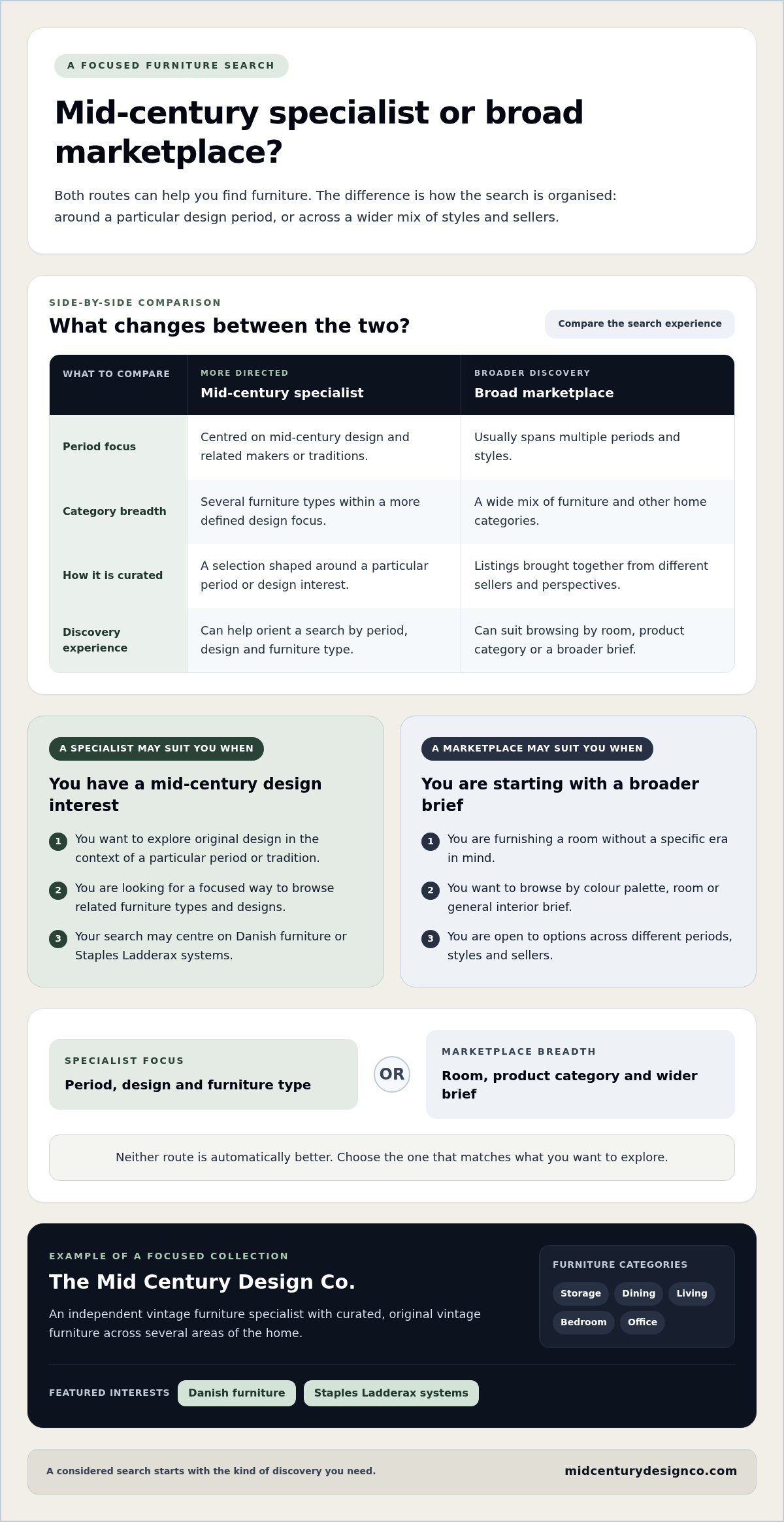
Specialist dealers and broad marketplaces organise the search differently. A marketplace gathers listings across eras, sellers and categories; a specialist focuses more closely on a particular period or design tradition. Neither route is automatically better. The practical question is which makes it easier to explore the furniture you want and understand the context of each piece.
| What to compare | Mid-century specialist | Broad marketplace |
|---|---|---|
| Period focus | Centred on mid-century design and its related makers or traditions. | Usually spans multiple periods and styles. |
| Category breadth | Several furniture types within a more defined design focus. | A wide mix of furniture and other home categories. |
| Curation | A selection shaped around a particular period or design interest. | Listings brought together from different sellers and perspectives. |
| Discovery experience | Can help orient a search by period, design and furniture type. | Can suit browsing by room, product category or broader brief. |
When does a specialist mid-century dealer suit your search?
A defined period focus can help if you’re looking for original design and want to explore a tradition in context, rather than filtering a much broader selection. For example, you might want to focus on Danish furniture or Staples Ladderax systems. The Mid Century Design Co. specialises in curated, original vintage furniture across storage, dining, living, bedroom and office categories, bringing a mid-century focus to a varied range of home needs.
A focused collection can also encourage a closer look at furniture as design history. The Victoria and Albert Museum’s world-class furniture collection offers another perspective on how furniture reflects changing materials, ideas and ways of living.
When might a broad vintage marketplace feel more useful?
A broader platform may suit you if you’re starting with a room, colour palette or general interior brief rather than a specific era. Room and product filters can help narrow a wide selection, while different sellers and periods may introduce options you hadn’t considered. The trade-off is that you’ll compare pieces from different design contexts. Choose the route that matches your search: breadth for open-ended discovery, or specialism for a more directed mid-century exploration.
If a focused collection suits your search, explore curated original vintage furniture and consider how its different categories might work in your home.
How can you assess an original mid-century piece before choosing it?
A familiar silhouette may catch your eye, but appearance alone can’t establish a piece’s age or originality. Assess the furniture as a whole: its materials, construction, proportions, hardware and signs of use should make sense together. When comparing mid century furniture dealers UK, read each item description alongside the photographs rather than relying on a style label or a single detail.
Assess the whole piece and its supporting description, not one detail in isolation. These clues can help you evaluate a listing, but they aren’t a substitute for fuller context about an item’s history.
Which details help you understand a piece’s period and character?
Start with what you can observe, then weigh the clues together. Clean lines or tapered legs may suggest a mid-century influence, but similar forms also appear in later furniture. Timber contributes colour and grain, yet the wood alone can’t prove when a piece was made. Consider how the form, proportions and materials work together, and whether the joinery and hardware suit the overall design.
- Form and proportions: Notice the balance between the body, legs, handles and other details.
- Construction: Look at visible joints and how drawers, doors or shelves are assembled.
- Materials and finish: Consider the timber, veneer, hardware and surface treatment as a connected whole.
- Description and photographs: Check that the written details match what you can see, and look for clear views of construction and condition.
A maker’s mark may help place a piece, but its absence doesn’t rule out originality. Treat a firm claim about age or maker as a conclusion that should be supported by more than visual resemblance.
How should you think about condition and signs of age?
Wear can be part of a vintage piece’s character, but distinguish surface marks from issues that could affect everyday use. Examine the moving and weight-bearing parts. Do doors and drawers appear aligned? Do they seem to open and close smoothly according to the photographs or description? Do visible joints look sound? Check surfaces for scratches, stains, lifting veneer or other damage, and note whether the description explains its extent.
Photographs can show the general condition, though they may not reveal every detail. Look for close views where available and read the description for specific mentions of wear or repairs. Patina may suit a lived-in room, but the condition should still fit how you intend to use the furniture. For ideas on bringing vintage pieces into a relaxed contemporary interior, explore how to style mid-century modern furniture.
How to narrow down UK mid-century furniture dealers for your home
A beautiful piece needs to work in the room as well as catch your eye. Before comparing mid century furniture dealers UK, decide what the furniture should do, where it will sit and how it will fit into your daily routine. This gives your search a clear direction without restricting you to a single style or category.
Start with the room, measurements and purpose
Work through these steps in order. A few measurements and practical decisions can make a broad search easier to manage.
- Define the room. Picture where the piece will sit and what surrounds it. A dining area, bedroom and living room each call for different proportions and functions.
- Identify its purpose. Decide whether it needs to store dinnerware, support a work routine, provide a place to gather or create a focal point.
- Shortlist categories. Match the purpose to furniture types such as a dining set, desk, bedside cabinet, chest of drawers or wider storage. Keep a second category in mind if more than one could meet the same need.
- Compare individual pieces. Check the stated width, depth and height against the available space. Allow room for doors, drawers, chairs and comfortable movement around the furniture.
Measure the route into the room as well as the space where the item will sit. Doorways, staircases and tight turns can affect whether a piece is practical to bring in. Then consider its visual role: should it draw the eye or sit quietly alongside existing furniture?
Match furniture categories to the way you live
Think about your routines, not just the room name. A dining set should suit everyday meals as well as hosting. Consider how many people need to sit comfortably and whether separate dining chairs would give you more flexibility. In a bedroom, bedside cabinets keep useful essentials close, while a dressing table can create a dedicated place to get ready. A desk may support focused work, and storage can help keep a living space composed.
If you’re furnishing a dining space, explore this guide to authentic mid-century dining furniture for ideas on tables and chairs. Apply the same practical checks as you browse: compare dimensions, function and how each design will sit with the furniture you already own.
A quick shortlist checklist: room identified; function clear; category chosen; available space and access measured; intended use considered; focal point or supporting role decided.
Ready to turn your shortlist into a considered search? Explore original mid-century furniture by category.
Discover original mid-century furniture at The Mid Century Design Co.
For readers comparing mid century furniture dealers UK, The Mid Century Design Co. offers a focused starting point: an independent specialist curating authentic vintage furniture and décor. Its collection centres on original mid-century pieces, bringing the search back to what makes furniture rewarding to live with: its design, practical purpose and the character of its materials and form.
The range spans several parts of the home, so you can explore furniture by the role it might play rather than by style alone. Storage, a dining table or a desk can each bring mid-century character into a room in a different way.
Explore furniture for living, dining and storage
For living spaces, sideboards and other storage provide places to organise everyday belongings, while coffee tables and occasional tables can give a room a natural centre. Dining sets and dining chairs become part of the rhythm of shared meals, from everyday use to hosting.
In the bedroom, chests of drawers and wardrobes provide storage, while bedside cabinets and dressing tables support personal routines. Desks and office chairs extend the collection to working spaces. Across these categories, the aim is to find an original piece that feels at home in your room, not to impose a single mid-century look on every space.
Find character in Danish furniture and Staples Ladderax
Danish furniture and Staples Ladderax systems are distinctive parts of the collection. Danish designs offer another perspective on the wider mid-century story, while Staples Ladderax systems form a dedicated modular storage category. Both invite you to consider how design and practical function can work together in your home.
Original vintage furniture brings an object with a past into a present-day setting. Its lines may create a focal point; its storage or work surface may simply make daily life more considered. Either way, the right piece can feel useful and individual, with character shaped by its design and history.
Take a considered look through the collection and picture what might suit your space. Explore original mid-century furniture and find a piece whose function and visual presence feel right for your home.
Find a piece that belongs in your home
Choosing among mid century furniture dealers UK is easier when you know what matters most: a focused period selection, details that support a piece’s originality, and furniture suited to your room, measurements and daily routines. Consider construction, materials, proportions and condition together, then weigh specialist curation against the broader browsing experience of a marketplace.
The Mid Century Design Co. curates authentic vintage furniture and décor for living, dining, storage, bedroom and office spaces. Danish furniture and Staples Ladderax systems add further character to a collection centred on original vintage design.
The right find needn’t simply fill an empty corner. It can bring function, craftsmanship and a distinctive sense of history into your home. Explore original mid-century furniture at The Mid Century Design Co.
Frequently Asked Questions
What makes a mid-century furniture dealer different from a general vintage shop?
A mid-century furniture dealer focuses on furniture from this design period, while a general vintage shop may span many eras, styles and product types. That specialism can make it easier to browse by design tradition or furniture category and understand how pieces relate to the period. When comparing mid century furniture dealers UK, look for a clear focus and item descriptions that give useful context, rather than relying on a mid-century label alone.
How can I tell whether mid-century furniture is original?
No single detail proves a piece is original. Consider its age, materials, construction, joinery, hardware, finish, proportions and signs of use together, then compare those clues with the item’s description and photographs. A maker’s mark can help identify a piece, but its absence doesn’t rule out originality. Treat a resemblance to a familiar style as a starting point, not proof, and remember that images alone may not provide enough context for a firm conclusion.
Is mid-century furniture always made from teak?
No. Teak is associated with some mid-century furniture, but the period includes a variety of woods, veneers, materials and finishes. Timber influences a piece’s colour, grain and character, but can’t establish its age or originality by itself. Consider the material alongside the construction, proportions and design details. A well-considered piece can reflect mid-century design without using teak.
Can I mix original mid-century furniture with contemporary interiors?
Yes. Original mid-century furniture can sit comfortably in a contemporary home because its function and form don’t need to dictate the style of the whole room. Try one distinctive piece, such as a sideboard or coffee table, alongside simpler modern furnishings, or add dining chairs around a contemporary table. Consider scale, colour and the room’s existing materials so the vintage piece feels connected rather than isolated.
What should I look for when assessing the condition of vintage furniture?
Check both visible wear and the parts that affect everyday use. Look closely at surfaces for scratches, stains or lifting veneer, and see whether doors and drawers appear aligned. Consider the condition of the joints and whether the piece seems sound for its intended purpose. Signs of age can contribute to character, but descriptions and photographs should help you understand their extent. Read both together, and don’t assume every mark is simply patina.
Which mid-century furniture categories are useful to explore first?
Start with the room and the function you need. Sideboards, chests of drawers and wardrobes offer storage; coffee tables and occasional tables can serve living spaces. For dining, consider dining sets and chairs, while desks, bedside cabinets and dressing tables support specific routines. The Mid Century Design Co. has categories across living, dining, storage, bedroom and office furniture, so you can begin with a practical need and then consider design.
Are Staples Ladderax systems mid-century furniture?
Staples Ladderax systems are a modular storage category associated with mid-century furniture design. Their shelving format offers a distinctive way to organise and display belongings, as well as a strong visual presence. The Mid Century Design Co. includes Staples Ladderax systems in its original vintage furniture collection. As with any vintage piece, consider its condition, intended use and fit with your room when deciding whether it suits your home.