

Mid Century Furniture Investment Value: What Makes a Piece Worth Keeping in 2026?
A beautiful vintage sideboard isn’t automatically a sound investment. The mid century furniture investment value of a piece rests on more than its clean lines or age: condition, authenticity, craftsmanship and future demand all matter, and none can guarantee a profit on resale.
It’s easy to see why these pieces endure. Thoughtful proportions, warm timber and practical design can bring character to a home for decades, while genuine vintage furniture offers an alternative to buying newly produced. But loving a piece, using it every day and selling it for more are different kinds of value.
This guide will help you weigh the practical, aesthetic and potential resale value of a vintage find. You’ll learn what to look for in its condition, authenticity, maker and market appeal, and how changing tastes and resale costs can affect ownership. The aim isn’t to promise appreciation, but to help you judge an asking price clearly and choose a piece you’ll value even if its market price doesn’t rise.
Key Takeaways
- Think of mid century furniture investment value as more than potential resale: consider how well a piece serves your home and how much you enjoy its design.
- Weigh condition, originality, maker or provenance, usability and buyer demand together. A recognised name alone doesn’t settle a piece’s worth.
- Before buying, define how you’ll use the furniture, inspect its condition and history, compare it with similar pieces, then set a price you’re comfortable with.
- Care can help preserve a piece’s usefulness, but changing tastes and uncertain demand mean future resale value can’t be promised.
- The Mid Century Design Co. curates genuine vintage furniture originally produced in the 1950s or 1960s, preserving original character through minimal restoration.
What does mid century furniture investment value really mean?
Mid century furniture investment value is the worth a piece brings through everyday use, design enjoyment, continued use of existing materials or the possibility of resale. These forms of value can overlap, but they aren’t interchangeable. A dining set that works beautifully for family meals may be a worthwhile purchase even if its resale price never rises. A rare piece may interest collectors yet be less practical for your home.
Lasting desirability means a design continues to appeal and serve a purpose. It doesn’t mean the piece will deliver a predictable financial return. Resale depends on the individual item’s condition, originality and appeal to buyers at the time, as well as the price someone is willing to pay. A broad label such as “mid-century” describes a design period, but it can’t tell you what one particular sideboard is worth.
Practical value is what a piece gives you at home; resale value is what a future buyer may offer, and that remains uncertain.
Is vintage furniture a financial investment or a lasting purchase?
Furniture is lived with. It occupies space, holds belongings and gathers the small marks of daily use, unlike a purely financial asset held chiefly for a return. Its emotional value might come from its character or the way it makes a room feel; its functional value comes from how well it serves your needs. Resale value is separate: it depends on future demand and the condition in which you sell it.
Even a sought-after vintage design can’t promise appreciation. Before buying, ask whether you’d still be pleased with it if its resale price stayed the same or fell. That simple test keeps the decision grounded in what you’ll live with, rather than a forecast no one can guarantee.
Why mid-century design continues to attract interest
Adaptable proportions, clear forms and visible materials help explain the style’s continuing appeal. A well-scaled chest of drawers can offer storage without overwhelming a room; a timber dining table can bring warmth alongside newer pieces. These qualities may help a design sit comfortably in changing interiors, though interest varies by piece and buyer.
The movement’s wider history and mid-century modern design principles offer useful context for understanding its forms and influence. Yet a style’s cultural presence doesn’t make every example equally desirable. Craft, condition, scale and suitability still shape an individual piece’s appeal.
For room-planning inspiration, explore how to style mid-century modern furniture. It can help you picture how a vintage piece might sit within a lived-in home, rather than treating it as an object to preserve untouched. Consider these questions:
- Does its scale suit the room and the way you use it?
- Do its materials and lines complement the furniture you already own?
- Would you value it for its function and appearance, even without a resale gain?
Your answers give you a personal measure of worth: a balance of usefulness, design and possible future demand, rather than a promise of profit.
Which factors can strengthen or weaken mid century furniture value?
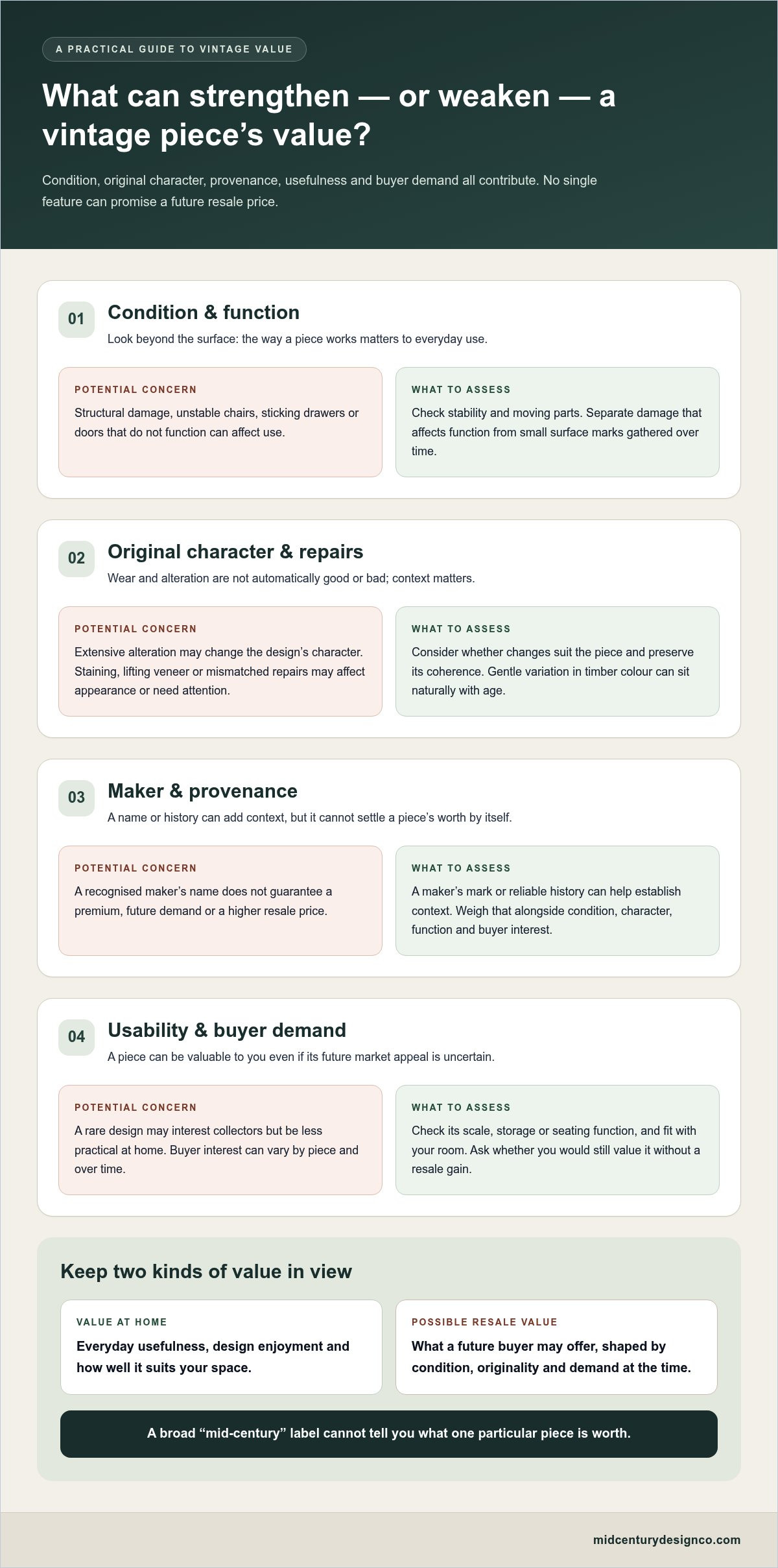
A vintage piece’s value reflects several details working together. Condition affects whether it can be used comfortably; originality helps preserve its design character; maker and provenance can add context; and buyer demand shapes the possibility of resale. These factors don’t carry equal weight for everyone. A sturdy, practical sideboard may be right for a home even if its maker is unknown, while a recognisable name may matter more to a collector looking for a particular design.
No single feature establishes a vintage item’s future resale value. A celebrated label can’t compensate for serious damage or guarantee that buyers will want the piece later. Equally, modest wear doesn’t automatically make furniture undesirable. Consider how its condition, character, function and potential audience fit together.
How do condition and original character affect value?
Start with the parts that make a piece work. A dining chair should feel stable; drawers should open and close; doors should sit properly and function. These details matter because they affect daily use, not just appearance. Damage that compromises structure or prevents a feature from working is different from a small surface mark acquired through years of use.
Patina can tell a story, but it isn’t automatic proof of quality. Gentle variations in colour may sit naturally with timber’s age, whereas extensive staining, lifting veneer or mismatched repairs may affect the look or require attention. There’s no universal rule that all original finishes are preferable to all repairs: what matters is whether changes suit the piece and preserve its coherence.
Extensive alteration can change the character that first drew someone to a design. Its effect on resale depends on the individual piece and the people interested in it. The Mid Century Design Company keeps restoration to a minimum, undertaking it when damage is significant to retain original character rather than make every piece appear newly finished.
Do maker, material and provenance guarantee a higher value?
A maker’s mark or a reliable account of a piece’s history can help establish context. Provenance may strengthen confidence in what an item is or explain why it matters, but it doesn’t guarantee a premium. The item still needs to suit a buyer’s needs and taste, and its condition remains part of the picture. A well-known name alone is no substitute for looking closely at the furniture itself.
Materials can also shape appeal. Teak, for example, is valued for its warm appearance and distinctive grain, but its presence doesn’t promise appreciation or make every teak piece equally desirable. Teak is naturally resistant to moisture, not waterproof, so wipe spills promptly. Apply the same measured approach to other materials: consider how they look, how they’re holding up and whether they fit your intended use.
These overlapping qualities are central to mid century furniture investment value, but they can’t remove uncertainty about future demand. The Mid Century Design Company offers hand-picked genuine vintage furniture, originally produced in the 1950s or 1960s. Choosing vintage can be an eco-friendly alternative to newly produced furniture. These pieces are built to last, though neither quality guarantees a financial return.
How can you assess a vintage piece without assuming it will appreciate?
Assess the furniture before giving it an investment story. A clear sequence helps you judge what the piece offers now, what you know about it and what remains uncertain. Start with your home, not a prediction of future resale.
- Define its intended use. Decide what you need: storage, a desk for regular work or a dining table for everyday meals. A striking piece that doesn’t serve a real purpose may be harder to live with.
- Inspect its condition. Check stability, drawers and doors, surface wear and any repairs. Look for signs of age you’re happy to live with, and distinguish them from damage that affects function or appearance.
- Understand its history. Look for information about its maker, age, materials and previous ownership. Treat documented details as useful context, not a promise of higher value.
- Compare like with like. Look at pieces with genuinely similar age, condition, maker and completeness. A broad search for the same furniture type or style won’t provide a reliable comparison on its own.
- Set expectations. Decide whether the asking price feels reasonable for the use and design enjoyment you expect, without counting on a future profit.
What should you consider before buying a vintage piece?
Picture the item in the room where it will actually live. A sideboard might suit your storage needs, while a desk may offer a more useful workspace than a decorative table. Measure the space and the furniture, and check that the piece can pass through your access points. Then consider whether its scale and function fit your routines, and whether its visible wear and original character feel right to you. History can add interest, but it shouldn’t outweigh everyday suitability.
These are different kinds of worth, and it helps to keep them distinct:
Personal-use value: How well the piece meets a practical need and serves you day to day.
Design value: How much you appreciate its form, materials and character within your home.
Resale value: What a future buyer may pay, which can change with condition, taste and demand.
How can you judge whether the asking price feels considered?
Comparisons are most useful when the details align. An example with a different maker, missing components or more extensive wear may not be a meaningful guide. A displayed asking price shows what a seller hopes to receive, not necessarily what a buyer has paid or what a similar piece could sell for later. Treat it as one point of context, not proof of market value.
For a grounded approach, assess the furniture first: would you choose it for its function and design even if its resale value never increased? That question keeps mid century furniture investment value in perspective. If you’re drawn to genuine vintage pieces for their character and everyday use, explore The Mid Century Design Company’s hand-picked furniture, originally produced in the 1950s or 1960s.
What risks and ownership realities can affect long-term value?
A vintage piece can offer years of useful service and still be difficult to resell. Its future appeal depends partly on changing preferences, its condition and whether someone else needs or wants it when you sell. That uncertainty is part of owning furniture, not a reason to dismiss it. A more dependable measure is how well it serves your home now, with resale treated as a possibility rather than a plan.
Choosing existing furniture can also extend the life of materials already in use instead of buying newly produced pieces. That’s a meaningful environmental consideration, but it isn’t a guaranteed financial benefit: an eco-friendly choice may suit your values without increasing its resale price. Durable construction can make continued use more rewarding, though age alone doesn’t mean an item will remain trouble-free.
Can changing taste or condition reduce future interest?
Buyer preferences shift, and no design style holds the same level of interest indefinitely. A piece that feels right in one home may not suit another person’s space, taste or practical needs. Damage can narrow its potential audience: an unstable dining chair, a cabinet with missing fittings or a desk that no longer functions as intended may be less appealing than one ready to use. This doesn’t predict which designs will gain or lose attention; it’s a reminder that demand is never fixed.
Consider ownership as well as appearance. Furniture may need thoughtful cleaning and care, and regular use can add wear. A mark that feels like part of a piece’s history to you may be a drawback to another buyer. Looking after it can preserve usability and appearance, but it can’t guarantee what someone will pay in the future.
How does responsible care support a piece’s useful life?
Use gentle, material-appropriate care and respect the existing finish rather than assuming every surface needs polishing or treatment. For teak, wipe spills promptly and clean with a damp cloth. Use mild soap and water for deeper cleaning, and avoid harsh chemicals that can affect the finish. Teak is naturally resistant to moisture, but it isn’t waterproof, so standing liquid needs prompt attention.
Over time, teak may develop a silver-grey patina. Some owners appreciate this soft, aged appearance; others prefer a golden-brown finish, which can be maintained with periodic teak oil. The right choice depends on your preference and the surface’s condition. Neither finish makes a piece a better investment by itself. Coasters and placemats help protect surfaces, while felt pads under heavy objects can help prevent scratches. Outdoor teak should be cleaned periodically and protected with a cover.
If Danish design is part of what draws you to vintage furniture, explore this guide to authentic Danish modern furniture for more design-history context. For a considered alternative to newly produced furniture, explore genuine vintage pieces from The Mid Century Design Company, hand-picked furniture originally produced in the 1950s or 1960s. The company keeps restoration minimal, preserving original character where possible. Its pieces are eco-friendly and built to last, but their future resale value remains uncertain.
How does The Mid Century Design Co. help you choose vintage furniture for lasting value?
Once you’ve considered how a piece will function in your home, its condition and the uncertainty of future resale, a retailer’s approach to vintage matters too. The Mid Century Design Company curates hand-picked, genuine vintage furniture originally produced in the 1950s or 1960s, rather than modern reproductions. The focus is on pieces with a past and a purpose, not on promising that any item will rise in price.
That distinction suits a considered view of mid century furniture investment value. A well-chosen piece can bring everyday usefulness and lasting design enjoyment, while resale remains dependent on future buyers and their preferences.
What does a considered vintage purchase look like?
Begin with the room and the role the furniture needs to play. A sideboard or storage piece might help organise a living space; a desk should suit the way you work; a dining set needs to fit the rhythms of meals and gathering. Then consider the details you’ll encounter every day: the piece’s proportions, visible wear, materials and original character.
The Mid Century Design Company’s range includes sideboards, dining sets, desks and storage, alongside other vintage furniture categories. Its pieces are sourced from original manufacturers or reputable vintage markets. This curation gives each item context, but you still need to consider what suits your home and taste. Ask yourself whether you appreciate the piece as it is, rather than buying it for a hoped-for resale gain.
Original character is treated with care. Restoration is kept to a minimum and undertaken when damage is significant, helping preserve the qualities that make a vintage piece distinctive. That doesn’t mean every mark should be read as a virtue; it means the aim is not to erase a piece’s history through unnecessary intervention.
Where can you explore hand-picked vintage furniture?
Take time to look closely at the furniture and imagine it in daily use. Consider what it can hold, how it will sit alongside the pieces you already own, and whether its character feels right for your space. The company’s vintage furniture is eco-friendly and built to last, offering a considered alternative to newly produced furniture. Those qualities can make continued use rewarding, without guaranteeing future financial returns.
Browse genuine vintage furniture at a relaxed pace, keeping your practical needs and personal taste in view. Good value isn’t only a resale figure. It’s the thoughtful balance of design, use and original character that makes a piece feel at home and worth keeping in your life.
Choose a piece you’ll be glad to live with
The clearest next step is to picture the furniture in your home, not in a future resale listing. Ask what it will hold, how often you’ll use it and whether its form still delights you after the first impression. That everyday relationship is something you can judge now; future mid century furniture investment value is not.
The Mid Century Design Company takes this longer view: genuine vintage furniture is hand-picked from original manufacturers or reputable vintage markets, with restoration kept minimal to preserve original character. Its pieces are eco-friendly and built to last, qualities that support continued use without promising a financial return.
Take your time exploring, and weigh practical needs alongside the pleasure of good design. A considered choice doesn’t have to predict the market. It can bring lasting character and purpose to the rooms you call home. Explore hand-picked genuine vintage furniture and find a piece that feels right for your space. Start with what you’ll value every day.
Frequently Asked Questions
Does mid-century furniture increase in value over time?
Some pieces may become more sought-after, but appreciation isn’t predictable or guaranteed. The mid century furniture investment value of an individual item depends on its condition, originality, provenance and the interest of future buyers. Even if a design attracts attention now, demand can change before you decide to sell. Buy a piece because you enjoy its design and expect to use it; treat any later resale value as uncertain, not a promised return.
Is vintage furniture a better investment than new furniture?
“Better” depends on what matters to you. Genuine vintage may offer original character, existing craftsmanship and the chance to reuse a piece, whilst newly built furniture from specialist makers like The Mensa Table Company can suit different tastes, room dimensions or practical dining requirements. Neither choice guarantees financial gain. Compare how each option fits your home, its condition, how often you expect to use it and your budget. Don’t assume a vintage item will retain or increase its resale value simply because it’s old.
Does a maker’s label guarantee that a vintage piece is valuable?
No. A maker’s label can help identify who produced a piece and provide useful context, but it doesn’t establish that the furniture is in good condition, complete or desirable to buyers. Check whether drawers, doors and fittings are present and usable, and whether the materials and construction remain sound. Treat the label as one clue among several, not a guarantee of resale value or investment performance.
Can refinishing reduce the value of mid-century furniture?
It can affect value, but the result depends on the particular piece, the quality of the work and what prospective buyers prefer. Refinishing might address a damaged surface, yet it may also change the original finish and the character that makes the furniture distinctive. There’s no rule that it always raises or lowers value. Avoid unnecessary alteration to vintage furniture; consider significant damage individually before deciding what care is appropriate.
Does teak furniture lose value when it develops a silver-grey patina?
Not necessarily. Teak naturally develops a silver-grey patina over time, and the colour change alone doesn’t mean the wood is damaged or determine its resale value. Some owners enjoy the softened, aged appearance; others prefer a golden-brown finish and may apply teak oil periodically to retain it. For routine care, wipe the surface with a damp cloth, use mild soap and water for deeper cleaning, avoid harsh chemicals and wipe spills promptly.
Is buying vintage furniture an eco-friendly choice?
It can be, because choosing an existing piece gives furniture already made the opportunity for a longer useful life and may reduce demand for new production. The environmental value also depends on its condition, how long it remains in use and how it’s cared for. For example, a dining table kept in service may avoid early replacement. Sustainability is a meaningful reason to choose vintage, but it doesn’t prove the item will appreciate financially.
Should I buy a mid-century piece solely because it is described as investment grade?
No. “Investment grade” is a description, not a promise that furniture will appreciate or be easy to resell. Look beyond the label: consider originality, condition, provenance, completeness and whether the piece suits your everyday needs. For instance, a cabinet with missing fittings may be less useful to you even if its description sounds impressive. A more considered purchase is one you’d still value in your home if buyer demand changed.