

Mid Century Room Divider Shelving: A Considered Buying Guide
What if a room divider could define a space without closing it off? Mid century room divider shelving offers that balance: it can give a living or dining area a clearer purpose while allowing light, sightlines and everyday movement to flow through. But a piece that looks airy in a photograph may feel imposing at home, or provide less practical storage than you need.
Look beyond style when choosing. The right piece should suit your room’s proportions, your routines and the degree of separation you want, while bringing vintage character that sits comfortably alongside contemporary furnishings.
This guide compares open, modular and more substantial shelving by openness, scale, storage and character. You’ll find practical ways to check proportions and plan a layout, plus a closer look at modular shelving such as Staples Ladderax. Use these details to choose a considered piece that creates useful zones without making the room feel closed in.
Key Takeaways
- Use shelving to distinguish activities while keeping a room bright, connected and welcoming.
- Start with the room’s purpose, then measure the shelving footprint, ceiling height and routes around the proposed divider.
- Compare open-frame, modular and more substantial mid century room divider shelving by visual weight, storage and flexibility, not appearance alone.
- Plan for light, movement and access from both sides. Leave some shelves clear so the display doesn’t feel crowded.
- Choose vintage shelving for its individual character, while checking that its scale and storage suit the way you live.
What Mid Century Room Divider Shelving Does for a Modern Room
A room can need clearer boundaries without needing another wall. In an open-plan living space, studio or shared work-and-living area, distinguishing the dining spot from the place you relax can make daily life feel more ordered. The challenge is to keep the light, sightlines and sense of connection that made the open layout appealing.
Room-divider shelving is storage placed between areas to distinguish their uses without forming a fully enclosed partition. Unlike a conventional bookcase against a wall, it works within the room, shaping movement and helping define where activities happen. Its shelves can hold useful objects and create a focal point, while an open structure keeps the adjoining areas visually connected.
That balance suits the clean lines and practical spirit often associated with mid-century interiors. The wider Mid-century Modern design movement offers useful context for understanding how furniture can be both functional and visually considered. With mid century room divider shelving, position matters as much as appearance: the same unit can feel airy between two zones or simply serve as storage when pushed against a wall.
Where a shelving divider earns its place
Start with the activity that needs definition. A low reading corner might benefit from a visual boundary behind an armchair. Shelving beside a dining area can help distinguish it from the living space, while a unit between a desk and sofa can mark the shift from working to unwinding. The divider doesn’t need to seal off either area. It simply gives each space a clearer purpose.
Keep everyday routes clear. Before choosing a position, picture the journeys between the entrance, seating, table and windows. A divider that interrupts a natural path can make even a generous room feel awkward. Let the shelving frame the zones rather than block the way through.
Open shelves, light and visual connection
Open backs and visible shelves allow daylight and glimpses of the adjoining area to pass through. This partial view can distinguish two zones without interrupting light from a window or dominating the centre of the room. A more enclosed piece creates stronger visual separation, but can also make the space feel heavier.
Plan the display from both sides. Consider what you’ll see from the sofa, the dining table and a desk. Books, ceramics and treasured objects bring warmth, but filling every shelf can obscure the openness you wanted. Leave some shelves clear and vary what’s on display so the divider looks composed from every angle.
How to Choose Mid Century Room Divider Shelving That Fits
A striking piece still needs to feel at ease in its setting. Choose mid century room divider shelving by working from how you use the room towards the details of the furniture. This practical sequence helps you balance purpose, storage and character before settling on a position.
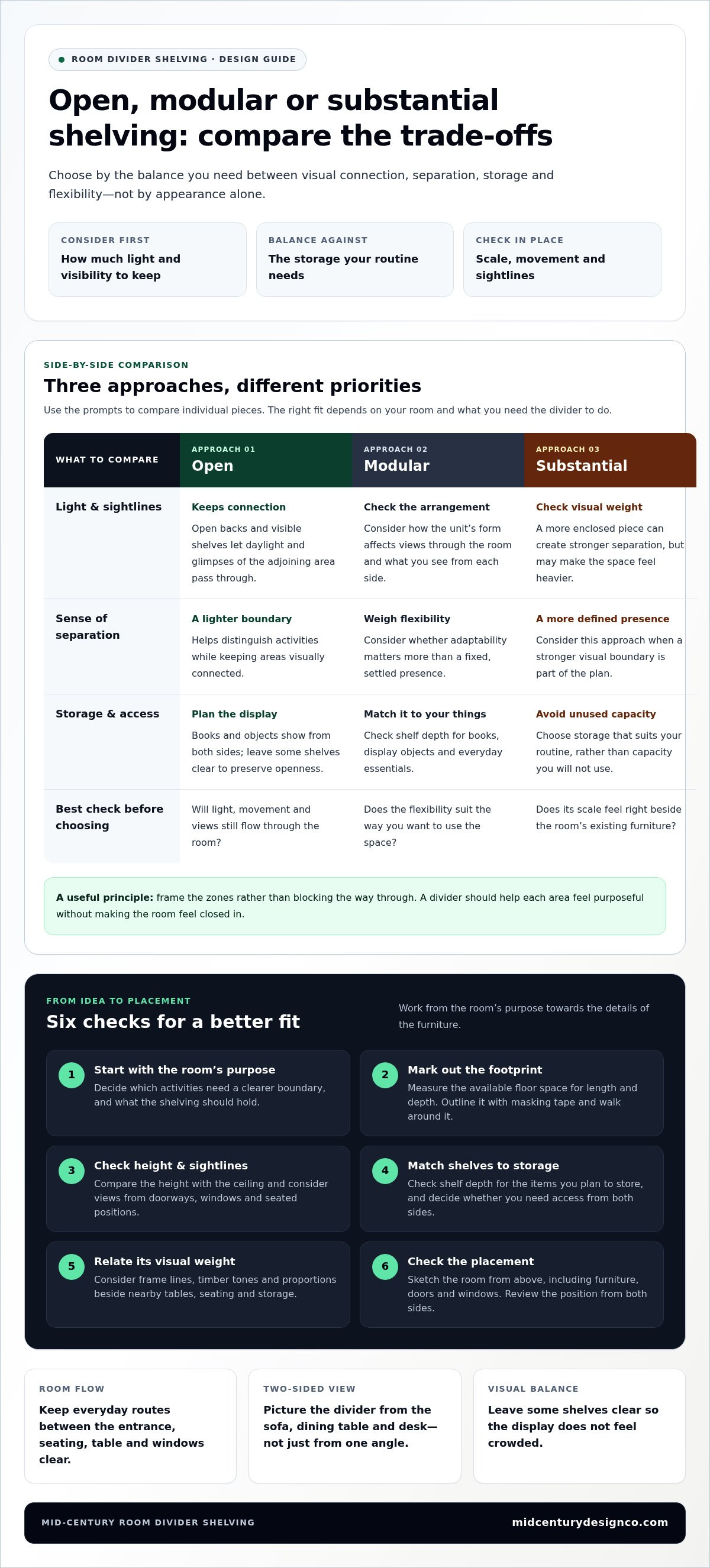
- Begin with the room’s purpose. Decide which activities need a clearer boundary. A divider beside a dining area might hold tableware or display objects, while shelving near a workspace could be more useful for books and everyday essentials. Knowing the purpose helps you decide what the unit needs to do.
- Mark out the footprint. Measure the floor space available for the unit’s length and depth. Use masking tape to outline the proposed footprint, then walk around it. This reveals whether the piece crowds nearby furniture or makes the main routes through the room awkward.
- Check height and sightlines. Compare the unit’s height with the ceiling and consider views from doorways, windows and seated positions. A taller piece creates a more defined boundary; a lower one leaves more of the room visible. Picture its outline in place and decide which effect suits your space.
- Match the shelves to what you’ll store. Think separately about books, display objects and things you reach for each day. Compare the shelf depth with the items you plan to put there, and decide whether you need access from both sides. Storage that fits your routine is more useful than unused capacity.
- Relate its visual weight to the furniture around it. Look at the frame lines, timber tones and proportions of nearby tables, seating and storage. The pieces don’t need to match, but the divider should feel considered among the room’s existing forms. The Interior Design Institute’s Mid-century Modern interior design tips offer further ideas for bringing period character into contemporary spaces.
- Finish with a placement check. Sketch the room from above, marking the divider, nearby furniture, doors and windows. View the proposed position from both sides. Check that the shelves are practical to reach and the routes you use most often still feel natural.
Make the plan work in everyday life
A quick sketch can reveal issues a product photograph won’t show: a chair that can’t be pulled out comfortably, a desk that feels boxed in, or shelves facing away from the activity they’re meant to serve. Include your existing furniture and note what you’ll see from each side. The Mid Century Design Co. curates original vintage storage, so browsing the vintage storage collection can help you weigh practical use against the character and presence of a particular piece.
Open, Modular or Substantial Shelving: Compare the Main Approaches
There’s no single right shape for a room divider. Your choice depends on how much visual connection you want, what needs storing and whether flexibility or a more settled presence matters most. Use this comparison as a starting point, then assess each vintage piece individually, including its form and condition.
The more open a divider is, the more it preserves visual connection; the more solid its form, the more clearly it marks a boundary. Neither effect is inherently better. Consider what the room needs, then weigh openness against storage and visual weight.
| Approach | Openness | Visual weight | Storage and flexibility | May suit |
|---|---|---|---|---|
| Open-frame shelving | High, with views through the unit | Often feels lighter | Display-led; layout depends on the piece | Rooms where light and connection matter |
| Modular shelving | Varies by arrangement | Depends on its frame and filled shelves | Designed around a system; configurations differ | Spaces where adaptability is valuable |
| More substantial shelving | More limited, depending on its construction | Creates a stronger presence | Can offer a more settled storage arrangement | Rooms that benefit from a pronounced boundary |
Open-frame shelving for a lighter visual boundary
Gaps between the shelves of an open-frame unit preserve glimpses of the adjoining area and help the divider feel less like a wall. But the frame isn’t the only thing that affects how open it looks. Books, boxes and ornaments fill those gaps, changing the overall impression. This display-led approach suits belongings you’re happy to see. If you’d rather keep everyday items out of view, consider whether open shelves will feel calm in daily use.
Modular systems and more substantial shelving
Modular shelving is built around a particular system, with arrangements that vary between designs. A more substantial unit has a steadier, furniture-like silhouette and can make the boundary feel clearer. Staples Ladderax is a distinctive example of vintage modular shelving. Consider its layout alongside the room and the objects you want to store or display.
With vintage shelving, look closely at the individual piece rather than assuming every example shares the same details or condition. Consider how its frame, shelves and overall visual weight relate to the room, and whether its storage suits the things you actually use. The right divider is the one whose openness, presence and practical role feel in proportion to your home.
Plan and Style a Room Divider Without Losing the Room’s Flow
A divider should make a room easier to live in, not harder to cross. Once you’ve chosen a piece, test its position against everyday routines and changing light. A successful arrangement feels intentional from both sides, with enough space around the shelving for the room to stay welcoming.
Set the divider where it supports everyday movement
Before moving furniture, sketch the room and mark the entrance, windows, seating, table and routes you use most. Try the proposed position with a temporary outline on the floor, then walk through the space as you would on an ordinary day. The divider should suggest a boundary, not turn the route between the door and sofa into a detour.
Think about how daylight moves through the room. A piece near a window can cast changing shadows or interrupt light reaching the area behind it. Open shelves can soften that effect, although their contents matter too. View the proposed position from the window, doorway and main seats. Check whether the divider frames a view you like or blocks one you value.
- Light: Does daylight still reach the adjoining zone?
- Movement: Can people pass without weaving around furniture?
- Access: Can you comfortably reach shelves from the side where they’ll be used?
- View: Does the piece look considered from both areas?
Style both sides with a measured hand
Open shelving can be seen from more than one angle, so plan it as part of both settings rather than treating the reverse as an afterthought. Vary the height of books and decorative objects, and leave deliberate gaps between groupings. These open spaces let the frame show through and keep the display from feeling crowded.
Consider how the shelves look from each activity. A stack of books might suit the side facing a reading chair, while a dining-side display could feature a few carefully chosen objects. The two sides don’t need to mirror each other, but aim for balance: if one area is visually busy, let the other breathe. Keep everyday belongings easy to reach and reserve the most visible shelves for items you’re happy to show.
To bring vintage furniture into a contemporary room, relate its timber tone and frame lines to nearby pieces without making everything match. A warm wood divider can sit comfortably alongside simpler modern forms; a favourite object or restrained colour accent can connect old and new. For more ideas on combining period character with present-day interiors, explore styling mid-century modern furniture.
When the layout feels clear, explore original vintage furniture for a distinctive piece with a considered place in your home.
Choose Authentic Vintage Room Divider Shelving with Lasting Character
A strong choice brings together a form that suits your room and storage that earns its place in daily life. With mid century room divider shelving, the appeal might be its open lines, warm timber or distinctive vintage character. Those qualities should go hand in hand with a practical assessment of scale, layout and storage. A beautiful piece that blocks a route or leaves useful belongings without a home may not be right for your space.
Original vintage furniture differs from piece to piece. Its individual details reflect its design and previous use, rather than the uniformity of mass-produced furnishings. That individuality is part of the pleasure, provided you choose carefully and make room for the piece’s proportions and presence.
What makes original vintage shelving distinctive
Look at the grain, finish, form and visible wear as features of the individual item. Patina can give timber depth and character, but it doesn’t by itself indicate a piece’s condition. Study the photographs and item description closely, noting details that matter to your decision, such as visible surfaces, shelf arrangement and overall appearance. Assess each piece on its own rather than assuming all vintage shelving shares the same construction or history.
Return to your room plan before deciding. Compare the shelving’s outline with the space it will occupy and picture the objects you intend to display or store. Consider whether the piece feels proportionate from both sides and complements the furnishings already in the room. The aim isn’t to create an interior untouched by modern life, but to find vintage furniture that feels at home in it.
When Staples Ladderax may suit a dividing role
Staples Ladderax is a vintage modular shelving system that can bring display and storage together. Its arrangement can also give a room a distinct visual feature. To judge whether it suits a dividing role, consider how the particular piece and layout relate to your space, intended use and preferred degree of openness.
For more context on choosing vintage storage, explore our guide to authentic mid-century storage, then apply those ideas to the divider you have in mind. The Mid Century Design Co. curates and sells authentic vintage mid-century furniture, including Staples Ladderax systems. Explore the collection to compare original pieces and find shelving that suits your room’s proportions and practical needs.
Choose a Piece That Grows into Your Home
The right divider can become more than a boundary. It can hold the books, objects and everyday essentials that make a room feel like yours, while helping organise the layout as your routines change. Let that future use guide your choice as much as the first impression: picture what you’ll put on the shelves and how the piece will feel through ordinary days.
Choose original vintage furniture for individual character rather than the uniformity of modern reproductions. The Mid Century Design Co.’s curated collection includes Staples Ladderax systems alongside other authentic vintage mid-century furniture for considered interiors.
Explore authentic vintage shelving and consider how mid century room divider shelving could bring purpose and character to your home. Compare the piece’s proportions, storage and openness with your room plan, then choose one that feels at home in the space.
Frequently Asked Questions
Can room divider shelving separate a room without blocking natural light?
Yes. Open shelving can create a boundary while allowing daylight to pass through, although the effect depends on how much of the unit is filled. Observe the room at different times of day and notice where shadows fall. If you plan to use baskets or larger objects, place them selectively so they don’t form a solid screen across the brightest part of the room.
How tall should shelving be when used as a room divider?
There’s no universal ideal height. Choose according to the separation you want and the views you’d like to preserve. Mark the proposed height on a sheet or temporary outline, then check it from the main seats and doorway. Consider standing and seated sightlines, along with the unit’s relationship to nearby furniture, ceiling height and windows.
Is a vintage shelving system practical for everyday use?
It can be, provided its layout suits the belongings and routines it will serve. Study the photographs and item description for visible wear, shelf condition and structural details. Don’t assume every shelf is suited to heavy books or that all systems have the same capacity. For everyday items, consider how easily you can reach them and whether the arrangement will keep them orderly.
What should I display on room divider shelves?
Choose objects that suit the adjoining areas, such as books near a reading chair or a small collection of ceramics beside a dining space. Keep frequently used belongings easy to reach and reserve less accessible shelves for occasional display. A few personal pieces add character; leaving room around them helps each object stand out rather than disappear into a crowded arrangement.
Can room divider shelving work in a small living space?
Yes, if the unit defines a useful zone without taking over the room. In a compact flat, a slim, visually open piece can distinguish a desk from a seating area while keeping the layout legible. Think about what the divider replaces or organises instead of adding it as another layer of furniture. A paper outline on the floor helps you judge its presence before choosing.
How can I keep a shelving divider feeling balanced from both sides?
Treat the unit as a shared view rather than styling one face and ignoring the other. Place visually weightier objects at different points so one side doesn’t feel noticeably busier. Books can create a steady rhythm, while a few favourite objects add variation. If an item looks awkward from one direction, turn it, move it or choose another shelf.
Does Staples Ladderax work as room divider shelving?
Staples Ladderax can serve as a divider when its arrangement suits your room and intended use. Its modular shelving brings display and storage together, but the effect depends on the configuration and what you put on it. Consider how it looks from both sides and whether its layout supports the boundary you want without interrupting everyday use of the room.