

Mid-Century vs Contemporary Furniture: How the Styles Differ
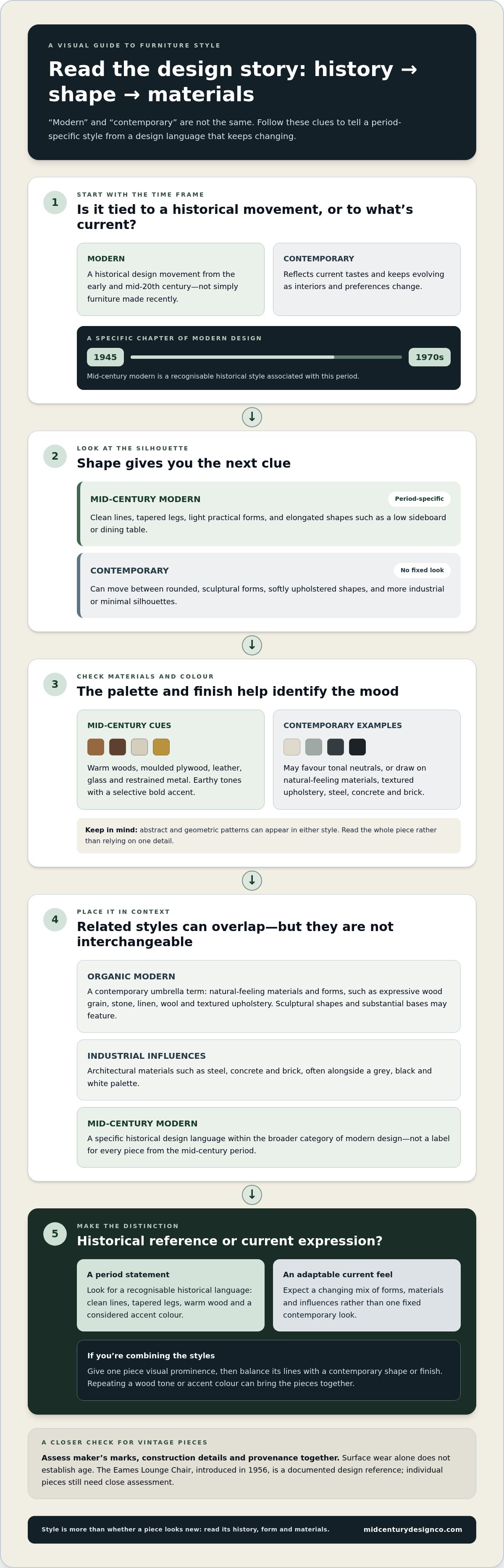
The surprising difference is that “modern” and “contemporary” don’t mean the same thing: modern furniture belongs to an earlier design movement, while contemporary design reflects what’s in favour now. Mid-century modern, active from 1945 to the 1970s, is a distinct historical style; contemporary furniture keeps evolving as tastes change. In comparing mid-century vs contemporary furniture styles, the key distinction is history, not simply whether a piece looks new.
Both styles can feel clean-lined and considered, so it’s easy to see why they’re sometimes confused. Yet a tapered-leg wooden sideboard and a sculptural, softly upholstered table tell different design stories, even when they work well in the same home.
This guide explains where each style comes from and how to recognise it through shape, materials and colour. You’ll also learn why contemporary design has no fixed look, and how understanding the difference can help you choose furniture that suits your space.
Key Takeaways
- Use a piece’s silhouette, materials and finish to distinguish era-defining mid-century character from contemporary design’s changing vocabulary.
- Look for tapered legs, warm-toned wood and selective colour when identifying familiar mid-century cues.
- Consider how contemporary furniture can shift between sculptural, organic forms and more industrial or minimal looks as tastes evolve.
- Use the contrast in shape and palette to decide whether a room calls for a strong period statement or a more current, adaptable feel.
What Is Modern Furniture?
Modern furniture belongs to a historical design movement, while contemporary furniture reflects current tastes. Mid-century modern is a recognisable chapter in that history, defined by its silhouettes, materials and warm visual character.
Mid-century modern materials, lines and colours
Mid-century modern furniture pairs clean lines and tapered legs with warm woods, moulded plywood, leather, glass and restrained metal. Together, these details create light, practical forms with enough character to anchor a room. A low sideboard or dining table might combine an elongated shape with visible legs, while earthy tones and a bold accent add contrast without overwhelming the space.
Organic modern and mid-century modern
Organic modern is a contemporary umbrella term for interiors softened by natural-feeling materials and forms; mid-century modern is a historical design language. This distinction helps you tell whether a piece evokes a particular period or a current, more tonal approach. Organic interiors often use expressive wood grain, stone, linen, wool and textured upholstery, alongside sculptural shapes and substantial bases rather than airy frames.
Origins and terminology
Mid-century modern is a design style associated with practical interiors that also convey warmth and character. Its practical interiors also embraced warmth and character, with Pop art and the Space Age influencing designs in the 1950s. “Mid-century” can describe the broader period; “mid-century modern” points to a specific design language. The distinction helps you describe furniture accurately, rather than treating every piece from that era as the same style.
To tell authentic vintage furniture from a reproduction, examine maker’s marks, construction details and provenance together; surface wear alone doesn’t establish age. A documented design such as the Eames Lounge Chair, introduced in 1956, offers a reference point, but individual pieces still need close assessment.
There’s no universal UK price comparison between vintage mid-century and contemporary furniture. A piece’s value depends on factors such as maker, condition, materials, provenance and demand, not style labels alone.
Mix the styles by giving one piece visual prominence, then balancing its lines with a contemporary shape or finish. For example, pair a tapered-leg dining table with simpler chairs, repeating a wood tone or accent colour to bring the pieces together.
Modern furniture’s historical period and design characteristics
Modern design describes movements from the early and mid-20th century, not simply furniture made recently. Contemporary means current; the distinction helps you judge whether a piece belongs to a historical design language or reflects today’s changing tastes.
Modern and contemporary design
Modern design is a historical movement, while contemporary design evolves with present-day interiors. The distinction matters because a current piece can borrow from several eras without becoming historical modern furniture. Contemporary rooms may combine minimalist forms, Scandinavian influences and mid-century references. Modern design, by contrast, has recognisable period roots, even when its influence appears in today’s furniture.
Contemporary furniture, for example, can reinterpret geometric shapes or pair sculptural upholstery with natural materials. Modern design is a broader category that includes mid-century modern, Scandinavian and minimalist approaches. These labels describe related but distinct design languages, not interchangeable styles. A piece’s proportions, materials and design references can reveal which tradition it draws on.
Mid-century modern’s relationship to modern design
Mid-century modern is a particular branch of modern design, shaped by the mid-20th-century interest in functional, characterful interiors. Its historical identity makes it more specific than the wider term “modern”. A 1956 Eames Lounge Chair, for instance, is a named example of mid-century modern design, not a definition of every modern chair.
Scandinavian design shares modernism’s emphasis on function and restrained forms, but often foregrounds simplicity and natural materials. A pale timber chair with an uncluttered profile may suggest Scandinavian design; a more sculptural, boldly shaped piece can signal another mid-century direction. These traditions overlap, so consider the whole design rather than relying on one detail.
The main difference is historical versus evolving design language: mid-century modern refers to a period-specific style, while contemporary describes what is current. Modern furniture is a broader historical category, with mid-century modern as one part of it.
Neither style is inherently more durable, comfortable or practical for everyday use. Assess a chair or table by its construction, materials, condition and fit for your routine, such as supportive seating for long meals or a stable surface for daily work.
Contemporary furniture materials, shapes, and colours
Contemporary furniture has no fixed shape or palette; current examples range from rounded, sculptural forms to industrial silhouettes. Comparing mid century vs contemporary furniture styles becomes easier when you look at how shape and colour work together. A contemporary room may favour tonal neutrals, while mid-century references can introduce stronger contrast. Abstract and geometric patterns can appear in either style, but contemporary choices shift with changing tastes.
In UK homes, organic modern and industrial influences offer useful ways to read current design. Organic modern interiors may combine expressive wood grain, stone, linen, wool and textured upholstery, often with matte finishes. Industrial furniture draws on architectural materials such as steel, concrete and brick, with grey, black and white shaping its palette. These details help you identify the mood a piece creates.
A material can shape a piece’s character as much as its outline. A dining table in expressive timber feels different from one with a concrete-effect top and steel base; a lounge chair in textured wool reads differently from one in smooth leather. Pairing materials can create contrast, such as a stone surface against warm wood or soft upholstery beside a metal frame.
Natural materials can lend an organic aesthetic, but their presence alone doesn’t establish how sustainably a piece was made. Consider material, finish and construction together. Visible grain, a matte surface and a sculptural form create a softer impression than polished metal, exposed steel and angular lines. These details offer a practical way to compare mid century vs contemporary furniture styles and understand how each shapes a room.
Contemporary furniture trends in the early and mid-2020s draw on organic forms, industrial elements and 1980s Italian Memphis Group-inspired furnishings. For a restrained look, combine tonal upholstery with wood and stone; for more energy, introduce a geometric accent or Memphis-inspired shape. Choose details that suit the room, rather than asking every piece to follow one aesthetic.
Contemporary furniture as an evolving style
Contemporary furniture has no fixed definition because tastes and trends change over time. Unlike mid-century modern, which names a historical design language, contemporary describes what feels current. Its characteristics can shift: a sculptural sofa may suit one moment, while streamlined forms or expressive colour define another. Treat “contemporary” as a moving description, not a permanent period label.
Its history includes earlier movements returning in new combinations. The post-modern movement began in the 1970s, and contemporary furniture can draw on 1980s Italian Memphis Group-inspired furnishings. Those pieces brought playful geometry and vivid colours into interiors. A present-day room might echo those forms through one curved chair or graphic table, rather than recreating an entire period scheme.
Industrial elements also show how function can become an aesthetic. Industrial design features resurfaced as deliberate choices in the 21st century, including steel, concrete and exposed brick. A housing shortage in the 2000s was identified as a catalyst for renewed interest in industrial features as interior style. Today, a metal-framed table can reference that architectural language whilst serving a practical dining or work space.
For a UK home, assess a contemporary piece by its function as well as its visual novelty. Ask whether its proportions suit the room, whether its materials work with existing finishes, and whether its defining detail will remain useful as surrounding trends change. Neutral colours can let a distinctive silhouette lead; a strong Memphis-inspired colour or shape can instead become the focal point. Pairing current design with enduring forms, such as Danish furniture, can give an interior both freshness and historical depth.
The Mid Century Design: Sideboards & Storage
The Mid Century Design Company offers Sideboards & Storage for readers drawn to the distinctive character and practical design of mid-century furniture. A vintage sideboard can bring warmth and useful storage to a contemporary interior, while a chest of drawers or coffee table can add a quieter period accent. These pieces are a natural starting point for combining historical design with newer furnishings.
Explore the range to find furniture that suits your room, routine and preferred balance of old and new. Visit The Mid Century Design Co..
Make room for a piece with character
Start with how you want your home to feel and function. Rather than furnishing a room all at once, choose one piece that expresses your taste, then let its shape, finish and presence guide the details around it. With mid-century versus contemporary furniture styles in mind, you can create a personal home that isn’t tied to a single moment or look.
The Mid Century Design Co. offers Sideboards & Storage, Dining Sets and Chest of Drawers, giving you considered ways to bring vintage character into everyday spaces. A sideboard might become the room’s quiet focal point; a dining set can give shared meals a stronger sense of occasion. Choose a piece with a story of its own, then make the room distinctly yours.
Contact The Mid Century Design Co. to explore furniture for your home. Take your time, trust your eye, and create a space that feels like you.
Frequently Asked Questions
What’s the difference between Mid-Century and Mid-Century Modern?
“Mid-century” broadly describes a period, while “mid-century modern” identifies a particular design language associated with it. A piece made during the period isn’t automatically mid-century modern: its form and design approach matter too. Look, for example, for clean lines, practical proportions and tapered legs. This distinction helps when describing a vintage find or deciding whether its character suits your interior.
What Does Modern Design Encompass?
Modern design encompasses several historical and design traditions, including mid-century modern, Scandinavian and minimalist styles. These share an interest in considered form, but their visual character can differ. A restrained Scandinavian chair, for example, may feel simpler than a more sculptural mid-century piece. Use a specific style name when a piece has clear defining characteristics; “modern” alone can refer to a broader family of ideas.
What Is Contemporary Furniture?
Contemporary furniture reflects current design tastes, so its meaning changes as styles evolve. It can bring together influences rather than follow one fixed historical template. A current interior might pair a softly sculptural seat with an industrial-style table. Thinking of “contemporary” as a description of current design, rather than a permanent period label, makes changing trends easier to understand.
What defines mid-century modern furniture style?
Mid-century modern furniture is recognised by functional design, clean lines and purposeful forms. Look closely at the legs and frame: tapered supports or an open base can give a piece a lighter appearance. The Eames Lounge Chair shows how an expressive silhouette can still serve comfort and function. These cues help distinguish the style from furniture that merely looks vintage.
What defines contemporary furniture style?
Contemporary furniture is defined by its connection to current tastes, not one unchanging set of features. In early and mid-2020s interiors, that can mean organic, sculptural forms, industrial details or Memphis Group-inspired shapes. To bring the look into a room, choose a current silhouette or finish that complements existing furniture, rather than trying to match every piece to a single trend.
How do mid-century modern and contemporary furniture styles compare in materials and finishes?
Mid-century modern often combines warm-toned wood with materials such as moulded plywood, leather, glass or restrained metal. Contemporary furniture can draw on a broader, changing mix: organic interiors may pair expressive wood grain with stone, linen or wool, while industrial pieces bring in steel or concrete. Consider how each finish feels in your room, as matte textures and polished surfaces create different impressions.