

Mixing Vintage and Modern Furniture Without Clashing
A room feels cohesive when its pieces share a colour palette and balanced proportions, not necessarily the same era. A useful starting point is 20% vintage and 80% modern, with a modern table paired with vintage upholstered chairs offering a particularly effective way to add character without overwhelming the space. This mixing vintage and modern furniture guide shows how to make that contrast feel considered rather than clashing.
It can be hard to know which pieces will sit comfortably together, especially when a vintage find has a strong shape, finish or story of its own. The key to mixing vintage and modern furniture is to give each piece a visual connection through colour, scale, material or a quieter contemporary backdrop. These practical ideas cover choosing a palette, balancing proportions, pairing old and new in different rooms, and combining styles such as mid-century modern, Art Deco and industrial vintage.
Key Takeaways
- Use a restrained colour palette to connect pieces from different eras, and let a neutral backdrop give distinctive shapes room to stand out.
- Balance visual weight by pairing contrasting scales and editing accessories to preserve breathing room.
- In kitchens, let one antique piece become a focal point, then use contemporary lighting or cushions to link it with modern surroundings.
- Bring mid-century modern, Art Deco or industrial vintage into contemporary rooms through complementary materials and a clear design anchor.
- Wood tones and metals need not match exactly; thoughtful contrast can make a room feel collected rather than mismatched.
1. Using a shared colour palette to create cohesion
Colour gives furniture from different eras a common thread. Start with a shade already present in the room, such as warm oak, soft white or deep green, then repeat it in a modern sofa, vintage chair upholstery or smaller accessories. Finishes don’t need to match: a shared colour makes the pairing feel deliberate. A restrained palette also lets distinctive details, such as carved legs or clean contemporary lines, stand out.
Decide on the room’s overall mood before choosing accent colours. For a calm, light interior, combine pale walls, natural wood and muted fabric, then add a darker note with a vintage side table or framed artwork. For a richer mood, start with a deep wall colour and balance it with lighter upholstery or a contemporary rug. Compare each piece against the room’s palette rather than judging it in isolation.
Pattern can also bridge different periods. A floral vintage armchair can sit comfortably beside plain modern furniture if its fabric shares a colour with the rug or curtains. Or let a contemporary geometric cushion pick up a tone from an older patterned textile. Keep nearby accessories simple when a fabric has several colours or a bold motif. This creates contrast without letting patterns compete.
Colour can connect eras without making a room look like a matching set. In a Georgian townhouse, a modern sofa, contemporary art and an ornate antique mirror can feel cohesive when their colours relate. Repeat a shade from the artwork in a cushion or lampshade, then let the mirror’s patina add a contrasting surface. The same idea works with mid-century wood: echo its warm undertone in a contemporary textile or ceramic accessory.
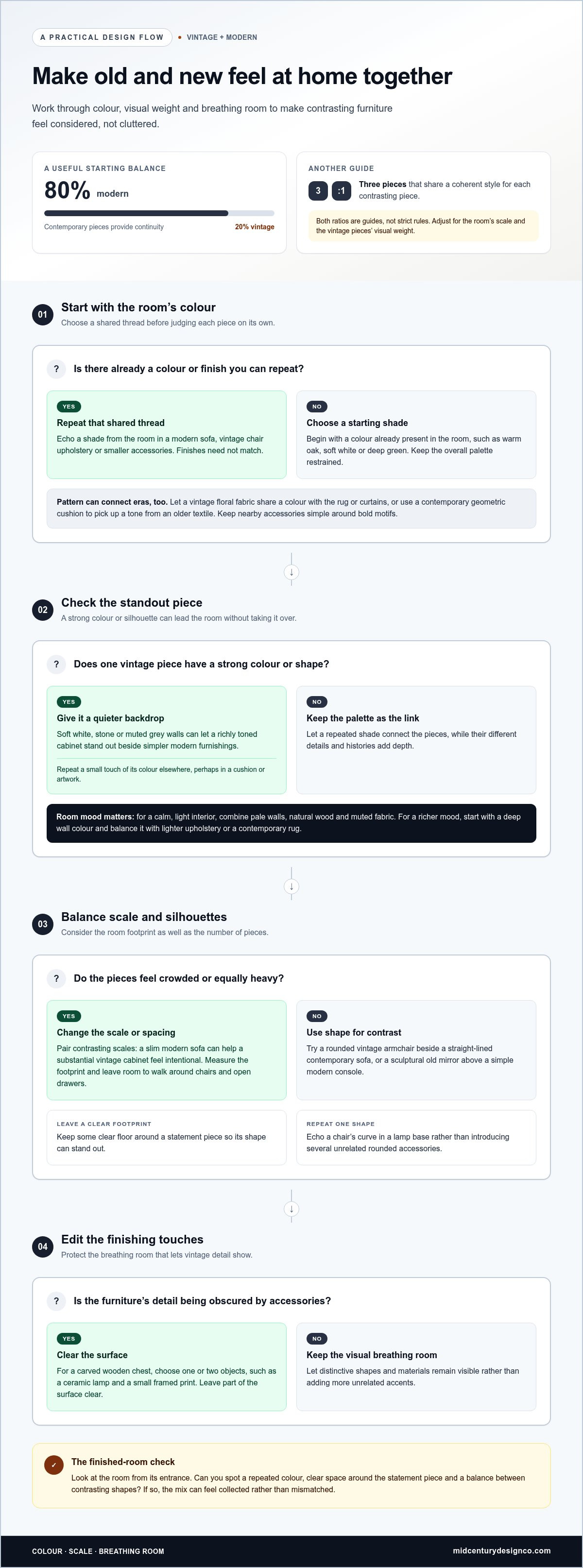
A neutral backdrop helps when one piece has a strong colour or silhouette. Soft white, stone or muted grey walls let a richly toned vintage cabinet stand out beside simpler modern furnishings. Repeat a small touch of the cabinet’s colour elsewhere, perhaps in a cushion or artwork, so it feels connected rather than isolated. Keep the palette restrained; too many unrelated accents can distract from both old and new pieces.
A useful starting balance is 20% vintage and 80% modern. Treat it as a guide, not a strict formula: a single vintage chair or lamp can introduce character, while contemporary pieces provide visual continuity. Before adding another colour, look at the room from its entrance and identify the shades that already repeat. In this mixing vintage and modern furniture guide, the key is to choose a palette that links the pieces, then allow their contrasting histories to add depth.
2. Balancing proportions and leaving visual breathing room
Scale matters as much as age. A slim modern sofa can make a substantial vintage cabinet feel intentional, while two bulky pieces side by side may crowd a small sitting room. Measure the room and map the furniture footprint, allowing space to open drawers and walk around chairs. Leave some clear floor around a statement piece so its shape can stand out without competing with every nearby object.
What proportions of vintage and modern furniture work best in a room? A practical starting point is 80% modern pieces and 20% vintage, keeping the older furniture as a considered accent. Another useful guide is a 3:1 balance: three pieces that share a coherent style for each contrasting piece. Treat both ratios as design guides, then adjust for a room’s scale and the visual weight of its vintage pieces.
Balance silhouettes as well as numbers. Pair a rounded vintage armchair with a straight-lined contemporary sofa, or set a sculptural old mirror above a simple modern console. Curved and straight forms create contrast, but repeating one shape elsewhere helps the room feel composed. For example, echo the chair’s curve in a lamp base, rather than introducing several unrelated rounded accessories.
Furniture needs breathing room from decor, too. A carved wooden chest already brings texture, detail and history; a cluster of ornaments on top can obscure its craftsmanship. Choose one or two objects, such as a ceramic lamp and a small framed print, and leave part of the surface clear. The same editing helps a vintage stool or table stand out against modern kitchen cabinetry.
Where to buy vintage furniture in the UK and what are typical prices? Vintage pieces are available from specialist dealers, auction houses, charity shops and local online listings. Prices vary with condition, maker, materials, rarity and demand. Danish furniture offers another route to a carefully designed older silhouette, bringing warmth alongside contemporary seating.
How should you check the condition and safety of second-hand vintage furniture? Inspect joints, legs and drawer runners for looseness, cracks or unstable repairs, then test doors and drawers gently. Check upholstery for tears and persistent odours, and look for sharp edges, loose glass or a cabinet that could tip when opened. A chair should sit firmly on the floor without rocking under ordinary pressure.
Once the proportions feel settled, leave a little space around the most distinctive piece. Danish vintage furniture can provide a characterful focal point when a room needs warmth without adding visual clutter.
3. Combining old and new pieces in kitchens
A contemporary kitchen can feel more personal with one antique focal point. This contrast gives a dining table, set of chairs or wooden stool room to tell its story, rather than making every surface compete. It also brings well-made older furniture into daily use instead of treating it as decoration. First decide what the room needs: a place to eat, extra seating or a distinctive visual anchor.
Consider a modern kitchen with an antique dining table and chairs. In a Victorian house renovation, this pairing sat beneath a Tom Dixon ceiling light, bringing different periods together without disguising either one. The table works as the dining area’s centrepiece, while contemporary cabinetry and lighting provide a quieter frame. In a smaller space, a vintage bistro table with modern bouclé chairs creates a similar dialogue on a compact scale.
Choose kitchen furniture for how the room is used as well as how it looks. A dining table should leave a comfortable route through the room, with enough space to move chairs in and out. If a large antique table dominates a narrow kitchen, try a smaller vintage table or use a single older chair as an accent. Measure the available floor area first, then consider how the piece’s height and shape relate to the cabinetry.
Different furniture styles can come together through material and form. Pair a rustic wooden table with sleek, handleless cabinetry, or set a curved vintage chair beside a clean-lined breakfast bar. Wood tones and metal finishes needn’t match exactly; repeating a material in a nearby detail can make the mix feel considered. A brass-toned handle or timber shelf, for example, can echo an older piece without creating a matching set.
Artwork adds history and personality. Hang a vintage print near contemporary artwork, using their subject or mood to guide the arrangement. A modern abstract beside an older still life can feel deliberate in simple frames, while a gallery wall can combine frame shapes with care. In a kitchen, keep artwork away from steam and splashes, and choose a wall where each piece remains visible.
Accessories can bridge eras without adding another large object. A contemporary lamp on an antique side table, or modern cushions on vintage dining chairs, gives the eye a point of connection. Keep surfaces around a focal piece uncluttered: a bowl and a lamp may be enough beside a patterned chair or sculptural table. This restraint helps old and new sit naturally together, even in a hardworking kitchen.
For a cohesive result, choose one older feature first and let modern elements support it. A vintage table, contemporary ceiling light and restrained artwork can make a kitchen feel layered rather than themed. This combination brings warmth, character and practical function to the room while allowing each piece to retain its identity.
4. Mid-century modern, Art Deco and industrial vintage styles
Start with a dominant style, then use other eras as deliberate accents. Mid-century modern furniture, shaped by the post-World War II housing boom, often features clean lines and restrained ornament. Pair a teak sideboard with a contemporary sofa, then add an Art Deco mirror or industrial lamp as a contrasting note. Each style remains recognisable, while the main furniture gives the interior direction.
Interior designer Alyssa Kapito offers a useful guide: aim for three cohesive-style pieces to one contrasting piece. For example, group a modern bed, bedside tables and a simple rug, then add an antique Persian rug with richer pattern and age. In a bedroom, the larger grouping anchors the design; the older piece adds texture and history without turning the whole space into a period setting.
Contrast works best when it shows in materials as well as silhouettes. Place a smooth contemporary table beside a carved wooden chair, or bring a metal industrial floor lamp into a room with a soft upholstered sofa. Putting older and newer items close together makes their different textures easier to appreciate. Sourcing sleek modern foundations from contemporary specialists such as RitzHouzz creates a refined backdrop, while a vintage coffee table with patina can give a clean-lined modern sofa a warmer, more individual centrepiece.
Sleek, handleless kitchen cabinetry can sit beside rustic vintage wooden barstools. The clean cabinet fronts keep the room contemporary, while the stools add grain, wear and a more relaxed note. Repeat a material elsewhere, perhaps in a timber shelf or metal tap, to connect the styles. Keep the arrangement practical: barstools should suit the counter height and leave a clear route through the kitchen.
Lighting can bring periods together without making them look identical. Try a modern pendant over an antique dining table, or place a vintage floor lamp near a contemporary sofa. A chandelier can become the room’s focal point when the surrounding furniture has quieter profiles. For a more understated combination, pair a sculptural vintage lamp with simple modern furnishings and let its shape provide contrast.
Before buying, decide which piece will lead the room and what role each addition should play. A striking vintage credenza can set the tone, supported by contemporary chairs and art; alternatively, modern furniture can anchor the room while Art Deco accessories add detail. Wood tones and metal finishes needn’t match exactly. Repeated forms, related materials and a clear dominant style help varied pieces feel collected rather than crowded.
These principles work across interior styles, from industrial lofts to period homes. Keep the strongest contrast to one considered piece, such as an Art Deco mirror above a minimalist console, and let the rest support it. This balance gives each era room to speak.
5. Pairing a modern table with vintage upholstered chairs
A modern table and vintage upholstered chairs make a compelling dining-room pairing: the table gives the arrangement a clean outline, while the chairs bring texture, age and softness. Connect them through proportion, colour or material rather than matching their shapes. A simple oak table, for example, lets sculptural chairs become the room’s focal point without making the space feel like a period set.
Which vintage furniture pieces pair well with modern furniture? Upholstered dining chairs, a distinctive sideboard, a sculptural coffee table and a characterful occasional table all sit naturally beside contemporary forms. For a dining set, start with chairs whose seat height suits the table and whose backs don’t overwhelm its outline.
Check the silhouette from across the room. A long rectangular table often works well with chairs that have curved backs or tapered legs, while a rounded modern table can balance more angular vintage seating. If the chairs have ornate frames, choose a table with restrained detailing. If they’re visually simple, a bolder tabletop can carry more presence. This exchange of visual weight helps the pieces feel considered together.
Fabric offers a subtle point of connection. Pick up a colour from the table’s wood grain, nearby rug or artwork in the chair upholstery. A contemporary table with a dark surface might suit vintage chairs in warm ochre or muted green, while pale timber can complement faded floral fabric. Repeating a tone in a cushion or artwork makes the pairing feel deliberate without matching every detail.
Consider the table’s finish alongside the chairs’ texture. Smooth glass or polished stone creates a striking counterpoint to tactile velvet, woven fabric or aged timber. A modern table with a slim metal base can also offset upholstered chairs with a heavier frame. Let one contrast lead: combining glossy surfaces, bold patterns and elaborate chair frames can make the dining area feel visually unsettled.
Try the arrangement in place before settling on the surrounding decor. Pull the chairs back as if someone were sitting down, then check that the table remains easy to see and access. In a compact room, avoid placing a bulky sideboard directly beside the set. A mirror on the opposite wall can reflect the upholstery and bring light into the space, while a restrained pendant defines the dining area.
Vintage chairs should work for everyday use, too. Sit in each one, check that it feels stable, and inspect the frame, joints and fabric for visible wear. A beautiful chair that feels uncomfortable may work better as an occasional accent than as daily dining seating. Consider using a pair at the ends of a modern table, with simpler chairs along its sides, for character and practicality.
For a characterful starting point, explore vintage dining chairs and picture them alongside your table, existing colours and favourite pieces.
The Mid Century Design: Sideboards & Storage
The Mid Century Design Company offers sideboards and storage for rooms that need practical organisation and a distinctive vintage focal point. A sideboard can anchor a dining area, bringing warmth and patina beside contemporary furniture. To carry vintage forms through the home, explore dining sets, chests of drawers, and coffee and occasional tables.
Turn to these pieces when your room needs useful storage, a considered centrepiece or an older accent to balance cleaner modern lines. Think about the furniture’s scale, finish and role before choosing where it belongs: a sideboard can ground a dining space, whilst a coffee table can bring texture into a living room. Explore the range at The Mid Century Design.
Let your next piece shape the room
A home’s character grows gradually, through pieces chosen to live alongside what’s already there. Rather than planning every detail at once, notice which corner feels unfinished or which room needs a more personal focal point. This mixing vintage and modern furniture guide is a starting point, but your routines, treasured objects and sense of comfort should shape the final choices.
A sideboard could give a dining space a more grounded presence, or a chest of drawers could bring an individual note to a bedroom. The Mid Century Design Co. offers both, alongside dining sets, so you can explore furniture suited to the room you’re shaping. Think about which piece would make the greatest difference, then picture it among your existing furnishings.
Contact The Mid Century Design Co. to explore pieces for your home. Take your time, trust your eye, and let a thoughtful choice become part of your home’s continuing story.
Frequently Asked Questions
How do I avoid clashing?
Give each piece a clear role, then look for a shared detail beyond its age. A contemporary desk and vintage chair, for example, can connect through similar wood undertones or a repeated metal finish. Stand at the room entrance and notice which object draws your eye first. If several pieces compete, move a smaller accessory elsewhere or let one distinctive item take centre stage.
How should I approach layout?
Arrange furniture around how you use the room, not the age of each piece. In a living room, position seating for conversation, then place an occasional table where it’s genuinely useful. Keep doorways and routes between seating, windows and storage clear. A simple paper plan can help you test different layouts before moving a heavy cabinet or table.
Should You Use Vintage or Modern as the Dominant Style?
Choose the dominant style that suits the room’s architecture and everyday needs. In a period home, an original feature such as a fireplace may make vintage furniture a natural lead. In a newer interior, modern pieces can establish a calm foundation for an older accent. Decide which piece should set the mood, then let the others support its character rather than compete with it.
Textures and Materials: How Can Textures Elevate the Look?
Texture adds depth through surfaces that look and feel different. Set smooth timber beside woven upholstery, or place a glazed ceramic lamp on a softly grained wooden table. Consider how daylight changes the finish: polished surfaces reflect more light, while velvet and aged wood absorb it. A rug beneath a table can also soften the transition between contrasting materials.
What About Artwork and Accessories?
Use artwork and accessories to connect furniture that might otherwise feel unrelated. A contemporary print can echo a colour in a vintage chair, while a sculptural bowl can repeat the curve of an old table. Hang art in relation to the furniture below rather than scattering frames across every wall. Leave some surfaces uncluttered so distinctive objects can be appreciated.
What Are the Key Elements to Focus on?
Focus on function first, then assess shape, material and finish. Ask whether the piece suits the room’s daily use, whether its outline complements nearby furniture, and whether its surface adds warmth or contrast. A vintage cabinet, for instance, can bring useful character to a room with plain modern shelving. Considering these qualities together helps you choose for more than appearance alone.
Why Vintage and Modern Are the Perfect Pairing?
Vintage and modern furniture can complement one another because each brings different qualities to a room. A vintage piece carries signs of its history, while a contemporary design offers a cleaner visual counterpoint. Together, they create an interior that feels personal rather than tied to a single period. The pairing works best when the contrast is purposeful and the furniture still serves the room.
Why would you want to mix old and new?
Mixing old and new lets you shape a home around pieces you value, rather than replacing everything to follow one look. An inherited chair might sit beside a newer sofa, bringing a familiar object into daily life. Keeping well-made furniture in use can also prevent it being discarded simply because its style belongs to another era. The result can feel individual and lived-in. The same appreciation for enduring materials and timeless design extends outdoors, where specialists such as Tropicraft Patio showcase quality outdoor furniture suited to both classic and contemporary homes.