

Modular Wall Shelving System Vintage: A Thoughtful Buying Guide
A vintage shelving system can look complete and still be the wrong buy. A modular wall shelving system vintage buyers admire for its warm timber and elegant lines needs to work beyond the photograph: its proportions must suit the room, its components must belong together, and its condition should suit everyday use. It’s easy to be drawn to the character first, then wonder whether the arrangement will fit or adapt to changing needs.
This guide explains how to assess a vintage modular wall shelving system before choosing one. You’ll learn how to measure for a considered fit, compare the components shown with those described, and assess condition without mistaking age for damage. You’ll also see how systems such as Staples Ladderax can balance open display with practical storage. With a little preparation, you can choose original vintage furniture for its design history and individual character, as well as the way it will work in your home.
Key Takeaways
- Understand what makes a shelving arrangement a coordinated modular system, rather than a single fixed bookcase.
- Use the room’s wall width, intended purpose and storage needs to guide your layout choices.
- Compare listing photographs with the written description to spot gaps or inconsistencies about components and condition.
- Use a practical checklist to assess whether a modular wall shelving system suits your space and daily needs.
- Explore authentic vintage mid-century shelving, including Staples Ladderax systems, for furniture with practical purpose and individual character.
What Makes a Vintage Modular Wall Shelving System Different?
A vintage modular wall shelving system is an original, period-made arrangement of coordinated furniture components, brought together to create a storage or display layout. Its identity lies in how the parts relate: shelves, cabinets and supports form a considered composition, rather than a single, self-contained bookcase. A modular wall shelving system vintage buyers seek may combine open and enclosed elements, but the precise components and how they fit together depend on the design.
This distinction matters when reading a listing. A group of shelves photographed together isn’t automatically a system. Look for consistent finishes, proportions and structural details that suggest the parts belong to a coordinated design. These clues help you understand what’s being offered without assuming that components from different systems will fit together.
How a modular system differs from a bookcase
A fixed bookcase is a single furniture form, with its shelves and sides held within one frame. A modular arrangement is composed of separate elements: vertical supports, horizontal shelves and cabinets create a rhythm across the wall, sometimes with open space between them. The result can feel lighter and more architectural, even when it provides substantial storage.
Consider how the parts relate, not just how they look. A listing should identify the components included so you can judge whether they form a coherent system or simply a group of separate pieces. Compatibility depends on the specific design; don’t assume that a shelf or cabinet from one system will work with another.
Why original vintage shelving has its own character
Original vintage furniture carries the materials, proportions and making choices of its period. Timber grain, the shape of a cabinet and the balance between solid and open sections give each arrangement its own presence. Small marks or changes in finish may also reflect a piece’s history. Assess them in context rather than dismissing them automatically.
Authentic vintage furniture was made in its own time; a modern reproduction is newly made, even when it draws on an earlier design. Neither description alone tells you whether a piece suits your home. Consider the provenance stated in the listing, the visible condition and the exact components included. For context on how furniture condition and longevity are considered, see this overview of conservation and restoration of wooden furniture.
Staples Ladderax is a recognised vintage shelving system with its own design history and component logic. Understanding how its supports, shelves and cabinets work together can sharpen your eye when assessing modular shelving more broadly. Apply the same careful approach to any original vintage system: appreciate its character, then assess the specific arrangement on its own terms.
How to Match a Vintage Shelving Configuration to Your Room
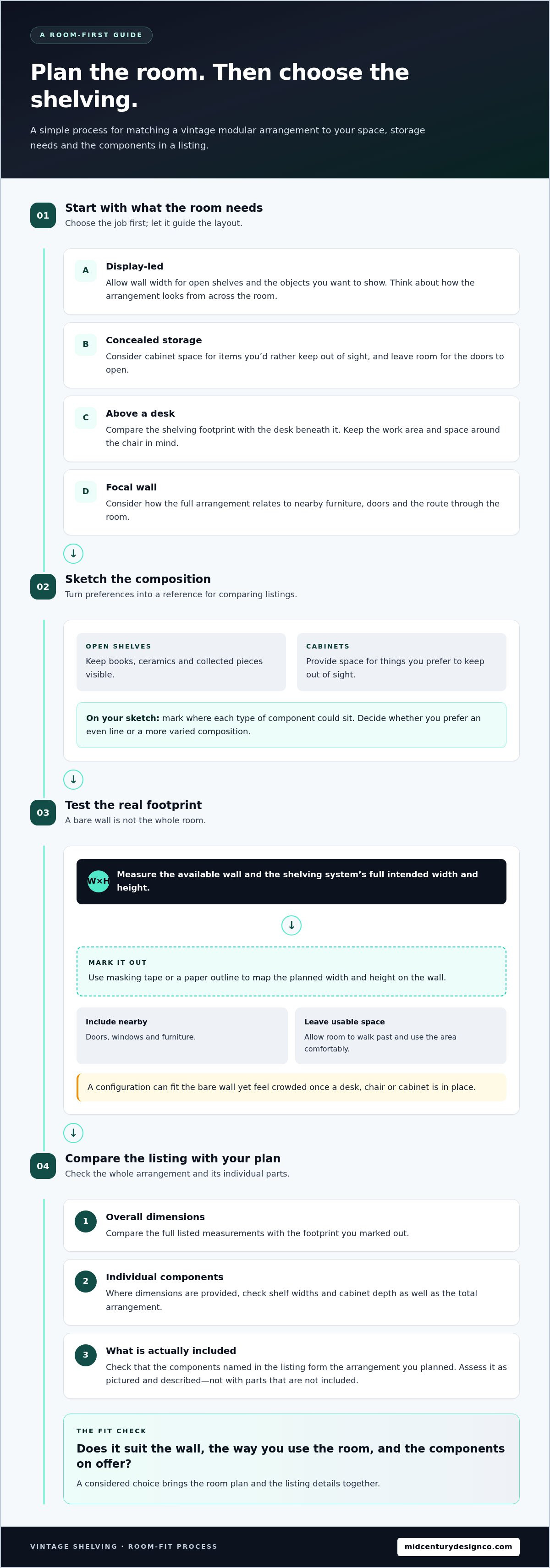
A striking arrangement earns its place when it suits both the room and the way you use it. Before comparing listings, decide what the shelves need to hold and where the system will sit. A display-led composition above a desk has different demands from a focal wall for books, objects and concealed storage. A quick sketch turns those preferences into practical criteria.
Choose a layout around the room’s purpose
Start with the objects you want to store. Open shelves keep books, ceramics and collected pieces visible, while cabinets provide space for items you’d rather keep out of sight. A desk setting may call for a compact arrangement that leaves the work surface clear; a living room focal wall might benefit from a balanced mix of open and closed sections. The right proportions depend on the room, not a standard formula.
Sketch the intended position of each type of component. It needn’t be to scale at first. This helps you decide whether you want an even line or a more varied composition, and gives you a reference when comparing the components named in individual listings.
Room-led comparison
Display-led use: Allow wall width for open shelves and the objects you’d like to show. Consider how the arrangement will look from across the room.
Concealed storage: Allow cabinet doors room to open and consider their visual weight alongside any open shelves.
Above a desk: Compare the system’s footprint with the desk beneath it, keeping the work area and space around the chair in mind.
Focal wall: Consider how the full arrangement relates to nearby furniture, doors and the route through the room.
Read dimensions as part of the whole composition
Measure the available wall, then mark the system’s full intended width and height with masking tape or a paper outline. Account for nearby doors, windows and furniture, as well as the space needed to walk past or use the area comfortably. A configuration can fit the bare wall yet feel crowded once a desk, chair or cabinet is in place. Compare the overall measurements in each listing with this real footprint.
Where dimensions are given for individual components, consider those as well as the total. A cabinet’s depth may affect how it sits above a desk, while shelf widths can change the visual balance of the arrangement. For broader room context, The Furniture Society connects people engaged with furniture design and making, offering a wider perspective on the craft behind considered interiors.
Assess each piece using its listed dimensions and included components. A modular wall shelving system vintage buyers are considering should suit the space as pictured and described, rather than depend on parts that aren’t included. Once you have a room plan, browse the vintage shelving and storage collection to explore how an original piece might bring function and character to your home.
Will a Vintage Modular Shelving System Be Complete and in Good Condition?
A polished photograph can make a shelving arrangement look complete, yet it may not show every component or reveal the condition of less visible surfaces. Read the description alongside the images, checking that both refer to the same piece and tell a consistent story. For a modular wall shelving system vintage buyers are assessing, details matter: don’t assume that a cabinet visible in a photograph is included unless the listing says so.
Completeness is about the specific configuration, not whether it matches an imagined ideal set. Look for a clear account of the shelves, uprights, cabinets and any other components included. Compare that account with each image. If a separate-looking item appears in a photograph but isn’t mentioned, don’t count it as part of the arrangement. Also note any named component that’s difficult to identify in the images.
Check what the listing says is included
Read the component description carefully, then use it as a guide while reviewing the images. A listing might identify open shelves and cabinets, for example; the photographs should give you a reasonable view of those pieces and how they relate to the arrangement. Check that the stated dimensions make sense for the configuration. If the wording and images appear to describe different combinations, you may not have a clear picture of exactly what’s included.
Assess condition without mistaking age for a flaw
Original furniture can show the passage of time. Variation in colour, small surface marks or gentle wear at edges may be part of a piece’s history; they don’t automatically make it unsuitable. Look more closely at damage that could affect appearance or use, such as pronounced chips, lifting veneer, cracks or joints that appear loose. Front-facing photographs may not show these details, so pay attention to close views of edges, surfaces and connections where provided.
The Caring for Historic Furniture resource from Connecting to Collections Care offers useful context on examining historic furniture and its surfaces. This guide can help you make an informed visual assessment, but it isn’t a professional condition report. Photographs have limits, so don’t treat details that can’t be seen as confirmed facts.
A practical listing check:
- Components: Match the named shelves, uprights, cabinets and other parts to what’s shown.
- Finish: Look for changes in colour, marks, patches or areas that appear inconsistent across views.
- Visible damage: Inspect edges, corners, surfaces and joints for chips, cracks, lifting or signs of movement.
- Dimensions: Compare stated overall measurements with any component measurements and the arrangement pictured.
- Consistency: Check that the description, photographs and measurements seem to refer to the same configuration.
Use the checklist to separate what the listing clearly shows from what remains uncertain. A system with visible signs of age may still be a considered choice. The key is to understand which details are character and which could affect the piece’s condition or suitability for your home.
A Practical Buying Checklist for Vintage Modular Wall Shelving
A considered purchase begins with your room, not the appeal of a photograph. Use this checklist to weigh purpose, proportions and the details of the piece together. If a point gives you pause, compare the listing with your notes before letting a striking finish hurry the decision.
Five checks to make before choosing a system
- Define its purpose. Decide what the shelves need to hold. A display of books and ceramics calls for a different balance from a work area where you want some items tucked away. Note what should remain visible and what needs a cabinet.
- Measure the available space. Record the wall width and height, then account for nearby doors, furniture and the space you need to move around comfortably. Sketch the intended footprint so you can compare the listing with the room, rather than judging scale from a photograph alone.
- Match the components. Read the description for the exact shelves, cabinets, uprights and other parts included. Compare those details with the photographs and your sketch. Don’t build your plan around a component shown in an image but not named as part of the piece.
- Review condition. Look across the photographs for visible marks, changes in finish or damage, especially on edges and joints. Consider whether what you can see meets your expectations for an original vintage piece, and distinguish visible evidence from details the images can’t establish.
- Pause for final suitability. Read the description once more, then compare it with the photographs and dimensions. Ask yourself whether this exact configuration fits your space and intended use, without relying on assumed compatibility or additional parts.
Separate vintage character from unsupported claims
A period look or a description of the material can help you imagine a piece, but neither alone proves who designed it or where it came from. Base your understanding on what the listing states and the visible details it provides. Authentic vintage furniture and modern reproductions are distinct categories; the useful question is whether the specific piece matches what you’re seeking and whether its description supports that understanding.
If you’re considering Staples Ladderax, a focused guide to buying that named system can help you interpret its particular components and configuration. The same measured approach applies to any modular wall shelving system vintage buyers compare: let the listed details, not assumptions about the category, shape your decision.
With your checklist in hand, browse authentic vintage shelving and storage and consider which original piece could bring character and practical purpose to your room.
Find a Vintage Shelving System with Character and Purpose
The right choice brings together three things: a configuration that suits the room, components that serve your intended purpose, and a piece whose described condition meets your expectations. Keep your measurements and priorities beside you as you browse. A modular wall shelving system vintage buyers choose thoughtfully should work as both a composition and a piece of everyday furniture, not simply look appealing in isolation.
Why choose an original vintage system
Original vintage furniture has a material presence shaped by its period: the grain and tone of the timber, the scale of its components and the way its design balances display with storage. Age can bring individuality, too. Subtle variations and signs of a previous life give a piece its own character, though each system should still be judged on the details described and shown.
The Mid Century Design Co. specialises in curated, authentic vintage mid-century furniture, focusing on original vintage pieces rather than modern reproductions. Its collection brings together furniture selected for character as well as function. Staples Ladderax systems are among its specialist storage offerings, with a distinctive approach to arranging shelves and storage components.
Continue your search with a clear brief
Before browsing further, write down the wall space you’ve measured, what you want the system to hold and which components matter most. You may want a place to display books and ceramics, or cabinet storage alongside open shelving. Keep that brief close and compare it with the exact dimensions and included components of each piece, rather than relying on a general impression of how a system might be arranged.
If Staples Ladderax has caught your eye, a focused Staples Ladderax shelving unit buying guide is a useful next step for understanding that named system. Let the specific configuration and listing details guide your decision; don’t assume a piece includes additional components or suits a different layout beyond what’s shown and described.
There’s no need to rush towards the most elaborate arrangement. A smaller, well-proportioned system may bring more ease to a room than a larger composition that dominates it. Choose a piece that answers your practical needs while adding warmth, texture and a sense of history to the space.
With your priorities in hand, explore The Mid Century Design Co.’s vintage collection. Compare original furniture by its dimensions, components and condition to find a piece with character and a practical purpose for your home.
Choose a Piece That Feels at Home
A well-chosen shelving system can do more than fill a wall. It can give treasured books and objects a thoughtful setting while bringing a sense of history into the room. Keep your priorities close as you continue your search: the right proportions and included components matter as much as the first impression. Taking time to compare them can help you find a piece that feels considered, not merely convenient.
For those searching “modular wall shelving system vintage”, the appeal lies in finding original furniture with presence and purpose. The Mid Century Design Co. curates authentic vintage mid-century furniture, with Staples Ladderax systems among its specialist storage offerings. Each piece has its own character and can be considered in the context of your home and the life you want it to support.
When you’re ready to explore, browse The Mid Century Design Co.’s curated vintage furniture collection and find an original piece that suits your space and storage needs.
Frequently Asked Questions
Can vintage modular shelving be reconfigured after it has been assembled?
Sometimes, but reconfiguration depends on the particular system and the components available for it. Before planning a new layout, refer to the description and any instructions for that piece, rather than assuming parts will fit simply because they look similar. A modular wall shelving system vintage buyers are considering may have specific component relationships, so treat compatibility as system-specific. If instructions aren’t available, don’t assume how the system can be rearranged.
Is vintage modular shelving a sustainable choice for a home?
Choosing existing furniture for continued use can appeal to shoppers who value keeping well-made objects in circulation rather than buying new. The environmental impact of an individual purchase depends on factors such as the piece’s condition, how it’s transported and how long it remains useful, so avoid assuming a particular benefit. Consider sustainability alongside fit, function and the care the piece will need in your home.
How do I clean vintage teak shelving without damaging its finish?
Begin with gentle dusting, then follow care guidance suited to the finish on that particular piece. Teak furniture can have different surface treatments, so don’t assume one cleaning approach is right for every item. If you’re considering a cleaning product, test it discreetly on a small, inconspicuous area first and observe the result before proceeding. Avoid vigorous rubbing, which could alter the surface or make a small mark more noticeable.
Can vintage modular shelving work in a small room?
Yes, if the specific system’s proportions work with the available wall area and the rest of the room. Measure the intended width and height, then consider whether the arrangement will leave the space feeling balanced rather than visually crowded. A narrow wall might suit a modest configuration, while a broad unit could overwhelm nearby furniture. There’s no universal ideal size; the best fit depends on your room and the piece.
Can vintage modular shelving be used in a home office?
It can, particularly if the arrangement brings display and storage together around a workspace. Open shelves might hold reference books or objects, while cabinets can keep stationery out of sight. Compare the actual components and dimensions with the position of your desk, and consider what you need close at hand. The suitability of a particular system depends on its layout and your room, so assess the listed configuration rather than relying on appearance alone.
What should I do if a vintage shelving listing has limited photographs?
Use the information provided cautiously. Photographs showing the complete arrangement, individual surfaces and named components make it easier to understand what’s being offered, but a listing may not show every angle or detail. Compare each image with the written description and dimensions, and don’t treat unseen parts or areas as proof of completeness or condition. Base your decision on what the listing actually establishes.