

Questions to Ask When Buying Second-Hand Furniture About Fit and Condition
A beautiful piece is only a good find if it fits your home and is sound enough to use. The essential questions to ask when buying second-hand furniture are whether its dimensions suit the room and route inside, and whether its upholstery, frame, mechanisms and electrical parts are in good condition. Inspect it closely for damage, pests, odours and wear before deciding.
It’s easy to be drawn to the character of a well-made vintage piece, especially when its finish and proportions feel just right. A careful inspection helps you appreciate that character while judging the furniture beneath the surface.
This guide covers the practical checks to make before committing: measuring the item and its route into your home, assessing upholstery and signs of pests, looking for structural damage, and testing drawers, seating, mechanisms and electrical goods. These questions help you decide whether a piece is right for your home.
Key Takeaways
- Measure the furniture, the room and the route into your home, including tight corners and stairwells, before you commit.
- Inspect upholstery in person for stains, tears, damp and lingering odours, as well as signs of pests in seams and crevices.
- Look over every surface and inside drawers for cracks, wobbling, missing parts, previous repairs or possible infestation.
- Test drawers, doors and other mechanisms, then sit on seating to judge how it feels and supports you.
- For electrical items, favour second-hand shops that test goods and offer guarantees.
1. Measuring a sofa and the route into the home
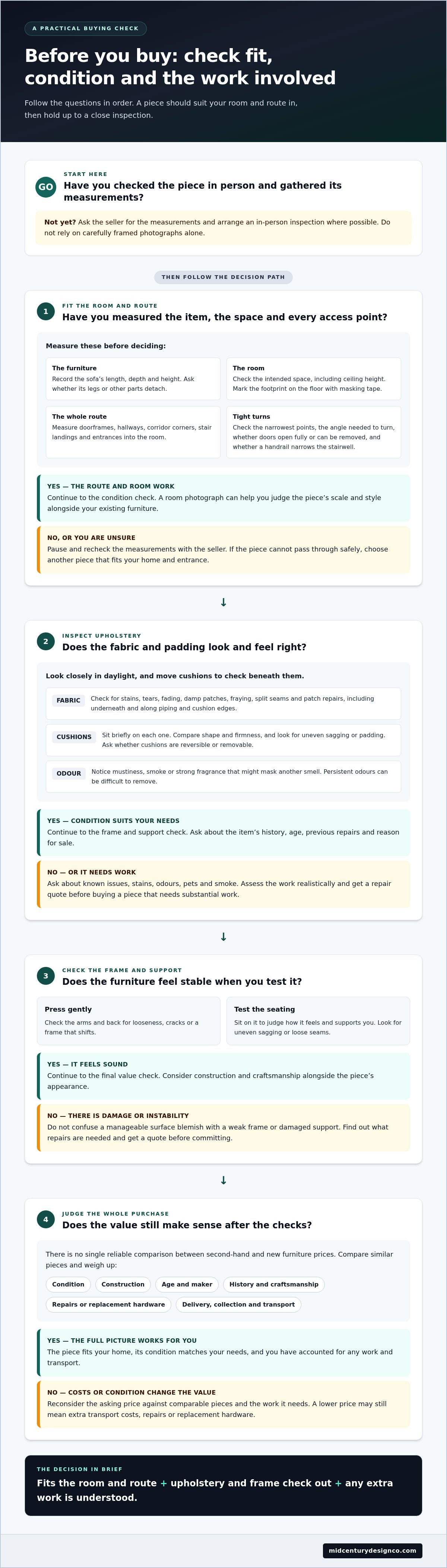
Before shopping, measure the space where each piece will sit and the route it must travel. Record the sofa’s length, depth and height, then compare them with the room, doorways, hallways and stairwells. Include ceiling height in your room measurements. A sofa might fit beside the living-room window but still be too wide for the turn at the foot of the stairs.
Measure the narrowest points along the route, not just the front door. Check doorframes, corridor corners, stair landings and entrances into the intended room. Note whether doors can open fully or be removed, and whether a handrail narrows the stairwell. Ask the seller for the sofa’s measurements and whether its legs or other parts detach. Don’t assume it will pass through simply because its listed width is less than the doorway’s.
How can you check dimensions and make sure used furniture will fit through your door? Compare the item’s height, width and depth with every access point, allowing for the angle needed to turn it. Measure the room, including ceiling height, and mark the intended footprint on the floor with masking tape. A room photograph can help you judge the sofa’s scale and style alongside your existing furniture.
How do second-hand furniture prices compare with new furniture prices? There’s no single reliable comparison: condition, construction, age, maker and delivery all affect value. Compare similar pieces and weigh their condition and history instead of judging by the asking price alone. A lower price may still mean extra transport costs, repairs or replacement hardware.
What is a fair price for used furniture in the UK? Compare similar items, then assess the piece’s condition, craftsmanship, history and any work it needs. Include collection and transport in your budget. The questions to ask when buying second-hand furniture should help you assess the whole purchase, not just the seller’s price.
What are your consumer rights when buying used furniture from a shop or online marketplace in the UK? According to the UK Government, under section 22, the short-term right to reject generally lasts 30 days, counted from the day after delivery and any other specified conditions being met. On a marketplace, note who the seller is and keep the listing and messages describing the sale.
How can you clean and treat second-hand furniture before bringing it home? Clean upholstered furniture thoroughly before it enters your home, following care instructions for its fabric. For a sofa, vacuum the seams and crevices, and clean visible marks with a method suited to the material. Don’t soak upholstery, as moisture can linger inside the padding.
Use a simple measuring sequence before agreeing to buy: measure the room, the sofa, then every part of the access route. Check the measurements against the seller’s figures and plan how the piece will pass through each turn. If it cannot be moved through safely, choose another piece that fits your home and entrance.
2. Assessing upholstered furniture in person
Inspect a sofa or armchair in person, not just in carefully framed photographs. Check the upholstery in daylight, moving cushions to examine the fabric beneath. Look for stains, tears, fading, damp patches and repairs hidden along seams or underneath. Sit briefly on each cushion: uneven sagging can reveal wear concealed by a polished exterior. Notice odours, too, as persistent smells can be difficult to remove.
Ask the seller about the piece’s history, including its age, previous repairs and reason for sale. Find out whether it came from a pet-free or smoke-free home, and whether the frame, springs or padding have known issues. For a mattress, ask how it has been used and inspect its overall condition carefully. Second-hand mattresses may contain allergens or dust mites and may lack the structural stability needed for sleeping.
What questions should you ask about a used sofa, mattress or upholstered furniture? Ask about its history, previous repairs, stains, odours, pets, smoke and known damage. For a sofa, ask whether the cushions are reversible or removable, then check beneath them for wear, loose seams and uneven padding.
- Check the frame: press gently on the arms and back, and look for looseness, cracks or a frame that shifts.
- Inspect the fabric: examine seams, piping and cushion edges for fraying, splits, stains or patch repairs.
- Assess the smell: check for mustiness, smoke or strong fragrance that might be masking another odour.
- Test the cushions: compare their shape and firmness, and check whether covers can be removed for cleaning.
Assess refurbishment realistically. A sturdy chair with tired fabric might suit someone willing to arrange reupholstery, but get a repair quote before buying a piece that needs substantial work. For smaller changes, decide whether you can clean, sand or repaint it yourself, and whether new hardware or a fresh finish would help. Don’t mistake a manageable surface blemish for a weak frame or damaged support.
Distinctive design details can make a vintage piece compelling, but inspect their condition alongside their appeal. Look closely at stitching, buttoning, carved arms and original fabric; these details may be costly or difficult to reproduce. If you value thoughtful construction, compare examples of vintage furniture craftsmanship with the piece in front of you. A considered choice balances its character with the work needed to make it comfortable and usable.
Distinctive designs and famous designer furniture may sell faster and for more than common styles. When assessing condition, prioritise construction and craftsmanship over minor blemishes.
3. Checking upholstered furniture for bed bugs
Inspect every upholstered piece before agreeing to buy, especially where fabric folds or meets the frame. Take a torch and check seams, piping, cushion edges, buttons and crevices; dark corners can conceal signs of bugs. Lift removable cushions and look beneath them, then inspect under the furniture and around its joints. Seller photographs may not show the underside or narrow gaps, so don’t rely on them alone.
How can you check second-hand furniture for bed bugs or other pests? Use a torch to inspect seams and crevices closely, and look over the whole piece for visible signs of bugs. If you spot signs of pests or notice an unexplained odour, leave the item rather than bringing it home.
Fabric condition matters as much as checking for pests. Examine the front and back of cushions for stains, tears, damp patches and wear, then gently press along seams to find loose stitching. Check for musty or smoky smells: odours can be difficult to remove, and stained or smelly upholstery may have hidden hygiene issues. Ask the seller about the furniture’s history and known problems.
- Use a torch: examine seams, folds, cushion edges and dark crevices.
- Check beneath cushions: inspect the fabric and frame, not only the visible seat.
- Look underneath: turn your attention to the base, legs and fabric stapled to the frame.
- Pause at warning signs: visible bugs, suspicious marks or lingering odours are reasons to reconsider.
Don’t treat a quick surface clean as a substitute for inspection. Before bringing upholstered second-hand furniture indoors, clean it thoroughly with a method suited to the fabric and let it dry fully. Follow care instructions where available; harsh products or excess moisture can damage delicate fibres. If cleaning won’t address a stain, smell or damaged patch, factor that work into your decision.
Upcycling can suit a piece with sound construction and tired but intact fabric, but be realistic about the work involved. If the upholstery needs replacing, decide whether you’re willing to arrange reupholstery before buying. New fabric may refresh a chair, but it won’t fix a frame problem or remove persistent odours. Avoid pieces needing extensive reupholstery if you want furniture ready to use.
Consider distinctive details before planning a new finish. Original stitching, shaped arms or patterned fabric may be central to a vintage piece’s character, so weigh what alterations would remove. A small, localised flaw may be manageable; widespread stains, tears or signs of pests call for greater caution. Choose only when the upholstery’s condition, cleaning needs and intended changes make sense together.
4. Inspecting furniture for damage
Inspect the whole piece from every angle, including its back, underside and interior. Open every drawer and cupboard; check for cracks, water marks, burn marks, holes and dust droppings. Holes or fine dust on wooden furniture may indicate an infestation. Examine joints and supports closely, since damage can affect stability even when the visible surfaces look beautiful.
How can you tell whether second-hand furniture is structurally sound and safe? Check that it stands steadily without wobbling or making noises, and look for cracks, broken supports, missing parts and previous repairs. For cots, high chairs, wardrobes and other large case goods, check that they meet current safety standards before use.
Test stability gently: press down on a table, rock a chair lightly and check whether a cabinet shifts. Look underneath for loose joints, split timber or improvised repairs. Confirm that shelves, handles, feet and drawer runners are present. A missing handle may be easy to replace; a cracked leg or broken support can affect how the furniture works. Distinguish cosmetic wear from defects that compromise its structure.
- Check surfaces: look for water damage, stains, burn marks and cracks.
- Inspect inside: open drawers and cupboards, checking corners for holes, dust and damage.
- Check all components: compare shelves, supports, handles and fittings with what the piece needs.
- Look for repair clues: mismatched screws, fresh glue or uneven joins may point to earlier work.
Ask the seller directly about repairs and known faults, then compare their answers with what you can see. Ask how old the item is, where it came from and why it’s being sold. Find out whether it has been moved, stored in damp conditions or altered. If the seller mentions a repair, inspect that area and consider whether the underlying construction remains sound.
What should you ask about a used furniture item’s age, history and reason for sale? Ask when it was bought, where it came from, what repairs it has had and why the seller is parting with it. The answers can help you understand wear, alterations and issues that need further investigation.
When collecting from a seller’s home, notice how the furniture has been stored and cared for. A dry, clean room suggests different conditions from a damp garage, though the item still needs inspection. Check for moisture around feet and lower panels, especially on cabinets kept against outside walls. If you plan to strip and re-stain a piece, check that it’s solid wood first. Peeling paint on vintage furniture may contain lead, so don’t treat it as an ordinary finish to remove.
5. Testing mechanisms, comfort and electrical goods
A polished finish can hide a stiff drawer or loose hinge. Before buying, operate every moving part yourself. Open drawers fully, then slide them closed and listen for scraping or catches. Open cupboard doors and check that the hinges move freely and close squarely. If a table extends, test the mechanism and make sure the leaves sit securely. These simple checks show how the piece works in everyday use.
For a desk, check each drawer with the others open and closed. This can reveal runners that catch or drawers that shift out of alignment. On a dressing table, test the drawers and any adjustable parts. For a coffee table, check that the top sits firmly and doesn’t rock when gently pressed. Don’t force a stiff mechanism; ask the seller whether it has always behaved that way or needs attention.
Try chairs before choosing them. Sit fully back, place your feet comfortably and notice whether the seat feels level or dips to one side. With dining chairs, check that the back supports you and the frame stays steady as you shift position. Test every chair in a set, as comfort and wear can vary.
On a sofa, sit in your usual positions rather than testing only the edge. Lean back to judge support, sit upright as if reading, then stretch out as you might at home. Notice whether cushions slide, the seat sinks unevenly or the frame creaks. A sofa can look inviting yet feel uncomfortable after a few minutes, so take time to assess its shape and support.
- Drawers: open and close each one, checking for sticking, scraping or uneven movement.
- Doors and hinges: test the full motion and check whether doors meet properly when closed.
- Tables: test extensions or adjustable parts, then check the assembled surface for movement.
- Seating: sit in your normal posture and try the positions you’ll use at home.
For electrical goods, choose a second-hand shop that tests items and offers guarantees. Ask to see the item tested and check whether it works as intended. Inspect the casing, plug and visible cable for damage; appearance alone doesn’t prove it works. If the item can’t be tested, you can’t assess its function before purchase.
Once you know what makes seating comfortable and tables practical, browse vintage dining chairs with those needs in mind. The right piece should work as well in your daily routine as it does in the room.
The Mid Century Design: Sideboards & Storage
The Mid Century Design Company offers sideboards and storage for readers seeking distinctive vintage pieces with practical purpose. Once you’ve identified the dimensions and condition that suit your home, explore its collection of sideboards, chest of drawers, coffee tables and occasional tables. These pieces offer considered storage and lasting character, while your measurements help you judge how each might fit.
If you’re furnishing a dining space, the collection also includes dining sets. Use the checks in this guide to assess what matters to you, from construction and condition to how a piece will work in daily life. Then picture its form, finish and presence in your home.
Explore the collection or contact The Mid Century Design to discuss your next furniture find.
Choose a piece that feels at home
A second-hand find can become part of your home’s story, not simply fill an empty corner. Let how you live guide your next step: what you want to store, how you gather around a table, or the details that make a room feel distinctly yours. That perspective helps you choose a piece for more than its first impression.
The questions to ask when buying second-hand furniture can also shape what you look for next. Note the qualities that matter most, such as a particular timber, silhouette or practical use. Then you can recognise a suitable piece without feeling compelled to settle for one that doesn’t belong in your space.
The Mid Century Design Co.’s collection offers a considered starting point for finding furniture with character. If you’re ready to explore a piece for your home, contact The Mid Century Design Co. Take your time, trust your eye and enjoy making room for something with its own story.
Frequently Asked Questions
What should I check for damage when buying second-hand furniture?
Separate damage that affects use from marks that are mainly cosmetic. A small surface scratch on a table may matter less than a split that could worsen under weight. Ask the seller to show any defect in good light, and compare it with the listing description before agreeing. For a set, such as dining chairs, inspect each piece individually; similar-looking items can have different wear or alterations.
What are the risks of buying second-hand furniture from a private seller in the UK?
The main risks are limited after-sales support, unclear item history and a mismatch between the listing and the furniture you collect. Used purchases may not include warranties, customer support or return policies. Check whether the seller is a private individual or a trader, read the listing closely, and keep messages and payment records. Poor communication, pressure to decide quickly or evasive answers are reasons to pause.
How should I arrange payment, collection and delivery when buying used furniture?
Agree on the payment method, collection time and who will arrange transport before committing. For an online purchase, get a delivery quote for a large item first, then compare it with the total cost of collecting it yourself. Confirm the address and access arrangements directly with the seller, and keep written records of the agreed price and collection details. Don’t pay until the arrangements and item description are clear.