

Round Vintage Dining Table for 4: A Thoughtful Buying Guide
What if the most inviting table for four isn’t the largest one you can fit, but the one that leaves everyone room to settle in? A round vintage dining table for 4 can make everyday meals feel more sociable, bringing graceful curves and a sense of history to the room. Its diameter is only part of the decision: chairs need space to move, and the base can make a real difference to comfort.
Choosing an older piece calls for a careful eye. A distinctive shape and appealing finish matter, but so do stability, signs of wear and how the table will fit your daily routine. The key is to decide whether the piece suits your space and intended use, rather than judging it on appearance alone.
This guide covers the dimensions and clearance to consider for four diners, how different bases affect legroom, and what to look for in materials, design and condition. You’ll be better equipped to choose an original vintage table that fits your room, works for everyday living and brings character to your dining area.
Key Takeaways
- Assess the room as a whole, allowing space for chairs to move and people to pass comfortably around the table.
- Compare tabletop shape and base design to see how each affects legroom, seating comfort and the table’s visual presence.
- A round vintage dining table for 4 can bring individuality to everyday meals. Make its condition part of your decision, not an afterthought.
- Separate essentials, such as suitable dimensions and a stable structure, from preferences like wood tone, finish and era.
- Explore authentic vintage dining sets and chairs to find original pieces with character and a history of their own.
Will a Round Vintage Dining Table for 4 Fit Your Room?
A round table has a particular ease about it. With no corners to interrupt the view, conversation can flow naturally, while its curved outline softens a room of straight walls and cabinetry. It can become a welcoming centrepiece without feeling formal. The right fit depends on more than the tabletop: consider its diameter alongside the chairs, the space they need to move and the routes people use through the room.
Measure the area the table will actually occupy, rather than relying on the room’s wall-to-wall dimensions. A doorway, radiator, sideboard or frequently used cupboard can reduce the space available. Vintage tables also vary in proportion, so compare your measurements with the dimensions of each piece instead of assuming every four-person design will fit in the same way.
How to measure for four diners
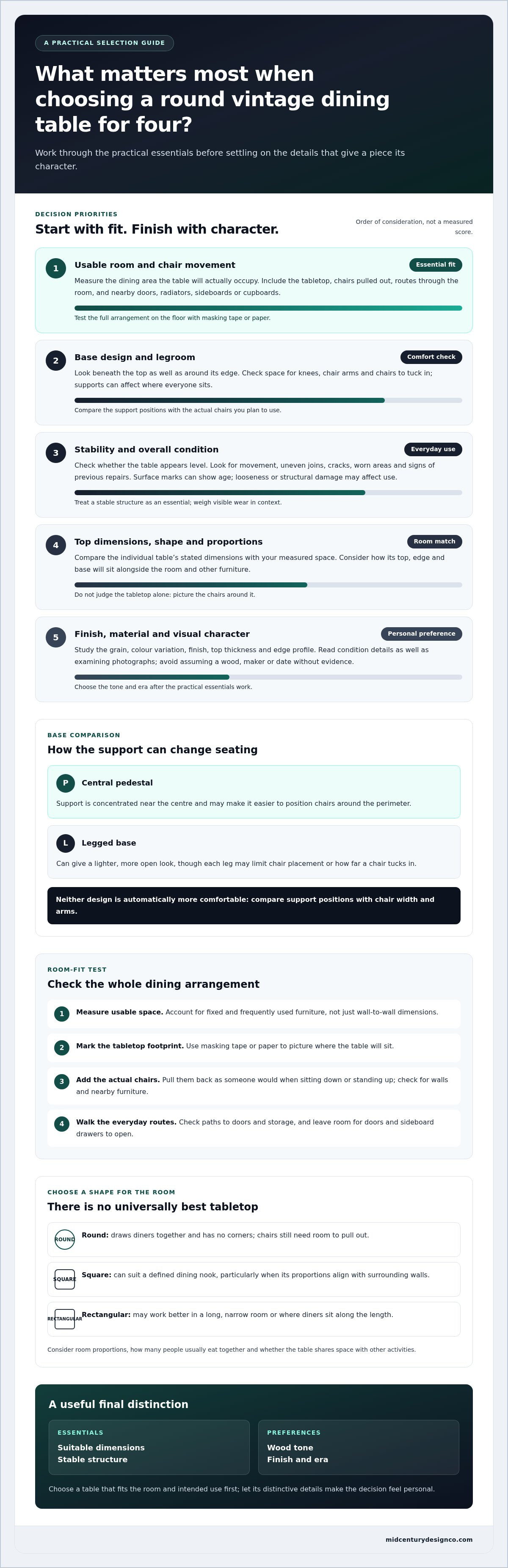
Measure the usable dining area, then mark the proposed tabletop footprint on the floor with masking tape or paper. Add the chairs around it, using their actual width and depth where possible. Pull each chair back as someone would when sitting down or standing up, and check whether it meets a wall or catches on nearby furniture. Walk the usual routes through the room, including the path to doors and storage. The layout should leave room for daily movement, not just look neat with every chair tucked in.
Remember less obvious obstacles. A radiator may make it uncomfortable to place a chair close to the wall; a door needs space to open; and a sideboard drawer needs room to slide out. If the table is for everyday meals, test the layout with the furniture in its usual positions rather than measuring around items you would not normally move.
Round table, square table or rectangular table?
A round top draws diners towards one another and can help a compact space feel less angular. Its footprint has no corners, which may make circulation feel more fluid, though the chairs still need room to pull out. That same welcoming dynamic applies when furnishing outdoor spaces too, where dedicated specialists like Zing Patio provide circular dining sets to maximise flow and sociability on terraces and patios. A square table can suit a defined dining nook, particularly when its proportions align with the surrounding walls. A rectangular table may work better in a long, narrow room or where diners need to sit along the length.
There’s no universally best shape. Consider the room’s proportions, how many people usually eat together and whether the table needs to share space with other activities. For a round vintage dining table for 4, check the stated diameter and picture the full arrangement with chairs rather than judging the tabletop alone. An older piece may also have a story that informs its appeal; an overview of antique furniture offers historical context, while vintage and antique aren’t interchangeable terms.
Once the measurements work on the floor, compare them with the individual table’s stated dimensions. This simple test helps you picture both its presence in the room and its place in your daily routine.
What to Look for in a Vintage Round Dining Table
A table’s character is more than its silhouette. The shape of the top, the structure beneath it and the way its surface has aged all influence how it looks and feels in daily use. A round vintage dining table for 4 should bring visual warmth, but its base must also leave diners comfortable and its condition should suit the meals, conversations and routines it will host.
Use this comparison as a starting point, then assess the individual piece. Design details can vary, even between tables with a similar outline.
| Detail | What to compare | What it can mean |
|---|---|---|
| Top shape | Round, with a defined or softly shaped edge | A continuous curve encourages a close, sociable arrangement. |
| Base form | Central pedestal or legs set around the perimeter | A pedestal can make chair placement more flexible; legs may interrupt some seating positions. |
| Legroom | Space beneath the top and between supports | Check for knees and chair arms, not just the number of places around the edge. |
| Visual presence | Top thickness, edge profile and base proportions | A substantial top or prominent base can feel more grounding in a room. |
Table tops, bases and the space beneath
A pedestal base keeps the support concentrated near the centre, which may make it easier to position chairs around the perimeter. A legged base can offer a lighter, more open look, though each leg may limit where a chair can sit or how far it tucks in. Neither design is automatically more comfortable. Compare the base’s position with your chairs, including their width and any arms, and check the table’s stated dimensions before deciding.
Look at the top’s edge and thickness, too. A slim profile can appear visually light, whilst a deeper edge may give the piece a more substantial presence. Consider how that proportion will sit alongside your other furniture.
Materials, finish and signs of age
In listing photographs, look closely at the grain, colour variation and finish across the top and base. Natural variation can give wood warmth and individuality; a finish may appear more matte or reflective depending on the light. Photographs show only part of the story, so read the condition details as well as studying the images. Avoid assuming a specific wood, maker or date unless there is evidence to support it.
Visible age-related character is not the same as a condition concern: marks can tell a story, whilst movement, instability or structural damage may affect everyday use. Check whether the table appears level, look for gaps or uneven joins, and note scratches, worn areas, cracks or signs of previous repairs. A stable piece with surface wear may suit daily dining; looseness or an uneven stance deserves closer consideration.
For an original piece with its own grain, finish and history, browse authentic vintage dining furniture and compare each table’s details with your chairs and room.
Is a Vintage Dining Table Practical for Everyday Use?
It can be. Vintage character and everyday function aren’t opposites: an original table may bring warmth and individuality to daily meals, provided its condition suits the way you plan to use it. Look beyond its appealing shape or patina and consider whether it feels stable, has a usable surface and works with the chairs you already own.
For a round vintage dining table for 4, think honestly about its place in your routine. Will it host family meals every day, occasional suppers or a mix of dining and other activities? Your answer helps you decide how much visible wear feels acceptable and which practical details deserve the closest attention.
- Reward: An original vintage table has individual character, from its grain and finish to the small details that distinguish it from newer furniture.
- Consideration: Existing marks and wear are part of a piece’s history, but understand their extent before deciding whether they suit your home.
- Check: Stability, surface condition and signs of repair need careful attention, particularly if the table will see regular use.
Assessing condition before you choose
Read the description alongside the photographs. Look across the tabletop for scratches, worn patches, cracks or unevenness, then examine the base, joints and feet for visible movement, gaps or signs of previous repairs. Images from several angles can help you understand the table’s structure, although a photograph can’t fully establish stability. A noted repair isn’t automatically a reason to rule out a piece; consider whether its current condition suits your intended use.
Age alone doesn’t determine practicality. A table with honest surface wear may still suit everyday dining, whilst looseness or an uneven stance could affect how it performs. Consider which marks you’re comfortable living with and distinguish them from concerns that may compromise a steady place to eat. For broader context on original pieces and their design, explore this guide to authentic mid-century dining furniture.
Pairing vintage tables with dining chairs
Compatibility is practical as well as visual. Compare the chairs’ seat height and width with the table’s stated dimensions, and consider the space beneath the top. A chair that’s too high may sit awkwardly; a broad seat or arms may make it harder to position several chairs comfortably. If you’re pairing pieces separately, check that each chair can sit in its intended place without clashing with the base.
A considered mix of vintage and contemporary chairs can make the dining area feel collected rather than overly matched. Repeat a colour, material or shape to give the arrangement a quiet sense of cohesion, then let the older table remain distinctive. For ideas on bringing different pieces together, see these mid-century furniture styling ideas.
A Simple Checklist for Choosing the Right Table
A clear shortlist makes it easier to balance practical needs with the details that give a vintage piece its appeal. Decide first what the table must do in your home, then weigh those essentials against preferences such as a particular finish or visual era. For a round vintage dining table for 4, this process helps you compare options on practical criteria as well as appearance.
Turn your room measurements into a shortlist
Start with the usable floor area, chair dimensions and the space needed for everyday movement. Use these figures to set a comfortable maximum footprint before browsing. A table that exceeds it can be ruled out straight away, however beautiful its finish; compare the remaining options on design and condition.
- Measure: Record the available dining area and the largest tabletop footprint that leaves room for chairs and regular walking routes.
- Set priorities: Note essential requirements, such as seating four, a stable structure and a suitable size. Keep preferences, including wood tone or period, in a separate list.
- Compare details: Review each table’s stated dimensions, top shape and base. Check whether the base leaves useful space for your chairs and diners’ legs.
- Review condition: Read the description and study photographs for signs of wear, repairs, an uneven surface or anything that could affect everyday use.
- Picture the setting: Consider the table with your chairs and surrounding furniture. Imagine it in daily use, not just as a striking object viewed on its own.
Compare the details that matter most
Keep a simple side-by-side record so a compelling photograph doesn’t overshadow a practical mismatch. Note any details that are unclear, then give the greatest weight to footprint, stability and chair compatibility. Finish and visual era can guide your final preference once the essentials are met.
| Detail | What to record |
|---|---|
| Dimensions | Top diameter and overall footprint |
| Base | Form, position and space beneath the top |
| Condition | Visible wear, repairs and signs of movement |
| Chair fit | Seat width, height and placement around the base |
| Appearance | Finish, colour and details you’re drawn to |
A shortlist is useful only if it reflects your actual room and routine. Once your criteria are clear, explore curated vintage dining furniture and compare individual pieces against your notes. The right choice should meet your essentials first, then bring the distinctive character you want to live with.
Find a Round Vintage Dining Table That Feels at Home
The right table should feel at ease in your room and in the rhythm of your days. You’ve considered how it fits, whether its base leaves comfortable legroom and what its condition means for regular use. Bring those practical checks together with a quieter question: does the piece’s shape, grain or finish feel like something you’ll enjoy living with?
A well-chosen vintage table needn’t be treated as a museum piece. Original furniture can bring individuality and a sense of history to everyday meals, sitting naturally alongside contemporary pieces and familiar routines. The aim isn’t to find a flawless object, but one whose character and condition make sense for your home.
What a considered final choice looks like
Before settling on a round vintage dining table for 4, revisit your measurements. Check the table’s stated dimensions against the usable space, your chairs and the room’s everyday routes. Then weigh the condition description and photographs against how often you’ll use the table and what level of visible wear feels comfortable.
Keep the essentials distinct from the details you simply prefer. A suitable footprint, stable structure and workable seating arrangement should come first; a particular wood tone, edge profile or period influence can help you choose between options that already meet those needs. That way, the table isn’t only appealing in a photograph. It has a place in the way you actually dine.
Bring original vintage design into your dining room
The Mid Century Design Co. curates and sells authentic vintage furniture, including dining sets and dining chairs. Original pieces have their own details and history, making it possible to create a dining setting with personality rather than a showroom-like sameness. A vintage table can stand on its own, or you can bring it together with complementary chairs for a more unified arrangement.
As you browse, use your shortlist as a guide, not a rulebook. Compare each piece’s dimensions and condition with your room, then notice the details that make one table feel especially right. Practicality and personal connection can both inform your decision.
When you’re ready to explore, browse authentic vintage dining furniture and picture how an original piece might settle into your home, ready for everyday meals and unhurried conversation.
Make Space for a Table with Character
A dining table becomes part of the small rituals that make a home feel like yours: a leisurely breakfast, a favourite dish shared with friends or a quiet moment at the end of the day. Choosing a round vintage dining table for 4 is an opportunity to bring that sense of occasion into everyday life with an original piece that feels personal rather than prescribed.
As you continue your search, look for a balance between practicality and the details that speak to you. Perhaps it’s the gentle curve of the top, the warmth of the wood or the way the table gathers people close. The most satisfying choice is one you can imagine welcoming into your home and using as part of everyday life.
Browse authentic vintage dining furniture and discover an original piece with character for your home. Explore the collection and find a table to gather around.
Frequently Asked Questions
Is a round vintage dining table suitable for a small dining room?
Yes, a round vintage dining table for 4 can work well in a small dining room if its full arrangement leaves enough space for chairs and movement. Its curved outline can feel less imposing than a table with corners, particularly in a compact nook. Mark the tabletop’s size on the floor, then add chair positions. This helps reveal whether the shape feels welcoming or crowds the route through the room.
Can I mix a vintage dining table with contemporary chairs?
Yes. A mix can feel intentional if the pieces share a visual thread, such as a similar timber tone, repeating curve or complementary upholstery colour. Pay attention to scale: a very delicate chair may look lost beside a substantial table, whilst bulky arms can make the arrangement feel crowded. Place a chair at the table and check that it slides in comfortably.
How can I tell whether a vintage dining table is stable?
If you can inspect it in person, place it on a firm, level surface and gently press opposite edges of the top to see whether it rocks. Look at the joints and where the base meets the top for movement or gaps. Don’t lean heavily on the table or force a joint. Online photographs can show visible condition, but they can’t demonstrate how firmly the table stands.
What is the difference between a pedestal base and a four-leg base?
A pedestal base supports the top from a central column, which can give chairs more freedom around the edge. However, a broad foot or low crosspiece may still meet diners’ feet. A four-leg base places supports towards the perimeter, leaving the centre open, but a leg can obstruct a chair position. Consider where each diner will sit, especially if your chairs have arms or wide legs.
Do vintage round dining tables usually extend?
Some extend, but don’t assume a round vintage table has a leaf or opening mechanism. An extending design may use a central leaf that changes the top into an oval, while other tables have a fixed surface. Check photographs for a seam across the top and look in the description for details of included leaves, operation and dimensions when extended. A measurement of the closed table won’t show its full footprint.
How should I care for a vintage wooden dining table?
Care depends on the table’s finish, so avoid abrasive cleaners, strong solvents or unverified polish that could alter its surface. For routine use, remove crumbs with a soft cloth, wipe spills promptly and use coasters or placemats to limit marks from hot dishes and moisture. Keep the table away from prolonged direct sunlight and heat sources where practical. If unsure, test any cleaning method on an inconspicuous area first.