

Small Dressing Table for an Alcove: Buying Guide
The smallest alcove doesn’t necessarily call for the smallest-looking furniture. A thoughtfully chosen small dressing table for alcove use can provide useful surface space and a sense of occasion, but only if it fits the recess as it really is. Skirting boards, uneven walls and room to sit comfortably all affect which dimensions will work.
It’s a familiar balancing act: you want enough room for daily essentials and a mirror, without making a compact bedroom feel crowded. Fitted furniture can make clever use of an awkward recess, while a freestanding piece offers more flexibility and character. An original vintage design can also sit naturally alongside contemporary furniture.
This guide explains how to measure your alcove and set realistic dimensions before you choose. You’ll compare fitted, freestanding and repurposed options, weigh surface space against storage, and learn how to bring vintage character into a smaller bedroom without making it feel cramped.
Key Takeaways
- Measure the alcove at several points, accounting for skirting boards, uneven walls and nearby doors.
- Compare fitted, freestanding and repurposed options for space, flexibility and visual impact.
- Choose a small dressing table for an alcove by checking its proportions and visual weight, not width alone.
- Balance drawer storage with open space to keep the dressing area practical without feeling heavy.
- Use a shortlist checklist to find a piece that fits the space and suits your bedroom.
How to tell whether a small dressing table will suit your alcove
A careful fit check can prevent a beautiful piece from feeling awkward. Alcoves often look more regular than they are: the walls may angle slightly, skirting boards can project into the recess, and an open door or radiator may limit how far a table can extend. Measure the space before browsing, then compare each piece with the usable opening rather than the alcove’s most generous dimensions.
Distinguish between the overall alcove width and the clear width at table height. The first describes the recess generally. The second is the space a table can actually occupy once wall irregularities and anything projecting into the alcove are accounted for. A table that seems narrow enough on paper may still catch on one side or sit awkwardly forward.
Which alcove measurements matter before you browse?
Use a tape measure and record your measurements in one place. Check the width at the front and further back, then note the narrowest usable point. Measure the depth from the wall to the nearest obstruction, including a radiator or the swing of a nearby door. At the intended table position, measure the height to any shelf, picture rail or sloping ceiling. Older dressing tables come in varied forms; the history of dressing tables offers useful context when comparing designs.
Think about how you’ll use the space, too. A dressing table needs room for its top, your knees, a stool or chair, and the movement needed to sit down and stand up. A compact piece may fit the recess but feel uncomfortable if drawers meet your legs or there’s no room to pull out a seat. Check these points together:
- Width: Compare the table’s widest point with the narrowest clear opening.
- Depth: Account for obstacles and the space needed to sit in front.
- Height: Check the tabletop against shelves, rails and ceiling lines.
- Legroom: Consider the position of drawers, supports and your knees.
- Seating space: Make sure a stool or chair can be pulled out without blocking a route through the room.
How do skirting boards and uneven walls affect the fit?
Skirting boards can stop a table sitting flush against the wall, reducing the available depth or leaving a gap behind it. Measure how far the skirting projects and check whether the table’s back or legs would meet it. Don’t assume both sides of the recess match. Measure each side and look for walls that taper, bow or lean. Keep a simple sketch with the figures marked, so you can compare a specific small dressing table for an alcove with the real shape of the space rather than a visual estimate.
Before deciding, picture the table in use. Leave enough clearance to reach the mirror and open drawers, and consider whether the chair can be tucked away when it’s not needed. Measuring these details helps the piece feel settled in the alcove, rather than squeezed into it.
Freestanding, fitted or repurposed: which alcove dressing-table option works?
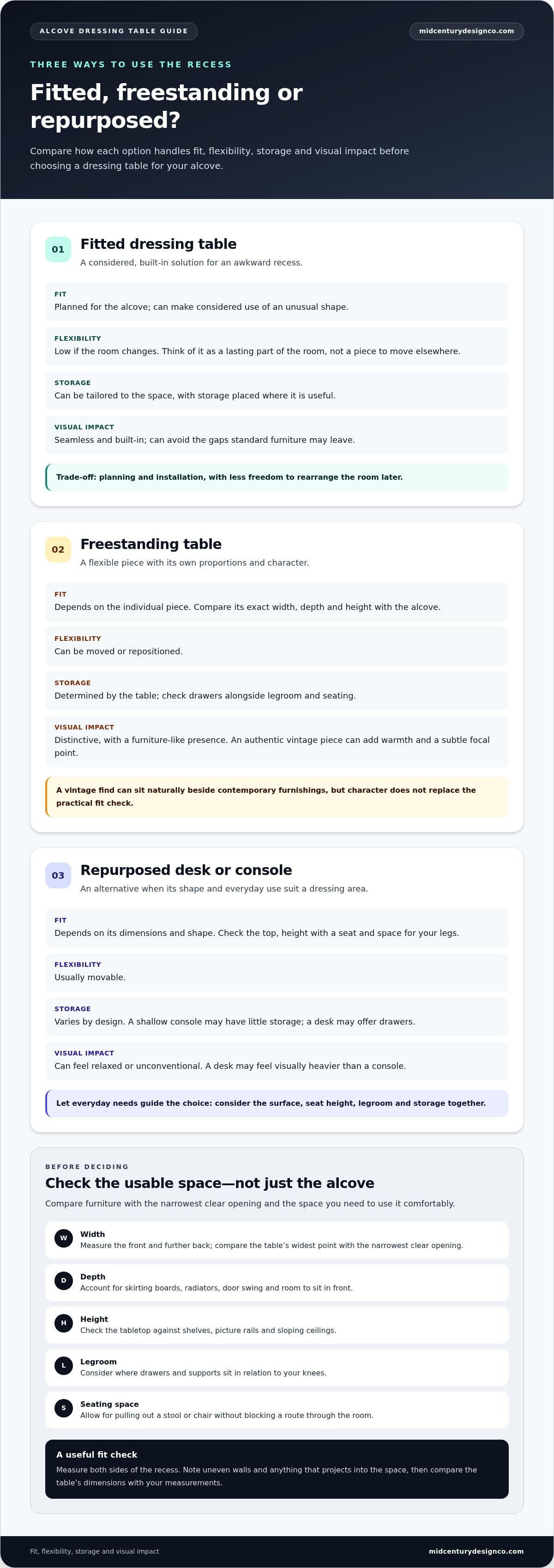
Once you know the alcove’s usable dimensions, decide how the furniture should work with the space. A fitted design can make an awkward recess feel intentional, while a freestanding table brings flexibility and the individuality of a considered find. A desk or console may also work if its proportions and everyday use suit a dressing area.
| Option | Fit | Flexibility | Storage | Visual impact |
|---|---|---|---|---|
| Fitted | Planned for the alcove | Low if the room changes | Can be tailored to the space | Seamless and built-in |
| Freestanding | Depends on the individual piece | Can be moved or repositioned | Determined by the table | Distinctive, with a furniture-like presence |
| Repurposed desk or console | Depends on its dimensions and shape | Usually movable | Varies by design | Can feel relaxed or unconventional |
When is a fitted dressing table the more practical choice?
Fitted furniture can make sense when the alcove is unusually shaped or standard furniture leaves gaps you’d rather use. Planned around the room’s dimensions, it can make considered use of the recess and place storage where it’s useful. The trade-off is the planning and installation involved, along with less freedom to rearrange the room later. Think of fitted furniture as a lasting part of the room, not a piece you can readily move elsewhere.
What can a freestanding vintage table offer?
A freestanding table lets you bring an object with its own proportions and history into a quieter corner. An authentic vintage piece can add warmth and a subtle focal point, particularly alongside contemporary furnishings. Character doesn’t replace the practical test: compare the table’s exact width, depth and height with your alcove measurements, then consider its legroom and storage. Styling mid-century modern furniture thoughtfully can help a vintage find feel at home rather than staged.
A small dressing table for alcove use needn’t be designed specifically for a recess. A compact desk or console can work if its top suits your routine, its height works with a seat, and its supports leave enough room for your legs. A shallow console may have an elegant profile but little storage; a desk may offer drawers but feel visually heavier. Let your everyday needs guide the choice.
If a freestanding option appeals, browse the vintage dressing tables and compare each piece with your measurements. Fit comes first; the right character can make the alcove feel connected to the rest of the room.
How to compare small dressing tables for scale, storage and style
Once a table’s dimensions are within range, look beyond its width. Two pieces that occupy similar floor space can feel quite different in an alcove. A solid-sided design may look substantial, while slim legs and open space beneath can make another feel lighter. The right small dressing table for an alcove should suit both the recess and the visual rhythm of the bedroom.
Consider the whole silhouette. Look at the depth of the top, the position of the legs, and whether drawers extend across the front or sit to one side. These details affect how much floor remains visible and how easily a stool can tuck underneath. A table may fit neatly yet dominate a narrow corner if it feels heavy beside the bed or wardrobe.
How much storage does a compact dressing table need?
Start by listing what you’ll actually keep there, such as a hairbrush, a few cosmetics and jewellery you reach for often. This makes it easier to decide whether drawers are useful or simply take up visual space. A clear top can make a small area feel composed, while a drawer keeps smaller essentials close at hand. Choose for your routine, not the largest storage capacity you can fit.
There’s a balance to strike. Drawers conceal everyday items and help keep the surface clear, but a deep drawer unit can make a compact table look heavier. A simple top with little or no enclosed storage may feel more open, though it means storing essentials elsewhere or keeping them visible. Think about how you prefer to get ready, then judge the storage against that habit.
Which design details help a table feel at home?
Visible legs and open space beneath can soften a table’s presence, particularly where the alcove already feels enclosed. Timber grain brings warmth and texture without adding another strong colour or pattern. Look for proportions that sit comfortably with nearby furniture rather than trying to match every finish exactly. If other vintage pieces are in the room, a shared material or shape can create a subtle connection.
Vintage dressing tables vary in timber, finish, handles, mirror arrangements and overall form. Notice which details draw your eye, then consider how they’ll relate to the room’s existing character. A restrained design can keep the alcove calm; a more distinctive piece can become a focal point. Neither is automatically better. Aim for a considered balance rather than a showroom-perfect match.
Consider the mirror separately from the table. A mirror fixed to the furniture creates a unified look, while a wall-mounted mirror gives you more freedom to set its height and position. It can also leave the table as the focal piece, rather than making the full arrangement feel crowded. Check the mirror’s scale against the table and wall, and leave enough space for the two to feel connected without overwhelming the alcove.
Before choosing, picture the table with the items you’ll use and the seat you plan to pair with it. The most successful piece isn’t necessarily the one with the most drawers or the boldest detail. It’s the one whose scale, storage and character work together, leaving the alcove practical and pleasant to use.
Checklist for choosing an alcove dressing table
A measured shortlist makes the decision easier. Instead of relying on a photograph or an approximate impression of the recess, compare your recorded dimensions with the individual table and picture how you’ll use the space day to day. Follow these checks in order to assess a small dressing table for an alcove for both fit and appearance.
- Record the usable alcove dimensions. Note the narrowest clear width, available depth and height at the table’s intended position. Mark variations between the front and back of the recess on your sketch rather than relying on one generous estimate.
- Decide what the table needs to do. List the essentials you’ll keep nearby and whether you need drawers, space for a mirror or room for a stool. This gives you a practical basis for comparing pieces, instead of choosing storage or surface area you may not use.
- Compare each shortlisted table’s dimensions. Check its stated width, depth and height against the narrowest clear opening and your other measurements. Look beyond the top: legs, handles and drawer fronts can affect how close it can sit to a wall or skirting board.
- Check how it works with a seat. Consider legroom, drawer access and the space needed to pull a chair or stool out. Make sure the seat won’t obstruct a doorway or make the route through the room feel pinched.
- Assess the specific piece. For a vintage table, look at its visible condition, finish and distinctive details as an individual object. Don’t assume that pieces from the same period or material share identical proportions or character.
What should you check on an individual table?
Read the measurements alongside the design. A drawer may sit close to one side, a handle may project beyond the front, or the legs may flare outwards. Each detail can affect clearance, even if the tabletop appears to fit. With vintage furniture, judge the particular table rather than relying on a general description. Its finish, signs of age and overall presence are part of what makes it individual.
How can you picture the finished alcove before buying?
Mark the proposed footprint on the floor with removable tape, or cut a paper outline to the table’s dimensions. Add the stool or chair, then move it in and out as you would while getting ready. Check that drawers can open and the route into the room remains clear. This simple rehearsal can reveal an awkward arrangement before the furniture is in place.
Once your practical shortlist is ready, explore vintage dressing tables and compare each piece with your notes. Imagine it in the alcove before settling on a finish or adding accessories. The right choice should feel naturally at home, not simply fill the space.
Make an alcove feel personal with an authentic vintage dressing table
Choosing a table for an alcove comes down to a sequence of priorities: fit first, practical needs second, then character and finish. Once the dimensions and daily use are settled, focus on the details that make a piece feel at home, from the warmth of its timber to the shape of its handles. An authentic vintage dressing table offers a freestanding alternative to built-in furniture, with a presence that feels individual rather than made to disappear into the recess.
That distinction matters in a small bedroom. Fitted furniture can be planned around a particular space, but an original piece brings its own proportions and visual identity. The aim isn’t to make the alcove look larger at any cost. It’s to make it feel considered, useful and connected to the rest of the room.
Why choose an original vintage piece for a small space?
A modest footprint can still carry a strong sense of craftsmanship and design history. A distinctive leg shape, carefully considered proportions or characterful timber can give a quiet corner a focal point without a large piece of furniture. Vintage tables vary in form and detail, so choose one for how its particular silhouette works in your room, not simply because it is described as mid-century.
Let the table sit alongside newer pieces without trying to recreate a period room. A contemporary lamp, favourite books or a simple mirror can make the arrangement feel personal while keeping the table’s original character in view. For a relaxed result, choose a few objects that echo its materials or tones rather than filling every available surface.
How to take the next step with confidence
Before browsing, return to your alcove sketch and shortlist of practical requirements. Compare each individual dressing table’s dimensions with the space, then look at details that affect everyday use, such as drawer placement, legroom and room to sit comfortably. Consider its visible finish and design in relation to nearby furniture, too. This order keeps an appealing detail from distracting you from a genuine fit or function concern.
Then picture the piece in place. Would its lines bring welcome contrast, or would a lighter silhouette suit the corner better? Will the surface hold your essentials while leaving the route through the room clear? These questions help you consider both the room and the object. The right find needn’t match everything around it; it should feel as though it belongs.
Explore authentic vintage dressing tables with your measurements and priorities to hand. Compare each piece’s proportions and character with the alcove you’ve prepared.
Choose a piece that makes the alcove your own
A small dressing table for an alcove can be more than a way to fill an awkward recess. Chosen with care, it can become a favourite corner of the bedroom, where useful routines meet the pleasure of living with a well-made object. Let the piece’s proportions guide your decision, then trust your eye for the details that make it feel personal.
The Mid Century Design Co. specialises in authentic vintage mid-century furniture, with dressing tables and Danish furniture among its offerings. Original pieces offer an alternative to built-in joinery: furniture with its own character, ready to find a place in a contemporary home.
Keep your measurements close as you browse, and imagine each table in the room, not just on a screen. The right choice needn’t be the most elaborate. It’s the one that feels comfortable in the space and reflects your taste.
Browse authentic vintage dressing tables and find a piece to make your alcove feel considered, welcoming and entirely your own.
Frequently Asked Questions
Can I use a small desk as a dressing table in an alcove?
Yes, a small desk can work well if its height, surface and leg arrangement suit your routine. For example, a desk with generous knee space may pair comfortably with a separate stool, while a deep set of drawers could make sitting close difficult. Consider where a mirror will go and whether you can keep daily essentials within reach. A desk can be a practical small dressing table for an alcove without looking like a traditional vanity.
Is a fitted dressing table better than a freestanding one for an alcove?
Neither is automatically better. The right choice depends on whether you value a tailored appearance or the freedom to rearrange. Fitted furniture can make an alcove feel integrated with the room, while a freestanding table can move if your needs or layout change. Think about how long you expect the bedroom arrangement to stay the same. If you rent or enjoy refreshing your furniture, a movable piece may offer useful flexibility.
Can a dressing table fit in an alcove with uneven walls?
Yes, but the wall shape may determine how the table sits and whether a gap remains behind it. A freestanding piece doesn’t need to meet both walls perfectly to look intentional. Positioning it centrally or leaving a little breathing space can create a balanced effect. Check that it stands securely and that drawers or doors operate freely. For a fitted design, account for the irregular shape in the planning.
Do I need a matching stool for a small dressing table?
No, a stool doesn’t have to match the table. A simple seat in a complementary material or colour can make the arrangement feel collected rather than overly coordinated. Prioritise comfort and proportion: check that the seat height lets you sit naturally at the tabletop and that it can be tucked away when not in use. If floor space is especially limited, a compact stool may be easier to move than a chair with arms.
Can I put a mirror above a dressing table in an alcove?
Yes, a wall-mounted mirror can work well and lets you choose a table without a built-in mirror. Consider how its width relates to the tabletop and whether its position suits your seated view. A mirror that’s too large may dominate a narrow recess, while one that’s too small can feel disconnected. Use appropriate fixings for the wall and ensure the mirror is securely mounted before placing the table beneath it.
What happens if a dressing table is slightly narrower than the alcove?
A narrower table can leave a visible gap on either side, but that isn’t necessarily a problem. The space can help a freestanding piece feel less crowded and make its outline easier to appreciate. Decide whether you prefer it centred or aligned with another feature, such as a wall shelf. Before filling the gaps for symmetry, see how the table, mirror and nearby furniture look together in the room.