

Small Vintage Desk for Bedroom: A Thoughtful Buying Guide
What if the right small vintage desk for bedroom use didn’t simply save space, but gave the whole room a little more soul? In a compact bedroom, even a beautiful piece can feel imposing if its proportions are wrong, or frustrating if there’s nowhere to keep papers and essentials close at hand.
It’s natural to wonder whether a vintage desk will leave enough room to move, offer a useful work surface and feel practical day to day. The answer lies in looking beyond appearance: a well-chosen original can bring warmth and individuality while earning its place in your routine.
This guide will help you choose a desk that fits your room and the way you work. We’ll look at proportions, storage, legroom and signs of wear, so you can balance function with visual lightness and picture how a characterful vintage piece might sit alongside the rest of your bedroom.
Key Takeaways
- Choose a small vintage desk for bedroom use by how it fits your room and routine, not by an assumed standard size.
- Measure the intended space, including skirting, door swing and the route into the room, before choosing a desk.
- Factor in chair movement and legroom to judge whether the desk’s depth will feel comfortable in daily use.
- Compare a writing desk with a dressing table by considering your main tasks, surface needs, storage preferences and preferred placement.
- Use the listing’s full measurements, materials and condition details to make a considered choice with practicality and character in mind.
Why a Small Vintage Desk Can Belong in a Bedroom
A bedroom desk can create a purposeful, personal corner without turning the room into an office. It might be where you write in a journal, open a laptop for a quiet task or keep correspondence together. The appeal of a small vintage desk for bedroom use is this balance: a useful place to focus, with a silhouette and finish that feel considered rather than purely utilitarian.
A small bedroom desk is one that gives you enough usable surface for your routine while fitting the room without obstructing movement. There’s no universal measurement that makes a desk small. Suitability depends on the available floor area, the chair you’ll use and how much space you need to move around it. A compact piece that works beside a window in one room may feel intrusive beside a bed in another.
Vintage design can help a desk feel at home rather than added as an afterthought. Tapered legs leave more floor visible, while a restrained frame can offer presence without the visual weight of a bulky workstation. Wood grain and a gently aged finish bring warmth, making the desk feel like part of the bedroom’s story. Consider both its footprint and how its shape reads in the room.
What makes a desk work in a bedroom?
Start with the task. A dedicated desk should have a surface that accommodates what you actually use, whether that’s a notebook and pen, a laptop or a few everyday essentials. Think about where a chair will sit and whether you can pull it out comfortably without blocking a doorway or the route around the bed.
A bedroom is also a place to rest, so the desk should support its calm, private atmosphere rather than dominate it. If you only occasionally write or use a laptop, a dressing table may already provide a suitable surface. A dedicated desk makes more sense when you want a distinct work area or need belongings to stay arranged between uses.
Why choose vintage character over a purely utilitarian look?
Details give a desk its presence. Visible wood grain, tapered legs, a modest drawer and well-judged proportions can make a practical surface feel quietly distinctive. Original vintage furniture also has individual character: natural variation in the finish and signs of its history mean it won’t have the uniform newness of a newly made vintage-style desk.
Vintage and antique aren’t interchangeable labels; Antique furniture offers useful background on how furniture reflects the style and craftsmanship of its time. For a bedroom scheme, you don’t need every piece to match. Let the desk’s lines or finish echo a detail in a bedside cabinet, chest of drawers or dressing table. A thoughtful relationship between pieces feels more personal than a matching set while keeping the desk visually connected to its surroundings.
The right choice earns its place twice: it serves the small tasks of daily life and brings warmth to the room. Choose by the routine it needs to support, then look for a shape and finish that feel at ease among the furniture you already love.
How to Assess the Scale, Shape and Materials of a Vintage Bedroom Desk
A desk’s listed width and depth are only part of the picture. In a compact bedroom, its position, shape and the space needed to use it all affect whether it feels graceful or gets in the way. Before comparing a small vintage desk for bedroom use, map the spot where you plan to place it and consider the approach to the desk as well as its footprint.
Measure the room, chair clearance and access route before comparing desk dimensions. Note the usable width of the wall, allowing for skirting boards that may stop the desk sitting flush. Mark the door swing and check whether nearby drawers or wardrobe doors can open fully. Then consider the route into the bedroom: a desk must fit through the doorway and along the approach, not just in its final position.
- Mark the footprint. Use masking tape or a simple paper plan to show the desk’s width and depth on the floor.
- Allow for the chair. Include the space needed to pull it out, sit down and move away comfortably.
- Check the underside. A drawer or apron can reduce legroom, even if the desktop itself seems generous.
Desk depth is useful only if you can sit comfortably at it. A chair pushed against a bed or obstructing a walkway may make the surface awkward to use, so picture the whole arrangement rather than the desk alone. A clear route past the chair matters as much as a neat fit against the wall.
Which desk shape suits a compact bedroom?
A writing desk with an open underside can feel visually lighter because more floor remains visible, and it may be easier to position a chair. Drawer-heavy designs offer handy space for stationery, keeping small essentials close without adding another storage piece. However, a deeper body or low drawer arrangement can add physical and visual bulk. Look at the kneehole and leg placement together: they determine where your knees can sit and whether the chair can tuck in naturally.
What can wood, veneer and visible wear tell you?
Photographs can reveal more than colour. Look closely at the grain, veneer edges and joins between the legs, frame and top. These details help you understand the desk’s materials and construction. Close-ups of corners, drawer fronts and the underside can also show how its condition varies across the piece.
Fine scratches or uneven colour can be part of a desk’s history; loose joints, lifting veneer or damage around a drawer may affect how it serves you. Consider the surface character alongside signs of stability and the job you have in mind. A desk for occasional notes has different demands from one used daily for a laptop. As you refine your preferences, browsing original vintage desks can help you compare how individual shapes and finishes might sit within your bedroom.
Vintage Desk or Dressing Table: Which Suits Your Bedroom Routine?
The best choice depends less on the room’s label than on what you’ll do at the surface most often. A writing desk gives work and writing a defined place; a dressing table is designed around getting ready but may also accommodate occasional notes or laptop use. Neither form is automatically the better fit. Match its surface, storage and position to your everyday habits.
| Consideration | Writing desk | Dressing table |
|---|---|---|
| Primary task | Writing, laptop use or focused everyday work | Getting ready, with occasional writing or other tasks |
| Surface needs | Space for the equipment and materials used together | Room for grooming essentials, with some clear space for other uses |
| Storage preference | Drawers for stationery or work items | Storage for smaller personal items and accessories |
| Bedroom placement | A spot where a chair can be pulled out for use | A position that suits the getting-ready routine and available light |
Choose for focused work, occasional writing or laptop use
Be honest about your routine. Will you write briefly now and then, use a laptop most days or spend longer stretches at the desk? Consider the equipment you need at hand, such as a notebook, charger or mouse, and whether it can sit on the surface without crowding it.
For regular use, look beyond the top. The desk needs enough depth for your usual task, while the space beneath it must allow you to sit without your knees meeting a drawer or apron. Pair it with a chair that lets you sit comfortably and move naturally. Comfort depends on the person and the combination of desk and chair, so consider them together rather than assuming a particular design will suit everyone.
Choose for a flexible bedroom surface
A dressing table can be a sensible dual-purpose choice if writing or laptop use is occasional and its surface leaves enough clear space for that task. Picture the changeover: will everyday items need moving each time, and can the seat tuck away when the table is being used for getting ready? Drawers can keep smaller belongings organised, though their position should still leave comfortable legroom.
Separate pieces may suit you better if work is frequent, equipment tends to stay out or you want a clear distinction between work and rest. A dedicated desk lets the bedroom surface serve one main purpose, while a dressing table remains centred on your getting-ready routine. Choose what supports your most frequent use without making the room harder to live in.
Choose the desk type that best serves your most frequent task, and let occasional uses be the welcome extra. If a small vintage desk for bedroom use needs to do double duty, prioritise a comfortable seat and usable surface first, then decide whether its storage and shape also suit the rest of your routine.
A Practical Checklist for Buying a Small Vintage Desk Online
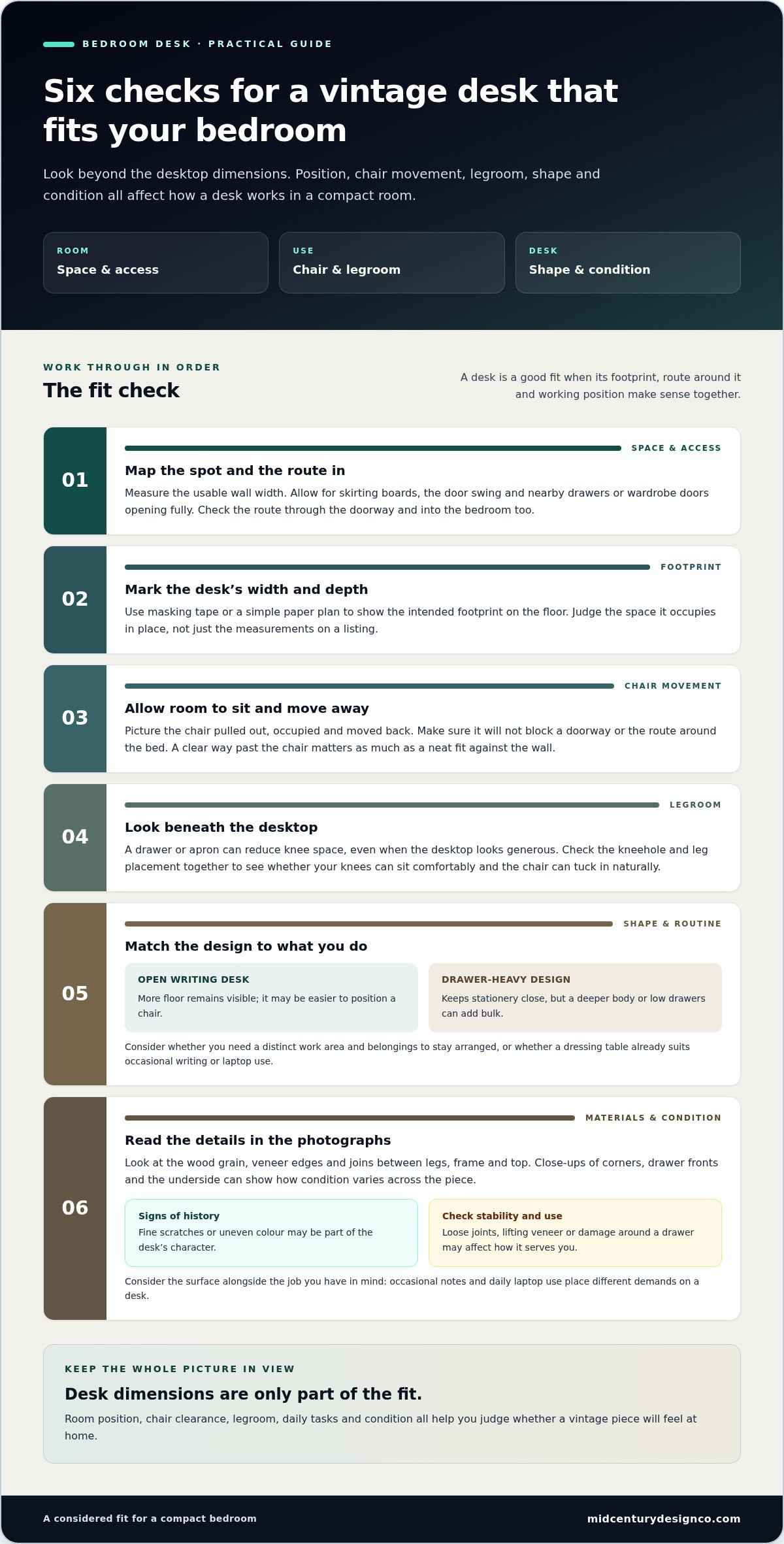
Online photographs can make a desk’s character immediately appealing, but the best choice also has to work in your room and routine. Use this checklist in order, from planning the space to weighing the final details. It helps separate what a listing shows from what you may be assuming, and gives each attractive piece a practical test.
- Measure the intended spot. Note the usable wall width and account for skirting, nearby doors and anything that needs to open. Mark the desk’s proposed footprint on a simple room plan or on the floor.
- Allow for access and movement. Consider the route into the bedroom as well as the space around the desk. Leave room for the chair to pull out, and check that it won’t obstruct a doorway, wardrobe or drawers you use regularly.
- Define the desk’s main purpose. Decide whether you’ll write occasionally, use a laptop regularly or keep work materials close at hand. This helps you judge the surface, legroom and storage you actually need.
- Compare the full measurements. Check the listing’s height, width and depth against your room plan, not just the wall space. Look for details that affect usable space, such as drawer fronts, an apron or legs set close together.
- Review the photographs and condition description. Examine every available angle and close-up, including the underside if shown. Look at joints, drawer fronts, handles and veneer edges, and note wear that could affect stability or everyday use.
- Make a considered final choice. Weigh fit, function, materials and visible condition together. Ask yourself whether the desk’s character suits the room and whether its practical compromises feel acceptable for the way you’ll use it.
What to check in the listing and photographs
Look for complete measurements, multiple views and a clear description of condition. In the photographs, compare drawers and handles: do they appear aligned, and do visible joints look even? A polished finish or a period-style label alone doesn’t establish age, construction or condition. Treat stated details as evidence, and avoid filling gaps with assumptions based on appearance.
How to picture the desk in your room before buying
Alongside the floor plan, consider how the desk’s wood tone will sit with your flooring, existing furniture and the natural light in that part of the room. It needn’t match everything; a related finish or shape can create a quieter connection. For further room-planning inspiration, the guide How to Style Mid Century Modern Furniture: Debunking the Museum Myth explores ways to make vintage pieces feel at home in a lived-in space.
Once you’ve settled on your measurements and priorities, browse original vintage desks to compare pieces with individual character and a practical place in your bedroom.
Find an Original Vintage Desk That Feels at Home in Your Bedroom
The right desk earns its place through more than appearance. Bring four considerations together before choosing: does it fit the room, support the way you’ll use it, suit the materials and finishes around it, and appear in a condition that works for everyday life? A small vintage desk for bedroom use should feel purposeful, not like a compromise made simply to squeeze in another piece of furniture.
Original vintage furniture offers more than a useful surface: the grain, lines and finish carry individual character and a sense of history. The Mid Century Design Co. specialises in curated original vintage mid-century furniture, including desks and office chairs. An original piece has its own history and signs of age, rather than the uniform finish of a newly made item inspired by the past.
Build a bedroom scheme around one purposeful vintage piece
A desk can sit comfortably alongside existing furniture without requiring a matching suite. Let one or two details, such as the wood tone, leg shape or drawer pulls, connect it with the room. If the desk has a strong visual presence, leave some floor around it and keep desktop accessories restrained. A lamp, notebook and a few useful objects can give the corner purpose without crowding the surface.
Think about the whole bedroom, too. A desk might relate to a bedside cabinet through its finish, while a dressing table elsewhere in the room can bring a different silhouette into the scheme. The aim isn’t to make every piece identical, but to give the eye a few thoughtful connections. Balance the character of the furniture with open space and the softer elements already in place for a room that feels collected rather than arranged as a display.
Explore original vintage desks and bedroom furniture
Once you know what will fit and how you’ll use it, browsing becomes more considered. The Mid Century Design Co. specialises in original vintage mid-century pieces, including desks, dressing tables and bedside cabinets for the bedroom. Begin with the surface you need, then consider whether another piece could bring continuity to the room through its form, finish or practical role.
Keep your priorities close as you explore: room fit first, then routine, materials and condition. If a desk answers those needs and brings a quality you’d be glad to see each day, it may be the piece that gives your bedroom a more personal corner.
Explore The Mid Century Design Co.’s curated collection of original vintage desks and bedroom furniture to find a piece that suits your room and routine.
Make Room for a Piece with a Story
The right small vintage desk for bedroom use can become more than a convenient surface. It can mark out a quiet corner for thought, creativity or a familiar daily ritual, bringing intention to a room that’s first and foremost your own sanctuary.
As you browse, picture the moment you want the desk to hold: a notebook opened in the morning, a letter written in the evening or a few minutes spent gathering your thoughts. Imagining how you’ll live with a piece can make your choice feel personal, not simply practical. A well-loved vintage form can sit naturally alongside the furniture you already have, adding warmth without asking the bedroom to become something else.
The Mid Century Design Co. brings together original vintage furniture with character and purpose. Explore original vintage desks and furniture to find a piece that feels right for your room and routine.
Frequently Asked Questions
Will a small vintage desk fit in a bedroom?
Yes, a small vintage desk for bedroom use can fit if its footprint works with the room’s layout and leaves space to sit and move around it. Measure the intended spot, then compare it with the desk’s full listing dimensions rather than relying on a label such as “small”. Include the chair and the route to the bed in your plan. A desk that fits against a wall may still feel awkward once in use.
What should I measure before buying a vintage desk for a bedroom?
Measure the space where the desk will stand, including the skirting that may keep it from sitting flush. Check the door swing, nearby furniture and the room needed to pull out a chair. Also consider the route through the bedroom and any tight turn on the way in. Compare these measurements with the listing dimensions, including the desk’s depth and height, so the piece works both in place and in use.
Are vintage desks practical for working from a bedroom?
They can suit writing or laptop use if the surface, legroom and chair work for you and the task. Think about how often you’ll sit there and whether your work takes a few minutes or several hours. A desk for occasional emails may have different demands from a full working-day setup, where equipment and comfort matter more. Consider the chair and desk together, and judge the arrangement for your own routine.
How can I tell whether a desk is genuinely vintage rather than vintage-style?
Read the listing description alongside photographs of the materials, finish, construction and joinery. Look for details shown from more than one angle, such as drawer interiors, the underside or the back, and see whether the stated history is clearly explained. No single feature proves a desk’s age or authenticity. A retro silhouette or warm wood finish can suggest a period look, but isn’t evidence on its own that the piece is original.
Is a vintage desk or a dressing table better for a bedroom?
Choose according to the task you do most. A desk may suit regular writing or laptop use, while a dressing table can prioritise personal items and serve as an occasional writing surface. Before deciding, consider whether the height works with your seat, whether there’s room for your legs and whether the storage suits what you’ll keep nearby. If you’ll switch between uses, picture how you’ll clear and reset the surface.
What condition details should I look for when buying a vintage desk online?
Examine close-up photographs of the top, veneer edges, joints, legs, drawer fronts and handles. Small marks or changes in colour may simply show age, while a loose-looking joint, lifting veneer or misaligned drawer could affect everyday use. Read the full condition description and compare it with images from different angles. One flattering view can’t show the whole piece, so look for a consistent picture of its condition.
Can a small vintage desk work in a bedroom with limited storage?
It can, depending on what you need to keep close. A desk with drawers may hold stationery or small everyday items, while an open-legged design can preserve a lighter feel and leave more visible floor beneath it. Decide which matters more in your room: concealed storage or an airy outline. Don’t assume every vintage desk has drawers; check the particular piece’s design and consider where anything that won’t fit will live.