

Sustainable furniture choices for UK buyers
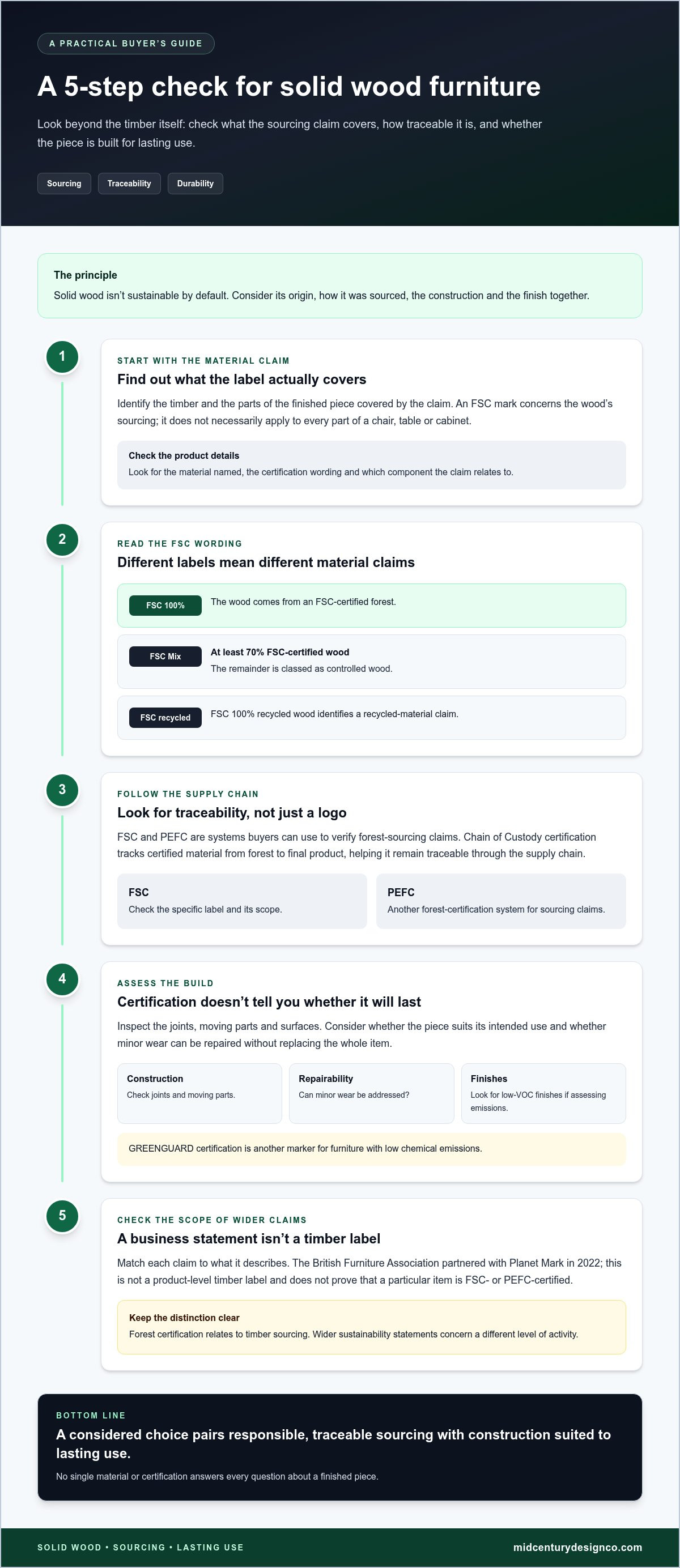
Solid wood isn’t automatically sustainable. For buyers weighing sustainable furniture choices in the UK, the timber’s origin, the way it was sourced and whether the piece is built to last all matter as much as the material itself. An FSC Mix label means at least 70% of the wood is FSC-certified, with the remainder classed as controlled wood.
Wood’s natural grain and lasting presence make it appealing, but a beautiful finish alone cannot tell you the whole story. This guide explains how to read FSC labels, assess materials such as solid wood and bamboo, and weigh sourcing against durability. You’ll also learn how reclaimed materials and careful construction can support a more considered furniture choice, including how genuine vintage pieces can keep existing furniture in use.
Key Takeaways
- Read FSC labels carefully: an FSC Mix product contains at least 70% FSC-certified wood, with the remainder being controlled wood.
- Solid wood isn’t sustainable by default; FSC or PEFC certification and traceability help show where timber comes from.
- Reclaimed materials give existing resources another life, while a well-built piece can reduce the need for replacement.
- Bamboo grows quickly, but durability and thoughtful sourcing still matter when weighing its sustainability.
- According to the UK Government, from 1 January 2021 Great Britain has its own Timber Regulations, whilst Northern Ireland remains subject to the European Timber Regulations.
1. What does FSC-certified wood mean for a furniture buyer?
FSC certification helps trace timber to responsibly managed forests, rather than asking you to judge a piece by appearance alone. The label concerns the wood’s sourcing, not necessarily every part of a finished chair, table or cabinet. Read the product details carefully and check which material the claim covers.
FSC labels communicate different things. FSC 100% means the wood comes from an FSC-certified forest. FSC Mix means at least 70% FSC-certified wood, with the remainder controlled wood. A product may also carry an FSC 100% recycled wood label. These distinctions help buyers compare claims without treating every FSC mark as identical.
Chain of Custody certification tracks certified material from forest to final product, helping buyers understand how forest-based materials remain traceable through the supply chain. FSC and PEFC both provide ways to verify responsible forest-sourcing claims. For a dining table, check the certification wording and whether it applies to the timber, rather than assuming it covers the whole piece.
Reclaimed wood has already served another purpose, perhaps in a building or piece of furniture. Reusing it can save resources and reduce waste, while its grain, marks and patina give each surface distinctive character. Recycled materials can also include metal, plastic, glass and textiles. Steel can be recycled repeatedly without losing its structural integrity, making it useful for furniture frames.
Compare materials by their origin, processing and expected useful life. Solid wood can often be refinished to address minor wear, helping a durable piece remain in use. Bamboo grows quickly and can be replenished readily. Engineered wood uses fibres or particles bonded into panels, so consider the materials’ source and the finish. No single material is automatically the best environmental choice.
To assess sourcing, read the product description for details of materials, certification and recycled content. If it says “recycled”, look for which component contains recycled material. FSC or PEFC certification can support forest-sourcing claims, while Chain of Custody tracks certified material through its supply chain. A broad environmental claim without material details gives you less to assess.
For durability, examine the construction, joints and surfaces, then consider whether the piece suits its intended use. To assess chemical emissions, look for low-VOC finishes; GREENGUARD certification is another marker for furniture with low chemical emissions. FSC certification does not establish fire safety. Keep the fire-safety label on upholstered furniture, and consult your local council’s guidance on recycling or disposal.
2. Is solid wood furniture always sustainable?
No. Solid wood can make a durable, repairable piece, but the material alone does not prove responsible sourcing. A table made from timber of unclear origin has a different environmental story from one made with traceable forest materials. Consider the wood’s source, the construction, the intended use and the finishes together. FSC and PEFC certification help assess forest-sourcing claims, but do not automatically describe every part of a finished item.
The Forest Stewardship Council, or FSC, provides labels that distinguish different material claims. FSC 100% means the wood comes from an FSC-certified forest. FSC Mix and FSC 100% recycled wood identify other material pathways, so read the complete wording rather than relying on a logo alone. Certification can be more informative when the product information also identifies which components are certified and how the claim relates to the finished piece.
PEFC is another forest-certification system. Both FSC and PEFC provide ways to verify claims that forest-based products come from sustainably managed forests throughout the supply chain. Chain of Custody certification tracks certified material from forest to final product, helping preserve traceability through processing and manufacture. For a wooden chair, look for the certification name and whether the claim relates to its timber, not just a general environmental message.
Certification has limits. It supports a sourcing claim, but does not tell you whether a cabinet is sturdy, repairable or suited to years of everyday use. Inspect joints, moving parts and the finish; consider whether minor wear can be addressed without replacing the whole piece. A durable design can remain useful for longer, while a poorly made item may need replacing sooner, regardless of its timber label.
Planet Mark is a separate name buyers may encounter in sustainability information. The British Furniture Association partnered with Planet Mark in 2022. That partnership is not a product-level timber label, so it shouldn’t be treated as proof that a particular piece of furniture is FSC- or PEFC-certified. Read each claim according to its scope: forest certification relates to timber sourcing, while wider sustainability statements concern a different level of activity.
Use a simple comparison when assessing solid-wood furniture:
- Identify the timber and the parts covered by the sourcing claim.
- Look for FSC or PEFC wording and any Chain of Custody information.
- Assess construction, repairability and finishes alongside certification.
- Separate a business-level sustainability statement from a product label.
That makes the decision more grounded: solid wood can be a thoughtful choice when it is responsibly sourced and the piece is built for lasting use. The same principles apply when furnishing outdoor spaces, where UK specialists such as Garden Chic focus on high-specification timber garden buildings and exterior living products built for lasting durability.
3. Can bamboo furniture be considered sustainable?
Bamboo can be a sustainable furniture material because it grows quickly and replenishes readily. It is also lightweight, strong and durable, qualities that suit everyday chairs or shelving. But the material alone does not settle the question. Consider how it was sourced, processed and assembled, then judge whether the finished piece is suited to years of use.
Manufacturing matters, too. A rapidly renewable material may still involve processing, finishes and transport that affect its environmental impact. Look for product information explaining where the bamboo comes from and what the furniture contains. Sustainability claims are more useful when material descriptions are specific, rather than broad statements about responsible design.
For buyers comparing bamboo with timber, reclaimed furniture offers another route. Reclaimed wood salvaged from old buildings or furniture reuses existing material, helping save resources and reduce waste. UK artisans and companies transform reclaimed materials into new pieces. Check that the description identifies what has been reclaimed, then consider whether the construction suits the room and its daily demands.
Durability is central to long-term value. A well-built item can stay useful longer, reducing the need for replacement. Examine joints, fixings, drawer runners and frame stability. Choose a design that suits your home beyond a passing trend: adaptable proportions and timeless forms can remain relevant as colour schemes and room layouts change.
Sofas need a practical assessment alongside material credentials. Check the frame and cushions for support and resilience, which affect comfort and everyday use. Measure your living area and compare the sofa’s dimensions with doorways and access routes. The right size and supportive construction matter more than an attractive sustainability label alone.
In the UK, second-hand furniture is available through charity shops, auction houses, local reuse groups and online marketplaces. Search for a specific item, such as a bamboo bookcase or reclaimed-wood dining table, and assess its condition, stability and materials before buying.
Sustainable furniture can cost more upfront than conventional furniture, but durability and a longer lifespan may offer better long-term value. Compare expected years of use, construction quality and maintenance needs rather than judging the purchase by its initial cost alone.
For a considered purchase, weigh sourcing, lifespan and manufacturing together. A bamboo chair made to last, a reclaimed dining table with sound construction or a well-made sofa with resilient cushions can each suit different priorities. The strongest choice is a piece whose materials and design match your needs and that you can see yourself using for years.
4. Ethical sourcing and traditional manufacture
Ethical timber sourcing begins with knowing where the wood grew and how it entered the supply chain. Interpol estimates that illegal logging accounts for 10-30% of the global timber trade’s value. In some tropical countries, 50-90% of the total wood trade is believed to come from methods not recognised as legal. These figures make clear why a broad “responsibly sourced” claim needs meaningful detail.
From 1 January 2021, Great Britain (England, Scotland and Wales) has its own Timber Regulations, while Northern Ireland remains subject to the European Timber Regulations, according to the UK Government. The UK Timber Regulations require businesses trading timber in the UK to carry out due diligence on their supply chains. For buyers, a useful first step is to look for information naming the timber and explaining its origin, rather than relying on a general environmental statement.
British timber may appeal because it comes from closer to home. But “local” alone does not establish that a forest is sustainably managed or that every part of a furniture piece comes from Britain. Compare the stated timber species, origin and sourcing evidence. Transport is one part of a piece’s carbon footprint; material origin and manufacturing also shape its wider environmental impact.
A piece’s materials and construction are easier to assess when they are clearly described. Look for specifics: whether a table uses British timber, imported wood or reclaimed boards; which components are new; and how the piece is made. Reclaimed timber gives existing material another use, but distinguish its previous origin from the source of any new wood in the same item.
Some woods are subject to international trade controls. CITES Appendix I lists woods banned from importation, while Appendices II and III cover woods requiring carefully controlled import and export permits. These categories help explain why a timber’s species and origin matter, particularly for distinctive or less familiar woods. A furniture description that names the species gives you a clearer starting point for assessing sourcing claims.
Use these steps to assess timber information before choosing a piece:
- Identify the named wood species and its stated country or region of origin.
- Look for FSC or PEFC certification and Chain of Custody information where relevant.
- Separate reclaimed timber from newly sourced components in mixed-material furniture.
- Consider transport, manufacturing and expected lifespan together, rather than treating local origin as the only measure.
A well-documented piece lets its materials speak plainly. For sustainable furniture choices in the UK, traceable origins and thoughtful manufacture provide firmer grounds for assessing timber than appearance alone.
5. Definition and environmental impact of eco-friendly furniture
Eco-friendly furniture aims to keep environmental impact low from production through disposal. Look beyond the material’s name: recycled components, lower-impact manufacturing, durable construction and end-of-life options all contribute. For example, a table made with recycled metal and sustainably sourced wood combines considered material choices with a design intended for long use.
Reusing materials can reduce demand for new resources. Furniture made with recycled materials can require less energy than furniture made with new materials, while reclaimed timber gives existing wood another purpose. Recycled metal, glass, textiles and plastic can also be used in furniture. Product descriptions should identify which parts are recycled, so a claim about one component is not mistaken for the whole piece.
Traditional sofas often contain synthetic fabrics and foam, which can be non-biodegradable. ECO sofas may instead use recycled or renewable materials, sustainably sourced wood and lower-impact manufacturing methods. Their makers may also aim to reduce production emissions. These choices do not remove the need to assess comfort: check the cushions and frame for support and resilience, and whether the sofa suits the room’s function.
Finishes affect emissions and indoor conditions. Sustainable furniture commonly avoids harmful chemicals such as formaldehyde or VOCs in finishes. Low-VOC or water-based finishes can help reduce emissions, while GREENGUARD certification identifies furniture with low chemical emissions. For upholstery, GOTS certification can help assess fabrics and textiles; natural fibres such as jute, hemp and organic cotton are other options.
Fast furniture can be tempting when a room needs furnishing quickly, but short-lived construction may lead to earlier replacement and more waste. Compare a low-cost, lightweight chair with a well-built hardwood chair: the better choice depends on sourcing, repairability, finish and expected use, not simply the material. Solid hardwood can often be refinished to address minor wear, extending its useful life instead of replacing it.
Practical needs matter. Measure your living area before choosing a sofa, and check whether it will fit through access points. Choose dimensions and upholstery suited to household routines, then consider how the piece can be maintained. A durable design that remains useful at home can reduce replacement needs and make its material choices count over time.
To assess a furniture collection, compare the stated materials, finishes, construction and disposal options together. Look for specific descriptions of recycled content, renewable materials and emissions, rather than relying on a broad “eco” label. If enduring craftsmanship suits your priorities, explore timeless furniture designs for pieces with lasting character.
The Mid Century Design Co.: Sideboards & Storage
The Mid Century Design Co. offers a considered next step if you’re seeking furniture with enduring character for your home. Its Sideboards & Storage, Dining Sets, Chest of Drawers and Coffee Tables & Occasional Tables bring practical function together with the appeal of vintage design. Choosing a pre-owned piece can keep existing furniture in use, though its materials, condition and construction still matter when weighing sustainability. Look closely at how a piece will serve your room and whether its design suits your needs over time. A carefully chosen sideboard can offer storage whilst lending a room a distinctive focal point; a dining set can bring lasting presence to shared meals. For help exploring the collection, contact The Mid Century Design Co.
Choose a piece with a future in your home
For sustainable furniture choices in the UK, picture how a piece will live with you, not simply how it looks today. Consider the room it will serve, what it needs to hold and whether its design will feel at home as your space changes. A thoughtful choice can be practical and personal at once.
The Mid Century Design Co. offers Sideboards & Storage, Dining Sets and Chest of Drawers for buyers drawn to furniture with enduring character. Explore the collection and shape a home around carefully chosen pieces, rather than filling a room in haste.
If you’re ready to find a piece that feels right for your home, contact The Mid Century Design Co. Take your time, trust your eye and make room for furniture you’ll be glad to live with.
Frequently Asked Questions
Is solid wood furniture always sustainable?
No. Solid wood describes how a piece is made, not where its timber came from or how responsibly it was sourced. A solid-wood table with weak joints or a finish that is difficult to maintain may also have a shorter useful life. Look beyond the material name: assess sourcing evidence, construction and repairability, and whether the design will suit your home as needs change.
Are water-based furniture finishes more sustainable than other finishes?
Water-based finishes are used in eco-friendly furniture manufacturing to reduce harmful emissions, but the finish alone does not determine a piece’s overall environmental impact. Check whether product information identifies the finish and its emissions, then consider durability and maintenance needs. A finish that protects a frequently used surface can help preserve the piece, while low-VOC options support lower chemical emissions.
Can bamboo furniture be considered sustainable?
Yes, bamboo can be a sustainable option because it grows quickly and replenishes readily. Its lightweight, strong and durable qualities can suit furniture used every day. For a bamboo chair or cabinet, consider where the material was sourced, how it was manufactured and whether its construction is sound. A renewable material is most useful when the finished piece is made to stay in use.
Can wooden furniture be recycled or reused at the end of its life?
Often, yes. If a wooden chair or table remains stable and functional, passing it on for reuse keeps the whole object in service. Damaged furniture may still yield usable timber or components, depending on its construction and condition. Separate wood from metal fittings where practical, and look into local reuse or recycling options before disposal, since accepted materials and collection arrangements can vary by area.
What does FSC-certified wood mean for a furniture buyer?
FSC certification gives buyers information about the wood’s relationship to responsibly managed forests, but read the label’s exact wording. FSC 100% refers to wood from an FSC-certified forest; FSC Mix means at least 70% FSC-certified wood, with the remainder controlled wood. On a finished item, check which components the claim covers, such as the frame rather than every fabric, fitting or finish.
What is eco-friendly furniture?
Eco-friendly furniture is designed to have a low environmental impact from production through disposal. This can involve recycled or renewable materials, lower-impact manufacturing, finishes with reduced harmful emissions and construction intended to last. For example, a table combining recycled metal with sustainably sourced wood may use different materials for its frame and top. Assess the whole piece, not just one appealing material claim.
What is FSC and should you trust it?
FSC stands for the Forest Stewardship Council, an organisation whose certification helps buyers assess forest-sourcing claims. Treat its label as evidence about the materials within its scope, not as a complete rating of furniture quality or every environmental impact. Read the label category alongside the product details. For example, an FSC claim about a wooden frame does not automatically cover its upholstery or finish.
What makes furniture sustainable in the UK?
A thoughtful choice brings together responsible sourcing, durable construction, repairability and a useful life that suits your household. Check whether product descriptions identify timber origins, recycled components and relevant certification, then consider care and eventual reuse. For sustainable furniture choices in the UK, a well-maintained second-hand piece can also keep existing materials in use instead of requiring a newly made item.