

The Collector’s Guide to Sourcing a Vintage Chest of Drawers in the UK
The mass-produced flat-pack of the modern high street offers utility, but it will never possess a soul. You likely believe that your home should be a sanctuary of stories, a curated space where every object reflects a deep appreciation for history and craftsmanship. Sourcing an authentic vintage chest of drawers UK can feel like a daunting pursuit, especially when you're worried about mistaking a clever modern reproduction for a genuine mid-century relic or struggling to tell the difference between a high-quality veneer and a failing laminate.
It's a common concern for the discerning collector. You deserve a piece that functions as a work of art whilst effortlessly solving the storage challenges of a characterful British bedroom. This guide promises to demystify the process of identifying authentic 1950s and 60s design, helping you invest in furniture that holds its value and its spirit. We'll explore how to evaluate functional condition, the specific allure of different wood grains, and the essential marks of quality that separate a true collector’s item from a mere second-hand find. By the end, you'll have the confidence to select a piece that brings both history and harmony to your personal sanctuary.
Key Takeaways
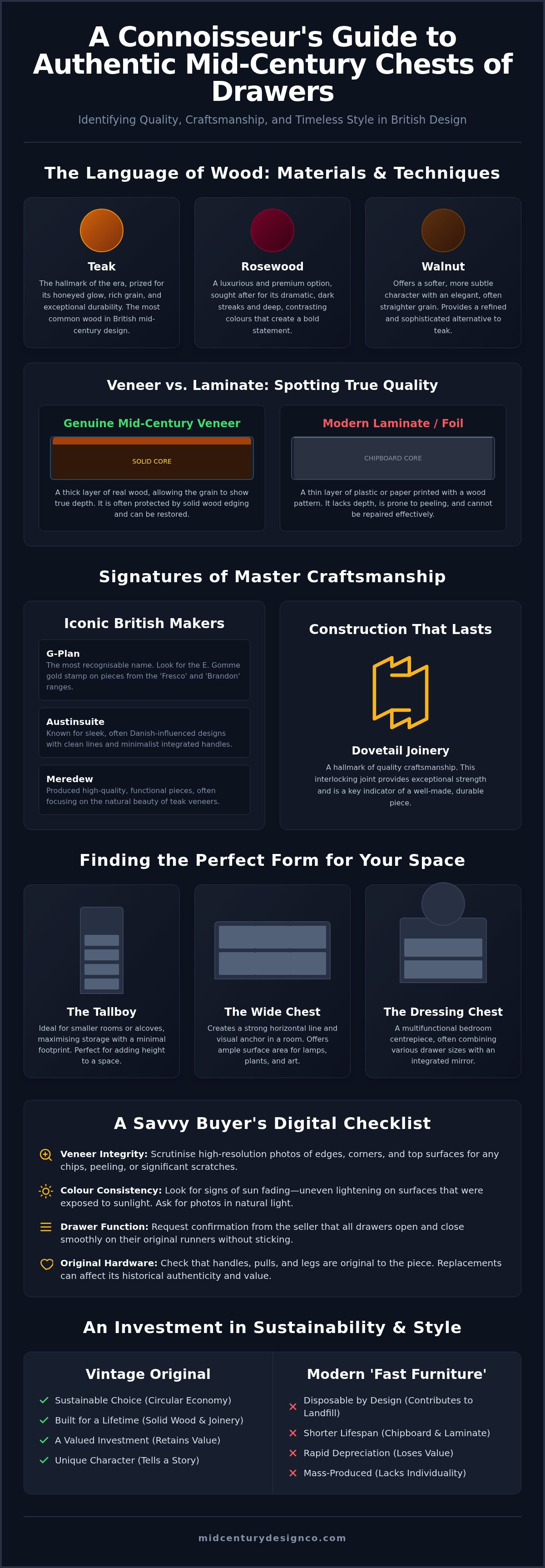
- Learn to distinguish between the rich grains of teak, rosewood, and walnut. This ensures your chosen piece is a genuine mid-century masterpiece.
- Identify the hallmark joinery and design signatures of celebrated British makers like G-Plan and Austinsuite. These details confirm a piece’s historical pedigree.
- Discover how to select the ideal vintage chest of drawers UK for your home. You'll learn to balance the need for vertical storage in small alcoves with the visual impact of a wide chest.
- Master the nuances of sourcing online whilst learning to identify subtle veneer chips, sun fading, and the functional integrity of original drawer runners.
- Embrace a sustainable approach to interior design by investing in original craftsmanship. These pieces retain their value and bring a unique soul to your sanctuary.
The Timeless Appeal of a Vintage Chest of Drawers in UK Interiors
A vintage chest of drawers UK represents far more than a simple organisational solution. It's a deliberate marriage of form and function. In the mid-century era, designers moved away from the heavy, ornate styles of the past to embrace clean lines and organic warmth. This shift allowed the natural beauty of the wood to take centre stage. Understanding the history of the chest of drawers reveals how these pieces transitioned from utilitarian storage into the elegant, sculptural focal points we celebrate today. They aren't just furniture. They're the quiet protagonists of a well-curated room.
The evocative nature of original teak and rosewood grains is impossible to replicate. These hardwoods possess a depth and sensory warmth that modern laminates lack. Whilst a mass-produced modern unit might look acceptable from a distance, it lacks the tactile honesty of a 60-year-old piece. The honeyed glow of teak or the dramatic, dark streaks of rosewood bring an immediate sense of character to contemporary British homes. These materials were chosen for their longevity. They were built to endure. Choosing vintage means choosing a piece that has already stood the test of time, proving its resilience through decades of daily use.
Why Authenticity Matters: The "Soul" of the Object
Authenticity isn't just about a label or a brand mark. It's about the narrative. Every original 1960s design carries the spirit of its era, a time when craftsmanship was paramount and furniture was intended to last a lifetime. These pieces act as functional art. They offer an emotional satisfaction that a flat-pack alternative can't provide. When you touch the smoothed edges of a drawer or admire the precision of a dovetail joint, you're connecting with a legacy of design. It transforms a house into a sanctuary with a story.
Sustainability and the Circular Design Economy
Investing in vintage is a powerful statement against the culture of "fast furniture." It's a conscious, sustainable choice. By sourcing an original piece, you're participating in a circular design economy that values existing resources. Mid-century construction methods were inherently durable. Unlike modern chipboard, which often fails after a few years, these solid wood and high-quality veneer pieces remain robust. A well-chosen vintage chest is an investment that holds its value. It's a piece of history that you can enjoy today and eventually pass down to the next generation.
Evaluating Quality: Materials, Makers, and Mid-Century Joinery
Assessing a vintage chest of drawers UK requires more than an eye for aesthetics. It demands an appreciation for the structural integrity that defined the 1950s and 60s. British design in this period was heavily influenced by Danish minimalism, prioritising clean silhouettes and high-quality hardwoods. To understand the benchmark of this era, one can look to the V&A furniture collection, which showcases the evolution of these standards. Quality isn't skin deep. It's found in the precision of a dovetail joint and the seamless flow of grain across drawer fronts.
Iconic British Makers to Look For
G-Plan remains the most recognisable name for a reason. Their Fresco and Brandon ranges defined the British mid-century aesthetic. Collectors often hunt for the E. Gomme gold stamp as a mark of authenticity. Meredew and Austinsuite provided sleek alternatives, focusing on clean lines and functional beauty. These makers were masters of teak, ensuring every piece felt substantial yet graceful. If you're looking for these specific markers, exploring a curated selection of authentic chests can help you find a piece that meets these rigorous standards.
Understanding Wood and Veneers
The sensory warmth of aged teak is distinct. It feels alive in a way that cold modern finishes don't. Teak was the king of the era. High-quality mid-century pieces often used book-matched veneers. This technique involves matching two wood surfaces so they mirror each other, creating a symmetrical, flowing grain. You should look for solid wood edging. Cheaper modern reproductions often use thin laminate that peels away, whilst original vintage pieces use thick timber edges to protect the veneer.
Rosewood and walnut offer a different character. Rosewood is prized for its dramatic, dark streaks and oily texture. Walnut provides a richer, more traditional depth. The best makers utilised these woods to create "grain matching," where the pattern continues uninterrupted from one drawer to the next. This attention to detail is what transforms a simple storage unit into a piece of functional art. Look closely at the handles too. Solid wood sculpted handles are far more desirable than plastic or metal replacements. They represent the peak of mid-century tactile design.
Finding Your Perfect Match: Tallboys, Wide Chests, and Dressing Chests
Selecting the right silhouette for a vintage chest of drawers UK is an exercise in both spatial logic and aesthetic curation. It isn't just about how much you can fit inside. It's about how the piece interacts with the architecture of your room. British homes, with their varied proportions and period alcoves, demand a thoughtful approach to dimensions. You must decide whether to embrace the vertical or celebrate the horizontal. Each configuration offers a distinct narrative, transforming the rhythm of your morning routine and the visual weight of your sanctuary.
The Tallboy: A Masterclass in Verticality
The six-drawer tallboy has become a staple of modern UK flat-living for good reason. It offers a generous volume of storage whilst occupying a remarkably small footprint. In narrow bedrooms or tight alcoves, height is your greatest ally. These pieces often stand between 100cm and 120cm tall, drawing the eye upwards and making a room feel more expansive. A teak tallboy doesn't just store linens. It acts as a sculptural pillar, providing a sense of order without crowding the floor space. It's the perfect solution for those who value clean lines but refuse to compromise on utility in a smaller space.
Low and Wide: The Credenza-Style Chest
For larger master suites or open-plan living areas, a wide chest of drawers offers a different kind of drama. These low-slung, credenza-style pieces provide a vast top surface that's ideal for displaying curated objects, a lamp, or even acting as a hallway centrepiece. Their elongated profile creates a sense of calm and stability. In a minimalist interior, a wide walnut chest can anchor a room, serving as a sophisticated alternative to modern media units. If you find yourself drawn to these longer forms, you might also appreciate The Definitive Guide to Authentic Mid Century Modern Sideboards, which explores similar silhouettes in greater depth.
Dressing chests represent a more romantic configuration. By integrating a mirror with a standard set of drawers, these pieces offer a dedicated space for morning rituals. They often feature slightly shallower top drawers, perfect for organising smaller personal items or jewellery. Whether you choose a towering tallboy or a sweeping wide chest, the goal is to find a piece that resonates with your lifestyle and enhances the soul of your home. Consider the rhythm of your daily routine. Does it require the quick accessibility of a tallboy or the expansive display potential of a wide dressing chest? The choice is a personal reflection of how you inhabit your space.
Avoiding Common Pitfalls whilst Sourcing Vintage Furniture Online
Sourcing a vintage chest of drawers UK through a digital screen is an exercise in detective work. It requires a discerning eye to see past polished staging and flattering lighting. Whilst an online listing might look impeccable at first glance, the true character of a piece lies in the details that photos often obscure. You must look for "ghosting" or sun fading. This usually appears as a lighter patch on the top surface where a lamp or vase sat for decades. These marks tell a story, but they can be difficult to harmonise without professional care. Veneer chips, particularly along the bottom edges or around the handles, are another common sight. Small chips add patina, but large areas of missing veneer suggest a history of neglect.
The functionality of the piece is just as vital as its silhouette. Mid-century drawers should glide. They shouldn't fight you. Stiff runners or sticking drawers often indicate structural warping or a frame that has lost its squareness over sixty years. Be wary of "Frankenstein" pieces too. These are units where non-original handles or modern hairpin legs have been added to mask a lack of pedigree. Originality is the collector's gold standard. A piece in its honest, original condition is almost always superior to one that has suffered an amateur restoration or a heavy-handed coat of modern varnish. If you want to ensure your investment is a genuine relic of the era, you can browse our authenticated collection of original storage pieces.
The Condition Checklist for Collectors
- Structural Integrity: Gently ask the seller if the piece wobbles. Stable joints are the hallmark of quality mid-century joinery.
- Surface Marks: Look closely for "ring marks" from damp glasses. These often penetrate deep into the grain of teak and rosewood.
- The Smell Test: If viewing in person, check for musty odours. Lingering smells from damp garages or basements are notoriously difficult to remove from vintage timber.
Authenticity vs. Reproductions
The market is currently flooded with modern "mid-century style" items. These reproductions often use MDF or thin laminates that lack the weight and tactile warmth of authentic hardwoods. An original teak chest has a specific density and a "soapy" feel to the wood that modern factory finishes cannot replicate. Identifying these nuances is a skill that develops with time. For a deeper dive into the technical markers of the era, read our guide on Identifying Original Mid Century Furniture Pieces. Understanding the difference between a mass-produced imitation and a hand-finished original ensures your home remains a sanctuary of genuine design heritage.
Curating Your Sanctuary: Discover Our Hand-Picked Collection
At The Mid Century Design Co., we don't merely sell furniture. We curate history. Finding the perfect vintage chest of drawers UK shouldn't be a gamble. It should be an invitation to bring a piece of design heritage into your home. Our approach is steady and intentional. We bypass the mass-market volume of larger marketplaces to focus exclusively on the finest originals. Every piece in our collection is chosen for its exceptional grain, its structural honesty, and its unique character. We look for the soul of the object. It's about finding that specific piece that resonates with your personal aesthetic and elevates your living space.
Our Standout Chest of Drawers
Our selection reflects the very best of British and Danish mid-century modernism. The 1960s teak tallboy remains a favourite amongst collectors for its slim, elegant profile that fits perfectly into a contemporary flat. These vertical masterpieces allow the natural beauty of the timber to take centre stage. Or perhaps you're drawn to our wider, Danish-inspired chests. These pieces often feature sculptural, hand-carved handles and book-matched veneers that turn a simple storage unit into a visual statement. For those seeking a cohesive aesthetic, we often stock matching bedside cabinets. These pairings allow you to extend the narrative of mid-century design across your entire bedroom sanctuary.
Begin Your Collection Today
Viewing furniture as a long-term lifestyle investment changes how you inhabit your space. A well-chosen vintage chest of drawers UK isn't just a purchase. It's a sustainable choice that holds its value whilst enriching your daily life. We understand that the journey of a vintage piece from our collection to your home requires expert care. To ensure your discovery arrives in pristine condition, we organise national delivery across the UK. Our specialist couriers are experienced in handling original hardwoods, giving you the peace of mind that your piece will be treated with the respect it deserves.
Your home is your gallery. It should reflect your eye for quality and your appreciation for the stories of the past. We invite you to linger over the details of our current inventory and envision how these pieces might transform your living space. Explore our curated collection of vintage chests of drawers and find the piece that speaks to your spirit. Every drawer we offer has been vetted for its functionality and aesthetic impact, allowing you to focus on the joy of discovery.
Transforming Your Space with Design Heritage
Choosing a vintage chest of drawers UK is a meaningful investment in your home's narrative. You've learned to look beyond the surface, identifying the rich grains of teak and rosewood whilst avoiding the pitfalls of amateur restorations. By focusing on authentic joinery and celebrated British makers, you ensure your piece remains a functional work of art for decades to come. It's a sustainable choice that prioritises character over the convenience of the high street.
At The Mid Century Design Co., we share your passion for original craftsmanship. Our collection is expertly curated to include only authentic 1950s and 1960s originals, each selected for its exceptional condition and design spirit. We handle the logistics of national UK delivery, ensuring your discovery arrives safely at your door. We invite you to browse our authentic vintage chest of drawers collection to find the perfect anchor for your sanctuary. Your journey to a more soulful home begins with a single, well-chosen object.
Frequently Asked Questions
What is the difference between a mid-century tallboy and a standard chest of drawers?
A mid-century tallboy is defined by its verticality, typically featuring six drawers stacked in a slim column to maximise storage in a narrow footprint. In contrast, a standard vintage chest of drawers UK usually has a wider, lower profile with three or four long drawers. Whilst both offer functional storage, the tallboy is specifically designed to draw the eye upwards, making it an ideal sculptural choice for tight alcoves or smaller British bedrooms.
How do I identify the maker of my vintage chest of drawers?
Identifying the maker often begins with a thorough search for stamps or labels inside the top drawer or on the back panel. Look for the gold E. Gomme stamp of G-Plan or the embossed labels of Austinsuite and Meredew. If a label is missing, the design of the handles and the specific style of the dovetail joints can provide vital clues. Many mid-century makers had unique joinery signatures that acted as a silent mark of quality.
Is teak or rosewood better for a vintage chest of drawers?
Neither is objectively better, as the choice depends on your aesthetic preference and the existing palette of your room. Teak is celebrated for its honey-toned warmth and incredible durability, making it the quintessential mid-century material. Rosewood offers a more dramatic, luxurious appearance with its dark, expressive grain and oily texture. Whilst rosewood pieces are often rarer and more expensive, teak remains the most popular choice for creating a cohesive, sanctuary-like atmosphere.
How should I maintain the finish on my mid-century teak furniture?
Maintaining the finish requires a gentle touch and the avoidance of modern silicone-based aerosol sprays. Regularly dust with a soft, lint-free cloth to prevent buildup. For original teak pieces, applying a high-quality teak oil once or twice a year will nourish the wood and restore its natural lustre. Always apply the oil in the direction of the grain, allowing it to soak in before buffing away any excess to maintain that soft, sensory glow.
Are vintage chests of drawers from the 1960s a good investment?
Original 1960s drawers are an excellent investment because they represent a finite period of exceptional design and craftsmanship. Unlike mass-produced modern furniture that depreciates quickly, a well-maintained vintage chest of drawers UK tends to hold its value or even appreciate as certain makers become more sought after. They are built from hardwoods that outlast modern chipboard, making them a sustainable choice for homeowners who value longevity and historical narrative over disposable trends.
What should I do if the drawers on my vintage chest are stiff?
If your drawers are sticking, the simplest solution is often to lubricate the runners with a little beeswax or a plain white candle. Rub the wax along the bottom edges of the drawer and the internal runners to reduce friction. Check for any small obstructions or loose screws that might be catching. Avoid heavy sanding unless the wood has significantly warped, as this can permanently alter the original fit and character of the piece.
Can I style a vintage chest of drawers in a modern bedroom?
Styling a vintage piece in a modern bedroom creates a sophisticated contrast that adds depth to your interior. The organic warmth of aged wood softens the sharp lines of contemporary architecture and minimalist decor. You can anchor the look by placing modern ceramics or a sleek lamp on the top surface. This blending of eras ensures your room feels like a curated sanctuary rather than a showroom, allowing the furniture to act as functional art.
What are the most sought-after brands for vintage drawers in the UK?
The most coveted brands amongst UK collectors include G-Plan, particularly their Fresco and Brandon ranges, and the refined designs of McIntosh of Kirkcaldy. A. Younger is highly prized for its higher-end, sophisticated silhouettes, whilst Austinsuite and Meredew offer accessible elegance. Danish makers such as Kai Kristiansen or Arne Vodder also remain incredibly popular for their sculptural handles and superior teak craftsmanship. These names represent a benchmark of quality that collectors consistently hunt for today.