

The Curated Entryway: Choosing a Narrow Sideboard for Hallway Spaces
What if the answer to a cramped hallway isn’t less furniture, but a more thoughtfully chosen piece? A narrow sideboard for hallway spaces can provide useful storage and a considered first impression without making the route through your home feel crowded. The challenge is finding a design that fits the available space and offers the character you want.
Choosing a vintage sideboard means balancing its presence with the practicalities of your hallway. Measure carefully to check that the piece will fit while leaving a clear route for everyday movement. Look beyond its outline, too: the grain of vintage teak or rosewood, the quality of its construction and details that suggest its history can all help you assess an original piece.
This guide explains how to assess dimensions, choose a mid-century design and make storage part of your hallway’s visual appeal. It also covers details to check when considering vintage furniture from the 1950s and 60s, and how to make a practical choice without relying on promises about future value. The aim is a hallway that feels welcoming, useful and personal.
Key Takeaways
- Learn how slender proportions can help a narrow sideboard for hallway spaces feel considered rather than imposing.
- Discover how mid-century silhouettes and Danish design influences can suit the scale of modern UK homes.
- Know which construction details to examine when assessing vintage craftsmanship and distinguishing it from modern reproductions.
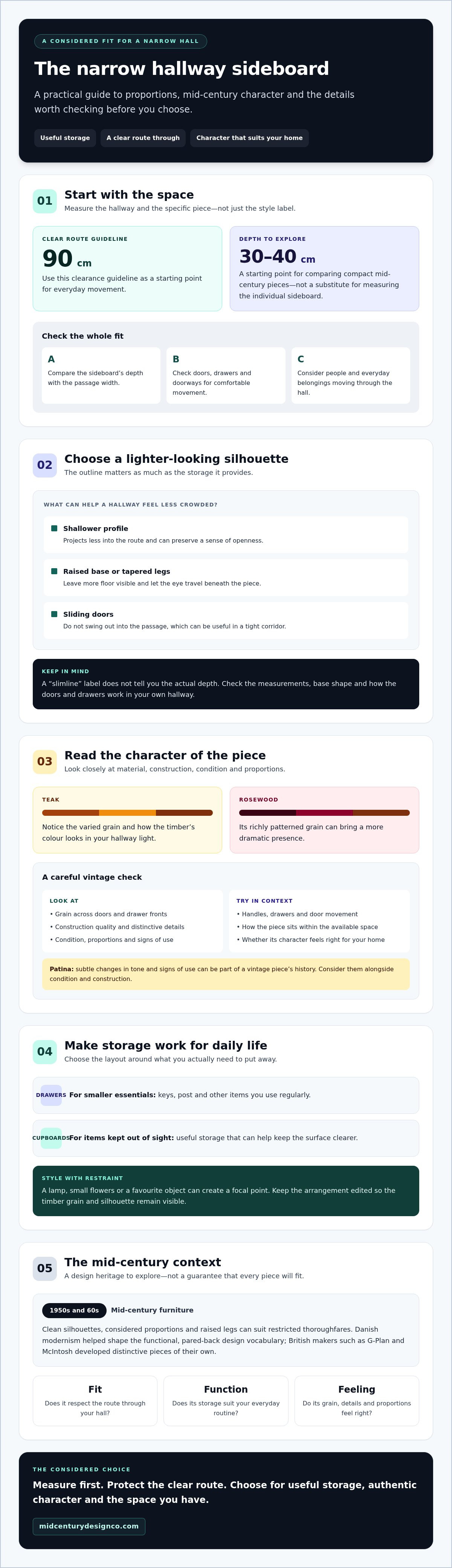
- Use the 90cm clearance guideline as a starting point, then consider how the sideboard’s visual weight affects the hallway.
- Find out how to assess a sideboard’s grain, character, condition and proportions before choosing one.
The Hallway Challenge: Why a Narrow Sideboard is the Perfect Solution
A hallway has to work hard. It welcomes you home, carries the daily traffic of coats, shoes and bags, and offers the first glimpse of the rooms beyond. A narrow sideboard can bring order and a sense of intention to this space, provided its proportions respect the route through it. Look for a useful depth, practical storage and a design that suits the hallway, rather than a bulky piece that becomes an obstacle.
The entryway also sets the mood for the rest of your home. A vintage sideboard can introduce the warmth of teak or rosewood, the clean lines of mid-century design and the character of an older piece. The term “sideboard” sits within a longer furniture history; for helpful background, explore the history of the credenza, a term often used for a related form of storage furniture.
Mid-century pieces from the 1950s and 60s can suit restricted thoroughfares. Their considered proportions, raised legs and clean silhouettes can leave more of the floor visible, helping a room feel less crowded. The result can be more than extra storage: it can be a functional focal point with character.
The Aesthetic Impact of a Slim Profile
In a long, narrow hall, furniture that projects too far into the route can make the space feel tighter. A shallower profile helps preserve a sense of openness, while tapered legs or a raised base let the eye travel beneath the piece. Compare the sideboard’s depth with the passage width, and check how it relates to doors, people and everyday belongings.
Give the sideboard room to be seen. A lamp, a small arrangement of flowers or a favourite object can create a focal point without taking over the surface. Keep the styling edited so the timber grain and silhouette remain visible.
Functionality Meets Mid-Century Soul
Good hallway storage can make the daily routine feel calmer. Drawers can hold keys, post and smaller essentials, while cupboards keep items you’d rather not leave on display out of sight. Choose a layout that suits what you actually use, so the surface is less likely to become a landing place for front-door clutter.
The details matter, too: the feel of a handle, the finish of a timber surface and the distinctive grain of an original piece. These features can make a practical item part of your home’s character. A well-chosen narrow sideboard for hallway spaces can make the entrance feel like more than a passage.
Sourcing Authentic Mid Century Proportions for UK Homes
Not every piece described as “slimline” will suit a narrow hall. Look past the style label and check the actual depth, door movement and shape of the base. Many mid-century silhouettes use streamlined forms to bring storage into a lighter-looking design, but dimensions vary from one piece to another.
Danish modernism helped shape the mid-century vocabulary of functional, pared-back furniture, influencing design in Britain as makers such as G-Plan and McIntosh developed their own distinctive pieces. The Furniture History Society offers a route into deeper research on furniture history, useful context when you’re learning to look beyond appearance and consider a piece’s design heritage.
The Danish Influence on Slim Cabinetry
In a tight corridor, small design decisions matter. Sliding doors don’t swing out into the passage, which can make them a practical feature to look for. Sculpted handles and integrated pulls can also keep the front visually composed. As you compare pieces, check that the doors and drawers can be used comfortably in your hallway, not just in a photograph.
As a starting point, explore pieces around 30cm to 40cm deep, then compare their measurements with the clearance available in your home. Vintage designs vary, so confirm the dimensions of the specific sideboard rather than assuming all mid-century pieces share the same footprint.
Woods and Finishes: Teak, Rosewood, and Beyond
Timber gives an original piece its particular warmth. Teak’s varied grain can bring natural depth to a compact space, while rosewood can offer a more dramatic, richly patterned presence. Notice how the grain runs across doors and drawer fronts, and how the colour looks in your hallway’s light.
Patina is part of a vintage piece’s history. Subtle changes in tone and signs of use can give wood character, though condition and construction still deserve careful attention. No individual piece’s future value can be promised, so focus first on whether its scale, timber and details feel right for your home. To explore the character of authentic vintage sideboards, compare the details that appeal to you with the space you have available.
Vintage Authenticity vs. Modern Hallway Reproductions
A mid-century silhouette can be copied, but its history cannot. When choosing a narrow sideboard for hallway use, look beyond age or appearance. Materials, construction and details of the original design can all help you assess a piece. The Mid Century Design Co. focuses on original vintage furniture, not modern reproductions.
Construction deserves a closer look. Dovetail joints, where present, can indicate considered joinery, but they aren’t the only mark of quality, and not every original sideboard uses them. Check that drawers run smoothly, doors sit evenly and the frame feels sound. Look closely at edges and surfaces, too: veneer can be part of fine mid-century craftsmanship, so assess its condition and execution rather than assuming solid timber throughout is the only sign of quality.
Longevity and Craftsmanship
Examine the details as a whole. Consistent grain, carefully finished edges and fittings that feel integrated into the design can help you assess how thoughtfully a vintage piece was made. A maker’s mark or label may offer useful evidence of origin, though its absence doesn’t by itself prove a piece isn’t authentic. If you’re unsure, ask what is known about its maker, age and construction before deciding.
Quality also shows in how a sideboard works in daily life. Drawers should open without undue force, and doors should align properly. Check the finish, joinery and overall condition alongside its appearance, so you know what you’re choosing.
The Environmental Choice
Choosing an existing piece gives furniture another chapter in the home, rather than creating demand for a newly made substitute. It’s a considered form of preservation: the timber, labour and design embodied in the sideboard continue to be appreciated and used. Vintage furniture isn’t automatically right for every household, so consider its condition, practicality and suitability for your space.
There’s also a difference between value as meaning and value as money. Original mid-century pieces may attract collectors for their design and provenance, but no future resale value is guaranteed. Treat investment potential as one consideration, not a promise. The appeal may simply be the pleasure of living with an object whose story feels real.
For more on the environmental case for choosing pre-owned pieces, read about sustainable living with high-quality vintage furniture. A carefully chosen original can make the hallway feel more personal while offering useful storage and a connection to the craftsmanship of another era.
Measuring a Narrow Sideboard for Hallway Spaces
A sideboard can be beautifully proportioned and still feel wrong if it interrupts the way through. Before choosing a narrow sideboard for hallway spaces, measure the usable passage, not just the wall. As a planning guideline, aim to retain at least 90cm of clear walking space between the sideboard’s furthest point and the opposite wall or obstruction. Include handles in your measurements, and remember that the route may narrow around doorways or other features.
A Practical Guide to Hallway Clearance
Mark the proposed width and depth on the floor with masking tape. Walk past the outline, carry a bag through and open nearby doors. This simple test helps you judge the footprint before you commit. Measure around radiators, skirting boards and door swings, too, so the piece won’t block access or movement.
Consider the wall as well as the floor. The rule of thirds can serve as a loose visual guide: a sideboard occupying around a third of a long wall may feel balanced, but the right proportion depends on the hall’s shape, openings and other features. Treat it as a starting point, not a fixed formula. Height matters as well. A lower piece with a lamp or artwork above it can draw the eye upwards, while a tall, visually heavy form may make a tight hallway feel more enclosed.
The Art of the Entryway Vignette
Style with restraint and intention. A ceramic bowl for keys, a glass vessel and a small stack of books can bring contrasting textures to the warmth of vintage timber without crowding the surface. Choose a lamp that suits the available space, and keep everyday essentials within easy reach. The aim is a composed scene that still works on a busy morning.
A well-positioned mirror can reflect light and create a greater sense of depth. Check what it reflects before hanging it: a view of a window or a lighter part of the home may open up the hall, while a cluttered corner simply repeats it. For more ideas on balancing character with comfort, explore how to style mid-century modern furniture.
Once the measurements feel right, let the sideboard lead the arrangement. Give its silhouette breathing room, then add only a few objects that feel personal. Explore authentic vintage sideboards and consider how a piece might bring warmth and purpose to your entryway.
Sourcing Your Sanctuary Piece from The Mid Century Design Co.
Choosing a hallway sideboard is a personal decision. The right piece must suit the available space and feel at home in the way you use your home. The Mid Century Design Co. curates authentic vintage furniture, including Danish furniture and storage pieces. Its focus on original vintage furniture, rather than modern reproductions, keeps the emphasis on the design and craftsmanship of the period.
Character matters as much as silhouette. The grain of teak or rosewood, the balance of the proportions and the details gathered over time can make a sideboard feel like functional art rather than simply a place to put things. Choose for the piece’s usefulness and appeal in your home, rather than assuming it will increase in financial value.
Our Curated Collection of Sideboards
The collection includes sideboards and storage, alongside Staples Ladderax systems. These offer different approaches to organising a home, from a contained cabinet to modular storage. Each piece has its own character, so assess its measurements and condition against your needs. For a deeper look at what distinguishes originals, read the definitive guide to authentic mid-century modern sideboards.
For a narrow sideboard for hallway use, check the dimensions of the individual piece rather than assuming that a particular era or design will fit. Compare its depth, width and height with your available space before deciding whether it will sit comfortably in your passage.
Your Partner in Home Curation
Choosing furniture is about more than selecting a handsome object. Consider how the piece will work in daily life: what it might hold, how its timber will sit alongside your colours and textures, and how it will shape the welcome at your front door. The Mid Century Design Co.’s curated selection of original vintage furniture is for homes that value character and history.
The Mid Century Design Co. serves customers across the UK. To explore the curated collection of vintage sideboards, first consider what your hallway needs, then compare individual pieces by their proportions, condition and character.
Make Your Entryway a Welcome Home
The right narrow sideboard for hallway spaces does more than solve a storage problem. It respects the flow of the passage, gives everyday essentials a considered place and sets a thoughtful tone for the rooms beyond. Careful measuring helps you choose a piece that fits, while looking closely at proportion, timber and craftsmanship reveals the character that makes an original feel at home.
The Mid Century Design Co. curates authentic vintage furniture, not modern reproductions. Each piece has its own character, so take time to picture how it might work in your home and check its measurements before choosing.
Ready to find a piece with a story of its own? Explore The Mid Century Design Co.’s curated collection of authentic vintage sideboards and find a design that suits your hallway.
Frequently Asked Questions
How deep should a narrow sideboard for a hallway be?
A depth of around 30cm to 40cm is a useful range to investigate, but the right measurement depends on your hallway and the furniture’s design. Include handles and any other projecting parts when checking the footprint. Then consider the remaining route, door movement and household traffic. A tape outline on the floor can help you judge the scale in place before choosing a particular piece.
Can I use a Staples Ladderax system as a hallway sideboard?
Yes, a Staples Ladderax system can provide hallway storage if its specific configuration suits the available space and your needs. Check its dimensions and how its shelves or storage components are arranged, then consider what you want to keep there, such as keys or post. Unlike a conventional sideboard, a modular system may leave some belongings on display, so plan how to keep the overall effect composed.
What is the best wood for a hallway sideboard to withstand daily use?
There isn’t one best timber for every home; condition, construction and how the surface has been cared for all matter. Vintage teak is valued for its warm colour and distinctive grain, while rosewood brings a deeper, more pronounced pattern. Inspect the particular sideboard for signs of wear, especially on its top and edges. Use coasters or a tray for frequently handled items, and follow any care guidance supplied for the piece.
How do I know if a narrow sideboard is an authentic 1960s original?
Look for a combination of clues rather than relying on appearance alone. A maker’s label or mark, period-appropriate construction, fittings and materials may help establish provenance, but no single feature proves a date by itself. Ask what is known about the piece and examine its condition, joinery, drawer movement and finish. The Mid Century Design Co. specialises in original vintage furniture, not modern reproductions, and can provide context for the pieces it curates.
Do sliding doors on a sideboard help in a narrow hallway?
Sliding doors can be useful because they don’t need the outward clearance required by hinged doors. That can make access easier when the sideboard sits close to the main route. Check that the doors move smoothly and give access to the storage you need, as the opening may expose only part of the cabinet at a time. Also measure any handles or edges that extend beyond the body.
Should I choose a sideboard with legs or a plinth base for a small hall?
Legs often make a piece feel visually lighter because more floor remains visible beneath it. A plinth base can give a stronger, more grounded appearance, which may suit a hall with enough breathing room. Neither is automatically better: compare the whole silhouette with the hallway’s width, light and other furniture. If possible, use a floor outline and consider how the base changes the piece’s apparent scale.
Is a vintage teak sideboard a good investment for a UK home?
A vintage teak sideboard can be a rewarding long-term purchase if you value its craftsmanship, character and usefulness, but future financial returns aren’t guaranteed. “Investment grade” describes the quality and appeal of a piece, not a promise that its resale value will rise. Check its condition, provenance and suitability for your home, then choose one you’ll enjoy living with. The warmth of the timber and its distinctive grain can be part of that appeal.
How do I style a narrow sideboard without it looking cluttered?
Keep the arrangement edited: choose a few useful or meaningful objects, then leave some of the surface clear. A small tray can gather keys, while a ceramic piece or glass vessel adds texture without competing with the timber. Consider a mirror or artwork above the sideboard to draw the eye upwards, and make sure anything displayed doesn’t obstruct access or the hallway route. Let the furniture’s grain and shape remain visible.