

Unique Living Room Furniture Ideas: Create a Room with Character
A memorable living room can begin with one piece that doesn’t match anything else. A matching furniture set may feel straightforward, but individual finds can make a room more personal. If you’re looking for unique living room furniture ideas, start with an expressive vintage piece: a sculptural coffee table, a characterful sideboard or distinctive storage can give the room a clear focal point.
The challenge is making individual pieces feel collected rather than cluttered. You don’t need every wood tone, silhouette or period to match. A considered layout, a simple palette and a few repeating details can help different pieces sit comfortably together. This guide covers how to choose a starting point, arrange furniture around your routines and balance vintage character with contemporary comfort. You’ll find practical ways to mix shapes and finishes, plan for everyday use and make original mid-century furniture both useful and distinctive. The result can feel warm and personal, rather than like a showroom or a museum.
Key Takeaways
- Begin with one meaningful focal piece. Let it give the room character without making every other choice match.
- Combine different silhouettes and finishes, then repeat a few details to create visual rhythm.
- Choose a conversation-led, open-plan or compact-room layout based on how you use the space and move through it.
- Put unique living room furniture ideas into practice by defining the room’s purpose, measuring carefully and planning around everyday routes.
- Consider how vintage sideboards, coffee tables and occasional tables can provide practical function as well as character.
Unique Living Room Furniture Ideas Start with One Meaningful Focal Point
A room with character reflects the people who live in it, rather than looking copied from a showroom. Begin with one object that catches your eye and gives the rest of the room a point of reference. This is the principle behind many unique living room furniture ideas: choose something distinctive, then let the surrounding pieces respond to it.
A focal piece is the furniture item that gives the room its visual starting point. It doesn’t need to be grand or brightly coloured. A memorable outline, attractive grain or well-judged proportion can draw the eye and suggest a direction for the room. Consider a focal piece that also has a useful role:
- A sculptural coffee table that gives people a natural place to gather.
- A distinctive sideboard that provides storage and a surface for a few treasured objects.
- Characterful seating that adds a different silhouette or makes a corner feel more intimate.
Each can set a mood without dictating every later choice. Treat the focal piece as the first note in a composition, not a rule for matching everything else. A timber sideboard, for instance, could suggest a warm palette, while upholstery, lamps and smaller tables introduce other textures and periods.
Choose a focal piece that reflects how you live
Before choosing on appearance alone, think about how you use the room. Is it mainly for conversation, reading, entertaining or quiet evenings? Let the answer guide your choice: a central table may suit shared activities, while a sideboard can provide storage and a place to display objects. Then consider shape, scale and material. A compact piece with a strong outline can bring personality to a modest room without dominating it; a larger form may feel more at home in a generous space. Aim for something that feels considered and useful, not a statement piece that gets in the way.
Let the room’s existing architecture guide the idea
Look at the room before deciding where the focal piece belongs. Notice how daylight falls, how doors and windows open, and which routes people naturally take between seats and exits. A fireplace, built-in shelving or generous window can work as a visual partner, helping furniture feel settled rather than imposed. The history of interior design offers broader context on how interiors respond to homes and ways of living. In your own room, start with the features already there and choose furniture that complements them.
View the room from its main entrance and from the places where you usually sit. Does the arrangement draw the eye in, leave practical routes open and make the architecture feel considered? A focal point should bring the room into focus without blocking light or interrupting movement. Once it has found its place, you can build a more layered arrangement around it.
Create Distinctive Living Room Furniture Combinations with Shape, Wood and Contrast
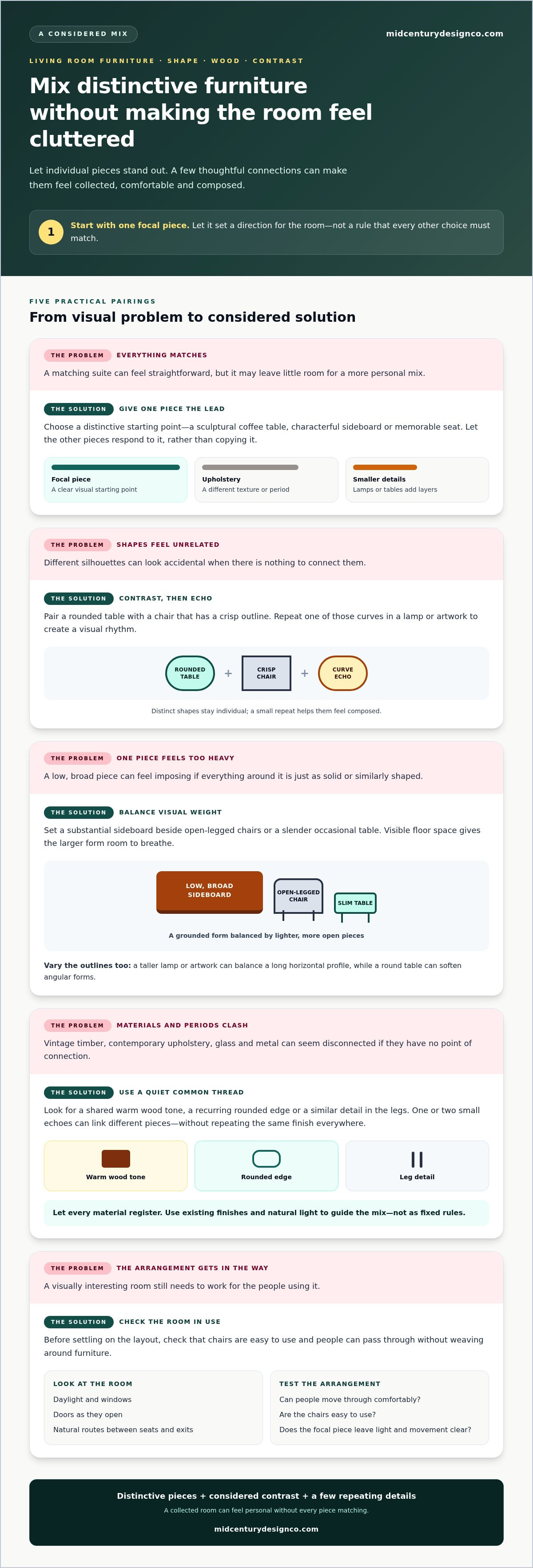
A room can feel thoughtfully collected without every piece sharing the same lines, finish or period. Balance contrast with a little repetition. For example, pair a rounded table with a chair that has a crisp outline, then echo one of those curves in a lamp or artwork. Each shape remains individual, while small connections help the arrangement feel composed rather than accidental.
Apply the same approach to materials. Wood, upholstery, metal and glass can sit comfortably together when each has room to register. A vintage timber sideboard can bring warmth and visual weight; a glass-topped occasional table or metal-framed chair can add a lighter note. These principles are useful for unique living room furniture ideas because they help you combine individual finds without relying on a matching suite or a fixed colour scheme.
Balance substantial forms with lighter pieces
Consider the visual weight of each item, not just its physical size. A low, broad sideboard may feel grounded beside open-legged chairs or a slender occasional table that leaves more of the floor visible. That open space gives distinctive shapes room to breathe and can help a substantial piece feel purposeful rather than imposing.
Vary the heights and outlines around the room. If one piece has a long, horizontal profile, a taller lamp or artwork can balance the composition. A round table can soften a group of angular forms. Before settling on the arrangement, check that chairs are easy to use and people can pass through without weaving around furniture. A visually interesting room should still be comfortable to move through.
Combine materials and periods with intention
Look for a subtle connection between different pieces. It might be a shared warm wood tone, a recurring rounded edge or a similar detail in the legs. This doesn’t mean repeating the same finish everywhere. One or two small echoes can help a vintage cabinet, contemporary upholstery and a glass or metal accent feel as though they belong together.
Use existing finishes and natural light to guide your choices. In a bright room, darker timber against lighter upholstery can add definition. In a room with less daylight, reflective glass or lighter fabric may help keep the arrangement feeling open. These are options, not rules. Choose colours and materials that work with your home and your taste.
Contemporary textiles or artwork can give an original vintage piece a fresh setting, while the furniture lends newer details a sense of depth. For more ideas on bringing period pieces into a lived-in home, explore this guide to styling mid-century modern furniture. You could also browse vintage sideboards and occasional tables for pieces that might complement your existing furnishings.
Compare Living Room Furniture Layouts to Find the Right Balance
A considered layout makes distinctive furniture easier to live with. The right arrangement depends on your room’s proportions, access points and daily routines, so think about how the pieces work together rather than how each looks on its own. Do you want to encourage conversation, keep an open-plan room flowing or make a compact space feel comfortable rather than crowded?
Compare these three starting points to see what each arrangement needs from the room:
Conversation-led
Purpose: Make talking and spending time together feel natural.
Grouping: Arrange seating to face or angle towards one another, with a coffee table or occasional table close at hand.
Keep clear: Routes between the entrance, seats and storage.
Open-plan
Purpose: Give the living area its own identity within a shared space.
Grouping: Use seating, a rug or a sideboard to suggest a boundary between the living and dining zones.
Keep clear: The main route through the room, especially between the entrance and adjoining areas.
Compact-room
Purpose: Make everyday use comfortable without filling every available corner.
Grouping: Prioritise essential seating and one useful table, then add storage where it serves a clear purpose.
Keep clear: Access to doors, windows and the routes you use most.
Arrange furniture for conversation and shared time
For conversation, bring seats into a group rather than automatically lining every piece against the walls. A sofa and chair can face one another or sit at a gentle angle, depending on the room’s shape. Place a coffee table or occasional table within practical reach, leaving enough space to sit down and move around it comfortably.
Then trace the routes people take from the entrance to the seating and storage. If reaching a cabinet means squeezing between chairs, adjust the grouping. A successful layout supports everyday movement as well as visual balance.
Adapt the arrangement for compact or open-plan rooms
In a compact room, make each item earn its place. Choose the pieces that support your routine first, and preserve usable space around them instead of adding furniture just to fill a wall. In an open-plan setting, a sideboard can help define the living area while providing storage. Its position can give a seating group purpose without closing off the room. For ideas on choosing this room-defining piece, explore this guide to authentic mid-century sideboards.
Before moving furniture into place, sketch the room and mark its doors, windows and main routes. Try a few arrangements on paper, then picture how each would work on an ordinary day, not just how it looks from one viewpoint. Browsing vintage sideboards and storage can also help you consider how a functional piece might shape your living area.
Put Unique Living Room Furniture Ideas into Practice with a Thoughtful Styling Plan
Good styling starts with a plan, but it needn’t feel rigid. Think about how you live in the room first, then build its character through considered choices. This sequence can help turn unique living room furniture ideas into a practical arrangement:
- Define the room’s purpose. Decide whether it’s mainly for reading, entertaining, conversation or a mixture of activities.
- Select an anchor. Choose a piece that supports that purpose and gives the arrangement a clear point of reference.
- Plan its position. Measure the room and note doors, windows, fixed features and the routes you use each day.
- Add supporting pieces. Bring in seating, tables, storage and finishing touches where they serve a purpose or strengthen the composition.
Before moving heavier furniture, sketch the room or mark each piece’s footprint on the floor with removable tape. Allow for doors to open and for access to storage, not just the outline of each item. This can show whether a table interrupts a route or a chair sits too close to a doorway. Once the essentials are in place, look at the arrangement from different parts of the room.
Build a room around daily rituals
Let familiar routines guide the details. A reading corner needs comfortable seating, useful light and a nearby surface for a book or cup. For entertaining, arrange seats so guests can speak easily and keep a table within reach. Storage can keep everyday objects close while helping the room feel composed. Decide where practical items belong before filling surfaces with accessories, so the room feels ready to use as well as pleasing to look at.
Lighting, rugs and soft furnishings should support the furniture rather than compete with it. A rug can help define a seating area; a floor or table lamp can make a reading spot inviting after daylight fades. Cushions and artwork can introduce texture or colour without repeating every detail of the furniture. A subtle echo, such as a similar curve or timber tone, may be enough to connect the pieces.
Edit the room so each piece has space to matter
Live with the arrangement before deciding it’s finished. Notice whether you keep moving a chair, leave a surface unused or struggle to reach something. Remove pieces that obstruct movement or duplicate a function without adding character. Edit accessories with the same care: choose artwork or objects that echo a furniture shape, material or colour, and leave some surfaces open. Space around a distinctive piece helps its form stand out.
A coffee table can be both a practical centrepiece and a way to introduce an individual design detail. For inspiration on choosing one, explore this guide to vintage Danish coffee tables. When you’re ready to consider a characterful piece for your own arrangement, explore vintage coffee tables.
Bring Your Living Room Together with Authentic Vintage Furniture
Original vintage furniture brings the design details of another era into a contemporary room, whether through a particular line, proportion or choice of material. It doesn’t have to be treated as a precious object reserved for admiration. A well-chosen piece can be part of everyday life, providing storage or a surface for books and conversation while adding its own history to the room.
For unique living room furniture ideas with lasting character, connect a detail you’re drawn to with a practical need. Perhaps you like the warmth of timber, a distinctive outline or the impression of careful design. Consider how that quality will sit alongside your existing furniture, and whether the piece’s scale and shape suit the space. The best choice isn’t simply the most striking one. It’s the piece that feels at home and earns its place.
Choose a vintage piece for both character and purpose
Start with a practical question: what would make the room work better? If you need somewhere to keep everyday objects, storage may be the priority. If people gather around a central point, a coffee table could provide both function and visual interest. Consider the piece from several angles, including its height in relation to nearby seating and how its material will work with the room’s existing finishes. Original vintage furniture is functional design with a story, not an untouchable display object.
Explore furniture categories that can shape the room
A sideboard can bring a strong horizontal line to a room, as well as a surface for a few carefully chosen objects. Storage systems offer another way to organise belongings and display meaningful things, helping the room feel personal without every surface becoming crowded. The right choice depends on what you want to keep close and how much visual presence feels comfortable in your space.
Coffee tables and occasional tables introduce different scales and silhouettes. A central table gives the seating area a shared surface, while a smaller occasional table can provide a useful landing place beside a chair. Together, these pieces can create contrast without requiring a matching suite. The Mid Century Design Co. curates and sells authentic vintage mid-century furniture, including original pieces that bring form, material and history to contemporary homes.
As you consider each category, picture how it could serve your routines as well as your eye. A sideboard might hold the things you prefer to keep out of sight; a table could become the familiar place for a book, a cup or a conversation. These practical details help an expressive piece become part of your home rather than an object set apart from it.
For a centrepiece with a distinctive profile, discover curated vintage furniture and consider how an original piece could bring warmth and character to your living room.
Let Your Living Room Evolve Around What You Love
A room with character doesn’t need to be finished all at once. Let it grow from the things you notice and value: a corner where the afternoon light settles, the chair you return to or an object that feels unmistakably yours. These details can point towards your next choice, helping the space feel lived-in rather than assembled around a passing trend.
As you explore unique living room furniture ideas, give yourself time to choose. A distinctive piece should feel right in your home, serve a genuine purpose and leave room for your own story. The pleasure lies not in making every decision at once, but in finding objects that remain meaningful as your routines change.
Find a piece that suits your room and the way you live. Explore authentic vintage mid-century furniture from The Mid Century Design Co. and consider the character an original piece could bring to your home. A more personal living room can take shape one considered choice at a time.
Frequently Asked Questions
Can I mix vintage furniture with contemporary pieces?
Yes. Vintage and contemporary furniture can sit comfortably together when a detail creates a visual link. For example, pair a vintage timber table with a modern chair that has warm wood in its frame, or repeat a curved outline in a contemporary lamp. You don’t need to match periods. Look at the pieces from across the room and see whether a shared material, shape or colour helps them feel related.
Is a matching furniture set necessary for a cohesive living room?
No. Individual pieces can feel cohesive through small, deliberate echoes, such as similar timber undertones, repeated rounded corners or related finishes on handles and lamp bases. Choose one detail to repeat rather than coordinating every item. This keeps the room’s character intact and makes it easier to add pieces gradually over time.
What colours work well with warm-toned vintage wood?
Warm-toned wood can work with many colours, from soft neutrals to deeper shades. Cream or muted green can bring out its warmth, while dusty blue or charcoal can create contrast. Let natural light and existing finishes guide your choice: a colour can look different beside a north-facing window than in bright afternoon sun. Try fabric or paint samples beside the wood before settling on a combination.
How do I choose a rug size for a living room furniture arrangement?
Choose a rug that visually connects the main seating rather than appearing like a small island beneath the coffee table. If space allows, place the front legs of the sofa and chairs on it to help anchor the group. Check that the rug won’t obstruct doors or narrow the route around furniture. A paper outline on the floor can help you judge the size before choosing a rug.
Can a small living room include a statement furniture piece?
Yes, a smaller room can accommodate a statement piece if its proportions suit the space. Look for a distinctive outline with a footprint that leaves room around it, so the piece remains a feature rather than an obstacle. Consider whether it can serve a useful role too, such as providing a surface or storage. Keeping nearby furnishings visually simple gives the chosen piece breathing room while preserving everyday comfort.
Where should a floor lamp sit beside a living room chair?
Place the lamp close enough to light a book comfortably, but not so close that its base interferes with your feet or the chair’s movement. For reading, position the light slightly behind or to the side of where you sit, adjusting it to reduce glare on the page. Check that the switch is easy to reach from the seat and that the lamp doesn’t interrupt a doorway or route through the room.
What artwork suits a mid-century-inspired living room?
Choose artwork according to the furniture and atmosphere you want to create. A large piece can balance a broad sideboard, while a smaller work may sit naturally above an occasional table. Pick out one colour from the room’s upholstery or wood accents for a subtle connection, or introduce a contrasting shade for emphasis. If you are searching for original contemporary paintings or distinctive decor to complement your arrangement, Wine Art Gallery provides an inspiring selection. Consider the frame too: a simple or more substantial profile can each complement the furniture, depending on the other shapes in the room.