

Vintage Floating Home Office Desk: A Thoughtful Buyer’s Guide
The desk that looks lightest in a room may not be the one that works best. If you’re searching for a floating home office desk vintage enough to bring warmth and character, start by separating two ideas: a floating desk is fixed to the wall, while a vintage desk is an original freestanding piece with a history of its own.
A wall-mounted design can leave the floor clear and create a pared-back workspace. An original vintage desk offers visible craftsmanship and the presence of a piece made to stand on its own. Neither is automatically the better choice. Your room, storage needs and working habits should guide the decision.
This guide explains how to compare the two forms, measure for a comfortable fit and assess the details that matter in everyday use. You’ll also learn what to look for in a listing, from construction and signs of age to damage that could affect function. Use these checks to choose a desk that suits your space and has the character you want.
Key Takeaways
- Separate wall-mounted construction from vintage character before deciding which kind of desk suits your room.
- Use “floating home office desk vintage” as a starting point, then compare the desk’s shape, materials and practical features.
- Measure the intended position and compare it with the desk’s stated dimensions, allowing space for your chair and movement.
- Read listings closely for evidence of age and construction, as well as damage or wear that could affect everyday use.
- Explore authentic vintage mid-century desks and office chairs if you’re drawn to original craftsmanship and period character.
What does a vintage floating home office desk actually mean?
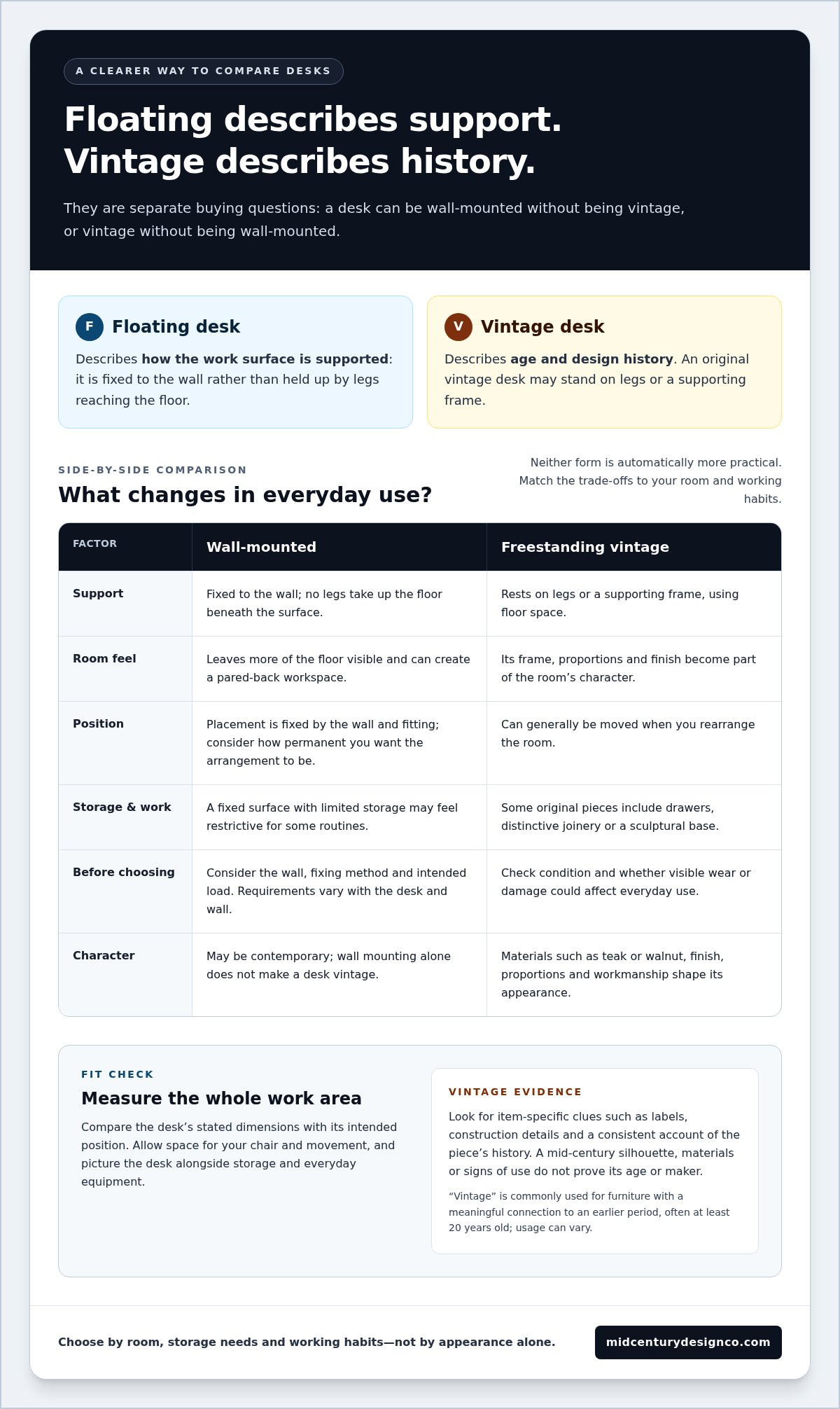
The phrase floating home office desk vintage brings together two descriptions, but it doesn’t name one established furniture category. “Floating” describes how the work surface is supported; “vintage” refers to its age and design history. A desk can meet one description without meeting the other: a wall-mounted desk can be contemporary, while an original vintage desk may stand on legs or a supporting frame.
A floating desk is supported by a wall rather than by legs reaching the floor. A vintage desk is an older piece associated with a particular period or design history, regardless of how it stands. Keeping these descriptions separate makes listings easier to interpret. It also helps you decide whether you’re looking for a particular construction, the character of an original piece, or both.
How is a floating desk different from a freestanding desk?
A wall-mounted work surface is fixed to the wall, leaving the area beneath it open. With no legs taking up floor space, a compact room can feel less crowded. The trade-off is a fixed position, with the desk’s placement determined by the wall and its fitting.
A freestanding desk rests on legs or a supporting frame. It uses floor space, but can generally be moved when you rearrange the room. Some original vintage desks also bring drawers, distinctive joinery or a sculptural base into view. Neither form is automatically more practical: consider how you work, what you need to store and whether you want the freedom to move the desk.
What makes a desk genuinely vintage?
Vintage describes age and design, rather than a maker’s mark or a certificate of authenticity. The term is commonly used for furniture with a meaningful connection to an earlier period, often at least 20 years old, although its use can vary. A mid-century silhouette alone doesn’t establish when a desk was made or who made it. Look for item-specific evidence, such as labels, construction details and a consistent account of the piece’s history, when assessing provenance.
This distinction separates original vintage furniture from contemporary desks that borrow mid-century styling. Both may have tapered legs or clean lines, but only the original comes from the period it reflects. Materials, workmanship and signs of use can add context, though appearance alone is not proof. For more context on identifying period pieces, explore this authentic mid-century modern desk guide.
For a broader introduction to the term and how it differs from “retro”, What is vintage design? offers useful context. When reading a listing, treat “floating” as a clue to support and installation, and “vintage” as a claim about age and design history. Then check what the description and photographs tell you about that particular desk.
How floating design and vintage character shape a home office
A desk affects the mood of a room before you sit down to work. A wall-mounted surface creates a clean line and leaves more of the floor visible. An original vintage desk has a different presence: its frame, proportions and finish become part of the room, adding a sense of history as well as a place to work.
Support method and vintage status are separate buying questions. The first concerns how a desk is held in place; the second concerns its age, design and history. A floating desk can be contemporary, while vintage character can belong to a freestanding piece.
What should you consider about wall mounting?
Before choosing a wall-mounted desk, consider the wall, the fixing method and the load the desk is intended to bear. Requirements vary with the desk’s construction and the wall, so one fitting approach will not suit every situation. Treat installation as part of your decision, rather than leaving it until after you’ve chosen a desk.
Consider how permanent you want the arrangement to be, too. A fixed position can create a composed work area, but it may be less adaptable if the room’s purpose or layout changes. Picture the desk alongside your chair, storage and everyday equipment. If you often rearrange your workspace, a freestanding design may give you more freedom. If keeping the floor open is a priority, wall mounting may fit your plans better.
Which vintage details bring warmth and character?
Look closely at the materials and finish. The grain of teak or walnut, for example, can bring natural warmth to a room, while the colour and sheen of the finish affect how the desk sits alongside flooring, shelves and soft furnishings. These details can help you judge the desk’s appearance, but they don’t prove its age or maker.
Proportions matter as much as materials. A slim top and tapered legs may feel light and restrained; a broader surface or more substantial frame can give a workspace a stronger visual anchor. Notice how the edges meet, whether the drawers align and how the handles relate to the overall design. These features may suggest thoughtful workmanship, but don’t establish provenance on their own. Assess the visible character separately from claims about who made the desk or when.
If original mid-century craftsmanship is what draws you to vintage design, explore authentic vintage desks and office chairs as another way to bring period character into your workspace. A freestanding piece can add warmth without relying on a wall-mounted form, leaving the room’s practical needs and visual balance to guide your choice.
Floating or freestanding vintage desk: which suits your home office?
A tidy outline can be tempting, especially in a room that serves more than one purpose. But a floating desk may not suit every working routine. A fixed surface with limited storage can feel restrictive if you use papers, equipment or frequently switch tasks. A freestanding vintage desk takes up more floor space, but may offer the flexibility and furniture-like presence you want.
Use this comparison to weigh the practical differences, then picture each form in your actual room rather than choosing by appearance alone.
| Consideration | Floating desk | Freestanding vintage desk |
|---|---|---|
| Room footprint | Leaves the floor beneath it visually open. | Uses floor space for legs or a supporting frame. |
| Placement | Fixed in one position once installed. | Can generally be moved as the layout changes. |
| Storage | Depends on the individual design; don’t assume drawers are included. | May have drawers or other storage, depending on the piece. |
| Installation | Requires a suitable wall and appropriate secure fitting. | Doesn’t rely on wall mounting, though the desk should be stable. |
When might a floating desk make sense?
A floating desk may suit a compact room where keeping the floor visually open is important. It can also work well if you have a settled work position and have considered the requirements of wall installation. Think through your typical routine: do you mainly use a laptop, or do you need room for notebooks, a screen and other equipment? Usable surface area and storage vary by design, so assess the specific desk instead of assuming the form provides a certain amount of either.
When is a freestanding vintage desk the better fit?
Choose a freestanding form if you value the freedom to rearrange your furniture or want the desk itself to act as a focal point. Its legs, frame and finish can contribute as much to a room’s character as its work surface. Storage varies from piece to piece, so check whether drawers are present and whether their size and arrangement suit the items you want close to hand.
Rule of thumb: choose for your room layout first, then let your working habits settle the decision. If a fixed position and open floor matter most, consider a floating design. If flexibility and a more substantial furniture presence matter more, look at freestanding desks. For a closer look at original pieces, this Danish desk buying guide explores what to consider in an authentic vintage desk.
If original period character is part of your vision, explore authentic vintage desks as you plan a workspace that feels considered as well as useful. A vintage-looking floating desk isn’t automatically the right answer; choose the form that supports your routine and belongs naturally in the room.
What to check before buying a vintage desk for home working
A desk can look beautiful in a photograph and still prove awkward in daily use. Before buying, check the practical fit, examine the visible condition and consider what the listing can genuinely tell you about the desk’s history. This makes it easier to distinguish appealing character from details that matter to function.
Will the desk fit your room and working routine?
Start with your space, not the listing. Measure the intended position and compare it with the desk’s stated dimensions. Then consider how you’ll sit, move and work around it.
- Measure the available area. Note the width and depth, as well as the clearance for your chair and movement nearby. Allow space to sit down and stand up without blocking a doorway or a drawer.
- Picture your working setup. Think about the screen, paperwork and equipment you use during a typical day. Compare these needs with the desk’s stated surface dimensions. Don’t assume its style or age tells you how much usable space it offers.
- Account for the desk’s position. For a freestanding desk, consider how its legs or frame will sit within the room. If you’re considering a floating home office desk vintage in character, plan the wall position, fitting and access to the full work surface before settling on a permanent arrangement.
How can you assess condition and authenticity?
Photographs and descriptions should work together to build a clear picture. Look for views of the surfaces, edges, joints, drawer fronts and underside where available. Close-up details can reveal more than a polished overall shot.
- Inspect condition closely. Look for cracks, water marks, lifting veneer, missing hardware, pinholes or visible repairs. Check whether the description identifies wear and whether the images show it clearly. Signs of age may be part of a desk’s character, but damage that affects use deserves careful consideration.
- Consider stability and moving parts. A desk should sit steadily. If it has drawers, look for information or images that help you assess their condition and movement. If these areas aren’t shown, don’t assume they’re in good condition.
- Separate appearance from provenance. A mid-century look or attractive patina doesn’t prove when or where a desk was made. Look for evidence specific to the piece, such as a maker’s mark, label or construction details, and check that claims about age or origin are supported by the description. The guide to identifying original mid-century furniture offers further context on assessing period character.
Once you’ve compared dimensions, condition and supporting details, you can decide whether the desk suits your room and your expectations of an original piece. Explore authentic vintage desks to find a characterful starting point for your home office.
Find an authentic vintage desk to give your home office character
The right desk combines a practical fit with a feeling that belongs to you. If you began by searching for a floating home office desk vintage, keep the two ideas distinct as you make your choice: “floating” describes wall support, while vintage character belongs to an original piece’s age and design history. The Mid Century Design Co. curates and sells authentic vintage mid-century furniture, including desks and office chairs, for those drawn to original craftsmanship and period character.
What does an original vintage desk bring to a workspace?
An original desk can give a home office individuality through its particular proportions, construction and signs of a life before yours. A distinctive frame or visible joinery can make it feel like considered furniture rather than a surface added solely for work. Period design can also sit comfortably among contemporary pieces, helping a workspace feel personal and lived-in rather than arranged around a single era.
Let the individual desk tell its own story. Judge materials, maker, age and condition from the information and evidence relating to that piece, rather than assuming them from a familiar silhouette. Patina may add visual depth, but it doesn’t prove provenance or guarantee quality. Originality matters for a desk’s connection to design history and its workmanship, not as a promise of future financial value.
How can you make the final choice with confidence?
Bring your priorities together before settling on a desk. A beautiful piece should still fit the room and support the way you work. Use this final check to balance appearance, practicality and authenticity:
- Room: Compare the desk’s stated dimensions with your measured space, including room for your chair and movement.
- Routine: Consider the surface area, storage and working position you need for your usual tasks.
- Form: Decide whether a fixed wall-mounted position or a freestanding piece better suits your layout and how often you rearrange the room.
- Condition: Review the available views of surfaces, edges, joints and moving parts. Weigh any disclosed wear against your expectations.
- Provenance: Look for item-specific information about age, maker or construction rather than relying on styling alone.
Prioritise the qualities you’ll use and appreciate every day. A clear work surface may matter most to one person; to another, it’s the grain, frame or sense of history that makes the desk feel right. The best choice is the one that serves your working habits and gives the room a character you’ll enjoy living with.
Explore authentic vintage furniture and picture an original mid-century desk paired with an office chair in a workspace shaped around your needs. A thoughtful choice can make everyday work feel more at home.
Give your workspace a character of its own
The right desk can make a working corner feel personal, rather than simply somewhere to set up a screen. Let the phrase floating home office desk vintage prompt a broader question: what kind of presence do you want in the room? It might be the clean line of a wall-mounted surface, or the warmth and individuality of an original piece with a story in its details.
The Mid Century Design Co. curates and sells authentic vintage mid-century furniture, including desks and office chairs, to customers across the UK. Each original piece has its own character and can become part of the rhythm of your home and working life.
Imagine the desk in your space, alongside the objects you use and the light that falls across it. Ready to find a piece that feels at home there? Explore authentic vintage desks and mid-century furniture from The Mid Century Design Co.
Frequently Asked Questions
What is a floating home office desk?
A floating home office desk is a work surface supported from a wall rather than by a conventional set of legs. The term describes its mounting style, not its age or authenticity. A newly made wall-mounted desk may have a vintage-inspired look, while an original vintage desk might stand on a frame. Treat construction and provenance as separate details when comparing listings.
Can a vintage desk be wall-mounted?
Some desks may be suitable for wall mounting, but age alone doesn’t show whether a particular piece can be adapted safely. Its construction, condition and weight all matter, as do the wall and proposed fixing method. A freestanding desk’s legs or frame may be integral to its support, so don’t assume they can be removed. Assess the individual desk and installation requirements before planning a wall-supported arrangement.
Is a floating desk practical for working from home?
A floating desk can be practical if its surface, position and storage suit your work. Someone who mainly uses a laptop may have different needs from a person who regularly spreads out paperwork or uses several devices. Searches for “floating home office desk vintage” can mix mounting style with period appearance, so assess those qualities separately. A fixed position may be less convenient if you often rearrange your room.
How do I choose between a floating desk and a freestanding vintage desk?
Begin with how you want the room to function. If keeping the floor visually open is a priority and a fixed position suits your routine, consider a wall-mounted desk. If you expect to change the layout, a freestanding piece may offer more flexibility. Then compare each desk’s actual surface, storage and condition. Appearance matters, but it shouldn’t outweigh the way you’ll use the desk day to day.
How can I tell whether a desk is genuinely vintage?
Look for evidence specific to the individual desk, such as a maker’s mark, construction details, a documented history and photographs that show its condition. A mid-century silhouette, aged finish or teak surface can inform your impression, but none proves originality on its own. Compare the listing’s claims with the visible details, and be cautious of firm dates or maker attributions that aren’t supported by item-specific information.
What should I measure before buying a home office desk?
Measure the available width and depth, then account for your chair and the space you need to move around it. Compare your measurements with the desk’s stated dimensions, not its proportions in a photograph. Think about the equipment and paperwork you use together: a screen may fit but leave too little room for notes. For a wall-mounted design, consider where the surface will sit and whether you can work comfortably there.