

Vintage Furniture: Its Styles, History and Lasting Appeal
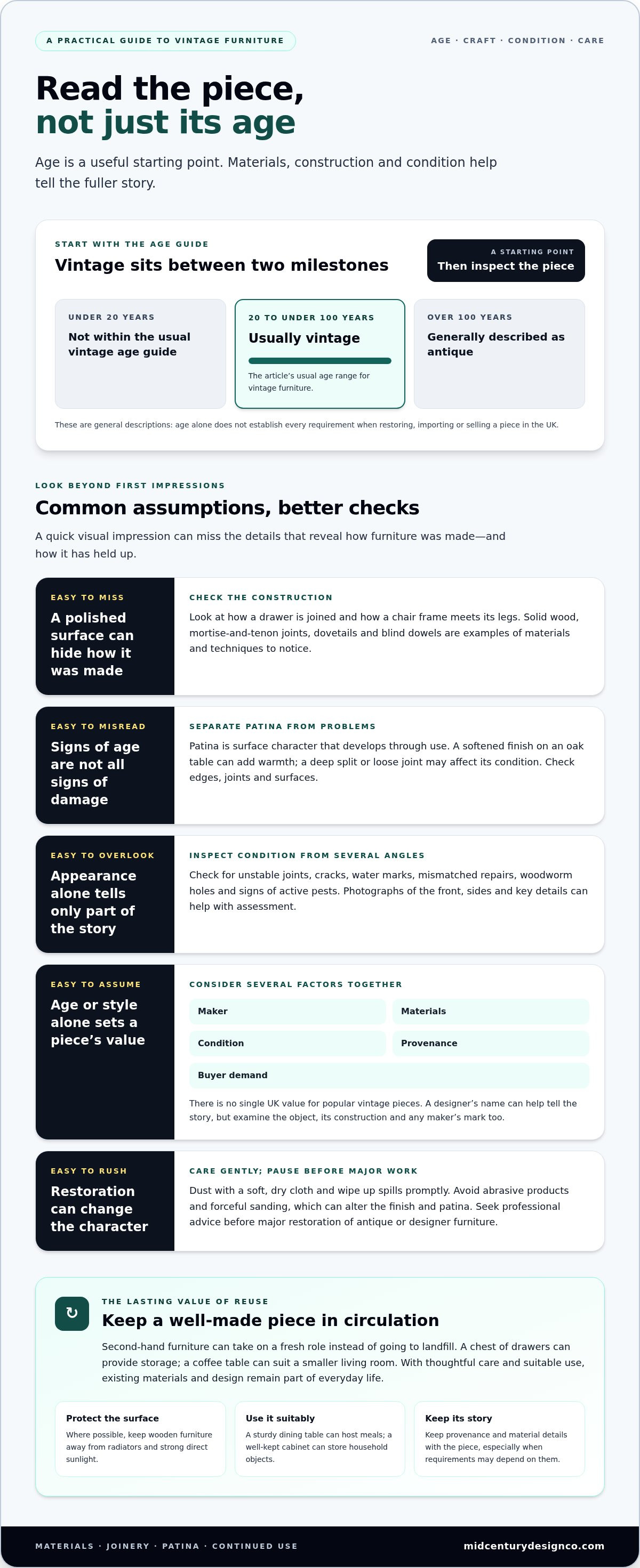
Age gives a piece its place in history; its design and craftsmanship give that history a voice. Vintage furniture is usually at least 20 years old but less than 100 years old, whilst furniture over 100 years old is generally described as antique. The story behind vintage furniture pieces lies in the way their materials, details and lived-in character reveal the period that shaped them.
An older piece can feel more personal than furniture made to follow a passing trend. A thoughtfully crafted table or sideboard carries traces of its era while still feeling at home in a contemporary room.
Explore what defines vintage furniture, how styles developed across different periods, and why mid-century craftsmanship continues to draw admiration. Reusing well-made furniture gives it a longer life, while the memories attached to it make its story uniquely yours.
Key Takeaways
- Use age as a starting point when identifying vintage furniture, then look closely at materials and joinery for clues to its making.
- Choosing well-made second-hand furniture gives an existing piece another life and can help reduce waste.
- Recognise how design details reflect different periods, from ornate historic influences to the distinctive experimentation of later decades.
- Consider a piece’s history and personal meaning alongside its appearance to create a home that feels more individual.
What is vintage furniture?
Vintage furniture is usually at least 20 years old but less than 100 years old; pieces over 100 years old are generally described as antique. Mid-century examples show how solid wood and considered joinery can make functional design feel enduring.
Traditional Craftsmanship and Durable Materials
Traditional craftsmanship pairs durable materials, such as solid wood, with skilled construction. Mortise-and-tenon joints, dovetails and blind dowels are examples of furniture-making techniques. Look beyond a polished surface: examine how a drawer is joined or how a chair frame meets its legs. In mid-century pieces, materials and joinery can reveal the care behind the design.
Patina, Character and Quality
Patina is the surface character that develops as furniture is handled and lived with over time. A softened finish on an oak table, for example, can add visual warmth, while a deep split or loose joint may affect its condition. Distinguish signs of age from damage by checking edges, joints and surfaces. Quality depends on both the original craftsmanship and the piece’s current structural condition; appearance alone tells only part of its story.
When restoring, importing or selling vintage furniture in the UK, relevant requirements depend on the item, its materials, origin and transaction. Age alone does not establish every requirement, so keep provenance and material details with the piece.
There is no single UK value for popular vintage pieces. Maker, materials, condition, provenance and buyer demand all influence what a particular sideboard, chair or table may be worth.
Before buying, inspect the item from several angles. Check for unstable joints, cracks, water marks, mismatched repairs, woodworm holes and signs of active pests. Photographs of the front, sides and key details can help you assess its condition.
For routine care, dust gently with a soft, dry cloth and wipe up spills promptly. Avoid abrasive products and forceful sanding, which can alter the finish and patina. Seek professional advice before major restoration of antique or designer furniture.
Sustainability through reuse and longevity
Reusing furniture gives it another role instead of sending a usable piece to landfill. An oak dining table, for example, can pass from one household to another, serving everyday meals and larger gatherings as homes and tastes change. Its value lies not only in its age, but also in continued use.
Choosing second-hand furniture supports sustainability by keeping an existing object in circulation. A vintage chest of drawers can provide practical storage in a bedroom or hallway, while a coffee table can suit a smaller living room. The story behind vintage furniture pieces continues as owners find fresh uses for them instead of replacing them whenever trends shift. Original materials and design remain part of daily life rather than being discarded.
Antique furniture carries this idea across a longer span of time. Preserving and appreciating an antique can help reduce waste and support more sustainable living. A family might keep a wooden cabinet for generations, adapting its use as rooms and needs change. The story behind vintage furniture pieces can be part of their usefulness, not simply a reason to leave them untouched.
Longevity also depends on thoughtful care. Where possible, keep a wooden sideboard away from radiators and strong direct sunlight, as heat and light can affect its surface. Wipe up spills promptly and use furniture for a suitable purpose: a sturdy dining table can host meals, while a well-kept cabinet can store household objects. These habits help protect a piece already in circulation.
Mid-century modern furniture shows how a distinctive design can remain relevant beyond the decades that produced it. Its clean lines can sit comfortably beside newer furnishings, allowing a room to evolve without replacing every piece. If you’re drawn to the considered forms of Danish furniture, explore how a carefully chosen vintage piece might bring lasting character to your home.
Vintage furniture styles and design periods
Design details connect furniture to its period, from ornate curves to sculptural forms. Recognising these cues helps you place a piece in a room and understand its character.
Furniture Design Eras
Furniture design eras are periods shaped by changing tastes, materials and ideas about how homes should function. The 18th-century Rococo style is known for ornate forms, whilst mid-century modern design favours cleaner lines. These distinctions help you compare a piece with the architecture and furnishings around it, rather than treating every older object as belonging to one look.
Later decades broaden the vintage palette. Furniture from the 1970s and 1980s can bring different silhouettes and visual weight to an interior. A 1960s Brutalist coffee table, for example, reflects post-war experimentation with materials. Its substantial presence can anchor a room, whilst a simpler armchair nearby creates contrast.
Vintage Styles and Collectible Designers
Vintage styles range from restrained mid-century modern forms to the bolder shapes associated with the 1970s and 1980s. In the UK, these periods offer distinct collecting interests; Rococo belongs to the 18th century and is generally classed as antique, not vintage. Collectibility depends on the maker, condition, provenance, design details and buyer demand, not simply a style label.
A designer’s name can help tell a piece’s story, but examine the object itself too. Consider its proportions, construction, materials and any maker’s mark. A well-documented dining chair with distinctive lines may attract more interest than a similar-looking piece without clear provenance. No single style or designer defines every collector’s taste.
Patina adds character through the marks of use and time. Subtle colour changes can lend a wooden table depth, while the bold texture of a Brutalist table makes its material presence part of the design. These details give each piece its own story.
For a timeless interior, pair a vintage centrepiece with simpler furnishings. A sculptural coffee table can sit beside a pared-back sofa, letting its shape and surface stand out without making the room feel tied to one era.
Vintage furniture’s history and personal significance
Furniture can preserve evidence of how it was made and the lives around it. Antique pieces often reflect craftsmanship techniques associated with their era, from carved details to the way components were assembled. Some were commissioned for palaces and grand estates, where their scale and ornament suited the rooms they served. Others travelled across the world, carrying traces of different owners, homes and historical journeys.
Consider an inlaid mahogany demilune table said to be 300 years old. Its curved form and intricate surface offer clues to the taste and workmanship of its period. Age alone cannot tell its full history, but provenance, records and inherited accounts can add context. When buying, look for details that connect the object to a maker, place or previous owner, and preserve any accompanying history alongside it.
Personal meaning can deepen over time. A dining table may hold memories of family meals, celebrations and everyday conversations; a cabinet passed between generations can connect its current owner with ancestors and family traditions. Such pieces become heirlooms through both their continued use and the stories attached to them. Adding a vintage object to a home can therefore bring more than a particular shape or finish. It can give a familiar room a link to another household and another era.
To uncover a piece’s background, look at its construction, distinctive design details and signs of use. Ask relatives about a family item’s previous homes, or keep notes about where and when you acquired it. A dated photograph, receipt or family recollection may help preserve its story for future owners. These fragments need not form a complete record to make the object more meaningful.
If you’re ready to bring a considered vintage piece into your home, discover furniture with enduring character.
The Mid Century Design Co.: Sideboards & Storage
The Mid Century Design Co. is a natural next step if you’re ready to bring vintage character into your home. Its furniture selection includes sideboards and storage, dining sets, chest of drawers, and coffee tables and occasional tables, offering functional pieces with a connection to mid-century design. Turn to these categories when you’re looking for a considered focal point, useful storage, or furniture that complements an existing interior. A sideboard can anchor a dining space, whilst a vintage coffee table can add warmth and sculptural interest to a living room. Choosing a piece is a chance to bring its history into your own everyday setting, where it can gather new meaning over time. Visit The Mid Century Design Co. to explore the collection.
Make room for a piece with a story
Let the story behind vintage furniture pieces guide a more personal choice for your home. Instead of furnishing a room all at once, start with the space you want to shape: a dining area for shared meals, a hallway in need of considered storage, or a living room ready for a distinctive focal point. Think about how you want the room to feel, then choose a piece that fits naturally. The right object can become part of daily life while retaining its own character.
The Mid Century Design Co. offers Sideboards & Storage, Dining Sets and Chest of Drawers for interiors shaped around function and individual taste. Explore these options and consider which might bring a sense of history and warmth to your home. Contact The Mid Century Design Co. to take the next step and find a piece that feels at home in your story.
Frequently Asked Questions
What makes a furniture piece vintage rather than antique or retro?
Vintage furniture is usually at least 20 years old but less than 100 years old; pieces over 100 years old are generally considered antique. Retro describes a look rather than a piece’s age: it usually refers to newer furniture designed to evoke an earlier style. To distinguish them, consider both the design and evidence of when the particular item was produced.
How can you identify a vintage furniture maker, date and country of origin?
Look underneath the piece, inside drawers and on the back for a maker’s mark, label or stamp. Record any wording and photograph these details alongside distinctive features, such as handles or leg shapes. Compare the clues with purchase paperwork, family records or the seller’s provenance. Style can suggest a period, but it cannot establish a maker or country on its own.
What do common marks, labels and construction details reveal about a piece’s history?
Labels and stamps may identify a maker, retailer or place of production, while handwritten notes might record ownership or an inventory number. Construction details offer another kind of evidence: a changed screw, filled hole or mismatched finish can point to later repair or alteration. Consider the clues together. A single mark may not reveal when, where or for whom the furniture was made.
How did major historical periods and design movements shape vintage furniture?
Design movements shaped furniture’s form, ornament and use. Rococo, associated with the 18th century, favoured an ornate visual language, while a 1960s Brutalist coffee table can express post-war experimentation with materials. Furniture from the 1970s and 1980s adds further contrasts in silhouette and presence. These shifts help explain why pieces from different decades create such distinct moods in a room.
Where can you find the provenance and original story of a vintage furniture piece?
Look for provenance in family photographs, receipts, correspondence, estate records and labels attached to the furniture. Ask previous owners or relatives where the piece lived and how it was used; stories about family gatherings around a dining table can add valuable personal context. Keep documents and recollections together, noting which details come from records and which are remembered.
Which vintage furniture pieces have the most interesting or unusual histories?
Pieces with unusual histories often have clear connections to people, places or significant journeys. Furniture commissioned for a palace or grand estate may reflect its original setting, while an item that travelled between countries can carry traces of changing ownership. A family heirloom can be just as compelling: its history may live in inherited stories rather than formal records.