

Vintage Furniture Patina vs Damage: How to Tell the Difference
What if the marks that give a vintage piece character are also hiding a problem? The difference between vintage furniture patina vs damage isn’t always obvious at first glance, especially in listing photographs where a time-softened surface can obscure a loose joint or water damage.
Look closely before you commit. Faded colour, gentle wear and small surface marks can reflect years of use, while cracks, instability or damage that affects how a piece works deserve more attention. Vintage furniture doesn’t need to look new to be a worthwhile find, but its condition should suit your needs and your home.
This guide explains how to recognise common signs of patina and deterioration, assess details before you buy, and decide what to check next. Look beyond the front-facing finish for clues in the joints, legs, drawers and veneer, as well as possible woodworm. The aim is to appreciate a piece’s history without overlooking genuine concerns.
Key Takeaways
- Patina can add character, but it doesn’t prove that a piece is well made or in good condition.
- Assess marks on timber, veneer and finishes, and note which signs need closer inspection.
- Use the difference between vintage furniture patina vs damage to decide what to check next, rather than judging by appearance alone.
- Follow a practical inspection sequence in person or when reviewing listing photographs, including less visible areas.
- Choose age-related wear that suits your home, habits and expectations, weighing condition alongside design and function.
Vintage Furniture Patina vs Damage: What Is the Difference?
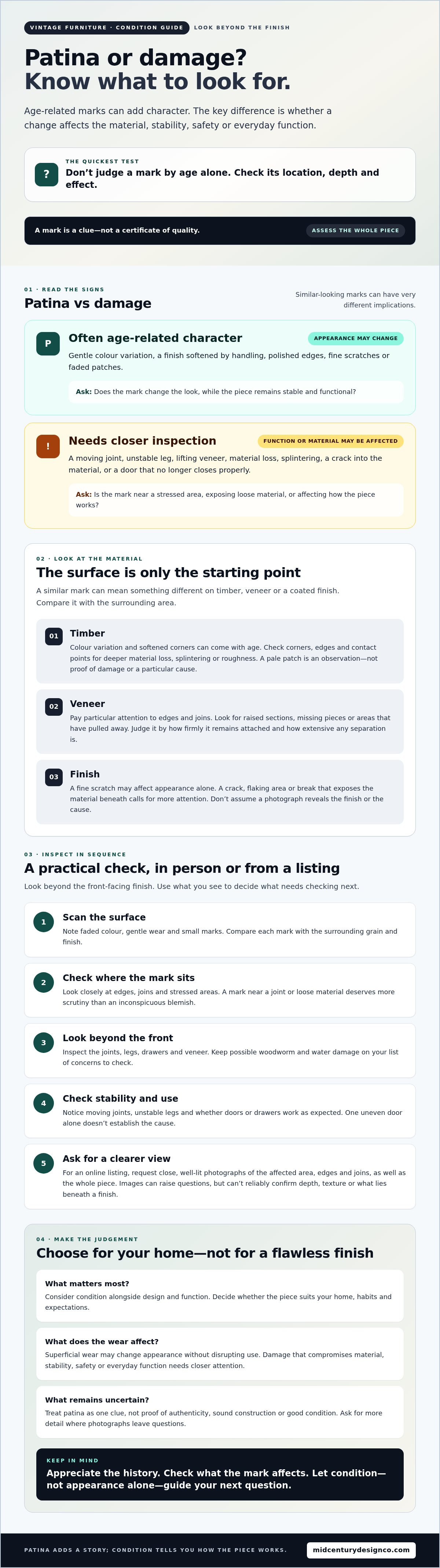
Age-related marks can be beautiful, concerning, or both. A softly worn table edge may add character, while a similar-looking mark near a joint could point to a practical problem. The difference between vintage furniture patina vs damage isn’t simply how old a mark looks. Patina is visible change acquired through age and use; damage is change that compromises the material, stability, safety or everyday function.
As a starting point, What is patina offers a useful overview of how patina forms across different materials. On furniture, its appearance can reflect the timber, veneer or finish, as well as light exposure and past care. Patina may tell part of a piece’s story, but it doesn’t prove authenticity, sound construction or good condition. Treat it as one clue, not a certificate of quality.
What does patina look like on vintage furniture?
Look for gentle colour variation, a finish softened by handling, or edges polished by everyday contact. A wooden drawer front may look richer where hands have often touched it; a tabletop may show uneven tones from sunlight or objects placed on it. These changes vary from piece to piece. A polished surface, painted finish and exposed timber age differently, and previous cleaning or care can affect what you see.
When does wear become damage?
Superficial wear usually changes appearance without disrupting use. A fine scratch or faded patch may stand out but leave the furniture stable and functional. Veneer that lifts or separates, a moving joint, or a leg that makes a piece unstable calls for closer attention. A door that no longer closes properly may also point to an issue, although one uneven door alone doesn’t establish the cause.
A mark’s location, depth and effect matter more than its age alone. A small blemish on an inconspicuous surface may be easy to live with; a similar mark at a stressed joint, or one that exposes loose material, deserves more scrutiny. A concern in one area doesn’t automatically make the whole piece unusable. Focus on what the mark affects rather than romanticising every flaw or treating every blemish as serious. That measured judgement helps you appreciate age while recognising when condition needs a closer look.
How Timber, Veneer and Finish Change with Age
The material beneath a mark changes how you should interpret it. A pale patch on solid timber may be a difference in colour; on veneer, a similar patch could indicate that a thin surface layer has lifted or worn away. A scratch in a protective finish may affect appearance alone, while a crack that reaches the material beneath calls for more attention. When assessing vintage furniture patina vs damage, the surface is only the starting point.
How to assess teak and other timber surfaces
Timber can develop colour variation, softened corners and changes in sheen with age. On teak, for example, a lighter area on an exposed edge is an observation, not proof of damage or a particular cause. Check corners, edges and contact points for deeper material loss, splintering or roughness. Light exposure and previous care may affect a surface, but a photograph rarely shows enough to confirm why its colour has changed.
Compare a mark with the surrounding grain. Is the surface simply a different tone, or does it look uneven, worn through or fractured? In person, view it from several angles and in natural light if possible. For an online listing, ask for close, well-lit photographs that show the affected area as well as the whole piece. Images can help you identify questions, but they can’t reliably confirm depth, texture or the condition beneath a finish.
How to spot veneer and finish problems
Veneer is a surface layer, so pay particular attention to edges and joins, where lifting or separation may be easier to see. Look for raised sections, missing pieces or edges that appear to have pulled away from the material beneath. Judge veneer by how firmly it remains attached and how extensive any separation is, not by appearance alone. A small discoloured area and a loose, lifting section may look similar in a distant photograph but have different implications.
A fine scratch in a coated finish may be superficial; a crack, flaking area or break that exposes the underlying material suggests a different kind of change. Don’t assume you can identify the finish or cause from one image. Request detailed photographs from several angles, including edges and joins, and ask the seller to clarify anything unclear. The Oregon State University guide recognises the value of signs of age and use, a useful reminder that preserving character needn’t mean overlooking condition. As you browse curated original vintage furniture, consider the material and its condition alongside the design and how you’ll use it at home.
Patina vs Damage: Which Signs Deserve a Closer Look?
A single mark rarely tells the whole story. A scratch may be confined to the finish, while a similar line near a join could be part of a wider concern. Use the table as an inspection prompt, not a diagnosis. Lighting, material and the furniture’s overall condition all affect what a mark might mean.
| Visible sign | Possible interpretation | What to inspect next |
|---|---|---|
| Light scratches or softened edges | Surface wear, though depth and location matter | Check whether the mark is shallow or catches on exposed material |
| Faded or uneven colour | A change in appearance, with several possible causes | Compare nearby areas and look for cracking, flaking or material loss |
| Water marks | Discolouration or a possible effect on the surface beneath | Check for raised, softened or deteriorating material around the mark |
| Raised or lifting veneer | Possible separation from the surface beneath | Look at its edges and extent; don’t pull or press it |
| Movement at a joint | Possible looseness that could affect stability | Observe whether the piece shifts during gentle, ordinary handling |
| Uneven doors | Could relate to alignment or another issue | Open and close gently; note rubbing or difficulty without forcing them |
Which surface marks may be mainly cosmetic?
Light scratches, softened edges and colour variation can be visual signs of use, but their significance depends on the piece and where they appear. Ask yourself whether the mark affects how the furniture works, its stability or your enjoyment of it in the room. A cosmetic concern can still matter if it distracts you every day, but appearance alone doesn’t establish authenticity or condition.
Which warning signs should not be overlooked?
Instability, loose joints, sharp breaks and lifting material deserve closer assessment because they may affect safe use or function. Check drawers, doors and other moving parts gently; don’t force anything that sticks. Consider the overall pattern as well as each individual flaw. Several signs together, such as a loose joint, uneven door and cracked area, may change your judgement even if none seems severe on its own.
When weighing vintage furniture patina vs damage, separate what you can see from what you can confirm. Ask the seller for clarification or clearer views where details are uncertain. If you can’t establish whether a concern affects structural integrity or safe use, seek an opinion from a qualified professional before deciding. A measured assessment helps you weigh condition alongside design and suitability without expecting age to leave no trace.
How to Inspect Vintage Furniture Before You Buy
A considered inspection helps you look beyond the most flattering angle and judge how a piece is likely to work in your home. Use the same sequence in person or when reviewing listing photographs. If a detail that matters isn’t visible, ask for another view rather than filling the gap with assumptions.
- View the whole piece. Start with the front, then inspect the back, underside, edges and interior surfaces where accessible. Look at corners, feet, joints and veneer edges, not just the main display surfaces.
- Compare alignment and stance. Check whether the furniture appears to stand evenly and whether doors and drawers sit straight. In person, view it from several angles. In photographs, ask for a level view of the front and a clear image of the base if the stance is difficult to judge.
- Look closely at marks and repairs. Note scratches, water marks, cracks, lifting material and areas that appear replaced or repaired. Ask for well-lit close-ups of relevant spots; a wide listing photograph may conceal their depth or extent.
- Check movement gently. Open and close drawers and doors without forcing them. Notice sticking, rubbing or unusual movement, and check whether the piece shifts during ordinary handling. One demonstration doesn’t prove how it will perform over time.
- Ask about what photographs can’t show. Find out which repairs or replacements are known, whether joints or other parts move, whether there has been water exposure, and whether the seller has noticed any unusual odour. Ask whether the furniture functions as described.
What should you confirm before deciding?
Compare the seller’s written condition description with the photographs. If a repair is mentioned, ask where it is and which part was affected. If an image shows a mark that the description doesn’t address, request clarification. You’re not looking for certainty from a photograph; you’re building a more complete picture before committing.
Assess appearance, structure, function and seller-provided condition evidence separately. This keeps an attractive finish from overshadowing practical concerns and helps you judge age-related wear in context. It also makes the vintage furniture patina vs damage distinction more useful: focus on what you can observe, what remains uncertain and whether any issue affects your intended use.
Once you know what to look for, compare condition with design and suitability across original vintage furniture, including sideboards, dining furniture, desks and storage.
Living with Patina: Choosing Vintage Furniture with Confidence
A vintage piece should suit the way you live, not just the way it looks in a photograph. Consider its appearance, stability, function and disclosed condition together. A gently worn dining table may feel at home in a busy kitchen, while a conspicuous mark on a desk you use every day might matter more to you. There’s no single correct tolerance for wear. The useful question is whether you can comfortably live with the piece as it is.
How to decide whether a piece’s condition suits you
Think about how the furniture will be used. A cabinet intended for display has different demands from a chair or desk used daily. Decide which imperfections you’ll barely notice and which would continue to draw your eye. A sound, functional piece can still show signs of age, but that isn’t a promise about how it will perform in future. Vintage furniture isn’t expected to look newly made, so its visible history should inform your decision rather than come as an unwelcome surprise.
Routine care is separate from repair or restoration. Follow any care guidance provided for the particular material and finish, and don’t assume a product or method is suitable for every surface. If a piece needs work beyond ordinary care, seek advice from an appropriate independent professional. The Mid Century Design Co. sells original vintage furniture but doesn’t offer restoration services.
How patina can sit naturally in a contemporary home
Signs of age can bring texture and a lived-in warmth to a room, especially alongside contemporary pieces and simpler surfaces. That doesn’t mean damage should be treated as desirable: a mark that affects stability or function remains a condition concern, whatever its aesthetic appeal. Aim for a considered balance, where the furniture’s character complements your home and its condition suits the way you’ll use it.
For ideas on bringing vintage pieces into a present-day interior, explore our guide to styling mid-century furniture and creating a lived-in home. Once you know what level of wear feels right, browse the Mid Century Design Co.’s curated selection of original vintage furniture, including sideboards, dining furniture, desks and storage. Let design, function and condition guide your choice, so the piece feels at ease in your space.
Choose a Vintage Piece with Confidence
The difference between vintage furniture patina vs damage comes down to more than age or appearance. Consider where a mark sits, how deep it appears and whether it affects the material, stability or everyday use. Timber, veneer and finishes each tell their own story, so inspect the whole piece and ask about anything the photographs or condition notes leave unclear.
A sound, functional vintage piece can still carry visible signs of its past. The right choice is one whose condition, character and practical use suit your home and expectations, not one that looks newly made.
The Mid Century Design Co. specialises in curated original mid-century vintage furniture, including sideboards, dining furniture, desks and storage. Explore the curated collection of original vintage furniture to find a piece that feels at home in your space.
Trust your eye, take time over the details and let the right piece bring its own quiet history into your home.
Frequently Asked Questions
Is patina on vintage furniture a good thing?
Patina can give a piece visual depth and reflect years of use, but it isn’t automatically proof of quality, authenticity or sound condition. Consider what you can observe and whether the surface appears stable. A piece may have appealing colour variation alongside a loose joint or other damage, so assess appearance, structure and function separately. Then decide whether its character and condition suit your home and how you plan to use it.
How can you tell the difference between patina and damage on wood furniture?
To assess vintage furniture patina vs damage, consider a mark’s location, depth and effect on the piece. Gentle colour variation or softened edges may be surface ageing, while lifting veneer, unstable joints or material loss deserve closer inspection. Appearance alone can’t confirm a cause. Look at other areas, check moving parts gently and ask the seller about known repairs or issues before deciding whether the furniture meets your needs.
Can water marks on vintage furniture be repaired?
Sometimes, but a water mark may affect only the visible finish or indicate a more involved surface problem. Whether it can be addressed depends on the material, finish, depth and any previous treatment. Don’t assume the mark can be removed safely, and avoid applying a product to an unknown finish. If it affects your decision, ask a suitably qualified furniture professional to assess the piece before attempting any treatment.
Are scratches on vintage furniture considered damage?
Scratches are marks, but their significance depends on their depth, position and effect. A light scratch confined to the surface may be a cosmetic detail you’re comfortable living with; a deep cut, splinter or crack warrants closer attention. Check whether it exposes or loosens material, affects use or appears alongside other concerns. Ask for clear close-up photographs and a description rather than judging from one distant image.
What should I check when buying vintage furniture online?
Look for clear photographs of the front, back, underside, edges, joints and visible marks. Ask how drawers, doors and other moving parts operate, and whether the seller knows of repairs or replaced parts. Read the condition description alongside the images, noting details that are unclear or hidden. If an important area isn’t shown, request further information before deciding whether the piece suits your expectations and intended use.
Can vintage furniture have patina and damage at the same time?
Yes. A piece may show attractive colour changes or softened edges and also have a loose joint, lifting veneer or another condition concern. Treat patina and damage as separate observations rather than opposite labels. Consider the extent of each mark and its effect on appearance, stability and function. If the condition is unclear, particularly when buying remotely, ask for more detail before making your decision.
Should I restore vintage furniture with visible wear?
It depends on the piece, the type of wear and your priorities. You may appreciate its existing surface as it is, or seek independent professional advice about a condition concern. Avoid irreversible treatment until the material and finish are understood. The Mid Century Design Co. specialises in curated original vintage furniture, but doesn’t provide restoration services. Consider the piece’s character and practical condition before deciding what, if anything, it needs.