

Vintage Low Sideboard UK: How to Choose the Right Piece
Could the sideboard that looks perfect online be the wrong piece for your room? A vintage low sideboard brings character and a graceful line to a space, but its proportions need to work with the wall, walkways and furniture around it. If you’re searching for a vintage low sideboard UK, the key is finding a piece that suits your room and works hard in everyday life.
It’s natural to notice the grain, handles or silhouette first. But a beautiful exterior can conceal a layout that doesn’t suit your belongings, or dimensions that make placement and access difficult. Original vintage furniture also carries the marks of its history, so take time to review its condition and the evidence provided for its age or attribution.
This guide explains how to compare height, width and depth, weigh cupboard and drawer storage against media-friendly features, and assess condition realistically. You’ll also find practical checks to make before choosing, from measuring the intended spot to considering doorways and stairs, so the piece feels at home in both your room and your routine.
Key Takeaways
- Define what “low” means for your room by checking a sideboard’s exact dimensions, rather than relying on its style or label.
- Measure the wall, depth, height clearance and access route, allowing for skirting boards, sockets, doors and nearby furniture.
- Match the storage layout to your routine: drawers, cupboards, mixed arrangements and compact media formats each serve different needs.
- Compare vintage low sideboard UK options by their stated form and intended use, and verify product details before deciding.
- Use a pre-purchase checklist to review dimensions, condition notes and storage, then ask about anything unclear in the listing or photographs.
What makes a vintage low sideboard right for your home?
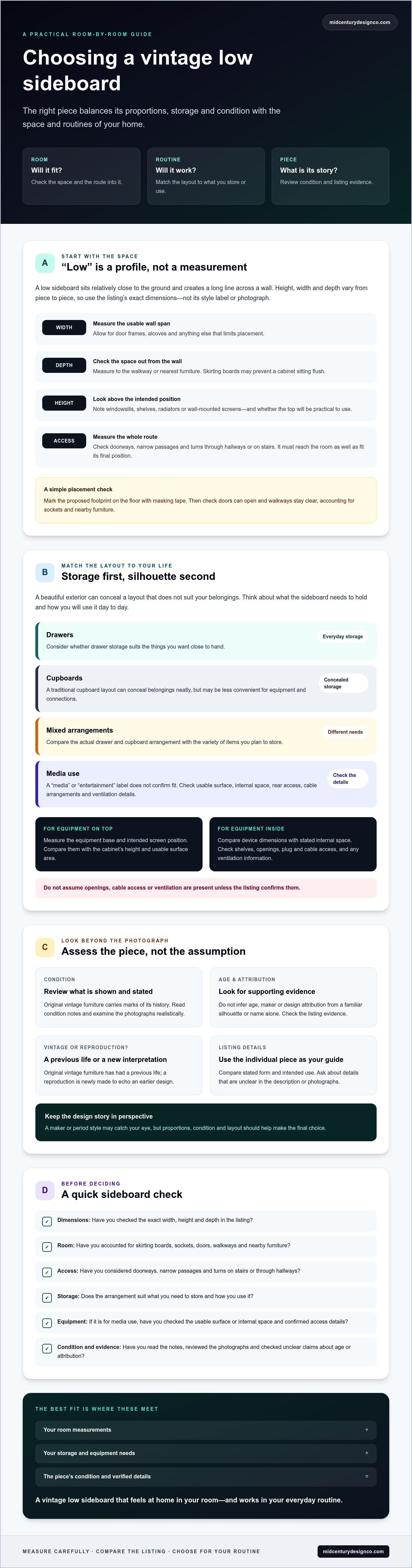
A low sideboard is defined more by its profile than by a universal measurement. It sits relatively close to the ground and creates a long line across a wall, but height, width and depth vary from piece to piece. That shape can help a room feel balanced while providing useful storage for tableware, books or everyday objects. The appeal is both practical and visual: original vintage furniture can bring distinctive details and a sense of history to a room.
The term “sideboard” covers a broad family of storage furniture. For context on how the form has evolved, explore the history of the sideboard. A piece described as a media or entertainment unit may have a layout intended for equipment, but the label alone doesn’t confirm that it will suit your television or devices. When comparing a vintage low sideboard in the UK, start with the individual listing rather than assumptions based on its era, maker or appearance.
Is a low sideboard the same as a media unit?
Not necessarily. Some sideboards can be used as media furniture, but suitability depends on their dimensions and arrangement. Compare your equipment’s footprint with the usable surface, and check the stated internal space if devices will go inside. Look for clear information about rear access and cable arrangements. Don’t assume there are openings or that ventilation has been considered unless the listing confirms it. A traditional cupboard layout may conceal belongings neatly but be less convenient for equipment and connections.
What makes a vintage piece different from a reproduction?
Original vintage furniture has a previous life; a reproduction is newly made to echo an earlier design. The Mid Century Design Co. focuses on original vintage furniture rather than modern reproductions. Even so, age, maker and design attribution should be supported by the listing evidence, not inferred from a familiar silhouette or name alone. Read the description and examine the photographs, then ask about anything unclear. If you’re exploring authentic mid-century sideboards, assess each piece on its own proportions, condition and layout as well as its design story.
A sideboard should look at home, but its measurements and condition should help you make the final choice. A maker or period style may catch your eye; think just as carefully about what the piece needs to hold and how you’ll use it.
Measure your room and equipment before choosing a low sideboard
A sideboard can look compact in a photograph but take up more space than expected against a wall, beside a sofa or near a door. Measure the room first, then compare your figures with the individual listing. This matters when searching for a vintage low sideboard in the UK: pieces vary in proportion, and category labels can’t replace exact dimensions.
How do you measure for a low sideboard?
Measure the full space, not just the bare wall. Use masking tape to mark the proposed footprint on the floor, then check that doors can open and walkways remain clear. Account for skirting boards, sockets and nearby furniture, and consider how the piece will sit alongside seating. The Victoria and Albert Museum offers a useful point of reference for furniture design and proportion, but your room measurements should guide the choice.
- Wall width: Measure the usable span, accounting for door frames, alcoves and anything else that limits placement.
- Available depth: Measure from the wall to the walkway or nearest furniture. Remember that skirting boards may stop a cabinet sitting flush against the wall.
- Height clearance: Note the space below windowsills, shelves, radiators or wall-mounted screens, and consider whether the top will be practical to use.
- Access route: Measure doorways and narrow passages, and consider turns on stairs or through hallways. The piece needs to fit into the room as well as in its intended position.
Compare your measurements with the listing’s stated width, height and depth. Don’t estimate from photographs: perspective can distort proportions, and a label such as “compact” won’t tell you whether the cabinet suits your space.
Will a vintage sideboard fit your television or audio equipment?
Measure the equipment base and intended screen position, then check the cabinet’s height and usable surface area. If equipment will sit inside, compare its dimensions with the stated internal space and check for suitable shelves or openings. Confirm how plugs and cables can be reached, and whether the listing addresses ventilation. These features vary, so don’t assume they are present.
If you’re considering a cabinet specifically for media, browsing the vintage media units can help you compare relevant formats. Check each listing’s measurements and details against your equipment before deciding.
Compare storage layouts, materials and practical details
Once a piece fits your space, its layout determines how well it works in your daily routine. Think about what you want to store, how often you’ll reach for it and whether you’d prefer belongings on display or tucked away. A vintage low sideboard UK search may bring up traditional storage alongside compact entertainment formats, so compare the arrangement rather than relying on the category name.
Drawers, cupboards or a combination: which layout suits you?
Drawers can make smaller belongings easier to sort and reach, while cupboards conceal larger items. Their usefulness depends on the internal configuration, so check the listing for details about shelves and usable space. A mixed layout combines both, giving you separate places for household essentials and bulkier belongings.
Choose the storage layout for what you intend to keep in the piece, not simply for the way its front looks.
| Layout | May suit | Check before choosing |
|---|---|---|
| Drawers | Smaller belongings you want to organise and reach often. | Drawer depth, internal dividers and whether the drawers open smoothly, if stated. |
| Cupboard doors | Items you’d prefer to keep out of sight, including larger belongings. | Internal shelves, clear opening space and the dimensions inside the cabinet. |
| Mixed layout | Households needing a combination of easy-access drawers and concealed storage. | How the drawer and cupboard sections are divided, and whether each fits its intended purpose. |
| Compact entertainment format | A media set-up, if the cabinet’s surface and internal arrangement are suitable. | Equipment fit, openings, rear access and cable arrangements in the specific listing. |
Which vintage details deserve a closer look?
Study the listing photographs. Handles, door alignment, drawer fronts and visible surface wear can help you assess appearance and condition, although photographs may not answer every question. Ask the retailer to clarify details that aren’t described, such as whether doors close evenly or what wear is present.
Assess materials from the evidence provided. If a listing identifies a piece as teak, consider the tone and grain shown in the photographs; don’t assume every vintage sideboard is teak or identify a material by colour alone. Construction and condition details matter too. Read the description alongside the images, and ask for clarification where information is missing. Comparing layout, material and visible details can help you find a piece with character that also works for your home.
Compare low vintage sideboards for different rooms and routines
A room’s purpose can help narrow the choice. In a living room, a cabinet might hold media equipment or keep everyday items close to hand; elsewhere, a sideboard may be chosen mainly for storage and visual presence. The examples below show different stated formats, not a ranking. Product details, dimensions, condition and availability can change, so check the current listing before relying on a description.
When might a compact entertainment unit be the better fit?
A Nathan Entertainment Unit is described as a compact format, making it an example to compare if you’re considering a smaller-footprint piece. The name alone can’t confirm that it will suit your room or equipment. Check the current listing for its dimensions and internal storage, then compare them with the intended position and the items you plan to keep inside.
The Nathan Entertainment Centre offers another named format to compare. Don’t assume “Centre” means a particular width or arrangement: check the stated measurements and descriptions for both listings. A compact footprint may be easier to accommodate in a smaller room, provided the measured piece leaves enough space for storage, equipment and comfortable movement.
When should you consider a longer or more storage-led piece?
The G Plan Pyramid Teak Media Unit PG326 is identified in the supplied description as a 1970s media-unit example. Treat that as a starting point, not a substitute for checking the current product listing. Confirm its dimensions, material description and storage layout before deciding whether it suits your room and routine.
If a listing mentions LP storage or another intended use, consider whether it matches what you own. Check the usable internal space rather than assuming a named format will accommodate your collection. For more ideas on bringing vintage pieces into a considered interior, read our guide to how to style mid-century modern furniture.
Choose according to how you’ll use the furniture. A compact unit may suit a tighter position, while a more storage-led design may be worth comparing if you have particular belongings in mind. Measurements and listing details should settle the question. To explore examples described for media use, browse the vintage media units and check each item’s current details before deciding.
Check condition, listing details and your next steps
A vintage sideboard has lived a life before it reaches your home. Small marks or changes in colour may be part of its character, but condition is individual. Assess each piece using its own photographs and description rather than assuming all signs of age are alike. When comparing a vintage low sideboard in the UK, a careful listing review helps you weigh its character against what you need from it each day.
What should you check before buying a vintage low sideboard?
Use this checklist to bring the practical details together before making a decision:
- Dimensions: Confirm the stated width, height and depth against your intended position, the route into your home and any equipment you plan to place on or inside it.
- Storage layout: Check the described drawers, cupboards, shelves or compartments against the belongings you want to store. For media use, verify the usable space and any stated access for plugs and cables.
- Condition: Review all available photographs alongside the condition notes. Look for visible wear and details that matter to you, such as marks, alignment or the appearance of handles and drawer fronts.
- Everyday use: Consider how often you’ll access the contents and whether the piece’s arrangement suits that routine, not just its appearance.
If a photograph leaves a question unanswered, or the listing doesn’t describe a condition detail that could affect your choice, ask the retailer for clarification before deciding. A clear answer can help you understand the piece; don’t rely on assumptions about age, construction or use.
How can you shortlist the right piece with confidence?
Start with your non-negotiables: footprint, storage arrangement, material and intended use. Then compare the remaining pieces using the details in their individual listings. Original vintage furniture is not uniform, and signs of age should be considered case by case. Recheck the live product page before purchase, as descriptions and availability can change.
There’s no need to hurry a considered choice. When a piece fits your room, holds what you need and feels right in its condition, usefulness and character can go together. If you’re exploring furniture intended for media use, browse vintage media units and review each listing’s current details to see what may suit your home.
Choose a piece that feels at home
Choosing a vintage low sideboard UK is about more than style. Start with the measurements, then match the storage layout to your belongings and intended use. Before deciding, review the individual listing’s condition notes and photographs, and ask about details that could affect how the piece works in your home.
Original vintage furniture has its own character and history. The Mid Century Design Co.’s curated collection of authentic vintage furniture offers a place to compare pieces; the G Plan and Nathan examples described above are presented as media or entertainment units. Treat those descriptions as a guide, and check current product details, measurements and availability before you commit.
If a media-focused format suits your plans, browse the vintage media-unit collection and compare the listed details. Measure carefully, decide what you need to store, and explore the collection to find a piece that could bring practical purpose and a distinctive note of history to your room.
Frequently Asked Questions
Is a vintage low sideboard suitable as a TV stand?
Yes, a vintage low sideboard can work as a TV stand if its dimensions and surface suit your screen and room. Check the cabinet’s stated width, depth and height, and consider whether the screen will sit at a comfortable viewing level. If you plan to store equipment inside, confirm the usable space, access for plugs and cables, and any ventilation details in the individual listing before deciding.
Can any vintage sideboard be used as a media unit?
No, a sideboard’s suitability depends on its layout, not simply its label or appearance. Some vintage pieces are described as media or entertainment units, while others have traditional cupboards or drawers that may not suit equipment. Check internal measurements, shelves, rear access and cable arrangements in the listing. Don’t assume a cabinet has cable openings or ventilation unless these are specifically confirmed for that piece.
How do I measure for a low sideboard?
Measure the usable wall width, available depth and height clearance, then compare these with the sideboard’s listed dimensions. Include skirting boards, sockets, windowsills and nearby furniture in your checks. Mark the proposed footprint with masking tape to see how it affects walkways and door swings. Measure the route into your home too, including doorways and narrow turns, so the piece can reach its intended position.
What should I look for in a vintage sideboard listing?
Look for stated width, height and depth, a clear description of the storage layout, and condition notes supported by photographs. Check visible details such as handles, drawer fronts, door alignment and surface wear. If the listing identifies a maker, period or material, look for evidence in its description rather than relying on appearance alone. Ask the retailer about anything unclear, especially details that could affect fit or everyday use.
Are vintage teak sideboards all the same colour?
No, teak sideboards can vary in tone and grain, so don’t expect every piece to have an identical colour. An individual vintage sideboard’s appearance may also reflect its finish, age and previous use. Check the listing photographs and confirm that teak is identified in the product description rather than judging by colour alone. If the photographs don’t show the surface clearly, ask for clarification before choosing.
Can a low sideboard fit in a small room?
It can, provided its measurements suit the available space and leave comfortable room to move. Compare the listed width and depth with the wall and nearby furniture, and check that doors and drawers can open without obstructing a walkway. A low profile may create a useful horizontal line without taking up as much visual space as a taller cabinet, but don’t assume a piece is compact without checking its dimensions.
How do I choose between drawers and cupboard doors?
Choose drawers for smaller belongings you want to organise and access frequently. Cupboards can suit larger items or things you’d prefer to keep out of sight, but check the internal configuration and usable space. A mixed layout offers both kinds of storage in one piece. Before deciding, list what you plan to keep inside and compare it with the cabinet’s described compartments, rather than choosing by the front design alone.