

Vintage Telephone Table with Seat: A UK Buying Guide
What if the vintage telephone table with seat that suits your home best isn’t the one that first catches your eye? Its graceful proportions and period character may draw you in, but it also needs to work in everyday life. A comfortable seat, useful surface and dimensions that suit your room matter just as much as the finish.
Listings can make it difficult to tell a telephone table from a hall seat or telephone bench, or to judge whether a handsome example is sound and practical. Photographs don’t always show the details that help you choose with confidence.
This guide explains what distinguishes a telephone table, how to assess its condition and proportions, and what to look for in the seat before buying. You’ll also find ways to bring an original vintage piece into a contemporary interior without making it feel out of place.
Key Takeaways
- Learn how a telephone table’s original purpose can help distinguish it from other occasional furniture.
- See how timber, veneer, grain and joinery contribute to a piece’s character, without relying on colour alone.
- Compare telephone tables, telephone benches and hall tables to find the form that best suits your space and needs.
- Use a practical checklist to assess the vintage telephone table with seat, including its footprint, seating and condition.
- Understand what sets original vintage furniture apart from modern reproductions, and how to choose a piece whose character feels right at home.
What is a Vintage Telephone Seat and How is it Used?
A telephone table is a compact occasional piece designed with an integrated or associated seat. Traditionally, it provided somewhere to sit whilst making or receiving telephone calls, with a surface nearby for the telephone and perhaps a notepad. Today, a vintage telephone table with seat can work as a practical perch and a distinctive piece of furniture.
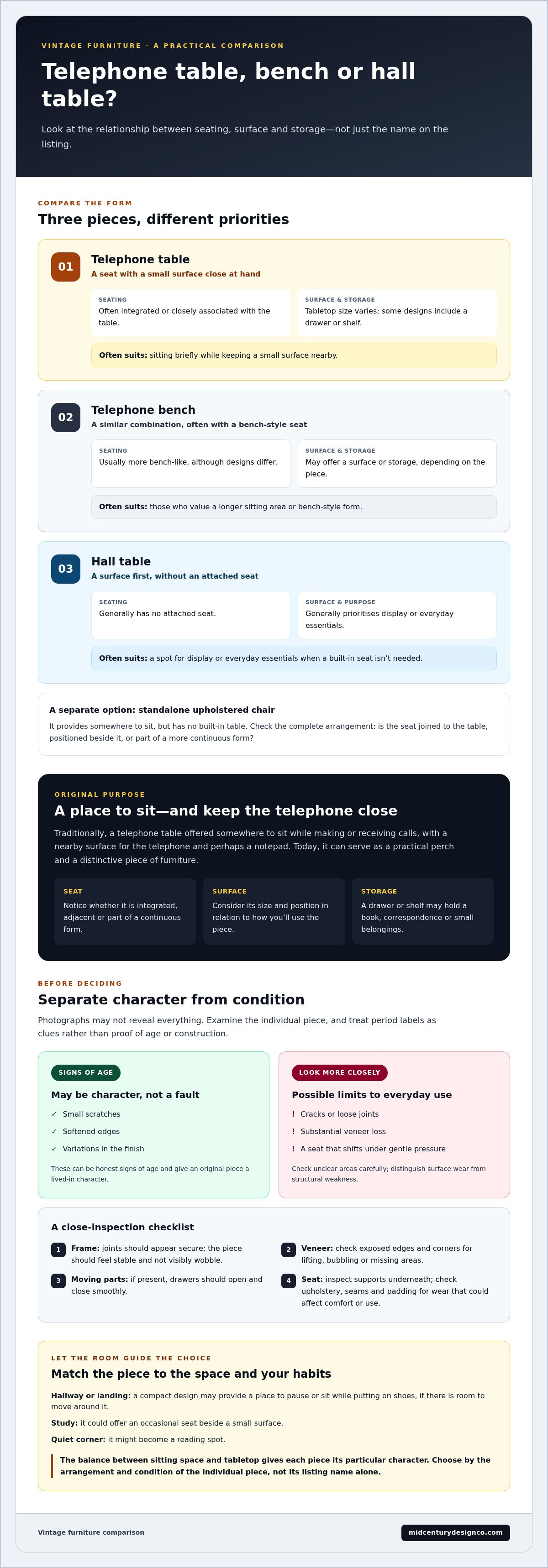
Names in listings can overlap. A telephone bench may describe a similar table-and-seat combination, sometimes with a longer, bench-style seat. A hall table, by contrast, is generally a surface for display or everyday essentials, without an attached seat. A standalone upholstered chair provides somewhere to sit but has no built-in table. For a broader introduction to the name and its variations, see What is a gossip bench?
Look at the whole arrangement rather than relying on the description. Is the seat joined to the table, positioned beside it, or part of a more continuous form? Designs vary, so no single layout defines every example. The balance between sitting space and tabletop gives each piece its particular character and practical appeal.
Which features make a telephone table distinctive?
The relationship between the seat and surface is central. The table might sit alongside the seat or extend over a compact seating area. Some designs also include a drawer or shelf for a book, correspondence or small belongings. Others offer only a surface, keeping the form visually lighter. If there’s a writing surface, consider whether its size and position would suit the way you plan to use the piece.
Details matter. Edges, joinery and finish influence whether a piece feels restrained or decorative, whilst storage can make it more useful day to day. Treat period labels as clues rather than proof of age or construction. Examine the individual piece rather than making assumptions from its name.
Where can a telephone table with seat work well?
A hallway or landing may suit a compact design, giving you somewhere to pause or sit whilst putting on shoes, provided there’s room to move around it. In a study, it could offer an occasional seat beside a small surface; in a quiet corner, it might become a reading spot. Let the available space and your habits guide the placement, so the piece feels considered rather than simply decorative.
How Materials, Construction and Vintage Character Shape Your Choice
Two telephone tables with similar outlines can feel entirely different in a room. Timber, veneer, joinery and finish all influence whether a piece looks light and understated or richly expressive. These details also help you judge whether age has brought character, practical wear or damage that needs careful consideration.
Material shapes appearance, construction reveals how the parts come together, and condition shows how well the piece has endured. Keep these distinctions in mind when assessing a vintage telephone table with seat, especially if photographs are your first view.
What should you look for in wood and veneer?
Teak is often associated with a warm, varied grain; oak can have a more pronounced, open pattern, whilst walnut is commonly admired for its deeper tones and flowing grain. These are broad visual tendencies, not reliable ways to identify timber by colour alone. Age, lighting, finish and photography can all change how a surface appears, so look for a clear description and close images of the grain.
Veneer is a thin layer of wood applied to a base material. It can create an attractive surface and isn’t, by itself, proof of poor quality. Check its edges and corners: a smooth, firmly attached surface is different from veneer that’s lifting, bubbling or missing. Look particularly at exposed edges and areas around the seat, where knocks and regular use may be more visible.
How can construction and condition reveal a piece’s character?
Look beyond the finish. Joints should appear secure, the frame should feel stable, and the table shouldn’t visibly wobble. If viewing the piece in person, check that drawers open and close smoothly, and look underneath for loose or damaged seat supports. For an upholstered seat, examine the fabric, seams and padding for wear that could affect comfort or use.
Not every mark is a concern. Small scratches, softened edges or variations in the finish may be honest signs of age, giving an original piece a lived-in character. Cracks, loose joints, substantial veneer loss or a seat that shifts under gentle pressure are different: these could limit safe everyday use. Look closely at any unclear areas and distinguish surface wear from structural weakness before deciding.
Let the evidence guide your choice rather than expecting an older piece to look untouched. If you’re drawn to the warmth of original materials and thoughtful construction, explore the curated vintage furniture collection for further inspiration.
Telephone Table with Seat vs Similar Vintage Furniture: What Fits Best?
The right choice depends on what the furniture needs to do in your home. A telephone table combines a surface and a place to sit, whilst a hall table may prioritise display and a telephone bench can give more emphasis to seating. Individual designs vary, so use this comparison as a guide rather than a rule.
| Furniture type | Seating | Storage and surface | Best suited to |
|---|---|---|---|
| Telephone table | Often integrated or closely associated with the table | May include a drawer or shelf; tabletop size varies | Sitting briefly whilst keeping a small surface close at hand |
| Telephone bench | Usually a more bench-like seat, though designs differ | May offer a surface or storage, depending on the piece | Those who value a longer sitting area or a bench-style form |
| Hall table | Typically no integrated seat | Primarily a surface for display or everyday belongings | Displaying objects or setting down keys where seating isn’t needed |
Is an integrated seat better than a separate chair?
An integrated seat brings a table and somewhere to sit together, which can be useful where separate pieces would crowd a narrow area. Choose an integrated design if you want a seat and a surface close at hand without arranging two separate pieces.
Comfort still depends on the seat’s height, depth and support, as well as how long you expect to sit. A compact seat may suit a brief pause or occasional use. If you want a more generous seat, or the freedom to move it elsewhere, a separate chair can offer greater flexibility. Consider your habits, not just the neatness of the combined design.
Should you prioritise storage, display space or a compact footprint?
Think about what you want within reach. A drawer or shelf can keep a book, correspondence or small belongings close by, whilst a clear tabletop can provide room for a lamp or a carefully chosen decorative object. A smaller top may work well in a restricted spot, but leaves less room for display. Decide how much surface you’ll actually use before favouring the most compact option.
If you need more substantial storage or display space, a telephone table may not be the only piece to consider. Explore this guide to authentic mid-century sideboards for another way to bring considered vintage design into your home. There’s no universally better form: choose the balance of seating, storage and footprint that suits your space.
How to Assess Dimensions, Seating Comfort and Condition Before Buying
A photograph can make a compact piece seem smaller or more generous than it is. Before choosing a vintage telephone table with seat, compare its stated measurements with your available space, then study the seat and frame as carefully as the finish. A few deliberate checks can help you picture how it will fit and function in everyday use.
Which measurements matter most in a small space?
Measure the intended spot, including the space needed to approach the seat and pull back from it. Compare it with the listing’s width, depth and height, and consider doorways, nearby furniture and usual walking routes. A piece that fits neatly against a wall may still obstruct movement when someone is seated.
- Measure the location. Note the available width, depth and height, including skirting boards or nearby obstacles that could affect placement.
- Compare the item’s dimensions. Check the listing measurements against your notes. Mark the footprint on the floor or use a similar-sized object at home to get a better sense of scale.
- Allow room to sit. Picture the seat in use, not just the table in place. Leave enough clearance to sit down and stand up without blocking a walkway or catching nearby furniture.
- Relate the seat to your needs. Consider seat height, depth and support in relation to your comfort and whether you expect brief pauses or longer periods of sitting.
How can you judge seat comfort and vintage condition?
Read the listing measurements alongside the photographs. Look for clear views of the seat, its supports, upholstery and underside, as well as the tabletop, frame and any drawers. Images from several angles can reveal details that a front-on photograph misses, such as uneven surfaces, loose-looking joints or signs of repair.
Consider how you’ll use the seat. A shallow seat may suit a short pause but feel less accommodating for reading; supportive upholstery may matter more if you plan to sit for longer. Distinguish cosmetic wear, such as surface marks, from signs that could affect stability or function, including a visibly uneven frame, damaged supports or a misaligned drawer. Don’t rely on a single attractive view to judge the whole piece.
Use the measurements and visible details together to decide whether the furniture suits your room and routine. Explore original vintage furniture to find pieces with considered proportions and enduring character.
Choosing an Original Vintage Telephone Table with Seat for Your Home
A good choice brings together four things: a footprint that suits your room, a seat you’ll genuinely use, sound condition and a design whose character appeals to you. A vintage telephone table with seat should work as furniture first, then add the particular charm that makes an original piece memorable. Before deciding, revisit your measurements and intended use, and inspect the frame, seat and finish closely.
It also helps to understand what “original vintage” means. An original piece was made in its own period and carries the materials, construction and signs of use associated with its history. A modern reproduction is newly made to reflect an earlier design. Each can suit a different preference; the distinction is whether you value the presence and age of an original or the qualities of a newly made interpretation.
What makes an original vintage piece feel right in a contemporary home?
One well-chosen vintage object can bring warmth and contrast to a restrained interior. A sculptural frame or softly aged surface may sit comfortably among simpler furniture, adding visual depth without requiring the whole room to follow the same period. Consider how its colour and texture relate to nearby wood, upholstery and wall tones. The aim isn’t to recreate a historical room, but to let the piece contribute its own story.
For broader ideas on bringing vintage forms into a contemporary setting, explore styling mid-century modern furniture.
How can you make a confident final decision?
Before choosing, check the essentials. Does the piece fit its intended spot with enough room to sit and move around it? Does the seat suit the way you expect to use it? Do the frame, supports and moving parts appear stable and functional? Finally, are the visible marks consistent with the age and character you appreciate, rather than signs that raise concerns about everyday use?
If original materials and the quiet evidence of a previous life matter to you, those qualities may be part of the pleasure of choosing vintage. The Mid Century Design Co. curates authentic vintage mid-century furniture and décor, with an appreciation for craftsmanship, character and considered interiors. Explore the curated vintage furniture collection and discover pieces that could feel at home in yours.
Choose a Piece That Works Beautifully in Your Home
A well-chosen vintage telephone table with seat balances everyday function with the character of original design. Start with the space it needs to occupy, then consider whether the seat suits your habits and whether the table, frame and upholstery appear sound. Materials, construction and signs of age can help you appreciate a piece’s history, whilst its proportions and finish show how naturally it might sit among your existing furniture.
There’s no single right choice. A compact design may suit a quiet corner, whilst another piece may offer the storage or seating you need. Look for one that is practical for your home and pleasing to live with.
The Mid Century Design Co. specialises in curated authentic vintage mid-century furniture and décor, focusing on original vintage pieces rather than modern reproductions. Explore the curated collection of authentic vintage furniture and discover designs with enduring character. Take your time, trust your eye and choose a piece that feels at home in yours.
Frequently Asked Questions
What is a vintage telephone table with a seat?
A vintage telephone table with a seat is a compact occasional piece combining a small table with seating, either integrated into the design or arranged as part of the same unit. Traditionally, it provided somewhere to sit whilst using a home telephone. Designs vary in materials, storage and proportions, so look beyond the name and consider how the individual piece would suit your space and intended use.
Are vintage telephone tables comfortable to sit on?
Comfort depends on the seat’s height, depth, support and condition, not its appearance alone. Many compact seats are better suited to a brief pause than prolonged sitting. Compare the measurements with your needs, inspect the seat and supports, and consider whether the upholstery looks suitable for how you plan to use it. If you can view the piece in person, sitting on it will give you a direct sense of its comfort.
How do I know if a telephone table is genuinely vintage?
Assess the materials, construction, proportions and signs of age together rather than relying on one detail. Check whether the visible features form a coherent piece, and look closely at photographs of joints, edges and the underside. A particular style or wood colour alone can’t establish age or provenance. Clear details and reliable information about the piece’s history can help you make a considered assessment.
What should I check before buying a vintage telephone table with a seat?
Measure the intended space and compare it with the piece’s full width, depth and height, allowing room to sit and move around it. Check that the table and seat appear stable, then inspect joints, upholstery, surfaces and drawers. Consider whether the seat suits your intended use. Finally, distinguish cosmetic marks from damage that could affect stability or function.
Can a telephone table with a seat work in a small hallway?
It can, provided its dimensions leave enough room to walk past and use the seat without obstruction. Measure the available floor area and allow for the space your legs need when sitting, rather than judging scale from a photograph. A compact design may combine a seat and surface efficiently, but make sure both remain practical for your routine and don’t make the hallway difficult to use.
What is the difference between a telephone table and a telephone bench?
The terms can describe overlapping forms. A telephone table commonly combines a tabletop with a seat, whilst a telephone bench may place greater emphasis on a longer seating area alongside a surface. Vintage designs vary, so the label isn’t always a reliable guide to the layout. Compare the proportions, seating arrangement, storage and tabletop of the specific piece to understand how it will work for you.
How should I style a vintage telephone table with a seat?
Give the piece enough breathing room to appreciate its silhouette, wood grain or upholstery. Keep the tabletop useful rather than crowded, perhaps with a small lamp or a few carefully chosen objects, and consider how its colours and materials relate to nearby furniture. A hallway, landing or quiet corner may suit it, as long as the scale feels balanced and there’s comfortable room to move around.