

Ways to blend vintage pieces with modern rooms
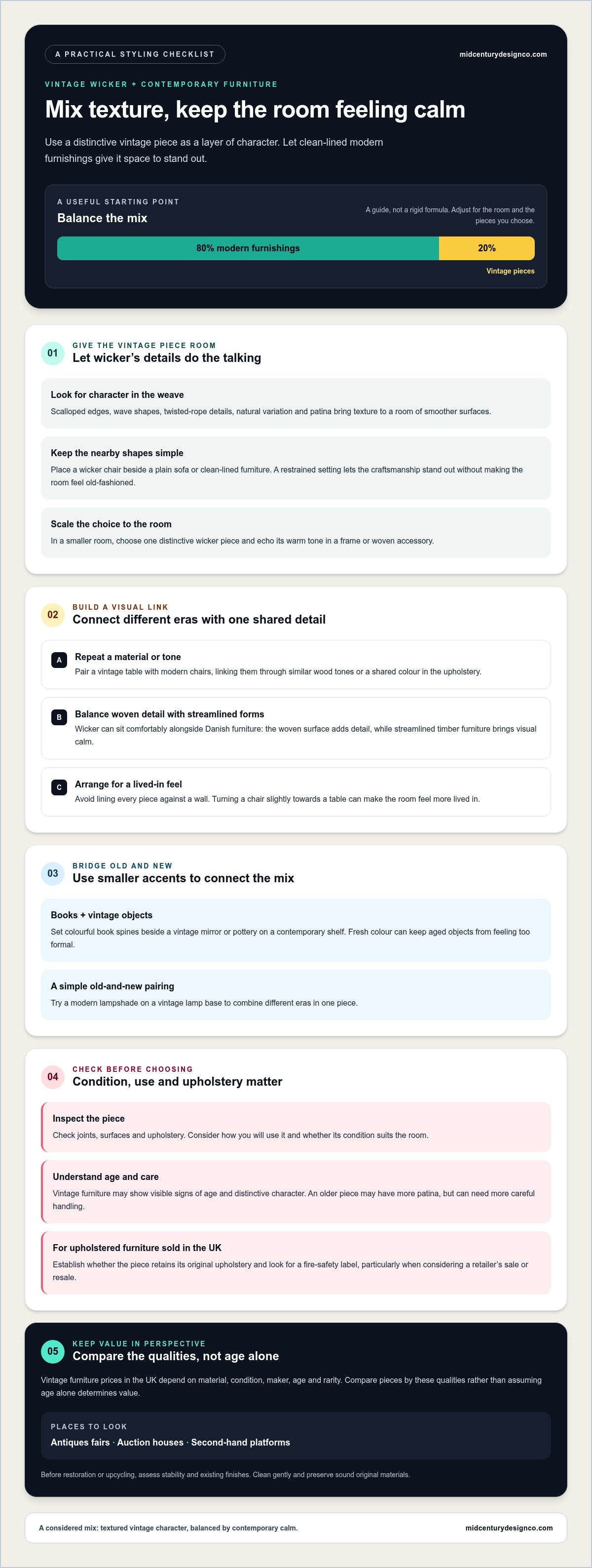
A modern table can feel more inviting when it’s surrounded by vintage upholstered chairs, rather than matched with a perfectly uniform set. For furnishing a home with vintage pieces, a useful starting point is to keep around 80% of the room’s furnishings modern and let vintage pieces make up the remaining 20%. The balance leaves room for history and character without losing a sense of calm.
It’s easy to see why furnishing a home with vintage pieces can feel daunting: a treasured chair or chest may seem out of place beside clean-lined contemporary furniture. Yet a shared colour, a considered backdrop and a little contrast can bring the pieces together. Try aged wood beside modern metal, or a sculptural chair at a sleek dining table.
This guide explores practical ways to blend vintage wicker, functional chests and upholstered chairs with modern rooms. You’ll find ideas for choosing a focal piece, building cohesion through colour, and creating a dining area where old and new feel comfortably at home.
Key Takeaways
- Give a vintage focal piece room to stand out, then use a considered backdrop to connect it with contemporary furnishings.
- Balance vintage wicker’s intricate details with clean-lined modern pieces for a collected, rather than overly matched, look.
- Choose a chest of drawers for both its character and practical storage, paying attention to how its drawers and doors work in your space.
- Bring pieces from different eras together through a shared colour palette, echoed across furnishings and smaller accents.
- Pair a sleek modern table with vintage upholstered chairs to create a dining area with warmth and contrast.
1. Creating a backdrop for vintage and modern decor
Begin with the room’s strongest vintage piece, then choose surrounding surfaces that complement its character. A dark wooden cabinet, for example, stands out against a pale wall and beside a modern metal lamp. This contrast makes old and new furnishings feel intentional. Keep the backdrop visually calm when carved details, rich grain or an unusual silhouette already draw the eye.
Start with one or two vintage pieces, balanced by contemporary furniture and clear space. Consider how each object relates to the next: a polished modern table can offset an ornate chair, while a plain sofa gives a patterned vintage cushion room to stand out. Repeating a material, such as warm wood, creates a quiet connection. The result feels layered, not like a period interior.
For vintage wall décor, choose a single statement piece or a considered grouping. A large mirror with a foxed edge can hold its own above a console, adding depth through its softened reflection. Alternatively, hang several pieces of the same type together, such as framed botanical prints. A gallery wall can unite varied artwork through a shared detail, such as black-and-white images in gold frames.
Vintage baskets bring texture and useful storage to a modern interior. Place a woven basket beside a clean-lined armchair for folded blankets, or group several on a plain wall to make their shapes and weave the focus. Keep nearby accessories simple, perhaps adding a contemporary floor lamp. This gives the baskets’ natural variation room to show without creating visual clutter.
A decorated wardrobe or armoire can anchor a room. Against a restrained wall, painted panels, carved mouldings or an aged finish read as craftsmanship rather than excess. Leave breathing room around the piece and avoid crowding its top with small ornaments. For a more functional setting, pair it with a simple mirror and discreet lighting, keeping the surrounding area practical without diminishing the wardrobe’s presence.
Use decorative ceramics to add handmade texture to shelves or a sideboard. A studio pottery jug with an irregular glaze, for instance, can sit beside modern books and a smooth contemporary bowl. Vary height and shape, but leave gaps so each silhouette remains visible. A limited arrangement makes a vessel’s colour and surface feel intentional, not incidental.
Lighting helps a room shift from day to evening. Place a vintage lamp on a modern side table, then consider how its shade and base look both switched off and illuminated. Pair its softer glow with simpler overhead lighting rather than adding several competing fixtures. Patina, woven texture and classic forms can bring warmth without sacrificing a clear, contemporary setting.
2. Mixing vintage wicker with contemporary pieces
Vintage wicker brings intricate texture to rooms dominated by smooth, contemporary surfaces. Look for scalloped edges, wave shapes or twisted-rope details, then give them space beside plain upholstery or clean-lined furniture. A wicker chair beside a simple sofa can soften the room without making everything feel old-fashioned. Natural variations and patina make the contrast appealing, while a restrained setting keeps the focus on craftsmanship.
A useful guide is to let vintage pieces make up 20% of a mixed interior, with modern furnishings forming the remaining 80%. Treat this as a starting point, not a rigid formula. A wicker chair, an occasional table and a single vintage lamp can create a collected feel amongst contemporary seating. In a smaller room, choose one distinctive wicker piece, then repeat its warm tone through a frame or woven accessory.
Mix furniture from different periods by finding one feature that links the pieces. Pair a vintage table with modern chairs, for example, and use similar wood tones or a shared colour in the upholstery. Danish furniture can sit comfortably alongside wicker when the silhouettes vary: the woven surface adds detail, while streamlined timber furniture brings visual calm. Avoid lining every piece against a wall. Turning a chair slightly towards a table makes the room feel lived in.
Books and smaller accessories can bridge different eras. Place colourful book spines beside a vintage mirror or pottery on a contemporary shelf. The fresh colour keeps aged objects from feeling too formal, while a second-hand find gives new books a more personal setting. For another simple mix of old and new, try a modern lampshade on a vintage lamp base.
Vintage furniture can show visible signs of age and distinctive character, while newer pieces offer cleaner shapes and finishes. Those contrasts create interest, but condition and suitability matter: inspect joints, surfaces and upholstery before buying, and consider how you’ll use the piece. Antique and vintage furniture can both offer craftsmanship and individuality. An older piece may have more patina, but can need more careful handling. Choose according to the room, its function and the item’s condition.
UK fire-safety requirements are relevant when upholstered furniture is sold. Before buying, establish whether the piece retains its original upholstery and look for a fire-safety label, particularly when considering a retailer’s sale or resale. These details help clarify the item’s status and suitability.
Vintage furniture prices in the UK depend on material, condition, maker, age and rarity. Compare pieces by these qualities rather than assuming age alone determines value. Antiques fairs, auction houses and second-hand platforms are places to look for wicker and other vintage furniture. Before restoration or upcycling, assess stability and existing finishes. Clean gently, preserve sound original materials and use suitable protective equipment when sanding or applying finishes. Treat upholstery as a separate specialist task, not a casual alteration.
3. Choosing functional vintage chests of drawers
A vintage chest of drawers should offer useful storage and a considered presence. First decide what it needs to hold, then compare its proportions with the available wall space. A low chest can sit beneath a mirror, while a taller design may make better use of a narrow bedroom corner. Leave enough clearance for the drawers to open fully, especially beside a bed or wardrobe.
Test every drawer and door before choosing a chest. They should open and close smoothly, without catching or slipping from their runners. Look inside for signs of damp, strong odours or damage, and examine the back, base and joints as carefully as the front. A decorative façade may catch your eye, but sound construction and working drawers determine whether the piece will serve everyday needs.
Materials matter. Quality vintage furniture can last and help avoid costly repeat purchases, so examine the timber, joinery and finish. A little wear may add character, while loose joints or damaged drawer bottoms can affect function. Distinguish honest patina from damage that compromises use. An antique chest may suit a room with traditional details, while a simpler mid-century design can balance contemporary furnishings.
A vintage sideboard can become a statement in a dining room or living space. Many vintage sideboards are made from wood rather than MDF, and can be relacquered in a chosen colour. Their broad surfaces offer space for a lamp, framed artwork or ceramic bowl, while cupboards conceal dining linens and serving pieces. Check that the doors move properly and the interior suits your storage needs.
Decide on the room’s overall feel before settling on colour. For a calm bedroom, pair a warm timber chest with neutral walls and soft textiles. For a stronger focal point, choose a painted finish and repeat its colour in a lampshade or artwork. An existing sideboard finish can guide the palette for a dining room. Aim for balance rather than matching every surface exactly.
Trends can inspire, but they needn’t dictate every choice. A distinctive chest or sideboard gives a vintage find a clear role, while modern lighting and understated seating keep the room current. In a dining area, for example, a wooden sideboard can complement a contemporary table without competing for attention. Choose pieces for their condition, scale and practical use, then let their differences make the interior feel collected over time.
4. Using a shared colour palette to create cohesion
A shared palette helps furniture from different periods sit naturally together. Start with a vintage piece’s strongest colour, then repeat it in a smaller detail elsewhere. Echo the warm brown of a wooden cabinet in a picture frame or dining-chair fabric, for example. Keep walls and larger furnishings quieter, so the colour links the room without making every surface match.
Past eras offer useful colour combinations, rather than rules to copy exactly. Interior design associated with the 1920s includes rich mustard yellows, deep navy blues and champagne tones. The 1930s brings poppy red, Egyptian blue and mint green; pastel shades dominated palettes in the 1950s. Choose one shade from an era and pair it with a neutral contemporary backdrop, such as mint green accessories against warm white walls.
Natural, desert-inspired hues are associated with the 1960s, while Victorian schemes often include maroon, deep reds, burgundies and chestnuts. To incorporate these tones without overwhelming a living room, use a chestnut-coloured cabinet as the anchor and bring in a muted red through artwork. A dining room can take a stronger accent, perhaps deep navy on chair upholstery, balanced by pale walls and a light-coloured table.
Artwork offers another way to connect different eras. Place vintage and newer pictures together, then look for a colour they share. A contemporary print with soft blue can sit beside an older painting with a similar detail. Repeat that shade in a lampshade or cushion. This creates continuity across different subjects and frame styles without requiring a perfectly matched set.
Colourful vintage bathroom fixtures can define a room. If a bath or basin has a distinctive hue, let it guide the palette. Pick up a small detail in towels, a bath mat or framed artwork, then keep larger surrounding surfaces restrained. An interior designer can use a colour sample from the fixture to compare paint and fabric choices in the room’s natural light.
Before buying new accessories, gather samples to compare with the vintage piece. Check paint cards, upholstery fabric and rug colours in daylight and evening lighting. A soft blue lampshade, for instance, can echo a lamp base, while a rug can connect the same blue to timber furniture. These considered additions create cohesion while keeping each vintage object’s colour and character visible.
5. Pairing modern tables with vintage upholstered chairs
A sleek modern table can give vintage upholstered chairs a fresh setting. The table’s clean lines provide contrast, while a chair’s curved back, carved legs or patterned fabric adds character. Try a simple timber table with vintage armchairs at its ends and contemporary chairs along the sides. This makes the older pieces feel intentional, rather than like leftovers from another dining set.
Start with proportion. Compare the table’s height and footprint with the chairs, then consider how easily people can sit down and move around it. A broad, ornate chair may overwhelm a small table, while a light, narrow frame can disappear beside a substantial design. Pull each chair close to the table and check that its arms slide underneath comfortably. Practical fit matters as much as appearance.
Next, choose a point of connection. Similar wood tones, a shared colour or a repeated shape can link different styles. A rounded modern table, for example, can echo the curved back of a vintage chair. If the upholstery has a strong pattern, keep the tabletop visually quiet. With plain fabric, a striking table base or sculptural legs can take the lead.
Inspect upholstered chairs before bringing them home. Check the fabric across the seat and back, examine seams and buttons, then sit down to assess comfort and stability. A chair may look beautiful in a photograph yet feel unsuitable for a long meal. Consider how you’ll use it, too. A favourite occasional chair may work at the head of a dining table, while a softer seat might suit a bedroom reading corner.
Mixing chairs can make a dining space feel collected over time. Keep a common thread, such as similar seat heights or a repeated fabric colour, while allowing frame shapes to vary. A pair of vintage chairs can flank a modern table, or a single upholstered chair can become the focal point. Avoid several competing patterns: one patterned chair among simpler seats gives the eye a clear place to rest.
Adding vintage chairs is also a flexible way to introduce history without replacing a modern table. Begin with the chairs you love, then arrange them around the table and view the grouping from the doorway. Adjust spacing, cushions and nearby lighting until the forms feel balanced. To find seating for this kind of pairing, explore vintage dining chairs and imagine how their upholstery and silhouette might sit with your table.
The Mid Century Design: Sideboards & Storage
The Mid Century Design Company offers vintage storage and furniture to bring character and function to a modern room. Explore Sideboards & Storage for a distinctive focal point, or Chest of Drawers for practical bedroom storage with period detail. Coffee Tables & Occasional Tables add a considered accent, while Dining Sets can help create a cohesive dining space.
These pieces can help translate the ideas in this guide into a home that feels personal, rather than arranged around a single era. Consider the room’s proportions, existing colours and daily needs as you decide which form belongs there. For a closer look at vintage furniture, visit midcenturydesignco.com.
Let your home evolve around the pieces you love
A room doesn’t need to feel finished all at once. Let it develop as you discover objects that suit your life, carry meaning and express your point of view. Furnishing a home with vintage pieces is a personal process: the best choices are the ones you’ll enjoy living with, not simply admire from across the room.
When you’re ready to add another layer to a room, The Mid Century Design Company offers Sideboards & Storage, Dining Sets and Chest of Drawers. Each can shape a different part of home life, from considered dining to practical storage with enduring character.
Contact The Mid Century Design Co. to explore vintage furniture for your home. Let the next piece be one that feels distinctly yours.
Frequently Asked Questions
How to furnish a home with vintage pieces without making it look dated?
When furnishing a home with vintage pieces, keep the room’s function and daily routines at the centre of each choice. A vintage desk, for example, can feel current beside a contemporary task chair and a well-positioned reading light. Avoid making every accessory period-specific; a modern rug or plain lampshade can give a distinctive older object room to breathe. The aim is a home that reflects your taste, not a staged historical setting.
What should I check when buying second-hand vintage furniture?
Check the piece’s dimensions against the intended space and your route into the room, including doorways, stairs and tight turns. Ask about its known history and inspect areas usually hidden from view, such as the back, underside and drawer interiors. Open doors and drawers, sit on chairs, and look for mismatched handles or replacement parts. These checks help you judge whether the furniture suits your needs and whether its condition matches its appearance.
How to mix vintage and modern furniture styles?
Give each piece a clear role, then arrange the room so its shapes work together. Place a vintage armchair beside a contemporary bookcase, for instance, rather than clustering every older object in one corner. Vary the silhouettes: pair a substantial, enclosed cabinet with open-legged seating, or set a sculptural chair against a simple wall. A shared material or repeated detail can connect the arrangement without making the furnishings look like a matching set.
How to check vintage furniture for woodworm, mould and structural damage?
Inspect the underside, joints and back panels with a torch. Small round holes, fresh-looking fine dust or gritty debris may indicate woodworm activity, while musty odours, staining or fuzzy patches can signal damp or mould. Press gently around joints and lift a table or chair slightly to assess wobbling, creaking or separation. Surface marks alone don’t establish the cause, so treat suspicious signs carefully and avoid bringing affected pieces into contact with other furniture.
How much does vintage furniture cost in the UK?
Prices vary according to material, condition, maker, age and rarity, so compare pieces on those qualities rather than age alone.