

Why Buy Vintage Furniture Instead of New? The Case for Mid-Century Mastery
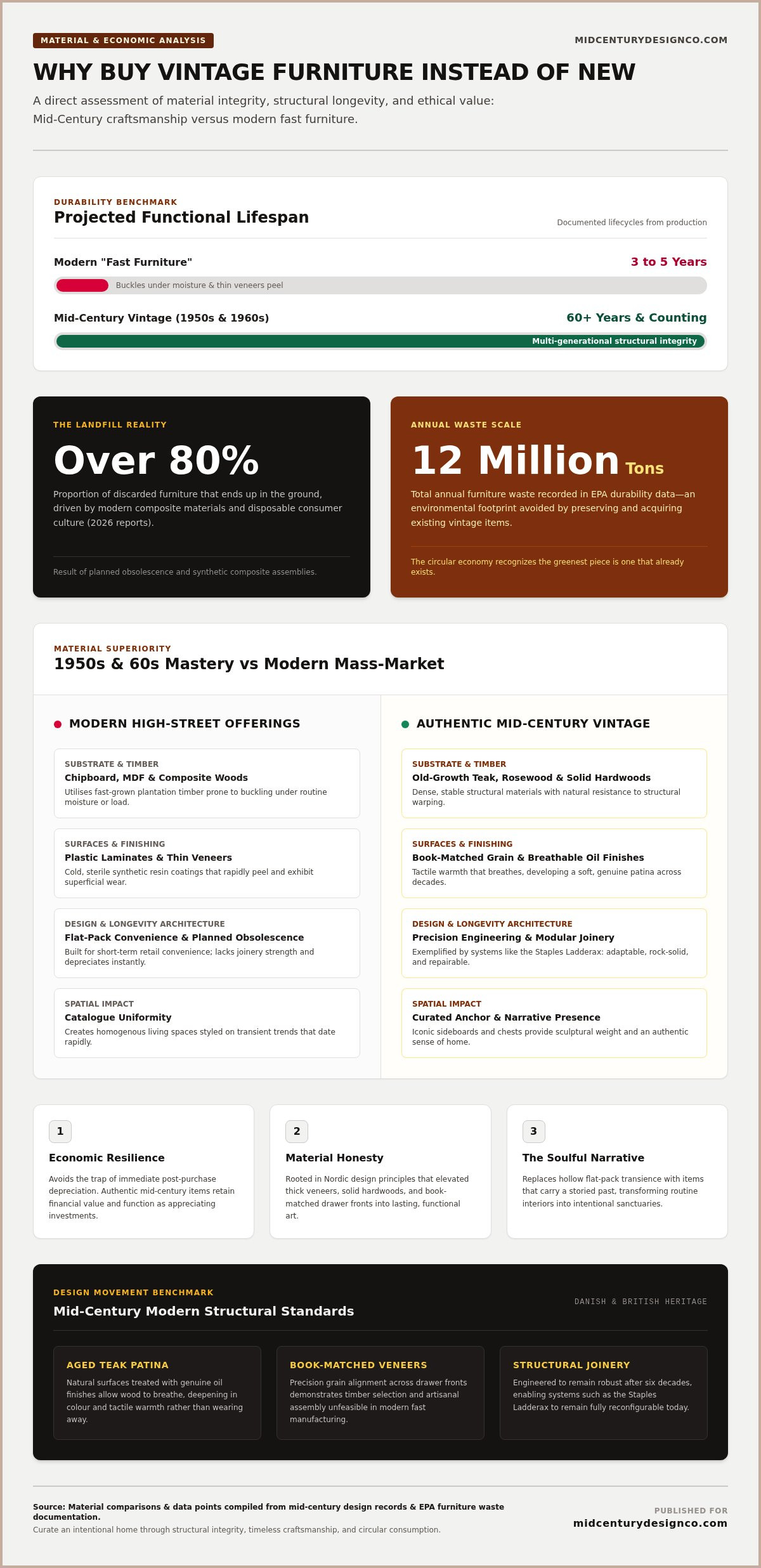
The average piece of modern "fast furniture" is designed to survive a mere three to five years before the particleboard buckles or the thin veneers begin to peel. It is a wearying cycle of purchase and disposal that often leaves a home feeling like a hollow catalogue copy rather than a curated sanctuary. If you have found yourself wondering why buy vintage furniture instead of new, you are likely seeking something more than just utility. You are looking for a connection to an era where material integrity and sculptural beauty were points of pride.
It is natural to feel a sense of hesitation when moving away from the convenience of the high street, particularly with the fear of accidentally purchasing a poor quality reproduction. Yet, the case for mid-century mastery is clear. Authentic pieces offer a level of craftsmanship and soul that modern mass production cannot touch. This article will help you understand why choosing vintage is a superior financial and ethical investment. You will gain confidence in identifying quality and find inspiration for styling these historic pieces to create a home that feels entirely your own.
Key Takeaways
- Identify the inherent flaws in "fast furniture" and discover why modern mass-market pieces are designed for obsolescence whilst vintage items carry a lasting, soulful narrative.
- Explore the material superiority of the 1950s and 60s to understand why buy vintage furniture instead of new for unparalleled durability and tactile warmth.
- Learn to avoid the trap of instant depreciation by selecting authentic mid-century pieces that serve as resilient, appreciating financial investments.
- Embrace a more ethical lifestyle by choosing the circular economy, recognising that the greenest furniture is the high-quality piece that already exists.
- Gain expert inspiration for styling iconic designs within a modern context, allowing you to curate a sanctuary that feels deeply personal and unique.
The Case for Character: Why Vintage Outshines Modern Mass Production
Character. It's a word often used, yet rarely found in the aisles of modern retail warehouses. Today's "fast furniture" industry operates on a cycle of planned obsolescence, producing items from composite woods and synthetic resins that are often destined for the landfill within five years. Reports from 2026 suggest that over 80% of discarded furniture ends up in the ground, a staggering consequence of a disposable culture. If you've been wondering why buy vintage furniture instead of new, the answer begins with this rejection of the temporary. You're choosing an object with a soul, a piece that invites a slower, more intentional way of living. It's about surrounding yourself with items that have already proven their worth, standing strong whilst the trends of the day fade into obscurity.
The Narrative of the Object
The patina of aged teak tells a story that spans decades. Unlike the artificial, manufactured "distressed" look found in contemporary shops, genuine historical wear has a soft, tactile warmth that only time can bestow. The mid-century modern design movement was rooted in a profound respect for material honesty, using solid hardwoods and expertly applied veneers that age with grace. These pieces are functional art; they carry the spirit of the craftsmen who shaped them and the homes they've graced before yours. An authentic 1960s sideboard does more than hold your linens; it acts as a visual anchor. It possesses a sculptural weight and a specific narrative that no glossy catalogue can replicate, offering a sense of stability in a world of flat-pack transience.
Breaking the Catalogue Cycle
Escaping the high-street allows you to build a home that is truly your own. Modern retail often traps homeowners in a wearying cycle of sameness, where every living room feels like a variation of the same showroom floor. Understanding why buy vintage furniture instead of new involves embracing the joy of the hunt, finding a unique piece amongst a sea of mass-produced sameness. This curated approach ensures your space remains timeless, avoiding the trend-driven aesthetic that dates so rapidly. By prioritising the unique over the uniform, you create a sanctuary that feels like an extension of your own personality rather than a replica of a shop window. It's a liberating shift that turns interior design into a process of discovery rather than just a transaction.
Unmatched Craftsmanship: The Superiority of Mid-Century Materials
The 1950s and 60s represent a "Golden Era" where furniture was built to endure for generations. Designers during this period didn't just create shapes; they engineered longevity. When considering why buy vintage furniture instead of new, one must look closely at the raw materials. Modern high-street offerings rely heavily on chipboard and MDF, which buckle under moisture or weight. In contrast, mid-century pieces utilised old-growth teak, rosewood, and thick, high-quality veneers. These materials offer a density and stability that is simply unavailable in the fast-grown plantation timber used for today's mass-market items.
Nordic design principles elevated these materials into functional art. This era gave us the Staples Ladderax system, a modular marvel that proved furniture could be both adaptable and structurally superior. It wasn't about "flat-pack" convenience; it was about precision engineering. This commitment to quality is why so much of this furniture avoids becoming part of the 12 million tons of annual waste highlighted in EPA data on furniture waste. These pieces were designed to be cherished, not discarded.
The Beauty of the Grain
Danish modern furniture offers a sensory warmth that plastic laminates cannot replicate. Observe an original teak chest of drawers. The consistency of the wood grain across the drawer fronts is often a masterclass in book-matching, a technique that requires immense skill and high-quality timber. Unlike modern finishes that feel cold and sterile, vintage oil finishes allow the wood to breathe. It's a tactile experience. You can feel the natural spirit of the tree beneath your fingertips, a far cry from the uniform, soulless surfaces of modern reproductions.
Joinery and Structural Integrity
The secret to why a 60-year-old mid century modern sideboard remains rock-solid lies in the joinery. Craftsmen used dovetail joints and solid wood frames instead of the flimsy cam-locks and staples found in today's disposable items. Manufacturing standards during the mid-20th century were exacting, particularly in Danish-inspired UK workshops. A vintage desk isn't held together by hope and glue; it's a testament to mechanical precision. Understanding why buy vintage furniture instead of new requires an appreciation for these hidden details. If you're looking for such enduring quality, exploring a curated collection of authentic Danish furniture can provide the perfect starting point for your home.
An Investment in History: Comparing Long-term Value
Purchasing new furniture is often a lesson in immediate financial loss. The moment a mass-produced sofa or dining table enters your home, it loses approximately 50% of its retail value. It's a "sinking asset" in the truest sense. If you're weighing up why buy vintage furniture instead of new, consider the shift from expense to investment. Authentic mid-century pieces don't just hold their utility; they hold their equity. Whilst high-street items are designed for a single owner, a well-chosen vintage piece is a baton passed between collectors, often increasing in value as the supply of original 1950s and 60s timber diminishes.
The sheer volume of disposable furniture is reflected in the EPA durable goods waste data, which tracks over 12 million tons of furnishings entering the waste stream annually. This cycle isn't just an environmental burden; it's a financial one. By choosing vintage, you're opting out of this "disposal tax" and instead placing your money into a tangible asset with a proven secondary market. You're buying into a legacy of design that has already survived the test of time and market fluctuations.
Depreciation vs Appreciation
Resale value tells the real story of craftsmanship. After five years, a high-street dining set is often destined for a charity shop or a skip, its joints loosened and its finish marred. Conversely, an original Danish dining set remains a sought-after prize. The global appetite for Nordic design ensures that prices for authentic pieces stay remarkably stable. Rarity plays a vital role here. A vintage Danish coffee table, crafted from now-protected woods, is a finite resource. As these pieces become harder to find, their desirability amongst international collectors only intensifies. When you look for investment-grade vintage, check for maker's marks or distinct joinery details that confirm its provenance and long-term worth.
The Cost of Quality
It's helpful to reframe the initial price of a vintage item as a "store of value" rather than a mere expense. Take the Staples Ladderax shelving system. Because of its modular nature and enduring popularity, you can expand it, reconfigure it, or even sell off individual bays if your needs change. It offers a level of liquidity that a fixed modern wardrobe simply cannot match. Whilst the initial outlay for an original piece may be higher than a flat-pack alternative, the "cost per year" is significantly lower. You aren't just buying furniture; you're securing a piece of history that pays dividends in both daily joy and long-term financial resilience.
The Ethical Choice: Sustainability and the Circular Economy
Choosing to furnish a home is often framed as a purely aesthetic decision. However, it's also a profound environmental one. Understanding why buy vintage furniture instead of new means recognising that the most sustainable object is the one that already exists. Every new mass-produced item carries a heavy shadow of carbon debt. Manufacturing a standard modern sofa can emit up to 120 kg of carbon dioxide equivalent, which is roughly the same as an hour-long passenger jet flight. By opting for an authentic vintage piece, you bypass nearly 100% of the upfront raw material extraction and factory emissions that define modern retail.
The Carbon Cost of 'New'
The global shipping and manufacturing impact of modern items is a hidden burden on our planet. Most high-street furniture is produced in overseas factories using energy-intensive processes before being shipped across oceans in massive containers. Choosing a vintage teak sideboard in the UK significantly reduces the demand for new timber harvesting, particularly in vulnerable old-growth forests. Supporting local UK businesses that specialise in curated vintage isn't just about style. It's a logistical win for the environment. You're investing in a local economy whilst drastically lowering the global shipping footprint of your living room.
Longevity as Activism
Choosing high quality vintage furniture UK is a quiet, sophisticated act of rebellion against "throwaway culture". It's a rejection of the idea that furniture should be replaced as often as a seasonal wardrobe. There is a deep psychological calm in living amongst items built to last forever. These pieces don't just occupy space; they provide a sense of continuity and permanence. Living with a curated collection of original mid-century pieces ensures that your home remains a sanctuary rather than a temporary stop on the way to a landfill.
Buying vintage is the most practical application of the circular economy. It keeps high-quality materials in use and out of the waste stream. There's also a significant health benefit to consider. New furniture often off-gasses formaldehyde and volatile organic compounds (VOCs) from synthetic glues and finishes for months or even years. Vintage pieces completed this curing and off-gassing process decades ago. They offer a cleaner, toxin-free indoor air profile for your home. It's a choice that respects both the health of the planet and the health of your family.
Curating Your Sanctuary: How to Style Vintage in a Modern Home
Creating a home that feels like a sanctuary requires a departure from the rigid, "matchy-matchy" aesthetic of high-street showrooms. Many homeowners fear that vintage pieces might turn their living space into a museum, a place where history is observed but not lived in. This "Museum Myth" couldn't be further from the truth. These items were designed for the rigours of 1960s family life; they are robust, functional, and meant to be touched. When you consider why buy vintage furniture instead of new, the most compelling answer is often the ability to create a space that feels layered, lived-in, and entirely unique. One sculptural mid century modern coffee table can anchor a contemporary living room, providing a warm, organic contrast to minimalist sofas and neutral rugs.
The modern home office also benefits from this infusion of character. Integrating a mid century modern desk UK into a workspace transforms a purely utilitarian area into an inspiring retreat. The tactile warmth of the wood and the clean, architectural lines foster a sense of calm focus that cold, mass-produced office furniture rarely provides. It is about choosing objects that serve your daily needs whilst also feeding your aesthetic soul, a philosophy that MIMO Living extends to the garden with premium outdoor furniture designed for modern serenity.
Balancing different wood tones amongst modern white walls is simpler than it seems. The key is to find a common thread, perhaps a similar leg profile or a shared era of design. For those living in contemporary flats where space is at a premium, modular systems like Staples Ladderax offer a bespoke feel. They allow you to build upwards, creating a customised library or display unit that evolves with your needs. To dive deeper into these techniques, you can read our guide on How to Style Mid Century Modern Furniture.
Sourcing with Confidence
Sourcing these treasures should be a journey of discovery, not a source of stress. Whilst marketplace auctions offer the thrill of the chase, they often hide structural flaws or poor-quality finishes. Buying from a curated specialist is a safer, more rewarding path. It ensures you receive pieces with verified provenance and clear, detailed photographs of the grain and joinery. This transparency allows you to envision the piece in your home with total confidence, knowing its history has been respected. If you are ready to begin your journey, explore our curated collection of authentic mid-century pieces and find the next chapter for your home story.
Embracing a Legacy of Design
Choosing an original piece is an act of curation that transcends simple home furnishing. It's about rejecting the disposable and embracing the enduring. Throughout this guide, we've explored how authentic materials like solid teak and rosewood offer a tactile warmth and structural integrity that modern chipboard simply cannot replicate. Beyond the aesthetic, you now understand the profound financial and ethical logic behind why buy vintage furniture instead of new. These pieces are functional assets that hold their value whilst protecting the planet from the heavy burden of landfill waste.
As specialists in authentic Danish and UK mid-century design, we invite you to discover our latest collection of authentic mid-century modern furniture. Each item in our curated selection is an original vintage piece, never a reproduction, and is available for nationwide UK delivery. Whether you're seeking a statement sideboard or a modular shelving system, we're here to help you find a piece with a soul.
Your journey toward a more soulful, sanctuary-like home begins with a single, well-chosen discovery. Let it be an object that tells a story for decades to come.
Frequently Asked Questions
Is vintage furniture more expensive than new furniture?
Vintage furniture often carries a higher initial price tag than budget high-street options, yet it represents a superior store of value. Whilst a new mass-produced dining set loses roughly half its value the moment it enters your home; authentic mid-century pieces tend to appreciate or remain stable. When you consider the lack of depreciation, the case for why buy vintage furniture instead of new becomes a sound financial decision for any homeowner.
How can I tell if a mid-century piece is an original or a reproduction?
Identifying an original piece requires a keen eye for construction details. Look for maker's marks or stamps inside drawers or underneath frames, which often denote prestigious Danish or British manufacturers. Genuine mid-century items utilise dovetail joints and solid wood frames rather than the cam-locks and staples found in modern reproductions. The weight and grain are also telling; authentic pieces feel substantial and feature rich, consistent veneers that plastic laminates cannot replicate.
Is vintage furniture sturdy enough for a family home with children?
Authentic mid-century furniture was engineered for the rigours of daily family life and remains remarkably robust today. Unlike modern chipboard that buckles or chips easily, the solid hardwoods and high-quality veneers used in the 1950s and 60s were built to endure for generations. A vintage chest of drawers or dining table has already survived sixty years of use. It is more than capable of handling the energetic environment of a contemporary family home.
Why is teak so popular in mid-century modern design?
Teak became the hallmark of the mid-century era due to its exceptional durability and warm, golden-brown hue. It possesses a high natural oil content that makes it resistant to warping and decay, qualities that were highly prized by Nordic designers. The tight, straight grain of teak allows for the creation of sleek, architectural forms that define the period's aesthetic. This material integrity ensures that a teak sideboard remains as beautiful and functional today as it was in 1960.
What should I look for when buying a vintage sideboard online?
When sourcing a sideboard online, prioritise detailed photography that highlights the wood grain and joinery. Reliable specialists will provide clear images of any historical wear, ensuring there are no surprises upon arrival. It is also vital to confirm the piece's dimensions and check for nationwide UK delivery options to ensure safe transit. Buying from a curated expert who focuses exclusively on original items provides a level of security that marketplace auctions often lack.
Does vintage furniture require a lot of maintenance?
Maintaining vintage furniture is surprisingly straightforward and focuses on preserving the wood's natural spirit. A light application of high-quality teak oil or beeswax every six to twelve months is usually sufficient to keep the grain hydrated and vibrant. Avoid placing pieces in direct sunlight or next to intense heat sources like radiators, as this can cause the wood to dry out. These simple steps ensure your investment remains a stunning focal point for decades.
Can I mix different types of wood in the same room?
Mixing wood tones is a sophisticated way to add depth and character to your sanctuary. The secret lies in finding a common thread, such as a shared design language or similar leg profiles, to unite the space. A dark rosewood coffee table can sit beautifully alongside lighter teak sideboards if the room is anchored by neutral walls and minimalist decor. This layered approach prevents your home from feeling like a rigid showroom and instead creates a curated, personalised atmosphere.
Why is Danish furniture considered the gold standard of mid-century design?
Danish furniture is revered for its seamless blend of sculptural beauty and ergonomic function. During the middle of the 20th century, designers in Denmark prioritised material honesty and precision engineering. Their commitment to using the finest hardwoods and innovative joinery techniques set a global benchmark for quality. This legacy is why buy vintage furniture instead of new for those seeking the highest level of craftsmanship; these pieces represent the pinnacle of modern design history.