

A Pair of Vintage Bedside Tables: A Thoughtful UK Buying Guide
The most characterful pair of vintage bedside tables may not be perfectly identical. Shared proportions, warm wood tones or considered craftsmanship can create a natural balance without making the room feel overly matched. Look for a connection between the pieces, then decide whether their differences add individuality or make the arrangement feel uneven.
It’s understandable to want a pair that feels coherent while still showing the signs of a life before yours. The practical test is whether each table fits beside the bed, gives you the storage and surface space you need, and leaves enough room to move around. A table that looks appealing on its own may feel too tall, deep or visually heavy once it’s in position.
This guide explains how to compare proportions, assess age-related wear and check the details that matter before buying. You’ll find practical ways to measure for fit, judge whether two pieces belong together and bring original vintage character into a bedroom without making it feel like a period set. With a few checks, you can choose useful pieces whose differences feel considered and whose craftsmanship gives the room a more personal character.
Key Takeaways
- A pair of vintage bedside tables can feel harmonious through shared proportions and character, even when the pieces aren’t identical.
- Compare silhouette, leg shape, drawer layout, handles and wood tone as a group rather than judging one detail on its own.
- Use height, material tone and visual weight to decide whether a closely matched, near-matched or contrasting pair will suit your bedroom.
- Measure the bed and available floor space, then allow room for drawers and doors to open in their intended positions.
- Original vintage bedside cabinets bring individual craftsmanship and authentic mid-century character to a bedroom.
Why choose a pair of vintage bedside tables for a considered bedroom?
A vintage pair may match closely, or share a design language through similar proportions, related materials or repeating details. Perfect symmetry isn’t essential. Two pieces with a common visual thread can frame the bed while retaining the individuality that makes vintage furniture feel personal.
There’s pleasure in combining beauty with purpose. Each table gives you a surface for a book, lamp or glass of water, while drawers or a cupboard keep smaller essentials close and the top clear. Wood grain, finish and signs of age can soften crisp bedding and contemporary surroundings without making the bedroom feel like a period set.
Think of the pair as part of the room’s composition, not a matching package to place without thought. The bed remains the natural centre, while the tables support it visually and practically. Similar appearance alone doesn’t prove that two tables share a maker or history. For broader context on how age, condition, rarity and usefulness inform interest in antique furniture, look beyond appearance alone. A thoughtful mix of older and newer furnishings can feel at ease too, as explored in this guide to styling mid-century modern furniture.
What makes a vintage bedside table different from a modern reproduction?
A vintage bedside table is an original older piece, rather than a newly made imitation of an earlier design. Its materials, patina and construction may show the marks of time and use, giving it a presence that differs from a fresh reproduction. These details can contribute to its character, but appearance alone can’t establish its maker, precise age or provenance. Judge the whole object, including its practical condition, rather than treating one feature as proof of its history.
Why buy two bedside tables rather than one?
For a double bed, two tables can give each person a useful surface and a place for personal essentials, while creating a calm visual rhythm on either side. The pieces needn’t be identical: a related shape or finish can connect them, with small differences preserving their individual character. A pair isn’t essential in every room. Consider the bed’s position, available floor space and how you use the bedside area before deciding whether two tables will serve the room.
That combination of shared presence and subtle variation is the appeal. The bed feels framed, yet the arrangement remains lived-in rather than staged. A considered pair can add useful storage and a sense of history to everyday bedroom routines, with each table contributing something of its own.
Which vintage details give a bedside table its distinctive character?
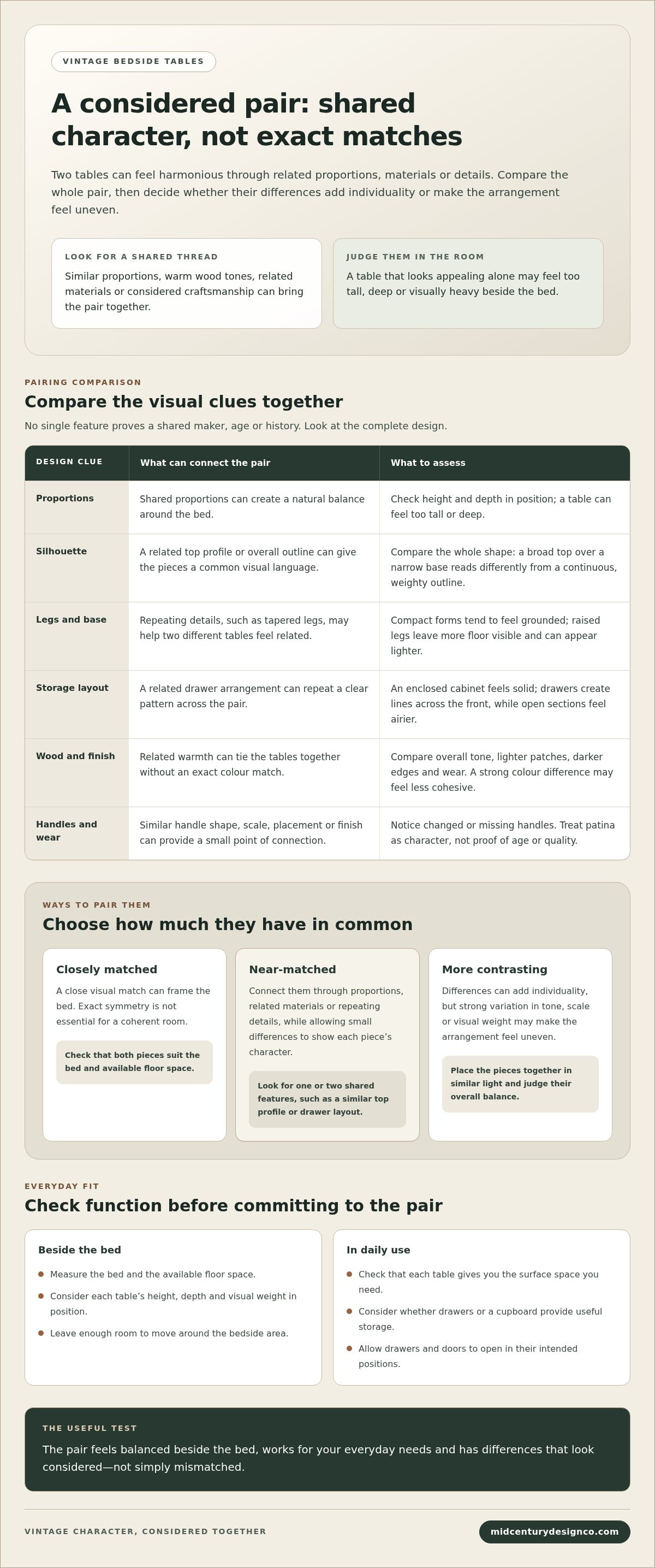
A bedside table’s character rarely comes from one decorative flourish. Look at the whole design: the outline of the top and cabinet, the angle and length of the legs, the drawer arrangement, the handles and the relationship between height and width. Together, these details create an impression of lightness, solidity or quiet elegance. A pair of vintage bedside tables can feel connected through a shared visual language, even when small differences show that each piece has its own story.
Assess a style by considering several design clues together, not by relying on one detail. A particular handle or leg shape may appear on furniture from different periods, and a finish can change with use or care. Treat each feature as part of a wider picture, not proof of a maker, date or origin. When comparing a pair, place the pieces side by side in similar light so differences in colour, scale and detail are easier to see.
How do shape, legs and storage change the look?
Compact forms close to the floor tend to feel grounded, while raised legs leave more floor visible and can make a table appear lighter. An enclosed cabinet creates a solid block beside the bed; drawers create a clear pattern across the front, while open sections make the outline feel airier. To connect two pieces, look for one or two repeated features, such as tapered legs, a similar top profile or a related drawer layout.
First compare each silhouette from across the room, then look closely at how the parts meet. A broad top above a narrow base can feel quite different from a cabinet with a continuous, weighty outline, even if their measurements are similar. Several shallow drawer lines create a different impression from one uninterrupted panel. There’s no single right combination; consider whether the form suits the bed and the atmosphere you want in the room.
What should you notice about wood, handles and finish?
Wood grain describes the lines and patterns visible on a surface, while colour can vary across a piece. Place both tables together and compare their overall tone, including lighter patches, darker edges and signs of wear. Similarity matters more than an exact match: related warmth may bring the pair together, while a strong difference can make them feel less cohesive. Don’t identify the wood as teak from a photograph or colour alone.
Handles are small details with a strong effect. Compare their shape, scale, placement and finish, and look for signs that either has been changed or is missing. Surface wear can add softness and history, but inspect it alongside the construction rather than treating patina as proof of age or quality. For gentle care, consult the National Park Service guidance on cleaning wood furniture before choosing a cleaning method. To see how considered details come together in original bedroom furniture, explore vintage bedside cabinets.
Must a pair of vintage bedside tables match exactly?
No. Exact matching is one way to create a composed bedroom, but it isn’t the only one. A closely matched pair gives the bed a clear, symmetrical frame; near-matched tables add gentle variation; contrasting pieces create a more collected, informal mood. Judge them together in relation to the bed and the rest of the room, rather than deciding from one detail alone.
A convincing pair shares enough visual cues to feel intentional, not necessarily identical. Use the comparison below to see where the tables align and where they differ. One difference can add character; several pronounced differences may make the arrangement feel unsettled.
| Feature | Closely matched | Near-matched | Contrasting |
|---|---|---|---|
| Silhouette | Same outline | Related shape | Distinct forms |
| Height | Very similar | Small difference | Noticeable difference |
| Material tone | Similar colour | Related warmth | Clear contrast |
| Hardware | Same style | Complementary detail | Different finishes |
| Visual weight | Even on both sides | Broadly balanced | Intentionally varied |
How can you tell whether two tables work together?
Start with their scale beside the bed. Compare each table’s height with the mattress and with its partner, then check width and depth. A much broader cabinet on one side can draw the eye even if both tops sit at a similar level. Next, look for shared cues such as a related leg profile, drawer arrangement or finish. Repeated shapes or tones elsewhere in the room can help a less obvious pair feel at home.
Step back and view the arrangement as a whole. If one table has a heavier outline, a lamp or another object on the opposite side may help balance the composition, provided both tables remain comfortable to use. Small variations in handles or drawer fronts are easy to accommodate when height, scale and overall form remain harmonious. A marked difference in both size and visual weight, by contrast, may compete with the bed instead of framing it.
When might a near-matched or contrasting pair suit the room?
Near-matched tables suit a calm, balanced setting when you want to avoid a perfectly uniform look. A slight difference in finish or drawer detail can add individuality, while shared proportions keep the arrangement coherent. Contrasting tables can work in a relaxed, collected interior, especially when another feature, such as similar height or a repeated colour, links them. Neither approach is automatically better; choose according to the room’s existing furniture and the atmosphere you want.
For a final sense-check, picture the tables in their intended positions rather than viewing them only side by side. Ask whether each holds its own without drawing attention away from the bed, and whether their differences look considered from the doorway. If so, variation can become the detail that gives the room its character.
How should you check size, condition and everyday fit before buying?
A table can look perfectly proportioned in a photograph and still crowd the bed or block a drawer once it’s in place. Measure the room first, then assess each piece individually: vintage pairs can differ slightly in height, depth and condition. Measure the available space and each table before deciding whether the pair will fit.
Which measurements matter beside the bed?
Start with the mattress-side height and the space available beside the bed. Measure the width and depth, allowing for skirting boards, nearby furniture and a clear route to get in and out. Include the space needed for drawers or cupboard doors to open fully. A paper outline or removable tape on the floor can help you picture each table’s footprint before you commit.
- Measure the bed and mattress height. Note the height from the floor to the top of the mattress, then compare it with each table. A surface close to mattress level is often convenient for reaching everyday items. Decide what feels comfortable for your bed and routine.
- Measure the space on both sides. Record the usable width and depth, including any skirting-board projection or nearby obstruction. Check that the tables won’t narrow the route around the bed.
- Check the intended position. Mark the footprint on the floor, then allow for the full opening range of doors and drawers. Make sure handles won’t catch on the bed or wall.
- Measure both tables separately. Compare height, width and depth rather than relying on one measurement for the pair. Small differences can affect everyday use and how balanced the tables look beside the bed.
How can you assess vintage condition and usability?
Inspect each table separately, even if they appear to be a matched pair. Check the top, corners, legs and joints for cracks, chips, loose parts or signs of alteration. Apply gentle pressure to see whether the piece rocks or twists, and look for signs of moisture or pests. Some variation in wear is expected, but note whether it affects stability or everyday use.
Open and close every drawer or door. Check that they move as expected without catching, and that the storage suits what you plan to keep nearby. In good light, inspect the surfaces for marks, lifting finish or damage that could affect their use for a lamp, book or other daily essentials. Honest wear can lend a table warmth and history; the practical question is whether its condition meets your needs. Consider visible unevenness or repairs alongside the table’s overall steadiness, rather than assuming age makes a flaw acceptable.
Once the measurements and condition make sense, explore vintage bedside cabinets to find original character for your bedroom.
Where can you find original vintage bedside tables for your bedroom?
If you’re drawn to furniture with design history, a specialist in original vintage pieces is a useful place to begin. The Mid Century Design Co. curates authentic vintage furniture, including bedside cabinets, within a wider collection of mid-century and Danish furniture. Its focus is on original pieces rather than newly made reproductions, making it a source of genuine vintage character for the bedroom.
An original table has materials, construction and finish that belong to the piece itself, rather than an imitation of an earlier look. Small variations and signs of age make each one distinct. That individuality is part of the appeal, but judge a piece on its design, condition and suitability for your room too. For another perspective on assessing period character, the guide to authentic mid-century modern sideboards offers broader furniture context.
What should you expect when choosing original vintage furniture?
Original vintage furniture isn’t uniform. Two tables with a related look may differ in finish, wear or detail, and appearance alone can’t establish a piece’s maker or history. Consider what matters most to you: a coherent shape, useful storage, particular materials or a finish that suits your bedroom. Set those preferences alongside your practical checks, then assess each table on its own merits rather than assuming a pair will be identical.
How can a vintage pair feel at home in a contemporary bedroom?
Let the tables bring the detail. Restrained bedding gives their silhouettes and grain room to show, while considered lighting can make the bedside feel warm without crowding the surfaces. If the tables have a strong presence, keep nearby accessories simple. If their forms are quieter, a lamp or favourite book can add a personal note. The aim is a comfortable room, not a recreation of a particular decade.
Balance the vintage pieces with the furniture already in your home. Contemporary bedding, a simple bed frame or familiar furnishings can sit naturally alongside older bedside cabinets, allowing the room to feel layered rather than staged. Choose a pair of vintage bedside tables that works with your routines and the atmosphere you want to create, then give their craftsmanship room to be appreciated.
Explore vintage bedside cabinets from The Mid Century Design Co. and consider how original character could work in your bedroom.
Make room for a little history
The right bedside furniture can shape the feeling of a bedroom long after the first impression. A pair of vintage bedside tables doesn’t need to be identical to feel at home. Look for pieces whose character complements your space and whose everyday usefulness makes them a pleasure to live with.
The Mid Century Design Co. specialises in authentic vintage mid-century modern furniture, including bedside cabinets within a wider collection of vintage bedroom furniture. Each original piece brings its own presence, offering a considered alternative to a room furnished entirely in one style or period.
Let your room guide the choice. A considered silhouette, a finish you’re drawn to or a detail that feels quietly familiar can be the start of a more personal bedroom. Explore the curated collection of vintage bedside cabinets and find an original piece with character for your home.
Frequently Asked Questions
Do vintage bedside tables have to match?
No, they don’t have to match exactly. In a room with a centred bed and symmetrical layout, matching tables can reinforce the arrangement. If one side is tighter because of a doorway or sloping wall, a visually lighter table there may work better. Consider how the pair relates to the room’s layout as well as to each other, so any differences feel deliberate.
What height should a bedside table be compared with the bed?
A useful starting point is a tabletop around the height of the mattress, so you can reach a book, spectacles or a glass without stretching. Personal comfort matters more than a fixed rule: a lower surface might suit a low bed, while a taller mattress may call for a higher table. Picture reaching across from your usual sleeping position, and check that a bedside lamp will sit comfortably too.
How can you tell whether vintage bedside tables are genuinely mid-century?
Appearance alone can’t confirm a table’s age or period. Look for supporting evidence such as a maker’s label, purchase records or documented provenance, and consider whether the construction and design details make sense together. Compare those clues with reliable references rather than relying on one fashionable feature or a description alone. If the evidence is incomplete, don’t treat a mid-century appearance as confirmation of an original piece.
Are vintage bedside cabinets practical for everyday use?
Yes, they can be practical if their storage and surfaces suit your routine. A cabinet with a door may conceal larger items, while drawers can keep smaller belongings organised. Check that the usable space accommodates what you actually keep beside the bed. Use a coaster beneath drinks and avoid placing hot items directly on an older finish, particularly if you want to preserve its existing surface.
Can I use two different bedside tables as a pair?
Yes. Different tables can work together if their scale and use feel balanced in the room. For example, one side might have a drawer for personal items, while the other offers open space for books. Similar tabletop heights can make both convenient to reach. If you’re unsure, place them beside the bed and view them from the doorway. That wider perspective can show whether the contrast feels composed.
What is the difference between a bedside table and a bedside cabinet?
The terms overlap, but “bedside table” often describes a small surface beside the bed, while “bedside cabinet” usually suggests enclosed storage such as drawers or a cupboard. The words aren’t always used in precisely the same way, so focus on the design rather than the label. Check the description and images to see whether the piece has open space, enclosed storage or a combination.
How do I style vintage bedside tables in a contemporary bedroom?
Give each table a little breathing room. Pair a sculptural vintage piece with plain bedding, then choose a lamp that suits the tabletop without crowding it. Repeating a colour elsewhere, perhaps in a cushion or artwork, can help the wood tone feel connected to the room. Keep useful items within reach, but edit decorative objects so the tables remain practical as well as distinctive.