

Is Nathan Furniture Solid Wood? The Vintage Collector’s Definitive Guide
The presence of teak veneer on mid-century cabinetry isn't a compromise in quality; it's the exact reason these graceful silhouettes have survived six decades without splitting. Yet, when appraising a classic British sideboard, almost every collector asks: is Nathan furniture solid wood? If you spot an expansive grain pattern that flows too harmoniously to have been carved from a single tree trunk, it's natural to wonder whether you're admiring heirloom craft or facing fragile, modern particle board.
That hesitation makes complete sense, particularly when disposable flat-pack items and synthetic laminates dominate today's high street. Mid-century makers, however, approached joinery with genuine architectural reverence. In this guide, you'll discover the authentic construction methods behind vintage Nathan furniture, exploring why masterfully applied teak veneers often surpass solid timber for structural stability and artistic grain matching. You will learn how to recognise solid framing, distinguish premium vintage veneers from cheap imitations, and confidently curate these enduring designs for your own home.
Key Takeaways
- Discover the definitive answer to whether is Nathan furniture solid wood, unpacking how genuine mid-century pieces unite solid structural frames with architectural teak veneers.
- Learn which specific components, from sculpted handles to solid timber legs, rely on dense hardwoods like afrormosia for lifelong durability.
- Understand why vintage veneering represents high-level cabinetmaking and artistic grain matching rather than modern flat-pack cost-cutting.
- Master practical inspection techniques to authenticate original Nathan maker marks, badges, and veneer integrity before investing.
- Gain expert care routines to preserve the rich, golden patina of vintage teak surfaces without risking moisture or chemical damage.
The Direct Answer: Is Vintage Nathan Furniture Solid Wood?
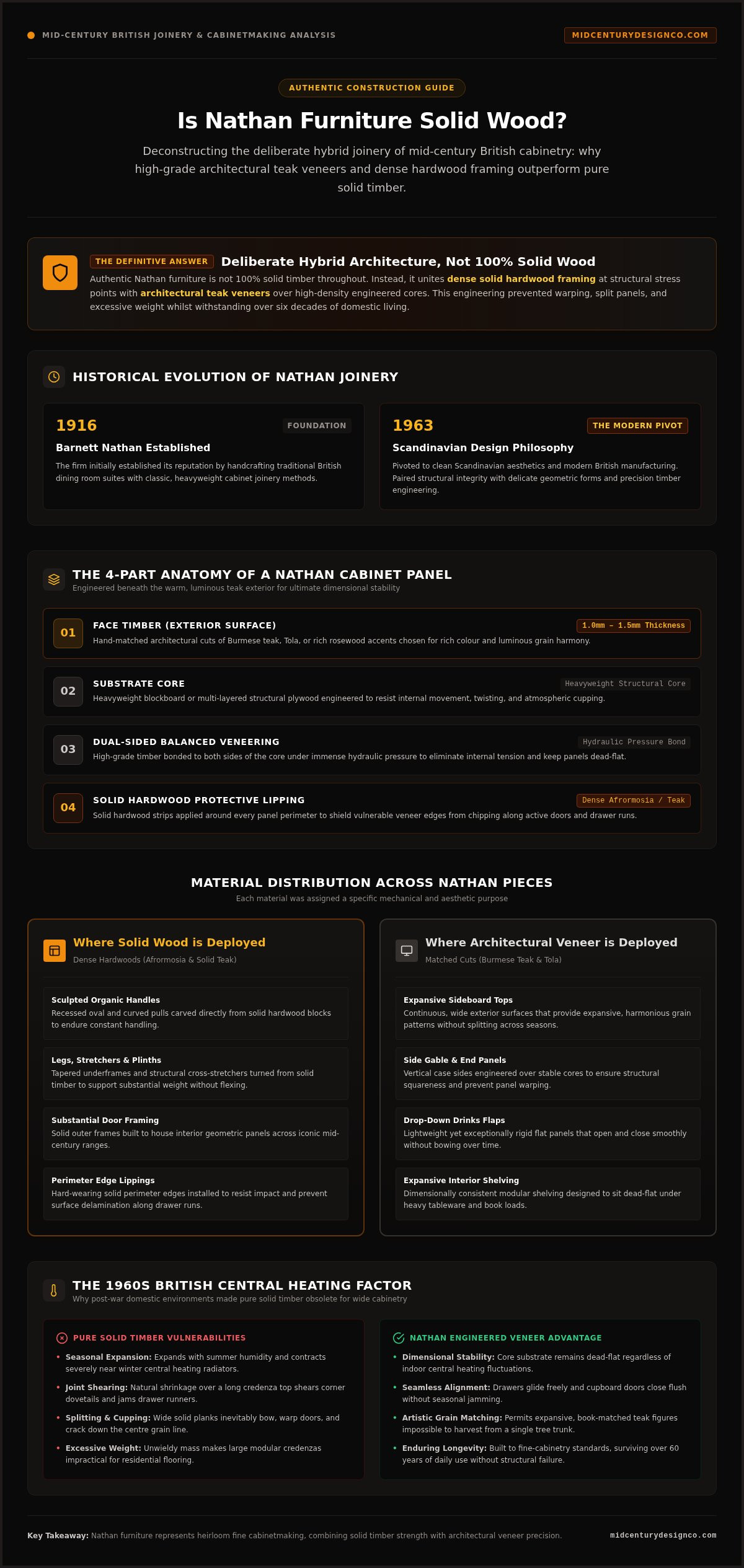
The short answer is no; Nathan furniture is not 100% solid wood throughout. Instead, authentic Nathan pieces unite dense solid hardwood frames with carefully selected, architectural teak veneers. If you have been asking yourself is Nathan furniture solid wood because you fear ending up with flimsy modern composite board, you can set your worries aside. Mid-century cabinet makers almost never built expansive credenzas or modular units from solid timber alone. Doing so would have resulted in warped doors, split tops, and impossibly heavy cabinetry.
Founded in 1916 by Barnett Nathan, the firm initially made its mark crafting traditional dining room suites. When the company pivoted to a clean Scandinavian aesthetic in 1963, its design philosophy evolved. Nathan embraced modern British manufacturing techniques to elevate organic materials, pairing structural integrity with delicate geometric forms. Far from modern paper foils or disposable flat-pack chipboard, mid-century veneering represented an exacting, fine-cabinetry discipline.
The Anatomy of a Mid-Century Nathan Cabinet
Beneath the warm, luminous teak exterior lies an exceptionally engineered interior core. Nathan craftsmen laid substantial sheets of genuine timber over robust blockboard or multi-layered plywood substrates. A high-grade wood veneer, typically cut between 1mm and 1.5mm thick, was bonded to both sides of the core under immense hydraulic pressure. This dual-sided balance prevented internal tension, ensuring the panel remained dead-flat across decades of use.
- Substrate core: Heavyweight blockboard or structural ply that resists warping and twisting.
- Face timber: Hand-matched cuts of Burmese teak, Tola, or rich rosewood accents.
- Solid timber framing: Solid hardwoods deployed precisely at load-bearing points, legs, and drawer pulls.
Why Mid-Century Makers Rejected Pure Solid Timber
Solid timber is a living, breathing material. As central heating gained widespread popularity across post-war British homes in the 1960s, interior air dried out dramatically. Solid wood panels expand with summer humidity and contract with winter radiators. On a long sideboard top, that natural movement leads to sheared joints, jammed drawers, and split timber. By applying rich teak over a dimensionally stable core, Nathan achieved the warm aesthetic of exotic hardwoods whilst eliminating the structural vulnerabilities inherent to solid planks.
Solid Timber vs Veneer: The Construction of Nathan Pieces
Every vintage Nathan credenza or dining table relies on a deliberate hybrid architecture. To understand why asking is Nathan furniture solid wood misses the brilliance of mid-century joinery, you have to look at the relationship between structural framing and decorative skin. Unlike contemporary fast furniture that hides hollow honeycomb cardboard inside synthetic shells, Nathan built robust cases designed to survive decades of continuous living.
Each material had a specific mechanical job. Heavy solid timber provided the skeletal foundation, resisting daily knocks and bearing substantial weight. Meanwhile, architectural veneers provided broad, perfectly flat exterior surfaces that would never warp, buckle, or split under changing domestic temperatures.
Where You Will Find Solid Wood on Nathan Furniture
Nathan reserved solid timber for the hard-wearing touchpoints and structural load-bearers. Running your fingers across the frame reveals dense, sculpted joinery crafted from solid afrormosia (often called African teak) or rich solid teak. Specifically, solid wood was utilised for:
- Sculpted organic handles: The recessed oval or curved drawer pulls characteristic of Nathan sideboards were carved directly from solid hardwood blocks.
- Legs, stretchers, and plinths: Tapered legs, cross-stretchers, and underframes were turned from solid timber to bear heavy loads without flexing.
- Substantial door framing: Solid frames housed interior panels, including the iconic geometric panelling seen on famous ranges.
- Protective edge lipping: Solid hardwood strips (lippings) were applied around every veneered panel perimeter, protecting the thin surface layers from chipping along vulnerable drawer runs and door edges.
Where Architectural Teak Veneer Takes Centre Stage
Expanse and pattern belong entirely to the veneer. Sideboard tops, side gable panels, drop-down drinks flaps, and shelving all feature high-grade teak veneer applied over dense timber substrates. This deliberate technique allowed Nathan craftsmen to practice book-matching, opening sequential cuts of timber like pages in a book to create mirror-image grain configurations.
Achieving this artistic symmetry across an eight-foot credenza top simply isn't possible with solid planks, which inevitably exhibit mismatched colour ribbons and erratic grain shifts. Veneering also allowed Barnett Nathan to showcase rare Burmese teak sustainably, making breathtaking Scandinavian silhouettes accessible to everyday British households. If you are curating your own dining or living space, browsing an authentic gallery of vintage sideboards and storage pieces will reveal just how striking this original grain alignment remains today.
Debunking the Myth: Why Vintage Veneer Signifies Quality
Mention the word "veneer" to modern buyers, and their minds often jump straight to peel-and-stick vinyl or throwaway chipboard that crumbles at the first hint of damp. This perception fuels the recurring question: is Nathan furniture solid wood, or is it merely cheap imitation? In truth, conflating mid-century veneering with modern mass manufacturing completely misreads furniture history. During the golden age of British cabinetmaking, veneering was not a shortcut. It was an advanced artisan discipline.
Nathan's mid-century creations have stood quietly in British homes for over six decades. They have absorbed sunlight, held heavy tableware, and survived family life without falling apart. You cannot fake that kind of longevity. As detailed in our comprehensive guide to the authentic mid century modern sideboard, this durability comes from the precise engineering of veneered structures, which stay true long after poorly engineered solid timber has warped out of square.
The Craft of Crown-Cut and Quarter-Cut Teak
Achieving breathtaking grain patterns demands extraordinary skill from the timber sawyer. Nathan's master cabinetmakers worked with distinct log-slicing methods to evoke different visual moods:
- Crown-cut (flat sawn): Slicing tangential to the annual rings to yield dramatic, cathedral-like flame patterns across panel faces.
- Quarter-cut: Slicing perpendicular to the rings to produce narrow, parallel stripes that create clean, architectural rhythm.
Look across adjacent drawers on a Nathan sideboard. The grain drifts uninterrupted from one drawer face to the next. That seamless flow required meticulous layout work and genuine 1mm to 1.5mm thick hardwood leaf cuts, not the fragile 0.2mm foil papers found on high-street furniture today.
Durability and Environmental Sustainability
Mid-century veneering was also an act of profound environmental stewardship. Teak logs grow slowly over generations; slicing them into architectural leaves allowed Barnett Nathan to produce dozens of heirloom pieces from a single trunk, rather than exhausting precious timber on unseen interior supports.
Preserving these pieces celebrates true circular design. Welcoming an authentic vintage Nathan credenza into your home sidesteps the heavy industrial footprint of modern flat-pack production. If you are exploring how to style mid century modern furniture within a warm, lived-in space, choosing original teak ensures your interior remains anchored in sustainable, time-tested heritage rather than fleeting trends.
How to Inspect and Identify Vintage Nathan Furniture
Acquiring an authentic vintage piece requires a trained eye and a gentle touch. When evaluating a potential purchase, asking is Nathan furniture solid wood helps you quickly determine whether an item has been accurately identified or merely tagged with a fashionable designer label. While Nathan shares the warm teak visual language of British contemporaries like G Plan, A.H. McIntosh, and Jentique, its construction signatures and proportioning remain entirely distinct.
G Plan leaned heavily into sculpted curved handles and contrasting darker afrormosia framing. McIntosh championed sleek, minimalist Scandinavian profiles with pull-out trays and minimalist lipping. Nathan carved its own identity through tactile geometric panelling, balanced proportions, and exceptional structural joinery that rewards close physical inspection.
Makers Marks, Badges, and Design Signatures
Maker badges confirm authenticity instantly, though decades of domestic life mean paper labels occasionally go missing. Open the top drawers and inspect the back faces of cabinet doors for these proven Nathan hallmarks:
- The Quality badge: Look for the signature rectangular blue and silver foil Nathan Quality mark, typically affixed inside the top cutlery drawer or inner door frame.
- Signature door carvings: Nathan's most celebrated designs feature geometric door facades, notably the iconic "Squares" range with its raised rectangular panels and the distinct "Circles" sideboard.
- Cabinetry joinery: Check drawer construction. Genuine Nathan drawers feature crisp machine dovetails connecting solid hardwood drawer sides to the veneered front faces.
The Collector’s Condition Checklist
Distinguishing genuine historic patina from structural damage protects your investment. Because Nathan used substantial real-wood veneers over stable substrates, checking the following critical zones will reveal a piece's true condition:
- Perimeter edges and corners: Run your fingertips along the lower edges of doors and sideboards. Check whether the solid hardwood lipping is intact, or if harsh knocks have chipped the veneer.
- Top surfaces: Angle your gaze against the light. Look for dark grey moisture rings, hot teacup circles, or patchy sun bleaching where tabletop ornaments once rested.
- Past restoration work: Beware amateur over-sanding. Because original Nathan veneer is roughly 1mm to 1.5mm thick, overzealous sanding by previous owners often cuts right through the face timber, exposing the lighter core board below.
When you want absolute certainty regarding authenticity and structural preservation, explore our curated selection of verified vintage Nathan sideboards and storage pieces for your home.
Caring for Nathan Teak Furniture: Preserving Patina and Value
Living with mid-century teak is an organic, tactile pleasure. Once you know that the answer to is Nathan furniture solid wood reveals a refined balance of solid joinery and fine architectural veneer, caring for it becomes straightforward. Protecting this delicate exterior layer requires mindful habits rather than aggressive interventions. Commercial aerosol sprays containing silicone create a cloudy, synthetic buildup that suffocates the grain and ruins the factory lacquer over time.
Preserving the warm, honeyed glow of original teak means honouring its natural moisture balance. Treating your sideboard with gentle, traditional methods ensures the thin timber leaf remains securely bonded to its core, maintaining its value for decades to come.
Daily Maintenance and Routine Dusting Rituals
Gentle care prevents premature wear across high-traffic surfaces. A simple weekly habit preserves the timber without abrasive friction:
- Soft dusting: Use a dry, lint-free microfibre cloth to lift surface dust along the grain direction rather than wiping in broad circular motions.
- Swift spill cleanup: Wipe up moisture immediately using a barely damp cotton cloth, followed by an immediate dry wipe to keep liquid from penetrating the veneer seams.
- Environmental placement: Position cabinets away from direct radiator heat and out of unfiltered afternoon sunlight, which dries out natural oils and bleaches the rich timber pigments.
Revitalising Tired Teak and Rehydrating the Wood Grain
When the surface looks parched or chalky, rehydration restores depth to the figure. Apply a specialised teak oil, such as a high-grade blend of tung and linseed oil, using a soft cotton cloth. Work the oil sparingly along the grain, allowing it to penetrate for twenty minutes before vigorously buffing away every trace of excess. To create a tactile, low-sheen barrier against daily fingerprints, apply a thin coat of natural beeswax once or twice a year.
Teak furniture thrives when paired thoughtfully within the home. If you are complementing a teak credenza with an authentic retro dining table and chairs UK setting, maintaining that shared golden patina ties the entire room together. For serious issues like water rings or lifting edge lipping, avoid heavy sandpaper; consult an experienced cabinetmaker who understands vintage substrates to safeguard the original wood.
Investing in Lasting Mid-Century Craftsmanship
Understanding the architectural harmony behind mid-century cabinetry changes how we view vintage design. Far from being a compromise, asking whether is Nathan furniture solid wood reveals something far more remarkable than solid planks alone: an ingenious union of solid hardwood frames, protective lippings, and book-matched teak veneers crafted to withstand decades of daily life without warping.
These British icons were built for enduring living, celebrating authentic timber figure whilst offering timeless structural stability. When you are ready to bring that sensory warmth into your own interior, explore our curated selection of authentic mid-century sideboards and storage. Every piece across our inventory is 100% original vintage, thoroughly checked for structural soundness, genuine period joinery, and honest patina. With safe nationwide UK delivery, curating a characterful, sustainable home anchored in true mid-century heritage is effortlessly within reach.
Frequently Asked Questions
Is vintage Nathan furniture made from 100% solid teak?
No, vintage Nathan pieces are not 100% solid wood. Asking is Nathan furniture solid wood usually stems from concerns about build quality, but Nathan deliberately combined solid timber framing, legs, and sculpted handles with thick, book-matched teak veneers across expansive panels. This structural pairing ensured exceptional dimensional stability against household central heating while allowing exquisite, uninterrupted timber grain patterns across large cabinet tops and doors.
Why did mid-century British makers like Nathan use veneer instead of solid timber?
Solid timber naturally expands, contracts, and splits when exposed to fluctuating household temperatures and humidity. By applying high-grade architectural veneers over balanced blockboard or multi-ply substrates, Nathan eliminated the risk of warping across expansive credenza tops and cabinet doors. Veneering also enabled craftsmen to practice book-matching for artistic symmetry, whilst sustainably utilising slow-grown exotic hardwoods without exhausting precious natural timber stocks.
How can I tell if my Nathan furniture is genuine and authentic?
Authenticating Nathan furniture begins with locating the classic rectangular blue and silver foil Nathan Quality badge, usually affixed inside the top cutlery drawer or inner door frame. You can also identify signature design hallmarks, such as the distinctive geometric panelling found on the celebrated Squares and Circles ranges. Crisp machine-cut dovetail joints on solid hardwood drawer boxes offer further proof of period manufacture.
Can you sand down and refinish a veneered Nathan sideboard?
You can lightly sand Nathan furniture, but you must proceed with great caution. Original mid-century teak veneer is typically between 1mm and 1.5mm thick, leaving very little margin for error. Avoid aggressive orbital sanders, which quickly burn through the decorative timber and expose the substrate below. Instead, sand gently by hand using fine 240-grit paper along the wood grain, or consult an expert cabinetmaker for deep water marks.
What is the difference between Nathan furniture and G Plan?
Both manufacturers defined the British post-war design landscape, yet they approached Scandinavian modernism with unique design signatures. G Plan favoured sweeping curved handles, floating base frames, and contrasting rich afrormosia borders on pieces by designers like Ib Kofod-Larsen. Nathan embraced tactile geometric relief panelling, balanced proportions, and a cohesive golden teak hue that suited compact dining and living rooms across the UK.
Is Nathan furniture considered valuable and collectable today?
Nathan furniture remains highly collectable and steadily retains value across the UK vintage market. As modern homeowners turn away from disposable flat-pack items in search of sustainable, characterful interiors, Nathan sideboards, dining suites, and versatile storage units have become treasured focal points. Their reliable mid-century joinery, warm golden patina, and timeless aesthetic make well-preserved original pieces an enduring interior investment.
What is the best way to clean and oil vintage Nathan teak furniture?
Weekly care requires nothing more than a dry, lint-free microfibre cloth wiped gently in the direction of the wood grain. When the timber appears parched, apply a dedicated teak oil blend of tung and linseed oil, buffing away all excess moisture after twenty minutes. A light application of natural beeswax once a year provides protective lustre. Avoid aerosol furniture polishes containing silicone, which break down vintage finishes.