

The Allure of the Mid Century Modern Dressing Table with Mirror: A Curated Guide
A dressing table is not merely a surface for bottles and brushes; it is the silent curator of your day's first intentions. For the discerning homeowner, the morning ritual deserves more than a fleeting glance in a generic mirror. It demands a sanctuary. You likely feel that true luxury lies in the honeyed grain of organic timber and the deliberate, tapered lines of a bygone era. However, the search for an authentic mid century modern dressing table with mirror is often clouded by the fear of purchasing a hollow reproduction or the uncertainty of judging vintage condition.
This curated guide provides the clarity needed to distinguish between a temporary trend and a lasting design investment. We will explore the exquisite craftsmanship of iconic Danish and British designers, focusing on the rich textures of teak and rosewood that define this celebrated period. You'll learn how to assess the spirit and soul of a vintage piece, ensuring it brings both character and value to your home. We'll also address the practicalities of fitting these sculptural forms into contemporary UK bedroom layouts, transforming your space into a sophisticated retreat that honours the past whilst elevating your present.
Key Takeaways
- Learn why the seasoned grains of teak, rosewood, and afromosia offer a sensory warmth and historical soul that modern timber cannot replicate.
- Understand how to identify an authentic mid century modern dressing table with mirror by recognising signature features like "floating" tops and elegant triptych glass.
- Discover the hallmark characteristics of iconic British makers such as G-Plan and McIntosh to ensure your furniture serves as a genuine design investment.
- Master the art of styling vintage pieces amongst contemporary UK colour palettes like navy and forest green to create a sophisticated morning sanctuary.
- Gain the confidence to distinguish between original vintage craftsmanship and mass-produced alternatives to ensure your piece retains its value over time.
What Defines a Mid Century Modern Dressing Table?
Post-war Britain was tired. The heavy, dark oak furniture of the Victorian era felt like anchors in a world that suddenly craved flight and optimism. Designers responded with light. They stripped away the dust-gathering carvings and replaced them with the "clean line." An authentic mid century modern dressing table with mirror represents a deliberate marriage of organic curves and industrial precision. This era wasn't just about making furniture; it was about sculpting a new way of living. To understand the broader movement, one might explore What is Mid-century Modern? at its core, as it prioritised a rejection of the ornate in favour of pieces that felt airy and purposeful.
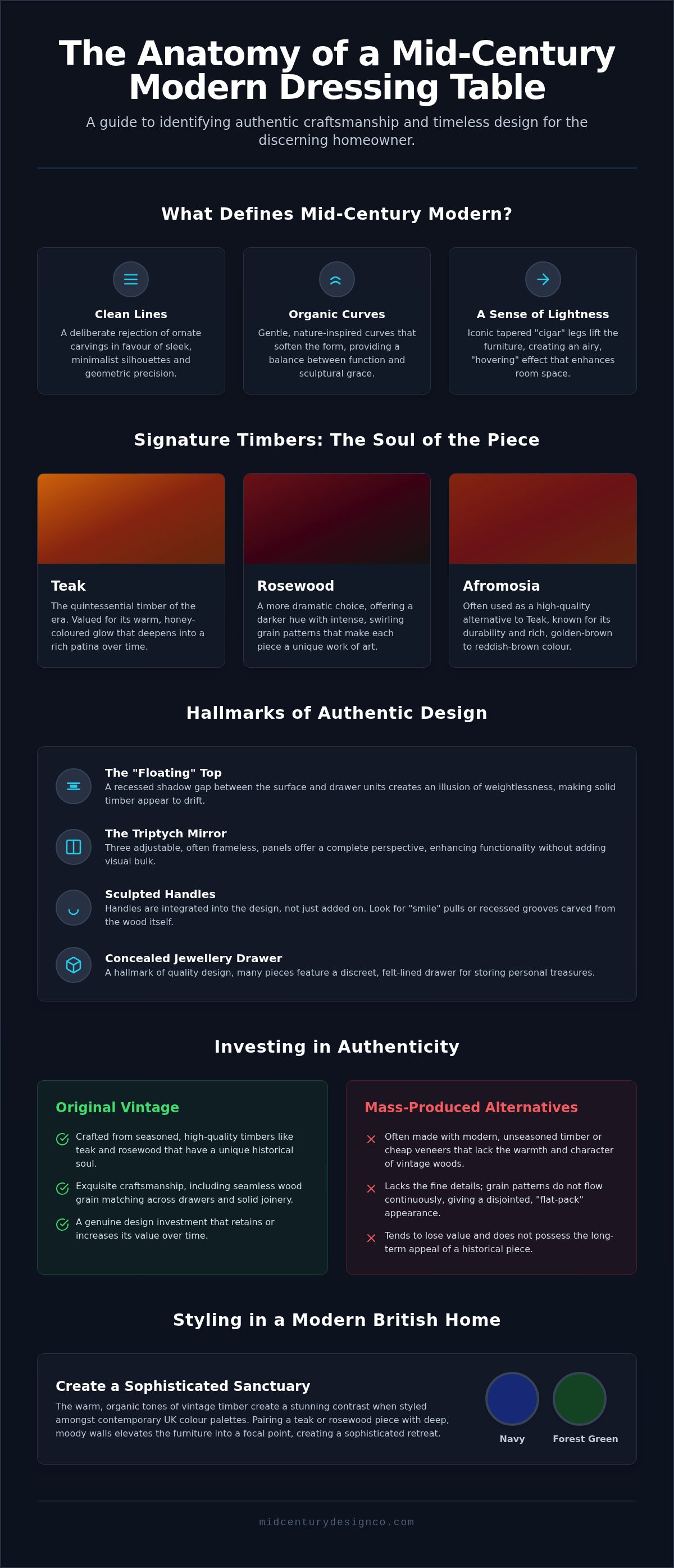
The silhouette of these pieces is unmistakable. Think of the tapered "cigar" leg, which lifts the main body of the chest off the floor to create a sense of space. Whilst older furniture sat flush to the carpet, these tables seem to hover. This lightness was achieved through the use of high-quality timbers like teak, rosewood, and afromosia. These woods weren't just chosen for their strength but for their sensory warmth. Choosing an authentic mid century modern dressing table with mirror is an exercise in appreciating this balance between structural integrity and visual grace.
The Aesthetic Philosophy of the 1950s and 60s
The "Atomic Age" brought a fascination with cosmic shapes and slender supports. This influence manifests in the light feel of bedroom furniture from the period. Designers moved away from the bulk of the past, opting for golden hues that caught the morning sun. It's a testament to the period's craftsmanship that these pieces were often designed to look beautiful from every angle. Even the back of a high-quality dressing table was frequently finished with the same care as the front, allowing it to sit away from a wall if needed.
Teak vs Rosewood: Choosing Your Timber
Teak was the undisputed staple of the British mid-century home. It's a versatile timber with a honey-coloured glow that deepens beautifully over the decades. For those seeking a more dramatic statement, rosewood offers a darker, more figured alternative. The grain patterns in rosewood are often swirling and intense, turning a simple piece of furniture into a work of functional art. A hallmark of quality to look for is wood grain matching. In the finest workshops, the veneer was carefully sliced and applied so the pattern flows seamlessly across multiple drawer fronts, creating a continuous visual narrative that modern flat-pack alternatives simply cannot mimic.
Essential Design Features: Mirrors and Floating Tops
The engineering of a mid century modern dressing table with mirror is as much a feat of physics as it is of aesthetics. One of the most captivating features of this era is the "floating top" design. By using small, recessed spacers, designers created a shadow gap between the drawer units and the main surface. This simple but brilliant structural choice makes substantial timber appear to drift, lending a sense of weightlessness to the bedroom. It's a visual trick that replaces the heavy, grounded feel of traditional furniture with a modern, airy elegance.
Thoughtfulness extends into the very tactile experience of the piece. Handles were rarely mere additions; they were sculpted directly into the soul of the wood. You'll often find "smile" pulls or integrated wooden grooves that invite the hand. Many of these tables also conceal a hidden jewellery drawer, usually lined with velvet or felt. This secret compartment was a hallmark of 1960s bedroom design, providing a dedicated space for personal treasures whilst maintaining the clean, minimalist exterior. If you are searching for these specific design hallmarks, you might explore our curated collection of authentic dressing tables to see these sculptural details in person.
The Triptych Mirror: A Three-Way Perspective
The classic triptych configuration remains the gold standard for functionality. With three adjustable panels, it offers a complete perspective, making the morning ritual feel like a moment of curated self-care. Most vintage mirrors from this period were frameless, a choice that prevents the glass from feeling bulky and helps the room appear more spacious. When assessing a mid century modern dressing table with mirror, examine the silvering of the glass. Some 1960s mirrors develop "foxing" or small dark spots over time. Whilst some collectors appreciate this authentic patina as a mark of history, others may prefer the crisp clarity of a well-preserved surface.
Tapered Legs and Stretcher Bars
The "cigar leg" is perhaps the most sought-after profile in mid-century design. These legs start wider at the top and taper gently towards the floor, creating a slender, athletic stance. To maintain structural integrity without adding bulk, designers utilised stretcher bars. These horizontal supports connect the legs, ensuring the table remains sturdy even with its slim frame. It's vital to check if the legs are solid wood, as premium makers used solid teak or afromosia for these structural elements to ensure they could withstand decades of use without warping or splitting.
Iconic Makers: From G-Plan to Danish Masterpieces
The mid-century era was a golden age of manufacturing where the name on the back of a drawer was a badge of honour. In Britain, the landscape was dominated by E. Gomme Ltd, better known as G-Plan. Their "Fresco" and "Sierra" ranges were revolutionary, bringing the fluid, organic sensibilities of Scandinavian design to the British high street. A mid century modern dressing table with mirror from the Fresco line is instantly recognisable by its signature "floating" top and solid afromosia handles. It's a piece that doesn't just sit in a room; it commands it with a quiet, teak-scented authority.
Beyond the giants of High Wycombe, other British makers carved out reputations for singular excellence. Austinsuite and White & Newton offered sleeker, often more minimalist interpretations of the style, frequently eschewing the heavier grains of teak for a more uniform, architectural look. These pieces are perfect for those who find the G-Plan aesthetic a little too "busy." They represent a different side of the same coin, proving that British workshops were far from monolithic in their creative output.
The British Icons: G-Plan and McIntosh
Scottish craftsmanship found its champion in McIntosh of Kirkcaldy. Known for exceptional joinery, McIntosh pieces often feature solid afromosia edging, a detail that prevents the veneer from chipping at the corners. When hunting for these icons, always look for the red G-Plan stamp or the gold McIntosh foil. These marks are not just labels; they are guarantees of a narrative. They ensure that your mid century modern dressing table with mirror remains a liquid asset, holding or even increasing in value as authentic 1960s timber becomes increasingly rare.
The Danish Influence
Whilst British makers were inspired by the North, authentic Danish furniture remains the pinnacle for many collectors. The hallmark of true Danish design is a level of sculptural fluidity that feels almost impossible in timber. Hidden joinery and seamless transitions between legs and rails are common traits. These pieces often command a premium because they were produced in smaller workshops where the hand of the master craftsman was more present. To spot a true Nordic import, look for stamps from makers like Dyrlund or Bernhard Pedersen, or simply feel the underside of the rails. The attention to detail in areas you cannot see is the ultimate tell of Danish quality.
How to Style a Vintage Dressing Table in a Modern Home
Styling an authentic mid century modern dressing table with mirror is about finding the equilibrium between its historical soul and your contemporary life. The warm, honeyed tones of teak or the deep intensity of rosewood require a backdrop that allows them to sing. Deep, moody hues like navy or forest green provide a sophisticated contrast that highlights the wood's organic grain, whilst soft greys or off-whites prevent the piece from feeling overly heavy. It's a balance of texture and tone that respects the past without being trapped by it.
Lighting is the secret to bringing a vintage surface to life. A period-correct desk lamp with a brass or painted shade creates a warm pool of light that emphasises the timber's texture and the mirror's clarity. Keep the surface intentional. Use vintage glass or teak trays to organise your essentials, ensuring the minimalist aesthetic remains intact. A sculpted Danish chair or a simple upholstered stool in a contrasting fabric like bouclé or velvet adds a layer of tactile luxury, making the piece feel integrated amongst your other furnishings.
Creating a Morning Sanctuary
Positioning is paramount. Place your mid century modern dressing table with mirror near a window to catch the natural morning light. This not only benefits the mirror's function but also illuminates the intricate joinery that defines these pieces. Integrating modern technology needn't disrupt the narrative. Discreetly route charging cables behind the slender legs or use a decorative box to house hairdryers. For more inspiration on blending eras, you can read our guide on how to style vintage furniture without turning your home into a museum.
Small Space Solutions
In many UK bedrooms, floor space is at a premium. The "leggy" design of MCM furniture is a strategic ally here, as it allows the eye to travel underneath the piece, creating an illusion of openness. Many of these tables are versatile enough to serve as a dual-purpose desk for hybrid working. If versatility is your priority, look for a piece with a removable mirror. This allows the unit to transition from a vanity to a sleek writing desk as your needs evolve. To find a piece that perfectly fits your space, browse our current inventory of curated vintage dressing tables.
Investing in Authenticity: Original Vintage vs Reproductions
Choosing an authentic mid century modern dressing table with mirror is a decision to prioritise legacy over the ephemeral. Modern reproductions often mimic the silhouette of the 1960s, yet they inevitably fail to capture the spirit of the era. Sixty-year-old timber possesses a depth of colour and a tactile warmth that young, kiln-dried wood simply cannot achieve. This "soul" is the result of decades of light and careful use, creating a patina that tells a narrative of domestic history. It's the difference between a piece of furniture and a piece of functional art.
The true distinction lies in the integrity of the build. Whilst modern "fast furniture" relies on cam-locks, staples, and glue, authentic mid-century pieces feature hand-finished dovetail joinery. These traditional techniques ensure that drawers glide as smoothly today as they did when they first left the workshop. Choosing vintage is also a radical act of sustainability. By opting for pre-loved timber, you are saving high-quality materials from landfill and avoiding the environmental cost of new manufacturing. It is a choice that respects both the planet and the craftsman's hand.
From a financial perspective, an original G-Plan or McIntosh piece is an asset rather than an expense. Modern mass-produced items lose the majority of their value the moment they are unboxed. In contrast, a well-maintained mid century modern dressing table with mirror tends to retain or even increase in value as original 1960s timber becomes increasingly rare. It is a functional investment that serves your daily ritual whilst securing your capital.
Spotting the Signs of a Genuine Piece
To ensure your investment is sound, look for the maker's marks. These are typically found as paper labels or gold-foil stamps tucked inside the top drawer or on the rear of the mirror. Examine the underside of the unit; period-correct screws and solid wood supports are hallmarks of a piece built to endure for generations. Perform the "Teak Test" by observing the veneer. Original 1960s teak has a rich, oily depth and a varied grain. If the surface feels dry, papery, or suspiciously uniform, it is likely a modern imitation lacking the historical weight of a true vintage icon.
The Mid Century Design Co. Commitment
We believe that your home should be a collection of stories, not a showroom of replicas. Our curation process is rigorous, focusing exclusively on original pieces that embody the optimism and precision of the post-war era. We reject reproductions in favour of furniture that has lived, breathed, and stood the test of time. When you choose from our selection, you are becoming the next custodian of a design masterpiece. To discover a piece that resonates with your personal style, explore our current collection of vintage Danish dressing tables and begin your journey into the world of authentic mid-century design.
Transform Your Morning Ritual with a Design Icon
An authentic mid century modern dressing table with mirror is far more than a functional workspace; it is a curated fragment of design history that elevates the soul of your bedroom. By prioritising the deep, honeyed grains of original teak and the sculptural precision of mid-century joinery, you ensure that your investment retains its character and value for decades to come. Whether you choose a British icon like G-Plan or a rare Danish masterpiece, you are inviting a narrative of quality and craftsmanship into your daily life. It's a choice that respects both the artisan's hand and the longevity of high-quality timber.
At The Mid Century Design Co., we specialise exclusively in original vintage furniture, ensuring that every piece in our collection is a genuine artefact of the era. We never offer reproductions, focusing instead on expertly curated British and Danish designs that have stood the test of time. With national UK delivery available on all our furniture pieces, finding your perfect sanctuary-like piece has never been more accessible. Browse our curated collection of authentic mid century dressing tables today and discover the piece that speaks to your personal style. Your morning ritual deserves a backdrop that is as beautiful as it is enduring.
Frequently Asked Questions
Is a mid century dressing table a good investment?
Authentic vintage pieces are excellent investments because they represent a finite resource of high-quality timber and historical craftsmanship. Unlike modern mass-produced items that depreciate instantly, an original mid century modern dressing table with mirror often appreciates in value as demand for genuine 1960s design grows. These tables were built using durable joinery techniques like dovetailing, ensuring they remain functional and desirable for future collectors and design enthusiasts alike.
What is the best wood for a mid century modern dressing table?
Teak is widely considered the quintessential choice due to its warm, golden hue and durable nature. It was the staple material for British icons like G-Plan. For a more dramatic and luxurious statement, rosewood offers deep, figured grains that are highly sought after by collectors. Afromosia, often referred to as African Teak, was frequently used for solid edgings and legs because of its exceptional strength and resistance to warping.
How can I tell if a mid century dressing table is authentic?
Authenticity is primarily confirmed through maker's marks, such as the iconic red G-Plan stamp or gold McIntosh foil found inside drawers. You should also examine the construction methods. Original pieces from the 1950s and 60s feature hand-finished dovetail joints and period-correct hardware rather than modern cam-locks or staples. The depth and warmth of the teak veneer should feel rich and varied, never flat or plastic-like as seen on modern reproductions.
Do mid century dressing tables come with mirrors attached?
Most original designs were created with integrated mirrors, typically in a triptych or landscape configuration. These mirrors are usually mounted on wooden or metal struts at the rear, allowing them to be adjusted for the perfect angle. A significant advantage of these vintage designs is that the mirror is often removable. This feature makes transportation easier and allows the piece to transition into a sleek writing desk if your needs change.
Can a mid century dressing table be used as a desk?
These pieces are incredibly versatile and frequently serve as stylish desks for hybrid working. Their slender, "leggy" silhouettes provide ample legroom, whilst the drawer units offer practical storage for stationery and laptops. To create a more dedicated workspace, you can simply remove the mirror. This flexibility allows a mid century modern dressing table with mirror to function as a sophisticated vanity in the morning and a productive desk during the day.
How do I care for the teak finish on my vintage dressing table?
Maintaining the honeyed glow of teak requires minimal but consistent care. Dust the surface regularly with a soft, dry cloth to prevent particles from scratching the finish. Every few months, you can apply a light coat of high-quality teak oil or clear beeswax to nourish the timber and maintain its lustre. Always avoid placing your furniture in direct sunlight or near radiators, as extreme heat can cause the vintage veneer to dry out or crack.
What size is a typical mid century dressing table?
Sizes vary between makers, but most standard models measure between 120cm and 150cm in width. They were designed to be compact enough for post-war UK bedrooms whilst providing a generous surface area. The height of the table top is typically around 70cm, which is slightly lower than a standard modern desk. This lower profile contributes to the airy, unobtrusive feel that makes mid-century furniture so successful in smaller contemporary spaces.
Where can I find an original G-Plan dressing table with a mirror?
You can find a curated selection of authentic G-Plan pieces at The Mid Century Design Co. We specialise in sourcing original vintage items from the 1960s, ensuring every piece in our inventory is a genuine design icon. We provide national UK delivery on all our furniture, allowing you to secure a piece of history from the comfort of your home. Unlike marketplaces that mix old and new, we focus exclusively on high-quality vintage craftsmanship.