

The Collector’s Guide to Sourcing a Vintage Danish Bedside Cabinet in the UK
A vintage Danish bedside cabinet isn't merely a place to rest a lamp; it's a small-scale soul that anchors a room in a way no modern reproduction ever could. You've likely felt that familiar pang of anxiety whilst scrolling through online listings. Is that "teak" finish genuine timber or just a clever laminate? It's exhausting to filter through the noise of mass-produced replicas when you're searching for something with history, character, and weight.
We share your desire for a bedroom that feels like a curated sanctuary. This guide will transform your search from a stressful chore into a rewarding journey of discovery. You'll learn exactly how to identify, appreciate, and source an authentic vintage Danish bedside cabinet UK collectors would prize; this ensures your investment brings both beauty and lasting value to your home. We'll explore the hallmark traits of expert craftsmanship, the specific wood grains to look for, and the best ways to approach the market with the confidence of a seasoned curator.
Key Takeaways
- Learn to distinguish the honeyed warmth of teak from the dramatic grain of rosewood to find a piece that resonates with your personal aesthetic.
- Identify master craftsmanship by inspecting dovetail joints and ensuring drawers glide smoothly on original wooden runners.
- Understand why sourcing an authentic vintage Danish bedside cabinet UK collectors value is a sound financial investment that appreciates over time.
- Discover how to integrate these sculptural pieces into a modern bedroom by mixing wood tones for a curated, sanctuary-like feel.
- Move beyond the fear of modern reproductions by learning to read the "soul" and historical narrative of original mid-century designs.
Small Scale Soul: The Allure of the Vintage Danish Bedside Cabinet
A vintage Danish bedside cabinet is a quiet revolution in furniture design. It doesn't scream for attention like a grand dining set or a sprawling sideboard. Instead, it offers a distilled, concentrated version of mid-century excellence. These pieces emerged from the legendary workshops of the 1950s and 60s. This was the golden era of Danish cabinetmaking, a period when designers moved away from heavy, ornate styles towards something far more breathable and honest.
In the UK, our homes often demand a clever, more intentional use of space. This is precisely why the vintage Danish bedside cabinet UK enthusiasts hunt for has remained a staple of sophisticated interiors. Whether it's the soft, honey-hued glow of teak or the architectural drama of rosewood, these cabinets provide a grounding presence. They carry the same design weight and "soul" as a much larger piece of furniture, yet they occupy only a tiny footprint. They are sculptural objects that happen to hold your evening book and a glass of water.
The Philosophy of Danish Minimalism
Danish design isn't just about stripping things away until a piece is cold or clinical. It's about finding the inherent warmth within natural materials and celebrating the grain of the wood. Danish modern is a movement that married industrial efficiency with artisan joinery. Designers of this era prioritised human-centric proportions, ensuring that every curve and angle felt natural within the modern home. A drawer handle wasn't just a piece of hardware; it was a tactile invitation. Tapered legs were designed to create a sense of "air" beneath the furniture, making even the smallest room feel more expansive and light.
Why Bedside Cabinets are the Perfect Entry Point for Collectors
Starting a collection of authentic mid-century furniture can feel like a daunting investment. A large wardrobe or a full dining set requires a significant commitment of both floor space and budget. Bedside cabinets offer a far more accessible gateway for the budding curator. They're incredibly versatile. Whilst they are designed for the bedroom, they work beautifully as end tables by a low-slung sofa or as elegant storage in a narrow hallway. When you find a matching pair, you create an immediate sense of symmetry and architectural calm. It's a simple way to anchor a room and turn a standard sleeping area into a deeply personal, curated sanctuary.
Materiality and Mastery: Teak, Rosewood, and the Art of Danish Joinery
To touch a vintage Danish bedside cabinet UK enthusiasts have preserved is to understand the tactile language of timber. It isn't just about the surface colour. It's about the depth of the grain and the way the wood has been persuaded into form. Unlike modern mass-produced items, these pieces rely on a hierarchy of materials that dictates their rarity and visual impact. These cabinets were built to be the silent workhorses of the bedroom, yet they were executed with the precision of fine jewellery.
The Warmth of Teak and the Rarity of Rosewood
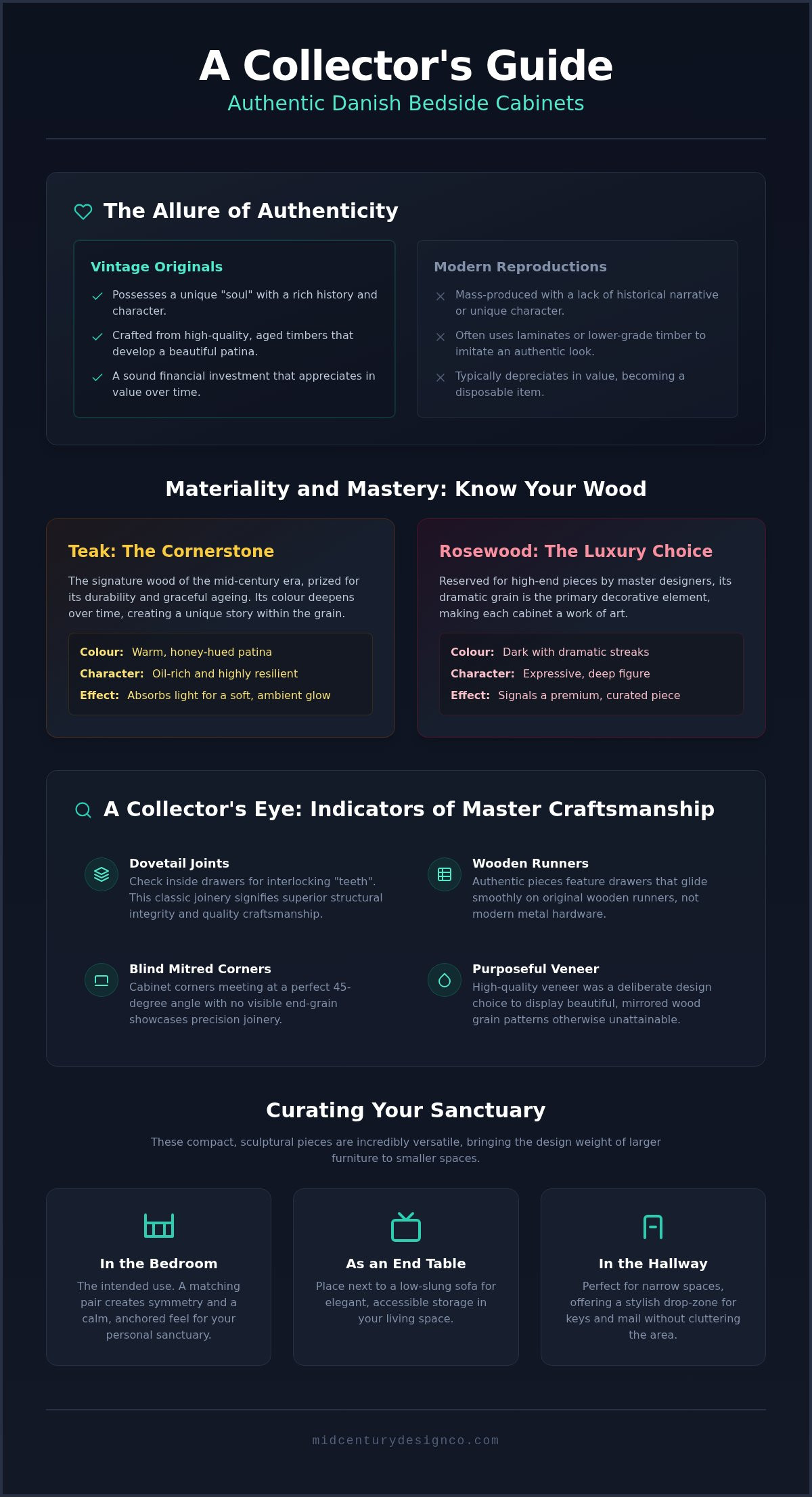
Teak is the cornerstone of the mid-century palette. It's an oil-rich, resilient wood that develops a soft, honey-hued patina over decades. This wood ages with a certain grace, absorbing the light of a room rather than reflecting it. Rosewood, however, occupies a different echelon of luxury. It's prized for its dark, expressive figure and dramatic streaks of charcoal and chocolate. As noted by the curators at Designmuseum Danmark, these premium woods were often reserved for the most accomplished designers. A rosewood cabinet signals a piece intended for a high-end interior, where the wood grain itself provides the primary decorative element.
Construction Details that Signal Authenticity
Mastery is found in the hidden corners. You must look beyond the silhouette to find the "secrets" of the cabinetmaker. Authentic Danish pieces often feature construction methods that ensure the cabinet remains stable for generations. High-quality Danish veneer shouldn't be confused with modern "fakes". In the 1960s, using veneer was a deliberate choice to showcase the most beautiful, mirrored grain patterns that solid timber simply couldn't provide.
Look for these specific indicators of master-level construction:
- Dovetail joints: Interlocking teeth in the drawers that provide superior structural integrity and a smooth glide.
- Blind mitred corners: Where two pieces of wood meet at a 45-degree angle with no visible end-grain, creating a seamless box.
- Solid wood edging: A thick border of solid timber that protects the decorative veneers from the knocks of daily life.
- Sculpted handles: Finger pulls or grips carved directly from solid timber rather than attached metal hardware.
Pay attention to the "stance" of the piece. Tapered legs and floating shelves are signature silhouettes that define the era, giving the cabinet a sense of weightlessness. If you are ready to begin your own collection, exploring a curated selection of Danish furniture can help you recognise these details in person. Often, you will find a maker's mark or a small paper label inside a drawer or on the underside. These stamps from iconic factories are the final seal of authenticity for an investment-grade piece.
The Investment of Authenticity: Vintage Originals vs Modern Reproductions
Choosing an original piece isn't just about aesthetics; it's a decision that respects the narrative of design. There's a common misconception, often called the "Museum Myth", that suggests these mid-century treasures are too fragile for daily use. In reality, a vintage Danish bedside cabinet UK collectors seek out was designed for the rigours of the modern home. These objects were built to be lived with, touched, and used every single morning. They aren't static museum displays; they are functional partners in your daily ritual.
From a financial perspective, the choice is clear. A high-street reproduction loses a significant portion of its value the moment it crosses your threshold. It is a consumable item, often destined for a landfill within a decade. Conversely, an authentic Danish piece is an investment-grade asset. Because these items are no longer in production, their scarcity ensures they hold, and often increase, their value over time. Beyond the balance sheet, there is the environmental impact. Choosing a piece that has already lasted sixty years is the ultimate sustainable choice, preventing the demand for new, low-quality manufacturing.
Why Reproductions Often Fall Short
The loss of "soul" in mass-manufactured replicas is immediate. When you run your hand across a reproduction, you often feel the cold, flat texture of factory-applied plastic coatings. Original pieces were finished with oils that allow the tactile warmth of the timber to shine through. Replicas frequently rely on chipboard and "teak-effect" prints that lack the depth and variation of real wood. To avoid a "showroom" feel, mix your vintage finds with contemporary textiles and art. This creates a home that feels curated and layered rather than a carbon copy of a catalogue page.
The Longevity of Original Craftsmanship
These pieces have survived six decades because the standards of 1950s cabinetmaking were uncompromising. Every original piece carries a unique history, told through the specific patterns of its grain and the gentle patina of age. Understanding the history of Danish Modern design reveals a culture that valued longevity over the "throwaway" nature of modern retail. This same commitment to quality is what makes these cabinets ready for another sixty years of service. If you're looking to expand this aesthetic beyond the bedroom, you might find similar value in The Definitive Guide to Authentic Mid Century Modern Sideboards, which explores how larger statement pieces carry this same enduring spirit.
A Collector’s Eye: How to Identify and Source Authentic Pieces in the UK
Finding a genuine vintage Danish bedside cabinet UK collectors would envy requires a blend of clinical observation and aesthetic intuition. It's about more than just a label. You're looking for a specific harmony of form. The search begins with the "stance" of the piece. Authentic Danish designs possess a light, almost floating quality. This is achieved through perfectly tapered legs and balanced proportions. If the cabinet feels clunky or "bottom-heavy," it likely lacks the pedigree of true mid-century craftsmanship. The proportions should feel intentional, providing a sense of architectural calm even in a compact form.
Your second step is a tactile one. Open the drawers. Original Danish cabinets almost exclusively use wooden runners. The glide should be smooth, silent, and deliberate. If you see modern metal slides or plastic components, the piece is either a reproduction or has been heavily modified. This mechanical honesty is a hallmark of the era. Next, look for "ghosting." This is the subtle sun-bleaching that occurs over decades. A lighter patch where a lamp once sat is a beautiful indicator of age. It proves the timber has spent sixty years developing its character in a real home, developing a patina that no factory can replicate.
What to Look for in Online Listings
Digital sourcing is convenient but requires a sharp eye. Demand high-resolution photography that highlights the grain and the joinery. Don't settle for blurry, distant shots. Ask the seller direct questions: "Is the back of the cabinet finished in the same wood?" or "Are these the original legs?" A finished back suggests a piece designed for versatility, perhaps to sit away from a wall. Be wary of overly shiny, thick finishes. These "refurbished" pieces often hide poor-quality repairs or have had their original soul stripped away by aggressive sanding and heavy varnishes.
Sourcing with Confidence in the UK
The UK market is full of generic marketplaces, but the safest path is through a specialist curator. An expert friend who has already filtered out the reproductions and the damaged goods. They understand the nuances of Danish design and the specific history of each maker. They also provide the peace of mind that comes with professional national delivery. These are delicate items with sixty years of history; they shouldn't be left to the mercy of a standard courier. Once your piece arrives, you can begin the joy of how to style mid century modern furniture to create a bedroom that feels like a curated sanctuary. To find your own piece of history, view our latest collection of authentic Danish bedside cabinets today.
Curating Your Sanctuary: Integrating Danish Design into the Modern British Bedroom
A vintage Danish bedside cabinet UK collectors prize is more than a storage solution. It is the final piece of the puzzle in creating a bedroom that feels like a curated sanctuary. In many contemporary British homes, especially new-builds, rooms can feel sterile or lacking in architectural detail. A single vintage cabinet provides that necessary anchor. Its warm timber and sculptural legs break up the flat planes of modern plasterwork, offering a focal point that carries a sense of history. It brings a "human" element into a space, grounding the room with its organic forms and tactile presence.
You don't need a perfectly matched suite of furniture to achieve a cohesive look. In fact, mixing wood tones often creates a more sophisticated, "collected" atmosphere. A teak bedside cabinet can sit comfortably alongside an oak bed frame or a walnut chest of drawers. The common thread is the quality of the craftsmanship and the honesty of the materials. To highlight the expressive grain of the timber, consider your lighting carefully. A well-placed mid-century lamp with a fabric shade will cast a soft glow across the surface, revealing the rich patina and the subtle "ghosting" of the wood. Balance these hard surfaces with soft textures; pair the resilient teak with heavy linens and hand-woven woollen rugs to create a space that feels both grounded and inviting.
Styling for the Modern Minimalist
The beauty of Danish design lies in its restraint. To let the silhouette of your cabinet truly shine, keep the top surface uncluttered. A single ceramic vase or a small trailing plant is often enough to complement the natural wood tones without overwhelming the design. This approach allows the eye to linger on the joinery and the grain. When you incorporate mid century bedroom furniture vintage into a modern space, you're not just adding furniture; you're introducing a story. It's about creating a dialogue between the crisp lines of the present and the soulful artistry of the past, ensuring your bedroom feels like a personal retreat rather than a furniture showroom.
The Final Touch: Choosing the Right Piece
Consider the scale of your bed before making a final selection. A low-slung Danish cabinet works best with a platform bed, ensuring the proportions feel balanced rather than mismatched. Height is critical; the surface should be roughly level with your mattress for both aesthetic harmony and functional ease. Think about your storage needs too. Drawers offer a way to tuck away the clutter of daily life, whilst open cubbies provide a stage for your favourite books. Every choice should feel intentional. If you're ready to find that perfect companion for your bedroom, explore our latest curated arrivals of authentic vintage bedside cabinets. These pieces are waiting to bring their timeless soul and expert craftsmanship into your British home.
Bringing Timeless Artistry to Your Bedside
Finding the perfect vintage Danish bedside cabinet UK collectors value is a journey into the heart of mid-century design. You now understand that these pieces are far more than functional surfaces. They are investments in artistry, defined by the honeyed glow of teak, the expressive grain of rosewood, and the honest joinery of a bygone era. By choosing an original over a modern reproduction, you're not just buying furniture; you're preserving a narrative of craftsmanship that has already stood the test of sixty years.
As an independent UK specialist, we act as your expert friend in this search. Each piece in our inventory is hand-selected for its unique soul and exceptional craftsmanship, ensuring it meets the highest aesthetic standards before it reaches your home. We provide national UK delivery on all our vintage furniture, taking the anxiety out of sourcing delicate, high-quality items. Your bedroom should be a sanctuary that reflects your personal taste and appreciation for history. Discover our curated collection of authentic vintage Danish bedside cabinets and find the piece that speaks to your space. Your journey to a more soulful home begins with a single, beautiful discovery.
Frequently Asked Questions
How can I tell if a bedside cabinet is real Danish teak?
Real teak is distinguished by its tight, linear grain and a characteristic honey-hued warmth. Unlike modern stained pine, teak is naturally oil-rich, giving it a tactile, velvety surface that feels substantial to the touch. Check the end grain on the edges; authentic pieces use solid wood edging to protect the decorative veneer. This construction ensures a vintage Danish bedside cabinet UK collectors seek remains durable and beautiful for decades.
Are vintage Danish bedside cabinets always sold in pairs?
Whilst matching pairs are highly coveted for creating bedroom symmetry, many cabinets were originally sold as individual units. In the mid-century era, Danish designers often created modular pieces intended to fit into smaller, flexible living spaces. Finding a true pair today is a discovery worth celebrating, but a single cabinet carries just as much sculptural weight and soul when used as a standalone statement piece or a hallway anchor.
Do original mid-century cabinets have makers marks?
Many original pieces feature a maker’s mark, though they can be elusive. Look for paper labels, silver foil stickers, or fire-branded stamps from iconic factories. These are usually tucked away inside the top drawer or on the underside of the cabinet. However, the absence of a mark doesn't always signal a replica, as many labels were lost over sixty years of use. The quality of the joinery is often a better indicator.
How do I care for the wood on my vintage Danish furniture?
Caring for vintage wood requires a gentle touch and the right materials. Use a high-quality teak oil once or twice a year to replenish the timber’s natural oils and maintain its deep, lustrous glow. Avoid silicone-based aerosol sprays, as these can create a sticky build-up that suffocates the grain. A simple, regular dusting with a soft, dry microfibre cloth is usually all that is needed to preserve the finish and patina.
Why is rosewood more expensive than teak for vintage furniture?
Rosewood is consistently more expensive due to its rarity and the sheer drama of its grain. It features dark, expressive streaks of chocolate and charcoal that were often reserved for premium, designer-led commissions. Additionally, rosewood is now a protected species, which limits new trade and makes existing vintage pieces highly prized. Its scarcity ensures that an authentic rosewood cabinet remains a significant investment-grade asset for any collector who appreciates historical weight.
Can I mix a vintage Danish cabinet with modern furniture?
You can absolutely mix vintage Danish cabinets with modern furniture. Their minimalist, sculptural silhouettes act as a bridge between different eras and styles. The organic warmth of teak softens the hard edges of contemporary British interiors, preventing a room from feeling too clinical. Pairing a vintage Danish bedside cabinet UK enthusiasts prize with a modern bed frame creates a layered, curated look that feels like a personal sanctuary rather than a showroom.
What is the best way to clean vintage teak without damaging it?
The best way to clean vintage teak is with a very lightly dampened cloth and a drop of mild, pH-neutral soap. Always wipe in the direction of the wood grain and follow immediately with a dry cloth to prevent moisture from sitting on the surface. Never use abrasive pads or harsh chemical cleaners, as these will strip away the delicate patina that has taken decades to develop through careful use.
Is it better to buy a restored or original condition vintage piece?
We believe in the value of original condition. A piece that has been sympathetically cared for over sixty years carries a soul and a patina that a heavily restored item often lacks. Aggressive restoration can sometimes lead to over-sanding or the application of thick, plastic-like lacquers that hide the natural beauty of the wood. An original piece tells a story through its gentle age marks and historical narrative, preserving its long-term investment value.