

The Collector’s Guide to Sourcing a Vintage Danish Dressing Table in the UK
A vintage Danish dressing table is not merely a place to prepare for the day; it is a silent testament to a mid-century philosophy where beauty and utility were inseparable. You likely appreciate the warmth of honey-toned teak and the sculptural elegance of a floating mirror, yet the search for an authentic vintage Danish dressing table UK can feel fraught with uncertainty. It’s natural to feel concerned about mistaking a flat-pack reproduction for a genuine piece of history or worrying about the specific maintenance required for a rare rosewood finish.
This guide is designed to help you master the nuances of sourcing these soulful objects, ensuring your investment holds its value whilst transforming your bedroom into a curated sanctuary. We will explore how to identify true craftsmanship, manage the delicate needs of rare timbers, and style your piece for a sophisticated aesthetic. From understanding CITES regulations for rosewood to evaluating the hallmarks of designers like Kai Kristiansen, you’ll learn everything needed to secure a piece of functional art that truly belongs in your home.
Key Takeaways
- Understand the organic curves and minimalist silhouettes that define the Danish Modern movement and why these pieces remain so highly coveted.
- Learn to distinguish between the golden glow of teak and the dramatic swirls of rosewood when evaluating a vintage Danish dressing table UK.
- Identify the hallmarks of authentic quality, including the "Danish Control" stamp and the subtle maker’s marks that signal a piece’s heritage.
- Discover how design features like tapered "cigar" legs and three-way mirrors can maximise light and space in modern British bedrooms.
- Gain the confidence to source a piece of functional art that holds its value whilst avoiding the disappointment of modern reproductions.
The Timeless Allure of the Vintage Danish Dressing Table
There is a quiet confidence in a piece that balances organic warmth with precise geometry. The allure of a vintage Danish dressing table UK lies in its refusal to be merely a utility. It is a physical expression of the Danish modern design movement, which prioritised the human experience through minimalist silhouettes and ergonomic, organic curves. During the 1950s and 1960s, the UK became a significant hub for these imports. British homeowners, eager to shed the heavy, dark aesthetics of the pre-war era, looked toward Scandinavia for an optimistic, airy modernism that felt both revolutionary and deeply rooted in nature.
Choosing vintage is a conscious act of preservation. It represents the ultimate sustainable choice for the modern home, opting for a legacy piece that has already survived half a century rather than contributing to the cycle of disposable, fast furniture. Beyond the environmental impact, there is a profound emotional benefit to reclaiming a dedicated space for self-care. A dressing table invites you to slow down. It transforms a rushed morning into a deliberate ritual, grounding you in a space that feels both historic and deeply personal. It's about finding a sanctuary amidst the noise of modern life.
The "Expert Friend" Perspective on Nordic Design
We often remind collectors that these aren't just objects; they're functional art. Modern mass-produced veneers often feel cold and sterile, whereas the tactile warmth of a vintage teak or rosewood grain invites the touch. When you run your hand across a smooth, oil-finished surface, you're connecting with decades of narrative and craftsmanship. Envision your dressing table not as a simple storage unit, but as the soulful centrepiece of your bedroom. It should be a piece that carries a spirit, reflecting your appreciation for objects that age with grace and character.
Danish Design vs. British Mid-Century: What is the Difference?
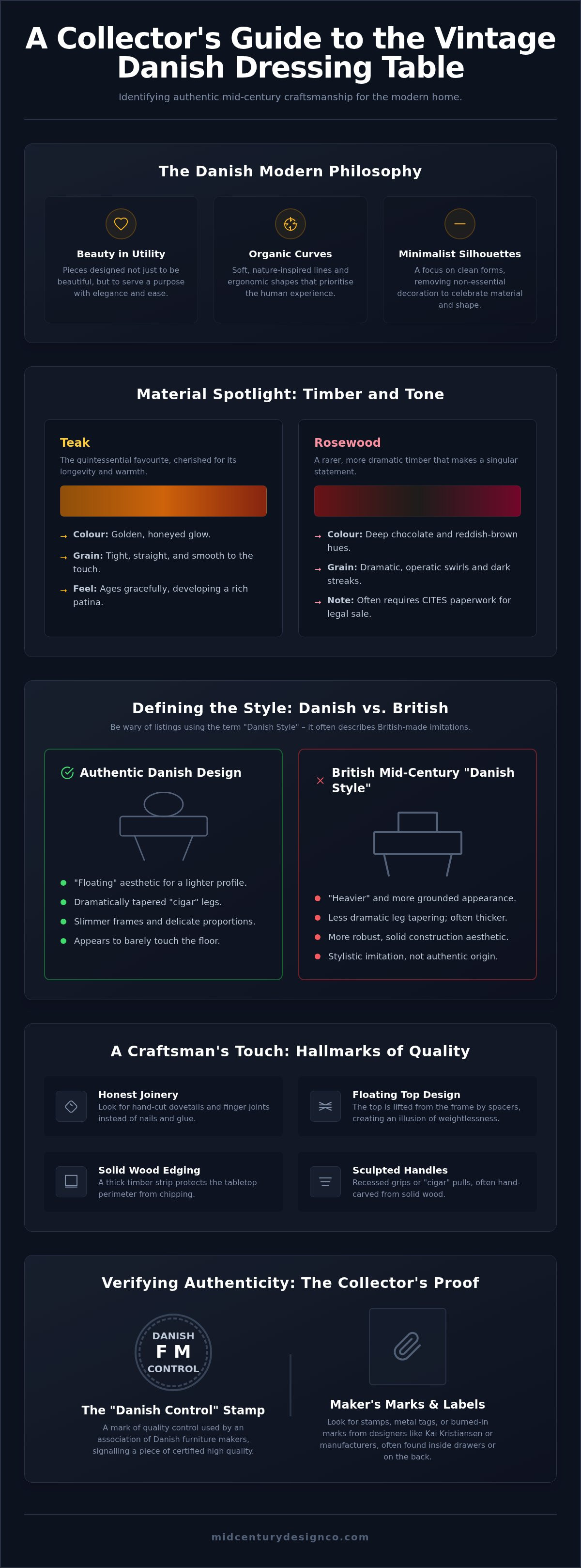
It is easy to conflate different mid-century styles, yet the distinctions are vital for a discerning collector. British pieces, such as the iconic ranges from G Plan, often retain a certain "heaviness" and groundedness typical of UK manufacturing traditions. In contrast, authentic Danish design focuses on a "floating" aesthetic. Legs are more dramatically tapered, frames are slimmer, and the overall profile feels lighter, as if the piece is barely touching the floor. Be wary of the term "Danish Style" in some listings. It often denotes British-made pieces that were merely inspired by Nordic trends. If you seek an authentic vintage Danish dressing table UK, you must look for the specific hallmarks of Copenhagen or Odense craftsmanship rather than mere stylistic imitations.
Materiality and Craftsmanship: Teak, Rosewood, and Joinery
To truly understand the value of a vintage Danish dressing table UK, one must first look closely at the grain. The mid-century era was defined by a deep reverence for timber, specifically Burmese teak and Brazilian rosewood. Teak remains the quintessential favourite, cherished for its golden, honeyed glow and a tight grain that feels remarkably smooth to the touch. Rosewood, however, offers a more dramatic narrative. Its deep, chocolate-coloured swirls and dark, operatic streaks create a piece that feels like a singular work of art. These materials weren't chosen just for their beauty; they were selected for a longevity that modern, mass-produced alternatives simply cannot replicate.
The construction of these pieces reveals a commitment to "honest" furniture. Authentic Danish joinery avoids the shortcuts of nails and glue, opting instead for visible finger joints and hand-cut dovetails that strengthen the structure. A hallmark of this sophistication is the "floating top" design. By using subtle spacers to lift the tabletop away from the drawer units, designers created an illusion of weightlessness that is celebrated by institutions like the Design Museum Denmark. This technique allows a heavy timber object to feel airy and light, a vital quality for maintaining a sense of space in a bedroom sanctuary.
Identifying Quality in the Details
Quality is often found where the eye doesn't immediately linger. Look for solid wood edging along the perimeter of the tabletop. This thick strip of timber protects the corners from the "chipping" common in cheaper reproductions that rely on paper-thin veneers. The handles, too, should be a source of tactile joy. Whether they are recessed grips or elegantly sculpted "cigar" pulls, they are often hand-carved from solid teak or rosewood. Book-matching occurs when two adjacent veneers are cut from the same log to create a symmetrical, mirrored grain pattern that signifies a truly premium level of craftsmanship. If you are searching for a piece that displays this level of artistry, you might explore our curated selection of Danish furniture.
The Longevity of Natural Materials
A well-maintained vintage Danish dressing table UK only improves with time. High-quality natural oils penetrate deep into the fibres, keeping the timber supple and preventing it from drying out over the decades. This process creates a rich patina, a soft sheen that reflects the history and soul of the object. While you should protect your investment from the bleaching effects of direct sunlight, minor character marks should be embraced. They are the narrative of the piece, proof that it has been loved and used for over sixty years without losing its inherent spirit.
Evaluating Form and Function: Mirrors, Drawers, and Tapered Legs
The silhouette of a vintage Danish dressing table UK is defined by a deliberate sense of weightlessness. This lightness is achieved primarily through the use of tapered "cigar" legs. These slender, sculpted supports elevate the main body of the furniture, allowing light to flow underneath and revealing more of the floor surface. In the context of compact UK bedrooms, this architectural trick is invaluable. It prevents a room from feeling cluttered, creating an illusion of space whilst providing a substantial piece of functional art. When sourcing your table, consider stool compatibility carefully. Danish designs often favour a lower profile than their Victorian or Edwardian predecessors, requiring a seat that respects this refined, low-slung geometry.
Practicality in Danish design is never an afterthought. Whilst the exterior remains minimalist, the interior is often a masterclass in organisation. Collectors must balance the desire for a sleek aesthetic with the reality of their morning ritual. A well-designed piece provides ample storage without compromising its slim proportions. It's about finding that perfect equilibrium between a clear, tranquil tabletop and the necessary depth to house your favourite cosmetics and accessories. This harmony of form and function ensures the piece remains a joy to use every single day.
Mirror Variants and Their Impact
The "three-way" mirror is perhaps the most iconic feature of these mid-century treasures. It offers a panoramic view, with hinged side panels that allow you to see yourself from every angle. Some collectors prefer the simplicity of a single tilting mirror, which can be adjusted to catch the best natural light. When evaluating a piece, look for the subtle charm of original glass. Gentle "foxing" or silvering around the edges isn't a defect; it's a mark of age that adds a ghostly, romantic character to the object. A "floating" mirror, often suspended between two teak uprights, adds a layer of architectural interest that makes the unit feel like a bespoke installation rather than a mere piece of furniture.
Drawer Configurations and Hidden Compartments
Danish makers often utilised different drawer layouts to suit various needs. You might find a wide, single drawer spanning the width of the piece, or a "pedestal" style featuring multiple smaller units on either side of the seating area. The true luxury of high-end makers, however, lies in the hidden details. Look for original velvet linings in soft greens or greys, designed to protect delicate jewellery. Some pieces even feature integrated trays or secret compartments tucked away behind the main drawers. To understand how these elements can be integrated into a wider aesthetic, you might read our guide on how to style mid century modern furniture to create a cohesive, sophisticated look.
The Collector’s Checklist: Sourcing Authenticity in the UK
Securing an authentic vintage Danish dressing table UK involves a process of discovery that goes far deeper than a simple transaction. To ensure you are investing in a piece of genuine heritage, look for the "Danish Control" stamp. This circular mark, often found discreetly inside a drawer or on the underside of the frame, was a symbol of elite quality control during the mid-century era. It signals that the piece met the rigorous standards of the Danish Furniture Makers' Quality Control association. Beyond this, identifying maker’s marks from workshops in Odense or Copenhagen allows you to trace the lineage of your furniture, connecting you to the specific artisans who shaped its soul.
British architecture presents its own unique challenges when sourcing furniture. Victorian and Edwardian homes often feature narrow alcoves or prominent chimney breasts that dictate the proportions of your sanctuary. Before committing to a national delivery, measure your space with precision. Ensure there is enough clearance for the "three-way" mirrors to open fully and for a stool to be tucked away neatly. Always request a detailed condition report. Ask about the structural integrity of the tapered legs and the smoothness of the drawer runners. A reputable curator will be transparent about the piece's journey, ensuring it arrives ready to be cherished.
Avoiding the Pitfalls of Reproductions
Distinguishing a masterpiece from a modern imitation requires a sensory approach. Perform the "weight test." Authentic vintage teak possesses a substantial, solid feel that modern composite boards simply cannot mimic. Examine the hardware. Original brass hinges and ironmongery should feel heavy and operate with a silent, mechanical grace. We always favour an "honest" vintage finish. Whilst some sellers might offer heavy-handed spray-painting to hide imperfections, we believe the true value lies in the original patina. A piece that shows its age with grace is far more soulful than one masked by modern chemicals. If you are beginning your collection, you can browse our authentic Danish furniture to see these details in person.
Integrating Vintage into Modern Spaces
A common concern is how to harmonise different wood tones within a single room. You don't need a perfectly matched set to create a sophisticated aesthetic. A teak dressing table can sit beautifully amongst existing oak or walnut pieces, provided there is a shared appreciation for grain and craftsmanship. Lighting plays a crucial role in the scene. Choose contemporary lamps with slim profiles that honour the mid-century silhouette without overshadowing it. For those looking to extend this curated feel into the living area, you might find our an elegant guide to buying vintage Danish coffee tables a useful companion for your journey.
Discover Your Perfect Piece: Our Curated Dressing Table Collection
At The Mid Century Design Co., we don't view ourselves as a mere furniture retailer. We are curators of history. Every vintage Danish dressing table UK we acquire is hand-picked for its narrative, its craftsmanship, and its inherent soul. We serve collectors across the country, ensuring that these masterpieces of mid-century design find their way into homes where they'll be cherished for another generation. Our collection is a rotating gallery of Nordic excellence. It features everything from the understated warmth of minimalist teak to the rare, operatic beauty of Brazilian rosewood. We look for pieces that tell a story, choosing objects that possess a spirit that modern furniture simply cannot replicate.
Sourcing a piece of functional art is a journey that requires trust. We understand the hesitation of buying significant furniture online, which is why our UK national delivery service is built on expertise and protective care. We don't just ship boxes; we manage the transition of a delicate heirloom. Our team ensures that every mirror, tapered leg, and velvet-lined drawer arrives in the exact condition it left our collection. It's about more than utility. It's about bringing a sense of calm and sophistication to your personal space.
Why Our Curation Stands Apart
We focus exclusively on investment-grade furniture. These are pieces that don't just occupy space; they hold their value and appreciate as the market for authentic Danish modernism grows. We provide transparent, high-resolution photography and meticulous condition reports for every item in our care. Our commitment is absolute: we never offer modern reproductions. By focusing on "honest" vintage condition, we preserve the spirit of the original maker. Whether that is a celebrated designer or an anonymous master from a Copenhagen workshop, you can be certain your piece is an original fragment of design history.
Start Your Design Journey Today
Finding the right piece is a personal endeavour. Whether you're looking for a specific maker or simply a silhouette that speaks to your aesthetic, we're here to act as your expert friend in the search. Our latest arrivals often find homes quickly. Collectors across the country look for unique items with character. We invite you to explore our current collection of authentic vintage dressing tables and discover the piece that will transform your bedroom into a sanctuary of slow living and timeless design. Let us help you find the furniture that resonates with your personal style and elevates your daily life.
Elevating Your Morning Ritual with Timeless Design
Sourcing a vintage Danish dressing table UK is an act of reclaiming beauty and intention for your most personal space. By understanding the hallmarks of authentic mid-century joinery and the architectural grace of tapered legs, you ensure your investment is both a functional asset and a piece of history. These objects do more than store your belongings; they anchor a room with a spirit of slow living and refined craftsmanship that modern reproductions simply cannot match.
We invite you to find a piece that truly resonates with your aesthetic. Our studio focuses exclusively on authentic 1950s and 60s originals, each expertly curated for its quality and soul. With our national UK white-glove delivery, you can be certain your discovery will arrive with the same care and protection with which it was first created. Please browse our curated collection of authentic vintage Danish dressing tables to begin the next chapter of your home's story. Your perfect sanctuary is only a single, beautiful discovery away.
Frequently Asked Questions
How can I tell if a dressing table is actually Danish or just "Danish style"?
Authentic pieces feature specific hallmarks like the "Danish Control" stamp or maker's marks from Copenhagen workshops. Whilst "Danish style" refers to British-made items inspired by the aesthetic, a true vintage Danish dressing table UK possesses a lighter, "floating" construction. Look for solid wood edging and sculpted, hand-carved handles rather than mass-produced alternatives. These details signal the soul and heritage of a genuine mid-century export rather than a mere stylistic imitation.
Does vintage Danish furniture hold its value as an investment?
Original mid-century furniture is increasingly viewed as a functional investment. Unlike modern mass-produced items that depreciate instantly, these pieces are finite assets with a growing global market. As younger generations seek soulful and sustainable alternatives to fast furniture, the value of well-maintained teak and rosewood continues to rise. Owning a piece of design history ensures your capital is preserved in a tangible, beautiful form that celebrates historical craftsmanship and longevity.
How do I care for the teak finish on my vintage dressing table?
Caring for teak requires a gentle, intentional approach. Avoid modern silicone-based polishes, as they can create a dull, plastic-like build-up over time. Instead, use high-quality natural oils to nourish the timber and maintain its golden glow. A light application every few months is usually sufficient to keep the grain supple. This simple ritual honours the spirit of the wood, allowing the patina to deepen and evolve with grace across the decades.
Will a mid-century dressing table fit in a small modern bedroom?
These tables are exceptionally suited to compact UK interiors. The hallmark tapered legs elevate the body of the piece, revealing more floor space and allowing light to circulate freely. This architectural trick prevents the furniture from feeling heavy or imposing. By choosing a minimalist silhouette, you can introduce a substantial piece of functional art without cluttering your sanctuary, making it a perfect choice for modern bedroom proportions where space is at a premium.
Is it safe to have a vintage mirror delivered across the UK?
Transporting a vintage Danish dressing table UK requires specialist expertise rather than standard courier services. We utilise national white-glove delivery to ensure every mirror and tapered leg is protected throughout its journey. Specialist handlers understand the delicate nature of original foxed glass and aged timber joints. By using dedicated transit methods and protective wrapping, we ensure your discovery arrives in your home in the exact condition it left our collection.
What should I look for in a maker’s mark or stamp?
Focus your search on the hidden surfaces of the piece. You are looking for the circular "Danish Control" seal or branded stamps from renowned makers in Odense or Copenhagen. These marks are often tucked away inside the top drawer or burned into the underside of the frame. They serve as a guarantee of elite craftsmanship, confirming the object was produced under the rigorous quality standards of the mid-century Danish furniture industry.
Can I mix a teak dressing table with other types of wood in my room?
You don't need a perfectly matched set to create a sophisticated bedroom. Mixing a teak dressing table with existing oak or walnut furniture creates a curated, layered aesthetic that feels more personal than a showroom suite. The key is to focus on a shared appreciation for natural grain and craftsmanship. This approach allows different timbers to coexist harmoniously, resulting in a sanctuary that feels evolved and deeply characterful amongst your personal collection.
Why is rosewood more expensive than teak for vintage furniture?
Rosewood commands a higher price due to its incredible rarity and dramatic, operatic grain patterns. During the mid-century era, it was the most luxurious material available, often reserved for elite commissions. Today, its value is further enhanced by strict trade regulations, making authentic vintage pieces highly sought after by serious collectors. The deep, dark swirls of rosewood offer a level of visual impact and historical weight that is truly singular in the world of design.