

The Collector’s Guide to Sourcing a Vintage Teak Dining Table in the UK
The finest dining table you will ever own was likely built over sixty years ago. When searching for an authentic vintage teak dining table UK homeowners often find that modern alternatives simply cannot match the tactile soul and enduring weight of honest mid-century woodwork. You already appreciate that unmistakable golden glow, yet committing to a vintage piece brings understandable hesitation. Telling genuine craftsmanship apart from clever reproductions, checking delicate extension leaves, and fearing timber damage can quickly turn an exciting hunt into an anxious compromise.
You shouldn't have to gamble when curating your sanctuary. In this guide, you will discover how to evaluate, authenticate, and choose an original vintage teak dining table that brings timeless mid-century character into your home. We explore the telltale signatures of master British and Danish cabinetmakers, share practical sizing frameworks for contemporary UK floor plans, and reveal simple rituals to preserve your table's rich patina for decades to come.
Key Takeaways
- Discover why original mid-century teak represents the finest in circular design, outlasting modern mass production through superior materials and artisanal joinery.
- Demystify mid-century construction by learning how master cabinetmakers artfully united solid sculpted timber legs with architectural book-matched veneers.
- Master essential room measurements and clearance calculations to choose a vintage teak dining table UK homes can accommodate effortlessly.
- Spot genuine maker stamps, paper labels, and construction hallmarks to authenticate coveted Danish and British pieces whilst steering clear of modern reproductions.
- Adopt effortless oiling routines and gentle daily habits that protect your table's rich grain and preserve its developing patina for generations to come.
Why an Authentic Vintage Teak Dining Table Transcends Modern Mass Production
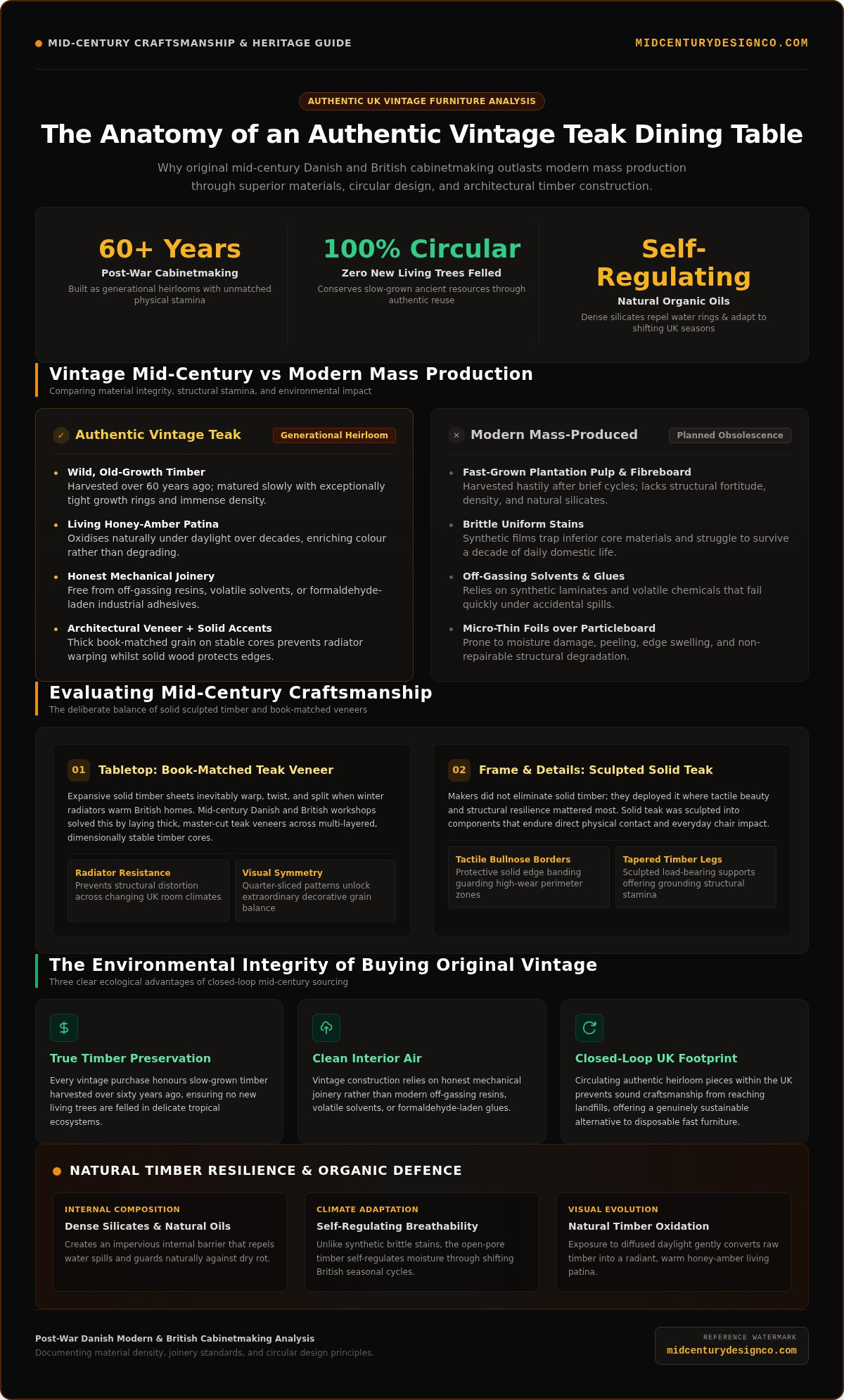
Modern furniture often promises convenience, yet it frequently delivers planned obsolescence. Mass-produced dining tables constructed from fibreboard and synthetic laminates struggle to survive a decade of daily life, let alone an accidental spill. In contrast, an authentic vintage teak dining table UK collectors cherish represents an entirely different design philosophy. Born from the golden age of post-war cabinetmaking, these tables were conceived as generational heirlooms, combining functional simplicity with extraordinary physical stamina.
Mid-century teak carries an organic warmth that synthetic surfaces cannot emulate. As decades pass, natural exposure to diffused daylight oxidises the timber, transforming raw timber into a radiant, deep honey-amber hue. Rather than degrading, a vintage table develops a soft, living patina that documents family gatherings, quiet morning coffees, and celebratory dinners. It anchors a room, lending grounding historical weight to sleek contemporary British architecture.
The Environmental Integrity of Buying Original Vintage
Choosing original mid-century modern furniture is an act of pure circularity. By welcoming an existing table into your home, you actively conserve ancient resources whilst completely avoiding the environmental toll of commercial logging and overseas factory shipping. Consider the ecological benefits of sourcing an original piece:
- True timber preservation: Every vintage purchase honours slow-grown timber harvested over sixty years ago, ensuring no new living trees are felled.
- Clean interior air: Vintage construction relies on honest mechanical joinery rather than modern off-gassing resins, volatile solvents, or formaldehyde-laden glues.
- A closed-loop footprint: Circulating authentic heirloom pieces within the UK prevents sound craftsmanship from reaching landfills, offering a genuinely sustainable alternative to disposable fast furniture.
Old-Growth Teak: Material Density and Natural Resilience
The secret behind this enduring longevity lies in the wood itself. Mid-century workshops of the Danish Modern design movement and celebrated British makers imported wild, old-growth teak. These trees matured slowly over decades in tropical forests, developing exceptionally tight growth rings and immense physical density. Contemporary fast-grown plantation teak, harvested hastily after brief growth cycles, simply lacks this structural fortitude.
Old-growth teak is naturally impregnated with dense silicates and protective organic oils. These internal elements form an impervious barrier that repels water, resists moisture rings, and guards against dry rot. Modern industrial stains often create a brittle, uniform film over inferior pulp, but vintage teak breathes. Its natural oils allow the wood to self-regulate across shifting British seasons, ensuring the timeless silhouette of your vintage teak dining table remains as solid and magnetic today as when it first left the workshop.
Evaluating Mid-Century Craftsmanship: Solid Timber, Veneers, and Mechanics
A common misconception among new collectors is that veneer implies inferior quality. In disposable modern manufacturing, micro-thin foils mask fragile particleboard; however, mid-century cabinetmakers used veneer as an architectural art form. When evaluating mid-century craftsmanship, recognising how natural timber responds to British domestic life is the first step toward finding an enduring showpiece.
The Art of Book-Matched Teak Veneer vs Solid Construction
Expansive sheets of solid timber inevitably warp, twist, and split under changing temperatures, particularly when winter radiators warm British homes. Mid-century Danish and British workshops solved this by laying thick, master-cut teak veneers across multi-layered, dimensionally stable timber cores. This practice prevented structural distortion whilst unlocking extraordinary decorative symmetry through quarter-sliced, book-matched grain patterns.
Makers did not eliminate solid timber; they deployed it where structural resilience mattered most. Solid teak was sculpted into tactile bullnose borders, protective edge banding, and elegant tapered legs. If you appreciate this balance of structural integrity and visual harmony, exploring curated original vintage dining sets allows you to observe how these solid timber contours age alongside veneered surfaces.
Mid-Century Extension Mechanisms: Butterfly Leaves and Pull-Out Drawers
The mechanical ingenuity of a genuine vintage teak dining table UK collectors covet lies hidden just beneath the tabletop. Designers engineered seamless expansion systems that allowed intimate family tables to accommodate larger weekend gatherings effortlessly:
- Dutch pull-out leaves: Clever auxiliary leaves housed discreetly beneath the main top. They glide outward from either end on angled timber runners, rising to meet the main surface without requiring separate leaf storage.
- Central butterfly leaves: Hidden within split-top tables, these leaves fold in half along brass piano hinges, tucking neatly inside the central apron before pivoting open with an easy, single-handed motion.
- Mechanical inspection points: Ensure internal runners remain straight and unwarped. Leaves should slide cleanly without binding against the apron or resting unevenly against the tabletop.
Choosing the Right Silhouette and Proportions for Your UK Dining Space
Every home presents its own architectural character, from high-ceilinged Victorian terraces to light-filled contemporary extensions. Successfully placing an original vintage teak dining table in a UK setting requires balancing historic silhouettes with the natural flow of daily movement. When sized thoughtfully, a mid-century piece anchors the room without overwhelming its physical boundaries.
Step 1: Calculate Spatial Footprint and Clearance Pathways
Scale dictates comfort. Measure your room perimeters carefully, allowing a minimum clearance of 90 centimetres between the table edge and the nearest wall or doorway. This boundary permits chairs to slide back smoothly without scuffing skirting boards or trapping diners. If your layout features an authentic mid century modern sideboard along one wall, increase that clearance to 100 or 110 centimetres so cupboards and cutlery drawers open unhindered. Finally, align the table's footprint directly beneath existing ceiling lighting to create an intentional, balanced focal point.
Step 2: Match the Table Silhouette to Room Architecture
The room's footprint should naturally inform the geometry of the timber surface:
- Circular tables: A compact 110 to 120-centimetre round design softens square rooms, eliminates harsh walkways, and fosters democratic, lively conversation. With an internal butterfly extension, it transforms effortlessly into an elongated oval for hosting guests.
- Classic rectangles: Clean, linear shapes thrive in dedicated dining spaces or open-plan rear extensions. Their defined geometry harmonises with long walls and French doors, establishing clear visual structure.
- Organic boat-shapes: Danish curved profiles gently widen at the centre before tapering toward the ends. This subtle contour creates fluid movement through tighter rooms whilst adding sculptural distinction.
Step 3: Pair Authentic Seating Without Visual Clutter
Harmonising a vintage table with period seating requires checking the under-frame clearance. Mid-century tables typically feature an apron height of 62 to 65 centimetres from the floor; always check that carver arms and chair stretchers slip underneath neatly. Sourcing a dedicated suite of retro dining table and chairs UK collectors cherish ensures leg tapers, timber grains, and seat proportions correspond as the designers intended.
When curating individual pieces, balance slender cigar legs with sculpted backrests upholstered in tactile wools or honest linens. Following the principles in how to style mid century modern furniture, mixing silhouettes prevents a room from feeling overly rigid. In discerning true vintage heritage, pairing genuine timber elements creates a layered interior that feels warm, personal, and effortlessly composed.
Authenticity and Condition Checklist: Discerning True Vintage Heritage
Sourcing an original mid-century table requires a discerning eye. Online marketplaces often present superficial labels, grouping mass-produced contemporary reproductions alongside authentic post-war masterworks. To secure a genuine vintage teak dining table UK collectors prize, you must look beyond visual charm and inspect the physical hallmarks of mid-century British and Scandinavian cabinetmaking.
Maker Marks and Hallmarks of Provenance
Provenance often rests quietly underneath. Begin your inspection beneath the main table apron and along the underside of stored extension leaves. Look for embossed gold foil medallions, heat-branded factory stamps, or metal maker badges from celebrated workshops. Renowned Danish imports frequently bear the circular metal button of the Danish Furnituremakers' Quality Control organisation.
Labels can perish over sixty years, but mechanical hardware rarely lies. Original tables feature solid brass hinges, machined steel dowels, and cast iron locking toggles rather than cheap zinc-plated brackets. If you wish to acquire an investment-grade centrepiece with verified provenance, explore our hand-selected original Danish furniture to view authenticated post-war cabinetmaker stamps in detail.
Assessing Surface Integrity: Patina vs Structural Damage
Not all timber marks tell the same story. A collector must distinguish between an honest, characterful patina and irreversible material fatigue:
- Living amber patina: Gentle, uniform golden ambering, shallow feather scratches, and subtle grain variations represent normal, dignified age.
- Severe moisture blooming: Milky white or deeply blackened water rings signify moisture that has breached the original oil barrier and penetrated the core.
- Veneer chipping and sanding burns: Inspect perimeter edges with your fingertips. Watch for brittle, lifting veneer or edges where an over-enthusiastic sander has rubbed through to raw groundwork substrate.
- Leaf colour parity: Stored internal extension leaves often remain darker than the sun-bleached main top. A slight disparity is normal, but drastic contrasts require patience as the darker timber gradually oxidises in ambient room light.
Under-Frame Rigidity and Joint Inspection
A table must stand resolutely firm. Grasp the tabletop edges firmly and test for lateral wobble or loose apron joints. Mid-century cabinetmakers favoured robust mortise-and-tenon framing reinforced by internal hardwood corner blocks. Avoid pieces displaying non-period drywall screws, brittle white PVA glue repairs around the legs, or split under-aprons, as amateur interventions severely compromise historical value and long-term durability.
Teak Care: Preserving an Heirloom for the Next Generation
Living with an authentic vintage teak dining table UK collectors cherish is never about fretful preservation. These pieces were crafted for real homes, vibrant dinner parties, and daily morning routines. Teak is remarkably resilient, asking only for mindful, steady habits rather than complicated treatments to maintain its golden glow across decades of family life.
Daily Rituals and Protective Measures
Simple preventative measures protect delicate oil finishes from everyday dining accidents. Shielding your table from direct heat and pooling liquids takes minimal effort:
- Natural protection: Use breathable linen placemats, cork coasters, and woven trivets beneath hot cookware. Direct heat can trap moisture beneath the surface, resulting in pale, hazy rings.
- Swift spill cleanup: Wipe wine, vinegar, or oily spills immediately with a soft, slightly dampened microfibre cloth, then buff the area completely dry with a clean towel.
- Aerosol avoidance: Never use modern supermarket furniture sprays, silicone-heavy polishes, or chemical detergents. These leave artificial films that clog timber pores and dull the natural satin grain.
Nourishing the Timber with Dedicated Oils
A biannual oiling ritual replenishes the wood's inherent moisture, particularly after cold British winters when indoor radiators dry the air. Apply a high-grade Danish oil or boiled linseed oil sparingly using a lint-free cotton cloth, working gently along the direction of the wood grain. Allow the oil to absorb for twenty minutes, then firmly buff away any excess with a dry cloth until the surface feels silky rather than tacky.
During the colder months, avoid placing your dining table flush against an active radiator or wood burner. Consistent, moderate indoor humidity helps timber expand and contract naturally without straining mechanical joinery or veneer bonds. For homeowners inspired to restore complementary built-in timber fixtures throughout their dining or kitchen space, you can explore Cabinet Refinishing to see how professional wood renewal elevates existing architectural joinery.
Curating Your Dining Space with The Mid Century Design Co.
Finding an investment piece should feel like an inspiring discovery rather than an uncertain gamble. At The Mid Century Design Co., we act as passionate custodians of twentieth-century heritage, curating original mid-century modern furniture across the UK. We focus strictly on genuine historical integrity, curating original vintage dining sets and authentic Danish furniture whilst entirely excluding modern flat-pack reproductions.
Every piece in our UK collection is chosen for its structural soundness, storied provenance, and timeless warmth. By choosing an original vintage teak table, you welcome a soulful, enduring anchor into your home, creating a restorative sanctuary tailored for slow living and memorable gatherings.
Bringing Mid-Century Soul to Your Dining Room
A thoughtfully chosen table does far more than furnish a room; it invites slow gatherings and rich conversation into daily life. By understanding the balance between stable architectural veneers and sculpted solid joints, calculating comfortable room clearances, and tending timber with honest oils, you can invest with absolute certainty. Sourcing an authentic vintage teak dining table UK collectors revere is ultimately a journey of preserving design heritage for your own sanctuary.
At The Mid Century Design Co., we remove the guesswork from this pursuit. Our gallery features exclusively authentic vintage pieces with verified provenance, backed by nationwide UK delivery handled with specialist care. Because we champion genuine craftsmanship, you will find zero modern reproductions or artificial restorations in our curation. Ready to find an enduring anchor for your home? Explore our curated vintage dining table collection and welcome sixty years of timeless cabinetmaking into your everyday life.
Frequently Asked Questions
How can I tell if a vintage teak dining table is authentic or a modern reproduction?
Authentic pieces reveal their history through materials and construction hallmarks. Inspect the underside for maker marks, factory stencils, or Danish control badges alongside period-accurate slotted brass screws and mortise joints. Modern reproductions often use lightweight chipboard, synthetic plastic fittings, or printed paper finishes. Original mid-century tables balance thick architectural veneers over sturdy timber cores with sculpted solid teak legs that show natural, dignified age rather than artificial distressing.
Is solid teak better than teak veneer for an authentic mid-century dining table?
Neither is superior; master mid-century cabinetmakers deliberately united both techniques. Solid teak was sculpted into tactile bullnose borders, sturdy aprons, and organic legs where strength was paramount. For broad tabletops, craftsmen layered genuine sliced teak veneers over stable multi-ply cores to prevent the timber from bowing or splitting under seasonal humidity changes. Mid-century veneering represents exquisite decorative artistry and structural stability rather than cost-cutting.
Why do the extension leaves on a vintage dining table often look darker than the main top?
Extension leaves appear noticeably deeper and richer because they spent decades tucked away from natural daylight inside the table frame. The primary tabletop gradually mellows and lightens through regular exposure to ambient sunshine. If you prefer a closer tone match, keep the table fully extended in a bright room for several months. Natural daylight will gradually oxidise the leaves until their amber patina balances the main surface.
Can a vintage mid-century teak table withstand daily family use?
Yes, an original vintage teak dining table UK homes welcome is remarkably resilient for everyday family living. Mid-century furniture relied on dense, old-growth timber packed with natural oils and silicates that repel water, resist spills, and withstand active use far better than contemporary fast furniture. Using breathable linen placemats under hot cookware and wiping spills promptly will keep your table looking radiant through decades of meals and homework sessions.
How do I remove water marks or heat hazes from an oiled teak surface?
Faint white rings indicate trapped moisture rather than permanent grain damage. You can often lift them by placing a clean cotton tea towel over the haze and pressing gently with a warm, dry iron for brief intervals. Once the trapped moisture clears, nourish the area by applying a modest drop of Danish oil or boiled linseed oil along the grain with a soft cloth to restore the timber's protective satin finish.
What is the ideal dining table size for a standard UK dining room?
For typical UK dining spaces, a table measuring 120 to 150 centimetres in length comfortably accommodates four to six diners whilst preserving generous walkways. Always allow at least 90 centimetres of clearance between table edges and surrounding walls or sideboards to ensure chairs withdraw easily. Circular extending designs measuring roughly 110 to 120 centimetres in diameter are especially forgiving, offering compact daily footprints alongside expandable seating for dinner guests.
Why is investing in original vintage furniture considered an eco-friendly choice?
Choosing original vintage furniture represents circular design in its purest form. It honours existing timber felled over six decades ago, completely avoiding modern commercial logging, overseas factory production, and toxic synthetic adhesives. Bringing an authentic vintage teak dining table UK collectors treasure into your interior keeps exceptional post-war cabinetmaking in everyday use, offering a genuinely sustainable, carbon-neutral centrepiece that outlasts disposable modern alternatives.