

The Elegance of Danish Tapered Leg Furniture: A UK Collector’s Guide
The most transformative element of a room isn't the colour of the walls or the art on the mantle, but the way a single piece of furniture appears to defy gravity. This "floating" aesthetic, perfected by mid-century masters, relies entirely on the precise geometry of Danish tapered leg furniture UK collectors have admired for decades. It's a design language that speaks of lightness and poise, turning a heavy sideboard into a graceful architectural statement.
You’ve likely felt the frustration of sifting through modern reproductions that lack character, or perhaps you're worried that a vintage piece might feel out of place in your contemporary space. It's a common hesitation. We'll show you how to identify the hallmarks of authentic 1960s joinery and understand the true value of original craftsmanship. By the end of this guide, you'll have the confidence to source genuine teak and rosewood treasures that turn your home into a refined sanctuary. We'll explore the secrets of the tapered silhouette, the importance of CITES regulations for collectors, and how these historic pieces can beautifully anchor a modern British interior.
Key Takeaways
- Understand the architectural philosophy behind the "floating" aesthetic and how it brings a sense of visual lightness to modern living spaces.
- Learn to distinguish between the warm, tactile nature of teak and the dramatic, exotic grains of rosewood found in premium mid-century pieces.
- Gain the expert knowledge needed to identify authentic maker's marks and Danish Control stamps when sourcing Danish tapered leg furniture UK wide.
- Discover how to seamlessly blend historical mid-century soul with contemporary British interiors to create a balanced, sanctuary-like home.
- Explore the long-term investment value and environmental benefits of choosing original vintage craftsmanship over modern mass-produced reproductions.
Defining the Silhouette: Why Danish Tapered Legs Define an Era
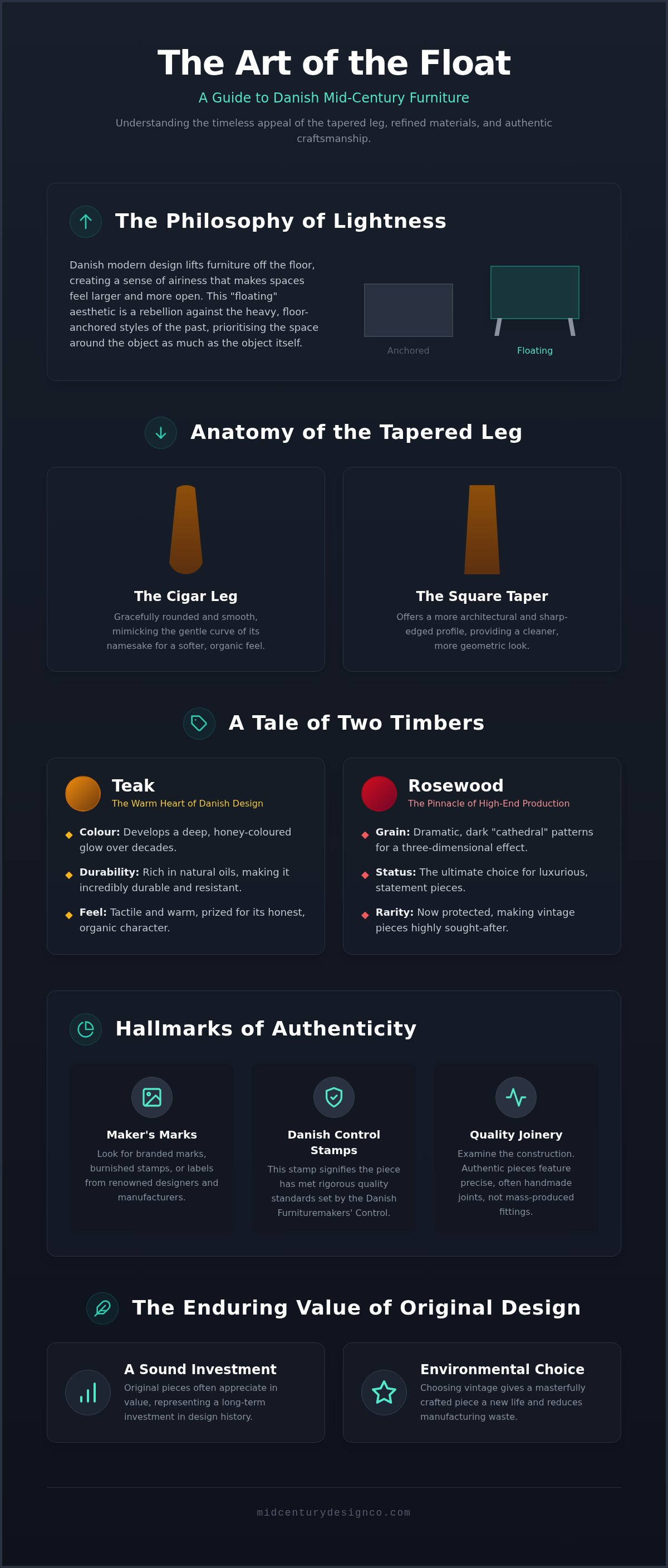
The silhouette of a classic Danish sideboard isn't just a matter of style; it's a rebellion against the weight of the past. Before the mid-20th century, British homes were often crowded with heavy, dark Victorian pieces that felt anchored to the floor. The arrival of Danish modern design changed the room's energy. By lifting cabinets and tables onto slender, narrowing supports, designers created an illusion of airiness. This visual lightness is why Danish tapered leg furniture UK collectors seek today remains the definitive choice for sophisticated interiors. It creates a sense of poise that feels both historic and remarkably fresh in a contemporary setting. It's a design philosophy that prioritises the space around the object as much as the object itself.
This transition from the ornate to the minimalist wasn't merely about aesthetics. It was a philosophical shift. Post-war designers wanted to create furniture that served the human experience, moving away from the imposing, status-driven furniture of previous generations. The result was a collection of pieces that felt approachable, organic, and inherently honest in their construction. They sought to bring a sense of calm and order to the home, using clean lines and natural materials to foster a sanctuary-like environment.
The Architectural Purpose of the Taper
The taper serves a dual purpose. Structurally, it provides stability where the leg meets the frame whilst shedding unnecessary bulk as it reaches the floor. In smaller UK living rooms, this design is transformative. It allows light to flow under the furniture, making the floor plan feel expansive rather than cluttered. You'll often encounter two main variations in original pieces:
- The Cigar Leg: Gracefully rounded and smooth, mimicking the gentle curve of its namesake for a softer, organic feel.
- The Square Taper: Offers a more architectural and sharp-edged profile, providing a cleaner, more geometric look for modern spaces.
Both styles achieve the same goal: elegance without compromise. These subtle variations allow a piece to feel grounded yet weightless, a trick of the eye that defines the era's genius. It's an architectural secret that ensures a large teak sideboard never feels overbearing in a compact urban apartment or a traditional semi-detached home. The narrowing form draws the eye upward, celebrating the craftsmanship of the cabinet above and creating a harmonious visual balance.
A Legacy of Nordic Nuance
Masters such as Hans Wegner and Finn Juhl didn't see furniture as mere utility. They viewed every leg and joint as a sculptural opportunity. Whilst industrial design in other nations often felt cold or repetitive, the Danish movement prioritised the "human touch" through organic curves and hand-finished surfaces. They understood that a leg shouldn't just hold something up; it should invite the eye to linger. The Danish Taper is a marriage of form and function. This legacy ensures that these pieces don't just sit in a room; they inhabit it with a quiet, storied confidence. It's this soul that makes an original vintage piece so much more than its modern reproduction. Each curve is a testament to a time when designers sought to harmonise the industrial age with the warmth of the home.
Materiality and Mastery: Teak, Rosewood, and Sculptural Precision
The tactile allure of an original mid-century piece is inseparable from the timber itself. Unlike the "teak effect" finishes found on mass-market platforms, authentic Danish tapered leg furniture UK collectors cherish was crafted from high-quality, slow-grown hardwoods. Burmese teak was the undisputed favourite of the era. It's a timber rich in natural oils, making it incredibly durable and resistant to the changing British climate. Over decades, this wood develops a deep, honey-coloured glow. This specific patina is a hallmark of history that no modern factory finish can truly replicate.
The Soul of Teak and Rosewood
Brazilian rosewood represents the pinnacle of high-end Danish production. Its dramatic "cathedral" grain patterns, characterised by dark, swirling lines against a deep reddish-brown background, create a visual depth that feels almost three-dimensional. As highlighted by the Design Museum Denmark, these materials were chosen for their expressive qualities and longevity. Choosing vintage isn't just an aesthetic preference; it's an ethical one. By investing in existing timber, you're participating in a circular economy that bypasses the environmental cost of new production. It's a way to bring the soul of the forest into your home without further depletion.
Craftsmanship Beyond the Surface
The true mastery lies in how these woods are joined. Original pieces rely on wood-to-wood joinery, such as mortise and tenon joints, rather than the metal brackets and screws found in modern flat-pack alternatives. This creates a seamless transition from the main frame to the tapered leg, making the piece feel like a single, fluid sculpture. The leg doesn't just attach to the cabinet; it grows from it.
You'll often find that the finest makers included solid wood "shoes" or contrasting tips at the base of the legs. These weren't just decorative. They protected the more delicate taper from the damp of a mop or the scuffs of daily life. Running your hand along a hand-finished Danish furniture edge reveals a silken texture where every curve feels intentional and soft to the touch. This level of detail is what distinguishes a curated sanctuary from a mere house. If you're looking for a piece that carries this level of narrative and sculptural precision, you might enjoy browsing our curated selection of Danish sideboards.
The Anatomy of Authenticity: Distinguishing Original Danish Craftsmanship
The marketplace is currently flooded with "mid-century style" items that mimic the silhouette of the 1960s but lack the soul of the era. For those seeking authentic Danish tapered leg furniture UK dealers offer a gateway to pieces that are not just furniture, but historical investments. Identifying the real deal requires a keen eye for the finer details of construction. Whilst a reproduction might look the part from across a room, the truth is always found in the joinery. Original Danish pieces rarely rely on visible screws or metal brackets. Instead, they utilise sophisticated wood-to-wood connections such as dovetails and finger joints, which ensure the piece remains rigid and beautiful for generations.
Vintage vs. Reproduction: A Comparison
The difference in materiality is profound. Modern reproductions often utilise MDF or particle board covered in a paper-thin foil or a low-quality veneer. In contrast, original pieces were built using solid hardwoods or exceptionally thick, hand-selected veneers. This choice of material affects more than just the look; it dictates the longevity. A vintage sideboard was designed to last centuries, whilst a flat-pack alternative often struggles to survive a single house move. Furthermore, the financial trajectory is entirely different. Original designs tend to appreciate in value as they become rarer, whereas modern copies depreciate the moment they leave the showroom. Understanding the history of the Danish Modern movement reveals that these objects were intended to be accessible luxuries that stood the test of time.
Signs of a True 1960s Piece
To verify provenance, you must look where others don't. Checking the underside of a table or the back of a cabinet often reveals the maker's marks. Look for the "Danish Control" stamp, a circular mark that served as a seal of quality for the Danish furniture industry. You might also find manufacturer labels from iconic workshops like Farstrup or Dyrlund. The colour of the wood is another vital clue. Authentic teak from the mid-century has a specific "honey" glow that modern stains simply cannot replicate. This warmth is the result of decades of light exposure and careful oiling, creating a depth of character that feels alive. For a deeper dive into these specifics, you can explore The Definitive Guide to Authentic Mid Century Modern Sideboards. A true vintage piece carries a weight of quality; a drawer should slide with a silent, confident ease that speaks of a master's touch.
Curating Your Sanctuary: Styling Tapered Leg Furniture in Modern UK Interiors
Many collectors hesitate to bring vintage pieces home, fearing their space will resemble a museum rather than a sanctuary. This "Museum Myth" is easily dispelled by embracing the contrast between old soul and new comfort. Integrating Danish tapered leg furniture UK homeowners already love into a modern room is about finding a rhythmic balance. A deep, contemporary velvet sofa feels grounded and inviting when paired with the architectural lightness of a 1960s coffee table. The open space beneath those slender legs allows the room to breathe, preventing even the most substantial furniture from feeling overbearing.
A vintage sideboard, originally designed for fine linens, makes an exceptional media unit for a modern television. It conceals tech whilst providing a warm, organic surface that softens the coldness of glass and metal. To complete the sensory experience with high-fidelity sound, you can check out OrangeAudio for their range of premium speakers. By choosing one high-quality statement piece, you create a focal point that anchors the entire room's narrative. It's about quality over quantity, allowing a single well-chosen item to set the tone for the entire space.
For enthusiasts who require more specialised support for their audio equipment, HiFi Rack offers the structural precision needed to complement a high-fidelity setup. This allows your vintage sideboard to remain a clean, uncluttered focal point while ensuring your tech is housed with the same regard for quality and craftsmanship as your mid-century pieces.
Positioning is everything. Place your sideboard where it can catch the shifting afternoon light. This highlights the natural oils and intricate grain of the teak, making the wood appear to glow from within. To complete the look, accessorise with tactile ceramics in muted earth tones or hand-woven textiles that mirror the Nordic palette. For more inspiration on choosing the right centrepiece, see An Elegant Guide to Buying Vintage Danish Coffee Tables.
Functional Elegance in the Dining Room
In the dining area, the taper comes into its own. Tapered legs on dining chairs and tables reduce visual clutter, which is particularly beneficial in smaller British dining rooms. This openness encourages a "slow dining" atmosphere, where the beauty of the table itself becomes a backdrop for shared meals and conversation. Investing in a vintage set brings a sense of heritage to every gathering. You can explore the possibilities of this aesthetic in our guide to Retro Dining Table and Chairs UK: The Allure of Authentic Mid-Century Design.
Ready to find your own piece of history? Browse our curated collection of authentic Danish furniture to start your journey.
Investing in the Soul of Design: Our Curated Collection
At The Mid Century Design Co., we believe a home should be a collection of stories rather than a catalogue of trends. Our approach is defined by a passionate, tireless search for the extraordinary. We traverse the landscape of Northern Europe to hand-select pieces that embody the peak of 20th-century craftsmanship. When sourcing the Danish tapered leg furniture UK collectors desire, we look for more than just a label. We seek out the soul of the object. We look for the way the light hits a teak grain or the silent, confident glide of a well-made drawer, ensuring every item meets our exacting standards for both beauty and utility.
Every sideboard, dining set, and chest of drawers in our collection has made a significant journey. Many began their lives in Danish homes during the 1950s and 60s, witnessing decades of family life before we carefully introduced them to our national gallery. We focus exclusively on original pieces with a verifiable history, ensuring that the narrative of the maker remains intact. This commitment ensures that when you invest in Danish tapered leg furniture UK homes are enriched by genuine design history, not a hollow imitation. Each piece is treated as functional art, preserved for the next generation of appreciative owners who value the marriage of heritage and style.
Why Choose The Mid Century Design Co.?
Our gallery is curated with a sophisticated eye for quality and visual impact. We've consciously rejected the modern "throwaway culture" that prioritises speed over substance. Instead, we champion sustainable, storied objects that have already proven their longevity over six decades. As your expert friends in the world of vintage design, we provide personalised guidance to help you find the perfect fit for your sanctuary. Our commitment to the UK collector includes expert national delivery, ensuring your chosen heirloom arrives in pristine condition regardless of your location across the country.
Discover Your Next Heirloom
Creating a curated home is a continuous journey of discovery. We invite you to explore our ever-evolving inventory of sideboards, storage solutions, and occasional tables. Each piece is ready to anchor your interior with its timeless silhouette and organic warmth. To stay updated on our latest curated discoveries, we encourage you to explore our digital collection regularly. Your next piece of history is waiting to be found amongst our latest acquisitions.
Explore our latest curated collection of authentic Danish furniture
Your Journey Toward a Curated Sanctuary
Bringing the spirit of 1960s modernism into your home is an act of preservation that rewards you every day. You've discovered how the architectural "floating" silhouette and the sensory warmth of authentic teak can redefine a room's energy, turning a simple living area into a refined gallery of functional art. By prioritising original craftsmanship over fleeting modern copies, you ensure your interior remains a place of genuine character and lasting value. It's about finding that singular piece that speaks to your soul whilst offering a lifetime of utility and grace.
As an independent UK specialist, The Mid Century Design Co. focuses on original 1960s Danish design, offering a bridge between the masters of the past and your contemporary lifestyle. Whether you're seeking a statement sideboard or a complete dining set, our expertise in Danish tapered leg furniture UK collectors trust ensures every piece is chosen for its beauty and provenance. With our national UK delivery, your next storied heirloom is closer than you think. We invite you to view our curated collection of authentic Danish furniture and begin the next chapter of your home's narrative. Your sanctuary is waiting.
Frequently Asked Questions
What exactly is a "tapered leg" in furniture design?
A tapered leg is a support that gradually thins in diameter as it reaches the floor. This design creates a sense of visual lightness and elegance. It reduces the visual footprint of a piece, making large sideboards appear to float. This architectural trick was central to the mid-century movement, allowing light to flow beneath the furniture and making British living rooms feel more spacious and airy.
How can I tell if a piece of Danish furniture is authentic or a reproduction?
Authenticity is found in the details of construction and materiality. Look for wood-to-wood joinery like dovetails rather than metal brackets or screws. Genuine 1960s pieces use thick veneers or solid hardwoods, whilst modern copies often rely on paper-thin foils over MDF. Authentic Danish tapered leg furniture UK collectors value will also typically feature maker's stamps or specific manufacturer labels on the underside or inside drawer linings.
Why is teak the most common wood for Danish mid-century furniture?
Teak was favoured for its exceptional durability and high natural oil content. These qualities made it resistant to moisture and easy to work into the organic, sculptural shapes required by Danish designers. Beyond its structural strength, teak possesses a warm, honey-toned grain that deepens beautifully over time. It provided a sensory warmth that contrasted perfectly with the clinical, industrial aesthetics of other post-war design movements.
How do I care for the wood on my vintage Danish furniture?
Regular dusting with a soft, dry cloth is usually sufficient for daily maintenance. Avoid using modern aerosol polishes, as these can contain silicones that damage the original finish. Instead, apply a high-quality teak oil or clear furniture wax once or twice a year to nourish the wood and maintain its lustre. Keep pieces away from direct sunlight and radiators to prevent the timber from drying out or fading.
Will a 1960s sideboard be strong enough for a modern television?
Yes, original mid-century sideboards are remarkably sturdy due to their superior joinery and solid construction. Most were designed to hold heavy records and ceramics, so they easily support the weight of a modern flat-screen television. However, it's wise to check that the weight is distributed evenly across the top surface. This prevents any long-term bowing of the wood and ensures the piece remains a functional part of your home.
What is the "Danish Control" stamp and why does it matter?
The Danish Control stamp was a mark of excellence established by the Danish Furniture Makers' Quality Control in 1959. It served as a guarantee that the piece met strict standards for materials and craftsmanship. For a collector, this circular mark is a vital indicator of provenance. It distinguishes high-quality workshop pieces from lesser mass-produced items, ensuring you're investing in a genuine piece of Danish design history.
Can I mix different wood types, like teak and oak, in the same room?
Mixing wood types is an excellent way to create a home that feels curated rather than staged. The key is to look for a shared design language, such as the slender profile of tapered legs, to unify the space. Teak and oak complement each other beautifully, as the warmth of the teak balances the lighter, more rustic tones of the oak. This approach adds texture and visual interest to your sanctuary.
How does buying vintage furniture contribute to a sustainable lifestyle?
Choosing vintage is one of the most environmentally conscious ways to furnish a home. By purchasing an existing piece of Danish tapered leg furniture UK buyers are diverting high-quality materials from landfill and bypassing the carbon cost of new manufacturing. These pieces were built to last for generations, rejecting the modern culture of disposable furniture. It's a commitment to a circular economy that values longevity and the preservation of natural resources.