

The Timeless Allure of the Vintage Dressing Table: A UK Collector’s Guide
A vintage dressing table isn't just a functional surface; it's a sculpted sanctuary that defines the very soul of a bedroom. You likely crave a private space that feels like a curated retreat, far removed from the cold, disposable nature of modern flat-pack alternatives. It's a common struggle when searching for a vintage dressing table UK to feel overwhelmed by low-quality replicas or to worry about whether that "teak" finish is actually a clever laminate. You want the tactile warmth of authentic 1960s timber and the peace of mind that comes with knowing your investment is genuine.
This guide promises to transform you from an admirer into a confident collector of mid-century design. We'll explore the artistry of legendary British makers like G-Plan, teaching you how to distinguish the rich hues of rosewood from the honeyed tones of teak through precise grain patterns. You'll discover how to inspect joinery for historical integrity and how to spot the tell-tale signs of a piece that's ready to anchor your sanctuary for decades to come. Let's step back into an era where furniture was crafted with intention, spirit, and an enduring sense of grace.
Key Takeaways
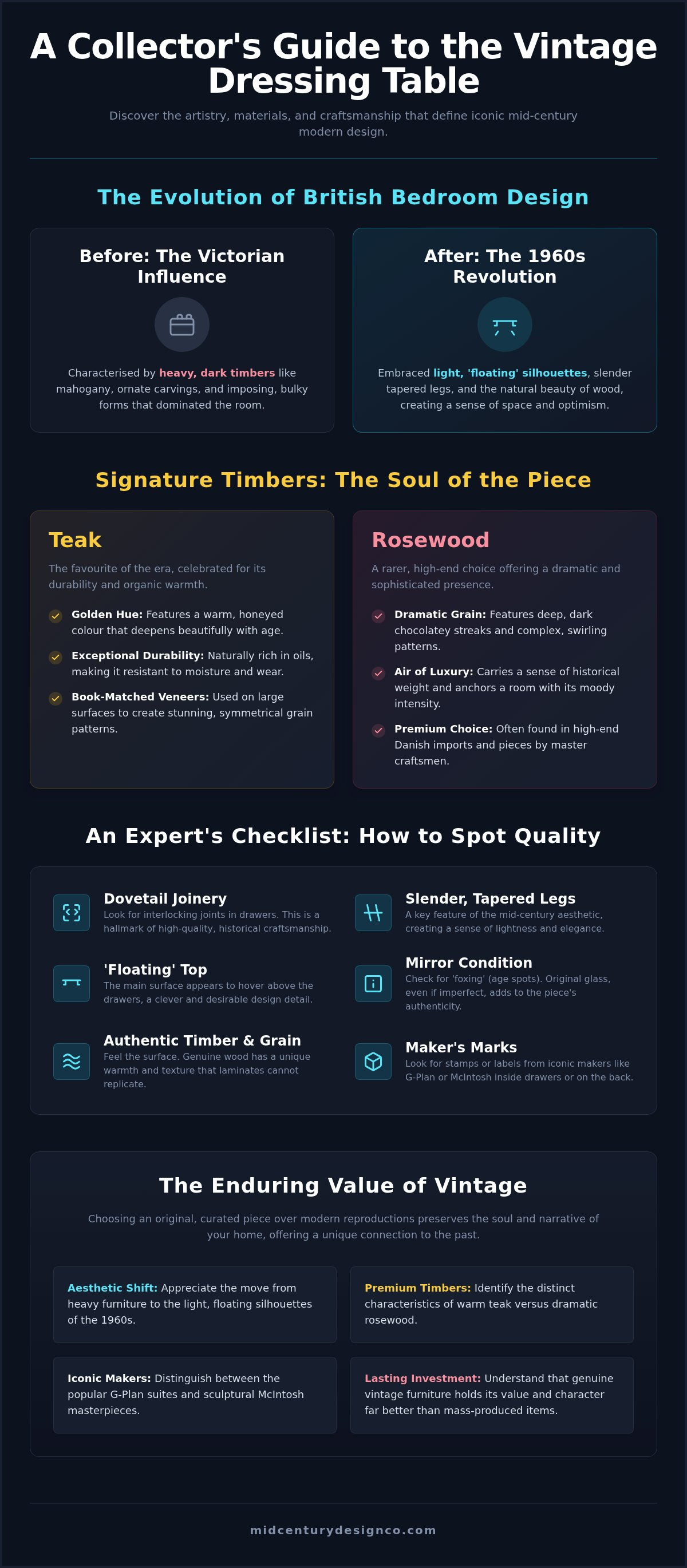
- Appreciate the historical shift from dark, heavy furniture to the light, "floating" silhouettes of the 1960s that define the mid-century aesthetic.
- Identify the specific characteristics of premium timbers, from the golden warmth of teak to the dramatic, deep grains of rare rosewood.
- Utilise an expert checklist to verify the authenticity of your vintage dressing table UK, focusing on structural dovetail joinery and mirror condition.
- Distinguish between the iconic "lifestyle suites" of G-Plan and the more refined, sculptural masterpieces created by makers like McIntosh of Kirkcaldy.
- Understand the lasting value of choosing an original, curated piece over a modern reproduction to preserve the soul and narrative of your home.
The Allure of the Vintage Dressing Table: More Than a Morning Ritual
A vintage dressing table UK is far more than a simple piece of bedroom storage. It stands as a testament to post-war British optimism, a time when the heavy, dark mahogany of the Victorian era was finally cast aside. Homeowners were tired of the shadows. They sought light, air, and a sense of forward-looking grace. These tables became the centrepiece of that desire, offering a sculpted elegance that felt entirely fresh and unapologetically modern.
This was the era of the vanity station. For the woman of the 1960s, the dressing table was a private sanctuary. It was a place to organise jewellery, apply the latest cosmetics, and prepare for a world that was rapidly changing. There's an undeniable romanticism in bringing such a piece into your home today. You aren't just buying timber and glass; you're inheriting a narrative. Each piece carries the spirit of its previous owners, acting as a bridge between the glamour of the past and the quiet moments of your own morning ritual.
The Evolution of the Vanity in British Design
The journey from the 1950s to the late 1960s was a period of intense creative boom in the UK. Early post-war designs were often constrained by utility regulations, resulting in sturdy but somewhat uninspired forms. However, as trade opened up, British manufacturers began to look towards the North Sea. The history of the dressing table reflects this shift, showing how functional utility gave way to high-concept artistry.
Scandinavian minimalism became the primary catalyst for change. Designers across the UK embraced the Danish look, prioritising the natural beauty of wood over ornate carvings. They replaced bulky bases with slender, tapered legs that created a sense of space and movement within a room. This influence led to the birth of the most iconic mid-century aesthetic: the floating top. In this clever piece of engineering, the main table surface appears to hover weightlessly above the pedestals of drawers, supported by subtle, recessed spacers that lend the piece a delicate, architectural quality.
Choosing a vintage dressing table UK means embracing this heritage of innovation. It's about finding a balance between form and function that mass-produced modern furniture simply cannot replicate. These pieces were built to last, crafted by artisans who understood that a bedroom should be a place of both utility and profound beauty.
Understanding Materials: The Warmth of Teak and the Depth of Rosewood
The choice of timber defines the soul of any vintage dressing table UK. Teak was the undisputed favourite of the mid-century era, prized for its exceptional durability and its warm, golden hue. This wood is naturally rich in oils, which helps it resist moisture and maintain its structural integrity over many decades. When you run your hand across a well-preserved piece, you feel a silky, organic warmth that modern melamine or plastic-coated furniture simply cannot replicate.
Master craftsmen of the 1960s often combined solid wood elements with high-quality veneers. Solid teak was typically reserved for the structural legs, frames, and handles, whilst the expansive surfaces of the table top and drawer fronts utilised veneers. This wasn't a cost-cutting measure. It allowed designers to use "book-matching" techniques, where two slices of wood from the same log are laid side-by-side to create a symmetrical, mirrored grain pattern. This grain acts as a natural fingerprint. No two pieces are identical, ensuring your furniture remains a unique work of art within your home.
For those seeking something even more evocative, rosewood offers a deeper, more dramatic alternative. Often found amongst high-end Danish imports, rosewood features dark, chocolatey streaks and a complex, swirling grain that suggests a certain historical weight. It's rarer than teak and carries an air of sophisticated luxury that anchors a room with its moody, intense presence. Finding the perfect vintage dressing table UK often comes down to which of these timber personalities speaks most clearly to your aesthetic.
The Sensory Appeal of Mid-Century Timbers
The tactile nature of these pieces is part of their enduring magic. Hand-finished wood possesses a "patina," a soft lustre that develops as the teak mellows and improves with age. Sunlight and time work together to soften the initial orange tones into a rich, honeyed glow. This maturing process adds a layer of character that mass-produced items lack. When you sit at your dressing table, you're interacting with a material that has lived, breathed, and matured alongside the homes it has graced.
Sustainable Choice: Why Vintage is the Greenest Furniture
Choosing original mid-century pieces is a powerful statement of environmental stewardship. Modern flat-pack furniture often follows a "throwaway" cycle, ending up in landfills after only a few years of use. By contrast, these vintage items were built for longevity. Repurposing existing high-quality resources is the ultimate form of ethical consumption. You can read more about the benefits of sustainable vintage furniture UK to understand why these pieces remain so relevant. If you're ready to find a piece that combines this ethical spirit with timeless design, explore our curated collection of dressing tables today.
Defining Eras: From G-Plan to the Danish Influence
British design in the 1960s was a melting pot of local manufacturing prowess and imported Scandinavian sensibilities. It was an era of coordinated elegance. Manufacturers moved away from standalone pieces, instead creating "lifestyle suites" that allowed homeowners to curate a cohesive, modern sanctuary. Identifying a genuine vintage dressing table UK requires an eye for specific maker's marks; these are often found as gold-stamped foil labels inside a drawer or branded stamps on the back panel.
Iconic British Makers to Look For
G-Plan remains the most recognisable name from this period. Their Brandon range, with its light oak finishes and splayed legs, offered a fresh start for post-war families. However, it was the teak Fresco range that truly defined the era. These pieces featured beautifully sculpted, recessed handles and a rich, honeyed tone that still feels contemporary. They were designed as part of a democratic dream, bringing high design to the British high street.
Whilst G-Plan focused on coordinated living, McIntosh of Kirkcaldy appealed to those seeking a more refined, sculptural masterpiece. McIntosh pieces are celebrated for their superior joinery and exceptionally sleek, tapered legs. They possess a quiet, architectural grace that feels less like furniture and more like functional art. Similarly, Austinsuite provided a middle ground, offering clean lines and functional elegance that prioritised slender silhouettes and understated handles for the modern home.
The Danish Connection
The "Danish Modern" movement had a profound impact on British silhouettes. Many UK designers were heavily influenced by the vintage Danish dressing tables of the time, leading to a cross-pollination of styles. Danish design prioritised the organic curve over rigid geometry, resulting in pieces that felt soft and human rather than industrial. This influence is most visible in the "floating" mirror designs, where the glass appears to hover above the timber frame, supported by delicate wooden struts.
Attention to detail was paramount in these imports. You'll often find hidden, felt-lined jewellery drawers tucked away beneath the main surface, designed to protect delicate treasures. This focus on the "inner life" of a piece is a hallmark of quality. When you run your hand along the underside of a drawer or the edge of a mirror, the smoothness of the finish tells the story of a craftsman who cared as much about the hidden details as the visible grain.
How to Spot Quality: An Expert’s Checklist for the UK Buyer
Finding the perfect vintage dressing table UK is a journey of discovery that requires a discerning eye. It's about looking beyond the initial aesthetic to understand the structural integrity of the piece. Quality construction in the mid-century era was never accidental; it was a deliberate choice by craftsmen who intended their work to outlive them. Start your inspection at the drawers. Pull them out and examine the joinery. Authentic pieces from the 1960s almost always feature dovetail joints, a hallmark of superior cabinet-making that ensures the drawer remains stable even after decades of use.
The mirror often tells the oldest story. Whilst some collectors appreciate "foxing", those delicate, dusky spots where the silvering has aged, significant silvering loss can affect the piece's utility. Ensure the glass is original if possible, as modern replacements can sometimes lack the slight, warm tint found in period mirrors. Similarly, assess the finish of the timber. You are looking for a healthy, aged glow that suggests the wood has been cared for. Avoid pieces that have been poorly over-restored with thick, glossy varnishes that mask the natural grain. A genuine patina should feel smooth and look deep, not plasticised.
The Fine Details of Authenticity
Originality often hides in the smallest details. Check for the original brass or wooden handles; these are often the favourite targets for replacement on reproductions. Finding a piece with its original hardware preserved is a sign that the table has been respected throughout its life. Look for hidden luxuries like velvet-lined vanity drawers or adjustable wing mirrors that allow you to see from every angle. If you are unsure of a piece's origin, comparing it to other items from the same designer, such as a mid century modern sideboard from the same range, can help verify the handles and leg profiles. Finally, verify the legs. Tapered legs should be sturdy and firmly attached to the frame, maintaining the "floating" silhouette discussed earlier.
Avoiding the Pitfalls of Reproductions
The market is occasionally flooded with modern copies that mimic the mid-century silhouette but lack the soul. You can spot these "tells" by looking at the undersides and back panels. If you find plastic-coated surfaces or drawers held together with staples, it's a reproduction. Original vintage is an investment grade purchase. These pieces retain their value and often appreciate, unlike the throwaway nature of flat-pack furniture. We remain committed to an "original vintage only" policy, ensuring every item we curate carries a genuine history. If you're ready to invest in a piece with a true narrative, view our latest collection of authentic dressing tables to find your perfect match.
Finding Your Perfect Piece with The Mid Century Design Co.
Every home deserves a centrepiece that tells a story. When you seek a vintage dressing table UK, you're looking for more than a surface for your morning ritual; you're looking for a piece that anchors your room's narrative. At The Mid Century Design Co., our philosophy is rooted in the belief that furniture should have soul and spirit. We treat every item as functional art, valuing the heritage behind the object as much as its physical beauty. Buying from a specialist means you're supported by an authoritative expert who appreciates the finer details of mid-century aesthetics.
Our Curation Process
Our curation process is methodical and deeply personal. We hand-select pieces based on their ability to transform a space. This means looking for exceptional joinery, iconic timber grains, and the unmistakable silhouettes of celebrated designers. We maintain a strict policy of original vintage only. You won't find modern reproductions in our collection. Instead, you'll find genuine slices of history that have been chosen for their longevity and sensory warmth. We've already done the difficult work of verification and sourcing, acting as a bridge between the craftsmanship of the past and the sanctuary of your present home.
A Seamless Journey from Gallery to Home
Bulky furniture requires a delicate touch. We understand the anxiety of transporting a prized find, which is why we organise professional national UK delivery. Our approach is that of an expert friend; we're here to help you envision how a specific piece will fit within your personal retreat. Whether you're drawn to the golden glow of a G-Plan Fresco or the architectural lines of a Danish import, we ensure the transition from our gallery to your home is seamless and inspiring.
We invite you to view the dressing table as the definitive final touch for your bedroom. It's a sculpted, private space designed for reflection and elegance. It's the place where you can pause, surrounded by the warmth of authentic timber and the history of British design. Explore our current collection of authentic vintage dressing tables and discover the original piece that will complete your sanctuary.
Curating Your Mid-Century Sanctuary
Bringing an original 1950s or 60s piece into your home is more than a purchase; it's an act of preservation. You now understand the hallmarks of quality construction and the rich, organic warmth of authentic timbers. By choosing a genuine vintage dressing table UK, you reject the disposable nature of modern furniture in favour of an object with a living history. It's about creating a space that feels intentional, soulful, and entirely your own. A curated retreat. A tactile history.
As specialists in original mid-century design, we don't sell modern reproductions. Every piece in our collection is a genuine slice of history, hand-selected for its spirit and structural integrity. We offer national UK delivery on all furniture to ensure your discovery arrives safely at your door. View our curated collection of authentic vintage dressing tables and find the piece that speaks to your aesthetic. We're here to help you complete your sanctuary with a piece you'll cherish for decades. Your bedroom is ready for its final, elegant touch.
Frequently Asked Questions
Is a vintage dressing table a good investment for a UK home?
An original vintage dressing table UK is an excellent investment because these pieces are built with a longevity that modern flat-pack furniture simply cannot match. Unlike mass-produced items that depreciate immediately, authentic mid-century furniture often retains or even increases in value as rarity grows. You are investing in high-quality timbers like teak and rosewood, which are increasingly scarce, ensuring your bedroom sanctuary remains both beautiful and financially sound for decades.
How can I tell if a dressing table is genuine mid-century or a reproduction?
Authenticity is revealed through the finer details of construction and materials. Look for gold-stamped foil labels or branded stamps from makers like G-Plan or McIntosh inside drawers or on the back panel. Genuine pieces utilise dovetail joinery rather than staples or glue; they also avoid plastic-coated undersides. If you find chipboard with a paper-thin laminate instead of a rich wood veneer, you are likely looking at a modern reproduction rather than a slice of history.
What is the best way to clean and maintain a teak dressing table?
Maintaining the honeyed glow of teak requires a gentle touch and minimal intervention. Regularly dust the surface with a soft, dry lint-free cloth to prevent particles from scratching the patina. For a deeper clean, use a damp cloth with a tiny amount of mild soap, followed immediately by a dry cloth. Avoid harsh chemical sprays or silicone-based polishes; instead, apply a high-quality teak oil once or twice a year to nourish the wood and maintain its spirit.
Will a 1960s dressing table fit in a small modern bedroom?
Mid-century designs were specifically crafted for the emerging "modern" homes of the 1960s, which often had smaller footprints than their Victorian predecessors. The slender silhouettes and tapered legs create an illusion of space by allowing light to flow underneath the piece. This "floating" aesthetic prevents the room from feeling crowded. Many British makers offered compact versions of their popular ranges, ensuring that even a modest bedroom can accommodate a sophisticated vintage dressing table UK.
What are the most famous British brands for vintage dressing tables?
The UK design boom of the 1960s was led by several iconic manufacturers who defined the era's aesthetic. G-Plan is perhaps the most celebrated, particularly for their Fresco and Brandon ranges. McIntosh of Kirkcaldy is favoured by collectors for its superior joinery and sculptural elegance. Other notable names include Austinsuite, known for clean functionalism, and White & Newton, which produced some of the most progressive, minimalist designs that still feel incredibly contemporary today.
Can I use a vintage dressing table as a desk?
Repurposing a vintage dressing table as a stylish desk is a popular choice for those creating a multi-functional sanctuary. Most mid-century models feature a central knee-hole that provides ample legroom, whilst the drawer pedestals offer convenient storage for stationery and tech. The height is generally comparable to a standard desk, making it a comfortable surface for laptop work. It's a beautiful way to blend your professional life with a touch of retro glamour.
What should I look for in the condition of a vintage mirror?
When inspecting a mirror, you must balance character with utility. Look for "foxing," which are the small dark spots where the silvering has aged; these add a romantic narrative to the piece. However, extensive silvering loss can make the mirror difficult to use. Check that the glass is original, as period mirrors often have a slight, warm tint that is more flattering than the cold, clinical reflection of modern replacements. Ensure the tilting mechanism remains sturdy.
Does The Mid Century Design Co. offer restoration services?
We do not offer standalone furniture restoration services to the public. Our focus remains entirely on the curation and sale of authentic mid-century modern furniture that is ready to be enjoyed in your home. We hand-select every piece for its structural integrity and aesthetic impact, ensuring that the hard work of sourcing and quality-checking is already done. This allows you to focus on the joy of discovery and styling your new bedroom sanctuary.