

Original 1950s Furniture: A Connoisseur's Buying Guide
A mass-produced replica might mimic the silhouette of the mid-century era, but it will never possess the quiet, storied soul of a piece that actually lived through it. True character isn't manufactured. It's earned through decades of use, the gentle patina of age, and the precise hand of a master craftsman. Finding authentic original 1950s furniture for sale can feel like a daunting pursuit for the modern collector, especially when fakes hide amongst clever finishes and deceptive digital filters. It's natural to feel a sense of hesitation; you want to ensure your investment is for a genuine slice of history that will fit seamlessly into your current floor plan.
We're here to help you navigate this journey with the eye of a seasoned curator. This guide promises to help you identify genuine maker's marks, evaluate structural integrity from afar, and source pieces that bring history into your home. We'll explore the nuances of iconic British and Danish design, ensuring your next acquisition is a meaningful investment in functional art. From the modular brilliance of Staples Ladderax to the organic warmth of a teak dining set, you'll discover how to build a sanctuary that feels both timeless and deeply personal.
Key Takeaways
- Learn to identify authentic maker's marks and traditional joinery techniques, such as dovetails, that distinguish true vintage pieces from modern replicas.
- Understand the historical shift from heavy, dark woods to the elegant, tapered forms that define the optimistic post-war aesthetic.
- Navigate the market for original 1950s furniture for sale with the confidence of a curator, prioritising pieces that retain their original vintage character and soul.
- Master the art of evaluating condition through online listings; learn why a gentle patina often adds more value than a heavy-handed restoration.
- Explore the functional versatility of iconic 1950s designs, such as sideboards and modular storage systems, and how they solve modern space challenges.
The Timeless Allure of Original 1950s Design
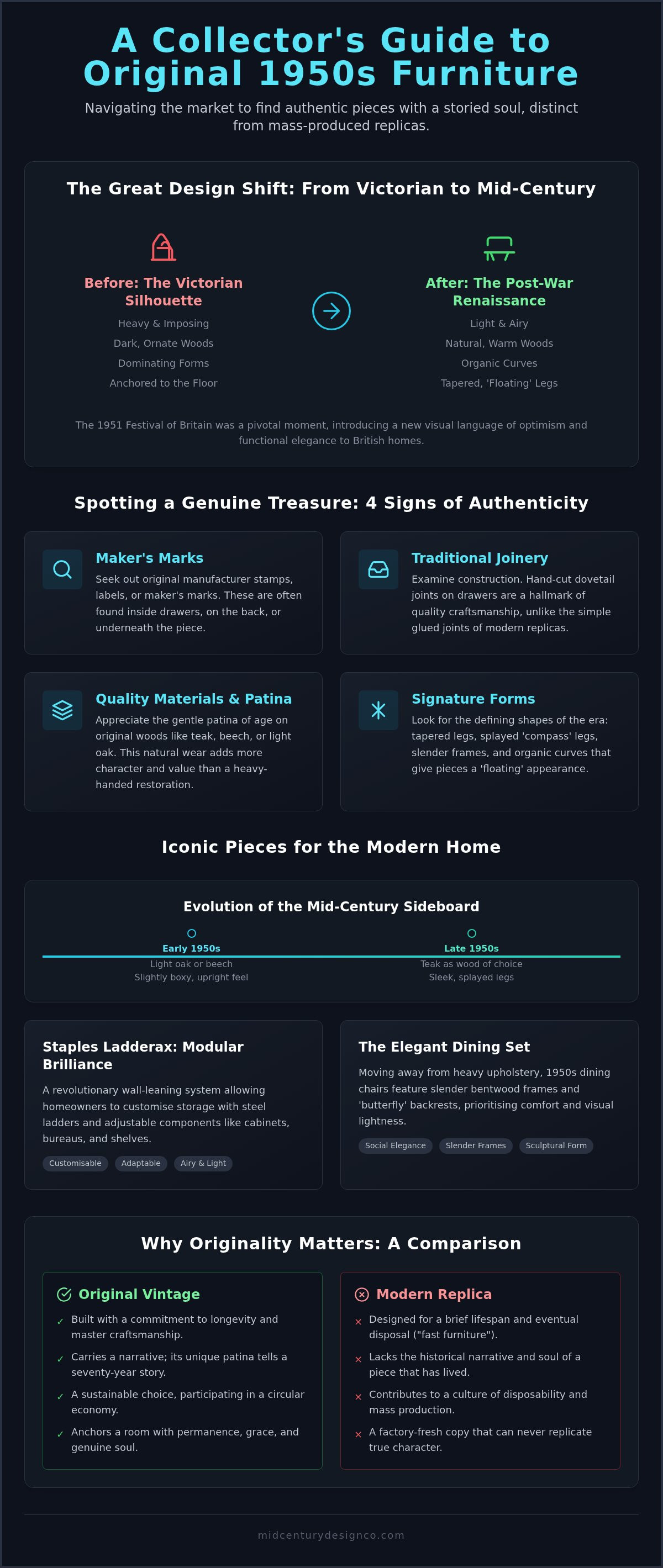
The 1950s was a decade defined by a collective sense of relief and a radical reimagining of the domestic sphere. After years of wartime austerity, British homes underwent a transformation that prioritised light, air, and a forward-looking optimism. This shift wasn't merely about fashion. It was a rejection of the heavy, dark, and imposing Victorian silhouettes that had dominated living rooms for generations. In their place emerged a new visual language: one of tapered legs, organic curves, and a deliberate lightness of touch. Finding high-quality original 1950s furniture for sale requires a discerning eye, but the reward is a home filled with objects that possess genuine historical weight.
The Post-War Design Renaissance
The 1951 Festival of Britain served as a pivotal moment for UK interiors, acting as a vibrant shop window for a new way of living. It introduced the public to the Mid-century modern design movement, which blended industrial innovation with a deep respect for natural materials. Designers began experimenting with bentwood, plywood, and slender steel legs, creating furniture that felt as though it were floating rather than anchored to the floor. This era saw a significant transition amongst British makers toward the minimalist, functional elegance of Scandinavian design. It was a period where the "Contemporary" style became a symbol of a modern, democratic future. Furniture became more than utility; it became functional art.
Why Originality Matters Amongst Collectors
When searching for original 1950s furniture for sale, collectors aren't just looking for a chair or a sideboard; they're seeking a piece of history with a soul. Unlike modern "fast furniture" that's designed for a brief lifespan and eventual disposal, mid-century pieces were built with a commitment to longevity and craftsmanship. An original piece carries a narrative in its grain. The gentle wear on a teak armrest or the subtle patina on a brass handle tells a story that seventy years of life have etched into its surface. This character is something a factory-fresh reproduction can never replicate. By choosing authentic vintage, you are also making a conscious, sustainable choice, participating in a circular economy that values the enduring over the ephemeral. These pieces don't just fill a room; they anchor it with a sense of permanence and grace.
Essential 1950s Furniture Pieces for the UK Home
The 1950s was a decade of sculptural innovation. When seeking original 1950s furniture for sale, collectors often start with the pieces that anchored the home: the sideboard and the dining suite. These weren't just storage or surfaces. They were statements of intent. 1950s dining sets, in particular, showcase a new focus on social elegance. Chairs moved away from heavy upholstery toward slender, bentwood frames and 'butterfly' backrests that prioritised comfort and visual lightness. These pieces brought a sense of theatre to the everyday act of dining, turning a simple meal into a curated experience.
The Iconic Mid Century Sideboard
The evolution of the mid century modern sideboard mirrors the decade's changing tastes. Early 1950s models often utilised light oak or beech, retaining a slightly boxy, upright feel. By the late 1950s, however, the influence of Scandinavian minimalism took hold. Teak became the wood of choice. Designers embraced splayed 'compass' legs and integrated wooden handles that felt like they grew from the doors themselves. These pieces remain the centrepiece of the contemporary living room because they offer immense storage whilst maintaining a sleek, low-profile silhouette that doesn't overwhelm a space.
Staples Ladderax: The Ultimate Modular Storage
Innovation wasn't limited to fixed furniture. The Staples Ladderax shelving unit revolutionised how we organised our lives. Designed in the late 1950s, this wall-leaning system allowed homeowners to customise their storage. It consists of steel ladders and adjustable components. You can combine cabinets, bureaus, and shelves to suit your specific needs. Today, it's a favourite choice for home offices. It provides a light, airy alternative to heavy desks and bulky wardrobes. Its modular brilliance lies in its ability to grow and adapt alongside your changing lifestyle.
Danish Influence in the 1950s
British homes in the 1950s were deeply influenced by our neighbours across the North Sea. The rise of authentic Danish modern furniture brought a softer, more organic aesthetic to the UK. Danish designers mastered the art of the curve. They turned hard wood into something that looked liquid and warm. Whether it's a dining chair with a sculptural backrest or a coffee table with a floating top, Danish pieces harmonise beautifully with British mid-century styles. The organic curves and rich teak finishes offer a tactile warmth that modern mass-produced items lack. If you're looking to start your collection, you might view our latest curated arrivals to see how these styles blend. Finding original 1950s furniture for sale is about more than filling a gap; it's about finding a piece that speaks to your personal aesthetic.
Identifying Authenticity: Distinguishing Original 1950s Furniture from Reproductions
Authenticity isn't just a label; it's a physical history written in wood and brass. When you're browsing original 1950s furniture for sale, the first thing to inspect is the joinery. Think of us as your expert friend, guiding you through the subtle tells that separate a masterpiece from a mimic. A true mid-century piece was built with a commitment to longevity. Look closely for dovetail joints on the drawers. These interlocking wedges of wood provide a structural strength that modern staples or cheap glue simply cannot match. If you pull a drawer out and see these clean, interlocking teeth, you're likely holding a piece of genuine quality. Modern reproductions often hide their shortcuts behind plastic caps or simple butt joints that lack the soul of traditional craftsmanship.
The Nuances of Wood Grain and Patina
Time is the greatest artist. Over the last seventy years, original 1950s teak has developed a warm, honey-coloured glow that is almost impossible to replicate in a factory. This patina is the result of natural oils reacting with decades of light and air. You should also look for "cathedral" grain patterns. These are the beautiful, arched shapes found in real wood veneers used by the master makers of the era. Be wary of finishes that look too perfect or uniform. If the wood grain looks like a repeating pattern or a flat sticker, it likely is. A genuine vintage piece will have subtle variations and a depth of colour that draws the eye into the grain.
Maker’s Marks and Design Hallmarks
A maker's mark is a badge of honour. In the 1950s, manufacturers like G Plan and Ercol were immensely proud of their output. You'll frequently find gold-stamped labels, embossed medallions, or paper tags tucked away in specific locations. Common spots include the inside of drawers, the underside of chair seats, or the back panels of sideboards. For modular systems, look for the "Staples of Cricklewood" stamp or specific patent markings on the metal ladders. If a piece is unmarked, do not despair. Many high-quality items lost their paper labels over the decades. In these cases, we look for design signatures. The specific taper of a leg or the unique shape of an integrated handle can often reveal the maker to a trained eye. Finding original 1950s furniture for sale is a journey of discovery. It's about learning to read the language of the wood and the hand of the maker.
What to Consider Before You Purchase Original Vintage Furniture
Authenticity has a texture. When you're searching for original 1950s furniture for sale, it's vital to differentiate between 'honest wear' and genuine structural damage. Finding the right piece is a journey that requires both an emotional connection and a practical checklist. You aren't just buying a utility; you're adopting a piece of history that has survived seven decades of changing fashions. This is why choosing a dealer who acts as a curator is essential. A knowledgeable expert understands the narrative of a piece and will be transparent about its journey from a 1950s showroom to your modern home.
Condition vs. Character: The Collector’s Dilemma
True character. It's found in the quiet details. A gentle patina on a teak sideboard is a badge of honour; it represents decades of family life and social history. You shouldn't fear a few light surface marks, as original finishes are often far more desirable to collectors than pieces that have been aggressively over-restored. Originality carries a soul that a fresh coat of modern varnish can easily smother. However, you must stay alert for red flags. Loose joints that wobble under pressure, deep water rings that have breached the veneer, or the tiny, tell-tale exit holes of historic woodworm are all signs of neglect. If you're considering upholstered pieces, be mindful of the Furniture and Furnishings (Fire) (Safety) Regulations 1988. Whilst furniture made before 1950 is exempt, pieces from the 1950s sold by businesses must meet specific safety standards and should possess a permanent label to verify their compliance.
Measuring for Your Space and Lifestyle
Post-war design was a masterclass in efficiency. Because many 1950s homes were more compact than modern open-plan layouts, the furniture was designed with a smaller footprint. A vintage chest of drawers or desk often occupies less floor space than its contemporary equivalent, making them ideal for urban apartments. Always check the floor clearance. The splayed, tapered legs characteristic of the era create a sense of visual lightness, but they also require enough room to breathe. Consider the ergonomics of a 1950s office chair or desk; they were built for a different era of work, so ensure they align with your modern comfort requirements. When a piece fits both your physical space and your aesthetic spirit, it transforms a house into a sanctuary. You can explore our latest curated arrivals to find a piece that truly belongs in your home.
Discover Curated 1950s Treasures at The Mid Century Design Co.
A home should be a collection of stories. At The Mid Century Design Co., we believe that the furniture you choose to live amongst should reflect more than just a trend. It should possess a narrative. When you explore our collection of original 1950s furniture for sale, you're engaging with history that has been hand-selected for its design merit and structural integrity. We don't just sell objects; we curate a legacy. Our West Sussex-based team acts as a bridge between the visionary designers of the post-war era and the modern collector. We're passionate about the soul of an object, focusing exclusively on pieces that retain their authentic, vintage spirit.
A Curated Collection of Authentic Pieces
Every item in our inventory is chosen with the eye of a connoisseur. From the sweeping, organic lines of a teak sideboard to the elegant functionality of a mid-century dressing table, our selection is designed to help you build a sanctuary. We've built our reputation on a strict philosophy: we exclusively sell original pieces and never deal in reproductions. Unlike many retailers, we also choose not to offer restoration services. We believe that a seventy-year-old chest of drawers or a set of dining chairs should wear its history with pride. By preserving the original vintage condition, we protect the unique patina and character that modern finishes simply cannot replicate. This commitment to the original form ensures that the piece you bring into your home is a genuine slice of design history.
National Delivery Across the United Kingdom
Our expertise is deeply rooted in the modular genius of Staples Ladderax and the sculptural warmth of Danish furniture. These pieces represent the pinnacle of 1950s innovation. We understand that sourcing original 1950s furniture for sale often involves a search that spans the entire country. To support our community of collectors, we provide a gallery-quality experience online, backed by seamless national delivery across the United Kingdom. We treat every delivery with the reverence it deserves. Our specialist transport ensures that delicate vintage items, from glass-fronted cabinets to slender-legged coffee tables, arrive at your door in their storied, original state. We invite you to browse our latest 1950s arrivals and discover a piece of functional art that speaks to your personal aesthetic. Your journey to a more soulful, curated home begins with a single, authentic discovery.
Curating Your Mid-Century Sanctuary
Embracing the 1950s aesthetic is about more than recreating a specific look. It's about inviting a piece of post-war optimism and enduring craftsmanship into your daily life. We've explored the importance of reading the grain, feeling the weight of traditional joinery, and understanding that a gentle patina is often the most beautiful part of a story. By prioritising authenticity over mass-produced reproductions, you ensure your home feels soulful and intentional rather than merely decorated.
Finding the perfect piece of original 1950s furniture for sale shouldn't be a source of stress. It's an act of discovery. As authentic vintage specialists, we take pride in our expertly curated selection of Staples Ladderax and Danish modern designs. We never deal in reproductions, focusing instead on the honest beauty of the original form. With our national UK delivery, we bring these historical treasures directly to your door, ensuring they arrive with their narrative intact. We invite you to view our curated collection of original 1950s furniture and find a piece that truly resonates with your spirit. Your home is your sanctuary; let it tell a story that lasts a lifetime.
Frequently Asked Questions
Is 1950s furniture still a good investment in 2026?
Yes, original 1950s furniture remains a robust investment because it belongs to a finite global market that tends to appreciate over time. The UK antiques market reached £724.7 million in 2024 and is forecasted to grow to £1.32 billion by 2033. Unlike mass-produced modern items, original 1950s furniture for sale retains its value through its historical narrative and superior craftsmanship. Collectors increasingly seek these pieces as sustainable alternatives to modern furniture.
How can I tell if a 1950s sideboard is made of solid wood or veneer?
You can identify the difference by closely inspecting the grain patterns and the edges of the timber. Most iconic 1950s sideboards used high-quality veneers over a stable core to create beautiful cathedral grain arches. Look at the corners; if the grain doesn't continue around the edge perfectly, it's a veneer. Solid wood was more common in early 1950s oak furniture, whilst teak models almost exclusively used expert veneering to ensure stability.
What is the difference between "mid-century style" and "original mid-century"?
The primary difference is the date of manufacture and the quality of the materials used. Original mid-century furniture was produced during the actual era, typically between 1945 and 1969, using traditional techniques like dovetail joinery. Mid-century style refers to modern reproductions made recently to look old. Original pieces possess a unique soul and a natural patina earned over seventy years, making them far more desirable to connoisseurs who value heritage over modern imitations.
Does original 1950s furniture require a lot of maintenance?
No, authentic 1950s furniture is surprisingly low-maintenance due to the high quality of the original materials. A simple routine of dusting with a lint-free cloth and an occasional application of beeswax or teak oil will keep the timber nourished. You should avoid silicone-based polish sprays, as they can leave a sticky residue that attracts dust. Because these pieces were built for longevity, they don't suffer from the structural instability seen in modern alternatives.
Why is Danish furniture from the 1950s so highly regarded?
Danish design from this era is prized for its revolutionary blend of organic, sculptural forms and functional minimalism. During the 1950s, Danish makers perfected the art of shaping teak into liquid-like curves that feel both sturdy and visually light. This level of craftsmanship is rare today. The global second-hand market for such collectibles was valued at approximately $142.5 billion in 2024, proving that the appetite for Nordic design remains a significant driver for investors.
Can I mix original 1950s pieces with modern furniture?
Yes, the minimalist silhouettes of the 1950s are designed to complement almost any interior style. A vintage sideboard can serve as a sophisticated focal point in a modern room, whilst a set of 1950s dining chairs adds character to a contemporary glass table. The key is to allow the vintage piece enough space to breathe. Mixing old and new creates a layered, soulful home that reflects your personal journey rather than a generic showroom.
What should I look for when buying a Staples Ladderax system?
When searching for original 1950s furniture for sale like the Staples Ladderax system, you must prioritise structural integrity. Check the metal ladders for any signs of rust or bending and ensure the wooden cabinets have no significant warping. It's essential to verify that all the original support pins are included, as these are vital for safety. A well-maintained system offers incredible modular flexibility, making it a favourite for modern home offices that require adaptable storage.
How do you handle delivery of vintage furniture across the UK?
We manage the delivery process through a specialised network of national couriers who understand the nuances of vintage furniture. Every piece is professionally blanket-wrapped and secured to prevent movement during transit across the UK. We don't use standard parcel networks, as original pieces require a white glove approach to preserve their condition. This careful handling ensures your furniture arrives in the same curated state it left our West Sussex base, ready for its new life.