

Retro Office Chair UK: A Guide to Authentic Mid-Century Workspace Style
The sleek, mass-produced office chair sitting in a cardboard box at a high-street retailer might offer a fleeting convenience, but it will never possess a soul. For the discerning professional, a search for a retro office chair UK isn't merely about finding a place to sit; it's about acquiring a piece of design history that breathes character into a workspace. You want more than a functional tool. You're looking for a curated statement that tells a story of mid-century craftsmanship and enduring British or Danish style.
It's natural to feel a sense of hesitation when stepping into the vintage market. You might worry about the ergonomics of a sixty-year-old frame or fear accidentally paying a premium for a modern "lookalike" that lacks the integrity of an original. We believe your home office should be a sanctuary of inspiration where every object holds its value over time. This guide will help you navigate the nuances of teak, rosewood, and era-specific terminology so you can invest with absolute confidence.
We'll explore how to identify genuine mid-century pieces, assess their comfort for modern work habits, and style them alongside your existing furniture to create a workspace that feels both sophisticated and timeless.
Key Takeaways
- Learn why investing in a curated original offers superior longevity and investment value compared to the transient nature of modern mass-produced furniture.
- Discover how to identify the tactile warmth of 1960s teak and the rare luxury of rosewood when sourcing an authentic retro office chair UK.
- Understand the ergonomic principles of mid-century designers who prioritised the natural curve of the spine for lasting comfort.
- Master the hero piece strategy to create a sophisticated workspace that balances heritage character with contemporary technology.
- Explore the sustainable appeal of acquiring pre-loved furniture that brings a unique story and artisanal soul to your home office.
The Allure of the Retro Office Chair: Defining a Design Revolution
The heavy, dark mahogany desks and stiff, upright Victorian chairs that dominated British offices for decades eventually felt like relics of a stifling past. As the mid-20th century dawned, a revolution took hold. Designers began to strip away the ornate clutter, favouring instead the light, organic forms that defined the mid-century modern design movement. This wasn't just a change in fashion; it was a shift in philosophy. A retro office chair UK collectors seek today represents a moment when furniture became sculptural, functional, and deeply human.
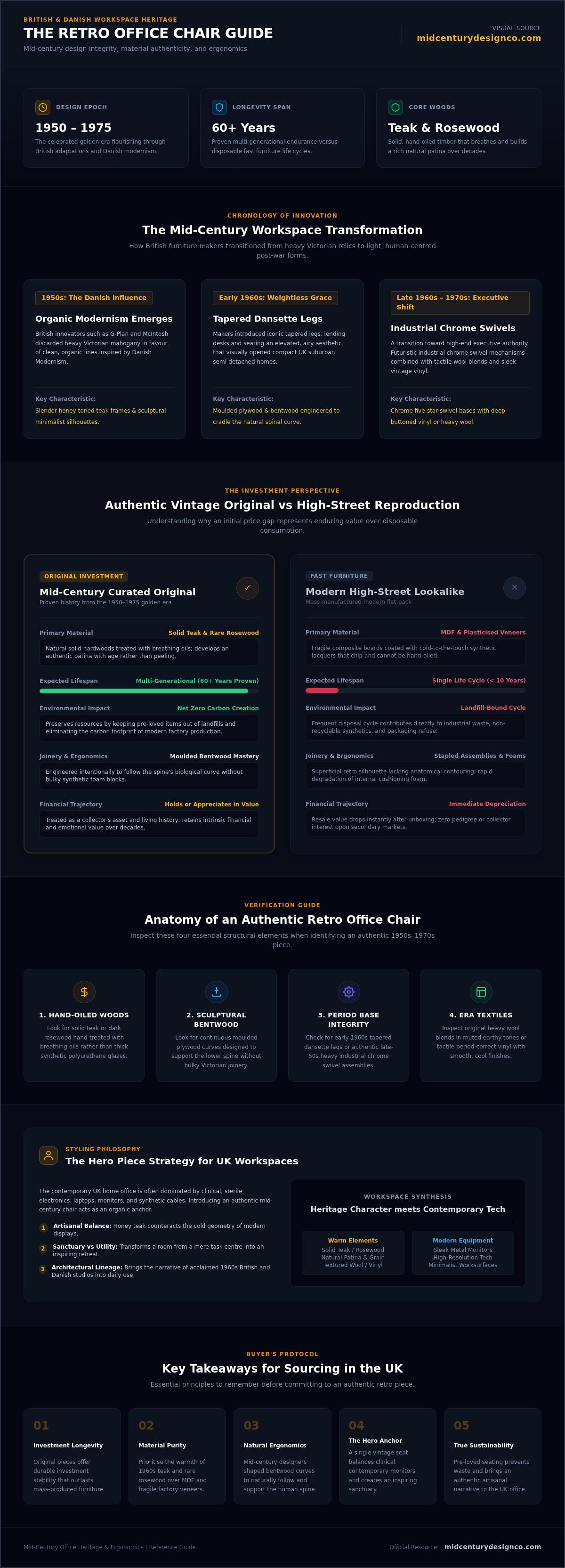
The true "golden era" of office design flourished between 1950 and 1975, a period where innovation in materials met a newfound appreciation for the natural world.
British manufacturers like G-Plan and McIntosh took cues from the minimalist elegance of Danish Modernism, adapting those sleek lines for the UK home. They replaced the imposing bulk of traditional seating with slender frames and warm, honey-toned teak. These pieces wasn't just manufactured; they were composed. Each curve was intentional, designed to support the body whilst pleasing the eye. It's this balance of artisanal soul and practical utility that makes vintage seating so compelling for the modern professional.
Era-Specific Features to Look For
When sourcing an authentic piece, the finer details reveal the chair's heritage. Early 1960s models often feature the iconic tapered "dansette" legs, which give the chair a sense of weightless grace. By the late 60s and early 70s, industrial chrome swivel bases became more common, reflecting a move toward a more futuristic, high-end executive aesthetic.
Sculptural curves are another hallmark. Designers utilised bentwood and moulded plywood to create backrests that cradled the spine, a feat traditional joinery couldn't achieve. You should also look for period-correct upholstery. Authentic textures range from the smooth, cool touch of vintage vinyl to the rich, tactile warmth of heavy wool blends in muted, earthy tones.
Why the UK Fell in Love with Mid-Century Workspace Design
The British public embraced this style as a symbol of post-war optimism. These chairs felt forward-thinking, clean, and unburdened by the weight of history. They offered a sense of sophistication that was accessible, bringing a touch of the executive suite into the suburban semi-detached. It was about creating a space that felt professional yet personal.
This love affair has only deepened with the rise of the modern home office. A vintage teak chair provides a soulful counterpoint to the clinical feel of contemporary laptops and monitors. It transforms a workspace from a mere utility area into a curated sanctuary. This desire for tactile, analogue experiences often leads professionals to seek out screen-free strategic challenges like Studio Showdown to enjoy in their newly inspired surroundings. Investing in a retro office chair UK means choosing furniture that holds its value, both financially and emotionally, far longer than any mass-produced alternative.
Vintage Authenticity vs Modern Reproductions: The Investment Perspective
The primary objection often surfaces when comparing price tags: why invest more in a sixty-year-old original when a modern high-street "retro-style" chair costs half the price? The answer lies in the distinction between a purchase and an investment. Modern "fast furniture" is designed for a single life cycle, often ending in a landfill within a decade. In contrast, an authentic retro office chair UK professionals choose is a piece of living history that has already proven its durability across generations. Choosing pre-owned isn't just an aesthetic preference; it's a profound commitment to sustainability that avoids the carbon footprint of new manufacturing.
Every vintage piece carries a narrative. It's a survivor. When you sit in a chair that has graced an acclaimed architect's studio in the 1960s, you're connecting with a lineage of design excellence. This emotional weight is something a factory-fresh reproduction simply cannot replicate. It's the difference between owning a print and owning the original canvas.
The Quality Gap: Solid Wood and Master Joinery
The difference is tactile. Modern reproductions frequently rely on MDF and thin, fragile veneers coated in plasticised factory finishes that feel cold to the touch. Authentic mid-century pieces showcase the honest warmth of solid teak or rich rosewood. These materials were hand-finished with oils that allow the wood to breathe and age gracefully. This natural process creates a unique patina, a soft glow and depth of colour that tells the story of the object's life. You can't fake the soul of a piece that has witnessed decades of history. If you're looking to anchor your workspace with this kind of heritage, you might pair it with an authentic desk to complete the narrative.
Resale Value: Furniture as a Tangible Asset
A mass-produced chair is a liability that depreciates the moment the box is opened. Its secondary market value is virtually non-existent. Curated vintage furniture operates on a different economic plane. Because these pieces are no longer in production, they represent a finite resource. An authentic retro office chair UK collectors seek often retains or even increases its market value over time, effectively acting as a hedge against a throwaway culture that prioritises the temporary over the timeless. You aren't just buying a seat; you're acquiring a tangible asset that can be passed down or resold to the next generation of design enthusiasts. It's a sophisticated way to furnish a workspace while protecting your capital.
Iconic Materials: From Warm Teak to Industrial Chrome Accents
The tactile experience of a retro office chair UK collectors value most often begins with the wood. Unlike the uniform, clinical surfaces of modern workstations, mid-century pieces celebrate the organic irregularities of nature. Teak was the undisputed king of this era. Its tight, linear grain and naturally oily surface made it the ideal medium for the organic, flowing lines that defined the 1960s. For those seeking something more exclusive, rosewood offered a darker, more dramatic alternative. These executive-level chairs are rare finds today, distinguished by their rich, ink-like streaks and dense weight.
Identifying authentic wood amongst a sea of stained modern pine requires a keen eye. Look for the depth of the grain. Authentic vintage teak has a "glow" that seems to come from within the wood itself, rather than a surface-level shine. Modern reproductions often use thin veneers over MDF that feel hollow when tapped. A genuine piece has a resonant, solid sound and a weight that reflects its high-quality construction. The late 1960s also introduced the "Space Age" influence, where designers began to experiment with polished chrome and brushed steel, creating a striking contrast against the warmth of the timber.
The Warmth of Vintage Teak Office Chairs
Teak became the signature material of the movement because it was incredibly stable and resistant to the warping that plagued lesser woods. This durability is why so many pieces have survived in such remarkable condition. To create a cohesive workspace, many enthusiasts choose to pair their seating with other iconic elements of the period. A teak chair looks particularly sophisticated when positioned in front of a Staples Ladderax shelving unit, as the shared wood tones create a sense of intentional, curated harmony. Maintaining this lustre is simple; a light application of high-quality teak oil once or twice a year is usually enough to keep the fibres hydrated and the colour vibrant.
Leather and Vinyl: The Executive Aesthetic
The upholstery of a vintage office chair is just as vital as its frame. High-quality black leather was the standard for the "executive" look, offering a professional atmosphere that feels both authoritative and inviting. However, many pieces from the era utilised "Skai" vinyl. This wasn't a cheap substitute but a high-performance material valued for its incredible durability and ease of maintenance. You can identify period-correct upholstery by looking for specific artisanal details:
- Button-tufting: Deep-set buttons that create a rhythmic, quilted texture on the backrest.
- Piping: Clean, corded edges that define the silhouette of the cushions.
- Stitched Seams: Heavy-duty, visible stitching that highlights the chair's structural curves.
These details don't just add visual interest. They're markers of a time when furniture was built to be a permanent fixture of the home, rather than a temporary convenience.
Ergonomics of the Past: Finding Comfort in Mid-Century Forms
A common misconception suggests that choosing a retro office chair UK collectors adore means sacrificing your physical wellbeing for the sake of a beautiful aesthetic. This couldn't be further from the truth. Designers of the mid-century era, particularly the Danish masters and British visionaries, were pioneers of human-centric design. They didn't view a chair as a static object. Instead, they saw it as a functional partner to the human body. They spent years studying the natural curve of the spine, ensuring that their sculptural creations offered support exactly where it was needed most.
Modern "fast furniture" often compensates for poor design with layers of cheap, bulky foam that loses its shape within months. Authentic vintage pieces rely on the integrity of their structure. It's about the precision of the frame and the quality of the materials. When you sit in a curated original, you're experiencing a level of intentionality that mass production simply cannot replicate.
The Sculptural Seat: Form Following Function
The breakthrough of steam-bent wood and moulded plywood allowed designers to create backrests that cradle the user. These organic, flowing lines provide a natural lumbar support that feels intuitive rather than forced. Because these chairs lack the overstuffed bulk of contemporary office seating, they possess a much lower profile. This is particularly beneficial for the typical UK home office, as it helps the room feel more spacious and airy. This same design philosophy of lightness and grace can be found across the era, from workspace seating to retro dining table and chairs UK, where every piece serves to enhance the flow of a home.
Adjustability and Mechanics
Whilst they may pre-date modern gas lifts, many high-end retro office chair UK models feature sophisticated manual swivel and tilt mechanisms. These are often built from heavy-duty steel and brass, materials designed to last a lifetime. When testing a vintage piece, it's essential to check the stability of the base. While early four-star bases are iconic, the later five-star versions offer increased stability for those who tend to move frequently throughout the workday. Ensuring these mechanical elements operate smoothly is vital for modern productivity. If you're ready to find a piece that balances historical soul with daily comfort, explore our curated collection of authentic office seating. Choosing a trusted specialist ensures that the mechanics have been vetted for modern use, allowing you to focus on your work within a workspace that feels truly inspired.
Curating Your Workspace: Integrating a Retro Statement Piece in the UK
Integrating a retro office chair UK into a contemporary workspace is an exercise in intentional contrast. It's about allowing the organic, soulful lines of the past to soften the clinical precision of modern technology. The most successful rooms often utilise the "Hero Piece" strategy. In this approach, you allow the chair to act as the room's sculptural centre, a focal point that commands attention through its unique silhouette and historical weight. A vintage teak frame provides a necessary tactile warmth that balances the cold, glass surfaces of monitors and the brushed aluminium of laptops.
Achieving a sophisticated look doesn't require a perfect match of materials. Mixing wood tones is a hallmark of a curated home. The honeyed glow of a 1960s teak chair sits beautifully against the pale grain of oak floorboards or the deeper, chocolate hues of walnut accents. This layering of textures creates a space that feels evolved rather than purchased from a single catalogue. For those with a larger workspace, the chair can act as a visual bridge, connecting a modern desk with a mid century modern sideboard used for storage. This creates a cohesive narrative across the room, uniting different eras through a shared appreciation for quality.
The National UK Sourcing Guide
Finding the perfect original requires a shift in mindset. Whilst unverified private listings might seem tempting, they often carry hidden risks regarding structural integrity and joint stability. Choosing a curated specialist offers a layer of security that is vital for investment pieces. A knowledgeable curator has already vetted the chair for its provenance and mechanical health. When enquiring about a piece, always ask about the stability of the swivel mechanism and whether the wood retains its original finish. For buyers across the country, the logistical hurdle is easily cleared. National UK delivery ensures that these heavy, artisanal items arrive safely at your door, regardless of where your sanctuary is located.
Completing the Look
A statement chair thrives when supported by the right environment. To avoid the "museum" feel, it's essential to understand how to style mid century modern furniture alongside contemporary comforts. Consider grounding the space with a heavy wool rug in a muted, earthy tone. This adds a layer of acoustic warmth that is particularly welcome in a home office. Lighting is equally transformative. A "Space Age" desk lamp with a polished chrome finish can echo the industrial accents of a chair's base, creating a rhythmic visual connection. Use this final checklist to ensure your space is ready:
- Contrast Textures: Pair smooth leather or vinyl with tactile textiles.
- Balance Light: Ensure the wood's patina is highlighted by warm, ambient lighting.
- Personalise: Add contemporary art or ceramics to keep the room feeling fresh and lived-in.
By following these principles, you create more than just a place to work. You cultivate an environment that inspires creativity through its connection to design history.
Investing in a Legacy of Design
Choosing an authentic piece is a commitment to quality that transcends the fleeting trends of modern retail. A unique narrative. An artisanal soul. You've discovered how the warm grains of teak and the sculptural precision of mid-century forms offer both lasting comfort and a tangible asset that appreciates over time. Unlike mass-produced alternatives, a genuine retro office chair UK professionals select brings a storied history and sophisticated character to your daily routine.
Your workspace should be a sanctuary that reflects your appreciation for heritage. Whether you're grounding a room with a rosewood executive chair or pairing a swivel base with a contemporary desk, these pieces bridge the gap between history and modern productivity. As West Sussex specialists, we focus exclusively on authentic 1950s and 60s originals. Every item is carefully vetted for its structural integrity and design significance, ensuring it remains a functional piece of art for years to come.
Explore our curated collection of authentic vintage desks and office seating and enjoy the ease of national UK delivery on every curated find. We invite you to find the piece that truly speaks to your space and elevates your working life.
Frequently Asked Questions
Are retro office chairs actually comfortable for daily work?
Yes, provided you choose a well-maintained original. Mid-century designers were pioneers of human-centric design, focusing on the natural curves of the spine rather than just thick padding. A high-quality retro office chair UK collectors recommend often provides better lumbar support through its sculptural frame than modern mass-produced alternatives. These chairs were built for durability and long hours, using the integrity of the wood and steel to support the user.
What is the difference between "retro-style" and "authentic vintage"?
"Retro-style" usually refers to modern reproductions made to look like old designs, often using MDF and plastic veneers. Authentic vintage pieces are originals from the 1950s to 1970s, crafted from solid teak or rosewood with superior joinery. At The Mid Century Design Co., we focus exclusively on these curated originals. Authentic pieces possess a soul and historical weight that modern replicas, often designed for short life cycles, simply cannot replicate.
How do I identify a genuine 1960s teak office chair?
Look for the depth of the grain and the weight of the piece. Genuine teak has a rich, linear grain and a natural warmth that feels oily to the touch, unlike the cold feel of modern stained pine. Check for maker's marks from British manufacturers like G-Plan or McIntosh. Authentic 1960s pieces will have solid wood components and a resonant, solid sound when tapped, rather than the hollow sound of modern veneers.
Do vintage swivel chairs meet modern safety standards in the UK?
Vintage chairs were manufactured before modern BSI safety certifications existed, so they don't carry contemporary labels. However, their heavy-duty steel and brass mechanisms were engineered for extreme longevity. When sourcing a retro office chair UK professionals should ensure the base is stable and the swivel mechanism operates smoothly. It's always wise to buy from a specialist curator who has vetted the structural integrity and mechanical health of every piece in their collection.
Will a vintage office chair hold its value over time?
Yes, an authentic vintage chair is a tangible asset that often retains or increases its value. Unlike new furniture that depreciates the moment it's purchased, original mid-century pieces represent a finite resource. As the market for 1960s British and Danish design continues to grow, curated originals become increasingly sought after. Investing in a vintage piece is a sophisticated way to furnish your home whilst protecting your capital against the throwaway culture of modern retail.
How do I maintain the wood and leather on a 50-year-old chair?
Maintenance is straightforward and rewarding. For teak frames, apply a light coat of high-quality teak oil once or twice a year to keep the wood hydrated and vibrant. For leather or vinyl, a gentle wipe with a damp cloth followed by a specialist conditioner will prevent the material from drying out. It's best to keep your furniture away from direct radiators or prolonged sunlight, as extreme heat can age the natural fibres prematurely.
Can I use a mid-century dining chair as an office chair?
You can certainly use a sculptural dining chair for lighter tasks or as a secondary statement piece. Many Danish dining chairs offer excellent support and a beautiful aesthetic for a home workspace. However, for full-day productivity, a dedicated office chair with a swivel mechanism allows for better dynamic movement. If you choose a dining chair, ensure the seat height is compatible with your desk to maintain a comfortable and healthy working posture.
What should I look for in an executive-style vintage office chair?
Look for premium materials and artisanal details that signal quality. Executive models often feature high-back designs, deep button-tufting, and rare woods like rosewood. Check for polished chrome or brushed steel accents on the base, which were popular during the "Space Age" influence of the late 1960s. The upholstery should be high-quality leather or durable vinyl with clean piping. These chairs were designed as "hero pieces," so ensure the proportions suit the scale of your desk.