

Sustainable Furniture Choices UK: The Case for Timeless Vintage
The most ecologically responsible piece of furniture for your home isn't found in a glossy new catalogue; it's already sitting in a workshop, seasoned by decades of history and waiting to be rediscovered. You're likely tired of the cycle of fast furniture that arrives in a flat-pack box only to lose its structural integrity within a few years. When you consider the benefits of buying vintage furniture, you aren't just choosing a style; you're opting out of the frustrating cycle of global shipping and retail greenwashing that defines modern mass production.
In this guide, we'll explore why authentic mid-century design serves as a sophisticated, sustainable investment for the modern British home. You'll discover how original teak sideboards and Danish dining sets hold their value whilst significantly reducing your environmental impact. We'll show you how to curate a home that feels like a genuine sanctuary, filled with objects that possess a soul and a narrative that new reproductions simply cannot replicate.
Key Takeaways
- Understand why the enduring quality of original mid-century design offers a permanent solution to the environmental burden of disposable furniture.
- Discover the aesthetic and financial benefits of buying vintage furniture as a way to invest in pieces that gain character and value with age.
- Learn to navigate the ethics of exotic timbers, enjoying the beauty of original teak and rosewood without the guilt of modern deforestation.
- Gain the skills to identify authentic joinery and era-specific markers that distinguish a genuine historical piece from a mass-produced imitation.
- Explore the versatility of modular systems like Staples Ladderax, which allow your home storage to grow and adapt alongside your lifestyle.
The Philosophy of Sustainable Furniture Choices in the UK
True sustainability isn't a fleeting trend; it's a quiet, intentional return to form. In a world of transient objects, sustainable furniture refers to pieces that minimise environmental impact through exceptional longevity and circularity. We're currently witnessing a significant shift in UK consumer behaviour. More homeowners are embracing "slow living," a philosophy that favours mindful curation over impulsive consumption. They want homes that feel like sanctuaries, filled with objects that possess a soul and a narrative. Sustainable furniture is a choice that prioritises the planet whilst celebrating design.
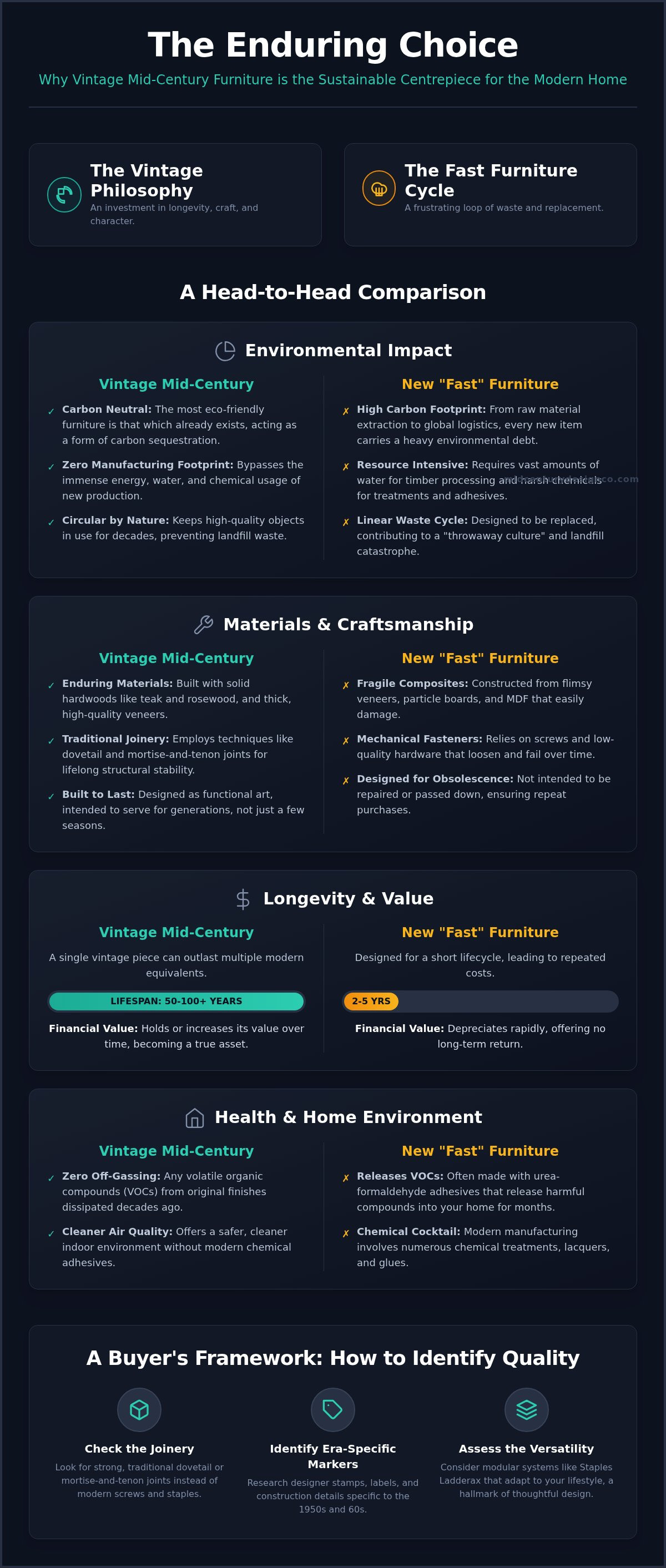
The problem with "fast furniture" is its inherent fragility. These low-cost modern items, often constructed from flimsy veneers and composite boards, are a landfill catastrophe. They aren't designed to be repaired or passed down. They're designed to be replaced. This cycle of waste is the antithesis of a thoughtful home, stripping away the character that only high-quality, seasoned materials can provide.
Beyond Greenwashing: What Truly Makes Furniture Eco-Friendly?
Modern retail is often saturated with "eco-labelled" products that still require massive energy to produce. In contrast, the inherent sustainability of vintage is undeniable. One of the most significant benefits of buying vintage furniture is its status as a naturally carbon-neutral choice. These pieces act as a form of carbon sequestration, holding onto the carbon stored in the original hardwood decades ago. By keeping these items in use, we prevent that carbon from being released. The UK market is a unique treasure trove for collectors, offering access to authentic pieces that have already stood the test of time. Understanding sustainable furniture design means recognising that the most ecological piece is the one that's already been made.
The Environmental Cost of New Manufacturing
Every new chair or desk carries a hidden debt. From the immense water usage in timber processing to the harsh chemical treatments and adhesives used in modern production, the environmental cost is staggering. The carbon footprint of global logistics and "just-in-time" retail models only adds to the burden, as pieces are shipped across oceans in carbon-heavy vessels. By selecting a piece from the past, you bypass the need for fresh raw material extraction. This logic is equally vital for professional spaces, where opting for preowned solutions from Smart Buy Office Furniture can significantly lower a company's environmental footprint. It's a simple, elegant act of preservation. You're choosing the sensory warmth of original teak over the sterile, high-impact reality of new manufacturing.
Why Vintage Mid-Century is the Ultimate Eco-Friendly Choice
Buying a vintage piece isn't just a purchase; it's an entry into a more responsible way of living. One of the most profound benefits of buying vintage furniture is the absence of modern industrial compromises. Modern flat-pack items often rely on urea-formaldehyde adhesives and particle boards that release volatile organic compounds (VOCs) into your living space for months. Vintage pieces, conversely, finished their off-gassing decades ago. They offer a cleaner, safer environment for the modern home. This is the essence of the circular economy in furniture, where high-quality objects remain in use for a century rather than a few years.
The 1950s and 60s represented a unique zenith for British and Danish craftsmanship. Designers of this era viewed furniture as functional art, blending sculptural beauty with uncompromising utility. They didn't build for the next season; they built for the next century.
The Longevity Factor: Craftsmanship over Convenience
Mid-century production favoured materials that were meant to endure. Solid teak, rich rosewood, and thick, high-quality veneers were the standard, not the exception. These materials were bonded using traditional joinery techniques, such as dovetail and mortise-and-tenon joints, which provide structural stability that mechanical screws simply cannot match. A single vintage sideboard can easily outlast three generations of modern alternatives. It's a testament to an era where "built to last" wasn't a marketing slogan but a manufacturing requirement. This durability is why the benefits of buying vintage furniture extend far beyond mere aesthetics; it's a financial and environmental victory for the homeowner.
Preserving Design Heritage as an Act of Sustainability
There is a romantic, evocative quality to a piece that has lived a previous life. When you bring an original chest of drawers or a Danish dining table into your home, you're inheriting a narrative soul. This emotional connection naturally encourages preservation, reducing the "throwaway culture" that plagues modern retail. These pieces aren't just utilitarian; they're investments that hold or even increase in value over time. They are the opposite of landfill fodder.
If you're beginning your journey, exploring The Definitive Guide to Authentic Mid Century Modern Sideboards can help you understand the specific markers of quality to look for. By choosing to invest in our curated collection of original pieces, you're actively participating in the preservation of design history whilst protecting the planet's future.
Evaluating Materials: Teak, Rosewood, and the Ethics of Timber
There is a quiet honesty in aged timber that modern manufacturing cannot replicate. One of the most compelling benefits of buying vintage furniture lies in the materials themselves, specifically the use of slow-grown hardwoods that have developed a depth of colour and stability over decades. Modern furniture often relies on rapid-growth timber or composite materials that lack structural soul. In contrast, mid-century pieces utilised timbers like teak and rosewood, which were selected for their incredible density and grain patterns. These original finishes are often more durable than modern synthetic coatings, as they were designed to be maintained and nourished rather than discarded when the surface shows signs of life.
When we discuss exotic timbers like rosewood, the ethical advantage of vintage becomes clear. These pieces represent a "sunken cost" of natural resources. By choosing an original 1960s sideboard, you are appreciating the beauty of these rare materials without contributing to new deforestation. It is an act of preservation that honours the material's history whilst protecting the living forests of today. A recent official report on the circular economy highlights that the UK must move beyond simple recycling towards waste prevention through better design and reuse. Vintage furniture is the embodiment of this principle.
The Enduring Appeal of Teak in the UK
Teak became the hallmark of mid-century excellence for good reason. Its high natural oil content makes it exceptionally resistant to the fluctuating humidity of the British climate, ensuring that drawers slide smoothly and surfaces remain stable through the seasons. Over time, the golden hue of vintage teak matures into a rich, honeyed patina that adds a sensory warmth to any room. Choosing vintage teak represents a responsible, sophisticated way to own rare timber without contributing to contemporary environmental degradation. For those looking to discover even more unique heritage pieces for the home, you can explore Chest of Drawers & Commodes from specialist collections that prioritise rarity and quality.
Sustainability is also found in adaptability. The genius of the Staples Ladderax system lies in its modularity; it is a design that grows, shrinks, and reconfigures to suit your changing needs. Unlike fixed modern shelving that might be abandoned during a house move, a modular system evolves with you. This prevents the need to replace entire furniture sets when your living circumstances change. For those looking to invest in this versatile system, reading An Expert Buying Guide to the Staples Ladderax Shelving Unit will help you understand how to build a configuration that serves you for a lifetime. This resource efficiency is a cornerstone of a truly sustainable home.
How to Source Sustainable Vintage Furniture: A Buyer’s Framework
Sourcing original mid-century pieces requires a shift in perspective. It's a move away from the instant gratification of modern retail towards a more patient, rewarding form of discovery. One of the primary benefits of buying vintage furniture is the opportunity to own a piece of history that has been curated specifically for its quality and design merit. To build a home that serves as a sustainable sanctuary, you need a framework that prioritises authenticity and longevity over mere convenience. It's about finding the soul in the object.
The sourcing process should follow a methodical path to ensure your investment is sound:
- Step 1: Identifying authenticity. Look for maker's marks or labels from renowned manufacturers like G-Plan, McIntosh, or Younger. Examine the joinery; hand-finished dovetail joints and solid wood drawer liners are hallmarks of quality.
- Step 2: Assessing condition. Value the patina of time. A few light surface marks or a gentle fading of the wood grain are not flaws; they are the narrative of the piece's life.
- Step 3: Measuring for purpose. UK homes often have specific constraints. A standard internal doorway is approximately 76 cm wide. Ensure your chosen sideboard or dining table can navigate your space without compromise.
- Step 4: Choosing a specialist. Avoid the unpredictability of general auctions. A specialist dealer provides quality assurance and a curated selection of original pieces.
- Step 5: Styling with intention. Don't feel pressured to create a period room. The most beautiful homes blend vintage soul with contemporary comfort.
Identifying Original Mid-Century Pieces
Authentic 1960s design is defined by its attention to detail. High-end sideboards often feature "book-matching," where two adjacent wood veneers are mirrored to create a perfectly symmetrical grain pattern across the doors. This level of craftsmanship is rare in modern production. If you're unsure how to integrate these bold designs into your home, How to Style Mid Century Modern Furniture offers practical advice on avoiding the "museum myth." It's about making these pieces work for your daily life.
The Investment Value of Authentic Vintage
Original furniture is an investment-grade choice. Unlike modern alternatives that lose value the moment they leave the showroom, authentic mid-century pieces are liquid assets that often appreciate. The resale market for quality teak and rosewood remains robust in the UK. By choosing original items, you're participating in a truly sustainable economy where value is preserved rather than discarded. It's a financially prudent way to protect the planet. To begin your own collection, view our latest arrivals of original mid-century furniture and discover the perfect piece for your sanctuary.
Investing in the Future with The Mid Century Design Co.
At The Mid Century Design Co., we believe a home should be more than a mere collection of functional objects. It should be a curated sanctuary. Our commitment to sourcing exclusively original mid-century furniture ensures that every piece you bring into your living space carries an authentic soul. By focusing on the benefits of buying vintage furniture, we provide a pathway to a more sustainable lifestyle that refuses to compromise on aesthetic sophistication. We offer a national UK service for those who seek to invest in pieces that protect the planet's future by honouring its design heritage. Choosing vintage is an act of preservation, a way to ensure that the craftsmanship of the past continues to inspire the present.
Curating Your Sustainable Sanctuary
Finding the perfect piece for a modern interior shouldn't be an overwhelming task. We act as your expert friend, simplifying the search by presenting a hand-selected collection that balances historical weight with sensory warmth. Our focus remains on high-impact items: original sideboards, elegant dining sets, and versatile Staples Ladderax systems. These pieces are chosen for their exceptional craftsmanship and their ability to anchor a room with genuine character. We look for the finer details, the matched wood grains and the sturdy joinery, to ensure that each item meets our rigorous standards for quality and design. You aren't just buying utility; you are discovering a narrative that matures alongside your home.
Why Originality Matters
We explicitly reject the sterile nature of modern reproductions. A reproduction might mimic a silhouette, but it lacks the spirit and the historical narrative of a piece that has lived through the decades. Every item in our collection is selected for its integrity and its place in the story of British and Danish design. These pieces possess a patina and a presence that no factory-fresh item can replicate. When you choose an original teak chest of drawers or a modular storage system, you're making a deliberate statement against the throwaway culture of modern retail. It is a commitment to a circular economy that values longevity over convenience. To find the next addition to your personal sanctuary, we invite you to browse our latest curated arrivals.
A Timeless Foundation for the Modern Sanctuary
A legacy for the home. A promise to the planet. Choosing authentic mid-century design is a profound act of preservation. It's a rejection of the disposable culture that defines modern retail. By focusing on the benefits of buying vintage furniture, you aren't just acquiring a sideboard or a dining set; you are curating a space with objects that possess a narrative soul. These 1950s and 60s originals, crafted from slow-grown hardwoods, serve as a bridge between historical excellence and future responsibility.
As specialists in Danish and British design, we ensure every piece in our collection is an authentic original. We provide national UK delivery on all curated pieces, bringing the sensory warmth of teak and rosewood directly to your door. Explore our curated collection of sustainable vintage masterpieces and discover how a single piece of history can transform your home into a sanctuary. Your journey towards a more mindful, beautiful living space begins with a single, well-chosen object.
Frequently Asked Questions
Is buying vintage furniture really more sustainable than buying new eco-friendly brands?
Choosing vintage is more sustainable because the most ecological product is one that already exists. Even eco-friendly new brands require energy for production, raw material extraction, and global logistics. By selecting an original piece, you're bypassing the carbon debt of new manufacturing. This is a primary example of the benefits of buying vintage furniture, as it keeps high-quality materials in a circular loop rather than contributing to the ongoing demand for fresh timber.
How can I tell if a mid-century piece is an original or a modern reproduction?
Identifying an original requires a keen eye for historical markers. Authentic mid-century pieces often feature maker's labels from manufacturers like G-Plan or McIntosh inside drawers or on the underside. Look for traditional joinery like dovetails and the specific weight of solid wood or high-quality veneers. Modern reproductions frequently rely on lightweight composite boards. They often lack the nuanced grain matching, known as book-matching, found in genuine 1960s British and Danish design.
Does vintage furniture require a lot of maintenance to stay sustainable?
Original vintage furniture is remarkably low-maintenance because it was built from durable, seasoned hardwoods. A simple application of high-quality teak oil or a natural beeswax polish every few months is usually sufficient to nourish the grain. This minimal upkeep ensures the piece remains functional for another century. Unlike modern alternatives that deteriorate when the surface is damaged, vintage wood can be gently cared for to preserve its character and historical narrative.
Why is teak such a popular choice for sustainable vintage furniture in the UK?
Teak is favoured in the UK because its high natural oil content makes it incredibly resilient against our fluctuating humidity. This stability prevents the wood from warping or cracking as the seasons change. Beyond its practical durability, the golden, honey-toned hue of vintage teak matures beautifully over time. It provides a sensory warmth that complements the light in British homes, making it a staple for those seeking both longevity and aesthetic soul.
Can I use vintage mid-century furniture in a high-traffic family home?
Mid-century furniture was designed for the rigours of everyday family life. These pieces were constructed with robust joinery and resilient materials intended to last for generations. A vintage sideboard or dining table can easily withstand the activity of a modern household. In fact, the natural patina that develops from daily use often enhances the piece's character. It's a practical, sturdy choice that offers more structural integrity than most contemporary flat-pack alternatives.
What should I look for when buying a Staples Ladderax system for the first time?
When sourcing a Staples Ladderax system, first inspect the integrity of the metal or wood ladders and the specific hooks used to support the shelves. Ensure the components are original and that the wood finish across the cabinets and shelves is consistent. One of the greatest benefits of buying vintage furniture like Ladderax is its modularity. You should look for a configuration that serves your current storage needs whilst allowing for future expansion or reconfiguration.
Does the value of mid-century furniture increase over time?
Authentic mid-century furniture is widely considered an investment-grade asset. Unlike new furniture, which depreciates rapidly, original pieces from the 1950s and 60s tend to hold or increase in value as they become rarer. The market for high-quality Danish and British design remains exceptionally strong across the UK. Investing in a well-preserved teak sideboard or a modular storage system is a financially prudent way to furnish your home whilst protecting the planet.
How do I style a 1960s sideboard in a modern British apartment?
Styling a 1960s sideboard in a contemporary apartment is about creating a dialogue between the past and present. Avoid a museum-like feel by pairing the piece with modern art, vibrant indoor plants, or minimalist ceramic lamps. The clean, architectural lines of mid-century design allow it to sit comfortably alongside modern textures and neutral palettes. This approach highlights the sculptural beauty of the wood grain whilst ensuring your living space feels fresh, inviting, and personal.