

The Collector’s Guide to Vintage Mid Century Furniture in the UK
A home is far more than a simple collection of functional objects; it's a living archive of the stories we choose to keep and the heritage we invite across our threshold. You likely understand that a mass-produced reproduction can never quite replicate the tactile warmth of a hand-finished sideboard or the sculptural grace of an original dining chair. Finding authentic vintage mid century furniture UK wide has become an art form in itself, particularly when the fear of accidentally purchasing a modern copy or overlooking a structural flaw in aged timber lingers in the back of your mind.
This guide serves as your expert companion in the search for genuine craftsmanship. We'll show you how to identify, source, and style pieces that bring a distinct soul to your British home, ensuring every purchase is a confident investment in design history. From the modular brilliance of Staples Ladderax systems to the rich, enduring colour of teak and rosewood, you'll discover how to curate a sanctuary that celebrates the past. We'll preview the essential checks for wood condition and the impact of the 2026 fire safety regulations, giving you the clarity needed to build a collection that starts conversations and lasts a lifetime.
Key Takeaways
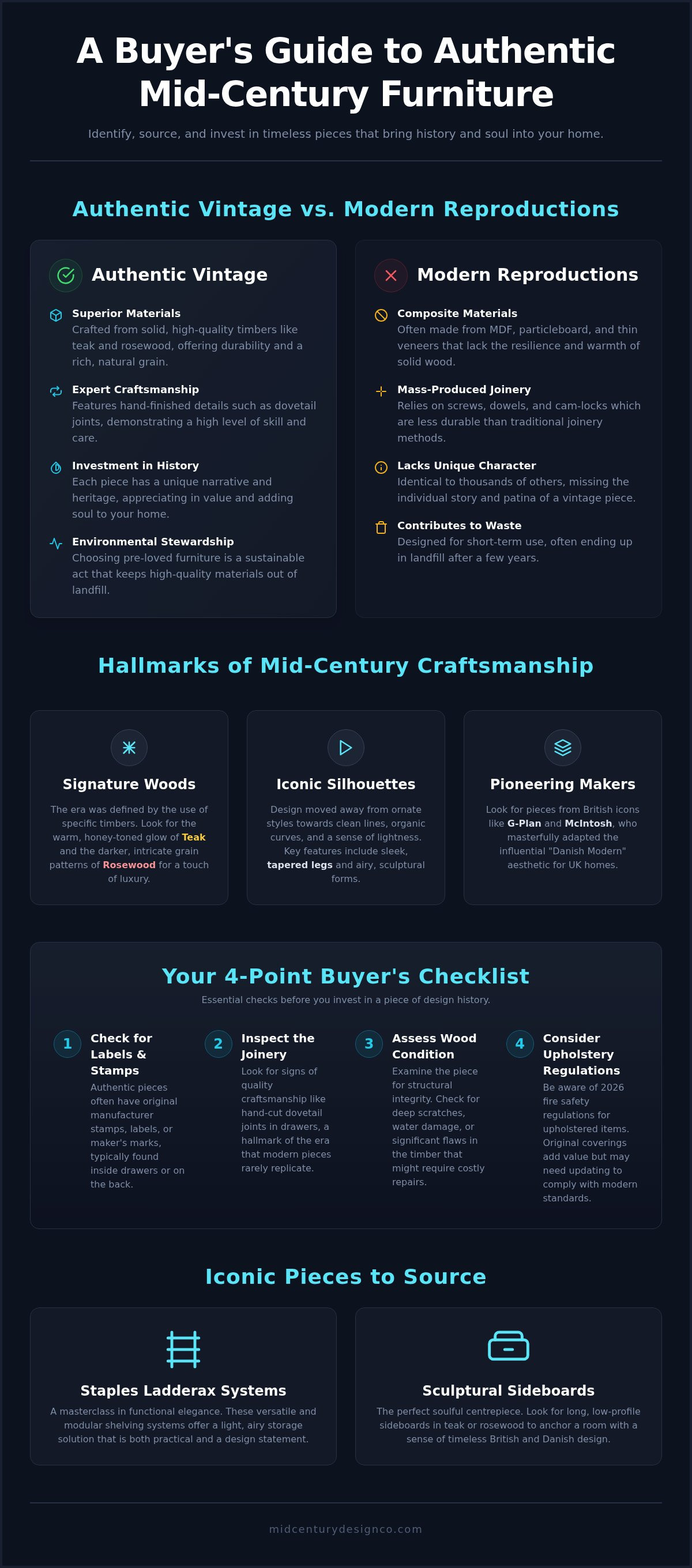
- Learn how to distinguish authentic vintage mid century furniture UK from modern copies by identifying original manufacturer stamps and era-specific labels.
- Discover the signature hallmarks of 1960s craftsmanship, including the warm hues of genuine teak and the precision of hand-finished dovetail joints.
- Uncover the functional elegance of modular systems such as Staples Ladderax and how to source these versatile icons for your personal space.
- Understand the investment value of original furniture, where the unique narrative and heritage of the piece far outweigh the utility of a mass-produced reproduction.
- Master the art of selecting soulful centrepieces, such as a sculptural sideboard, to anchor your home with a sense of timeless British and Danish design.
The Timeless Allure of Vintage Mid Century Furniture in the UK
The Mid-century modern era represents a rare moment in history where utility met high art. It was a golden age of British and Scandinavian design, spanning roughly from the late 1940s through the late 1960s. During these decades, designers moved away from heavy, ornate Victorian styles toward clean lines and organic silhouettes. Today, the allure of vintage mid century furniture UK wide is stronger than ever. Homeowners aren't just looking for chairs or tables; they're seeking a connection to a period of boundless optimism and refined craftsmanship.
Every piece carries a narrative, a whisper of a past life that brings a sense of soul to a contemporary room. This is furniture as functional art, designed to be lived with and loved for generations. When you choose an original piece, you aren't just decorating a space. You're preserving a story. The presence of vintage mid century furniture UK collectors prize transforms a house into a gallery of personal history, where each object serves as a conversation starter.
The sensory warmth of teak, with its honey-toned glow and smooth, oil-finished surface, encourages a "slow living" philosophy. It invites you to pause, to run your hand over a curved armrest, and to appreciate the intentionality behind every joint. This aesthetic remains a favourite amongst those who value quality over quantity, offering a sanctuary of calm in an increasingly digital world. These pieces weren't built to be replaced; they were built to endure, gaining character and depth as the decades pass.
Why Authentic Vintage Beats Modern Flat-Pack
The choice between a mass-produced item and heritage design is a choice between the temporary and the timeless. Modern flat-pack often relies on composite materials that lack the resilience of solid timber. In contrast, original mid-century pieces use expert joinery, like the dovetail joints in a chest of drawers. Choosing pre-loved furniture is also an act of environmental stewardship. By sourcing sustainable vintage pieces, you enjoy unique grain patterns in aged teak that modern veneers cannot replicate, whilst ensuring high-quality materials stay out of landfill.
The Cultural Impact of Mid Century Design in Britain
Britain's relationship with this aesthetic was forged after the Second World War. There was a shift toward an optimistic, forward-looking domesticity. The 1951 Festival of Britain was pivotal, introducing sleek, tapered legs and airy forms that felt radical compared to the clutter of the past. These designs were aspirational and practical, created for smaller, modern homes. They offered a promise of a better, more organised life, a sentiment that still resonates in our busy world today as we seek out pieces that balance beauty with everyday utility.
Defining the Era: Materials, Makers, and Iconic Silhouettes
To truly appreciate the vintage mid century furniture UK collectors adore, one must look closely at the physical language of the 1950s and 60s. This period abandoned the visual weight of previous generations in favour of lightness, fluidity, and a sense of movement. Quality was never sacrificed for style. Instead, it was found in the quiet details: the precision of a hand-cut dovetail joint, the smooth taper of a solid wood leg, and the seamless organic curves of a steam-bent chair back. These hallmarks signify a piece designed with a deep respect for both the material and the end user.
The Warmth of Teak and the Elegance of Rosewood
Teak was the undisputed protagonist of the 1960s. Its honey-toned warmth, often finished with a simple oiling, allowed the natural grain to speak for itself without the need for heavy, dark varnishes. British manufacturers like G-Plan and McIntosh embraced this timber, creating pieces that felt both exotic and domestic. Teak became the preferred wood for mid-century craftsmen due to its remarkable durability and its aesthetic versatility in both structural and decorative applications. For those seeking a more dramatic statement, rosewood offered a darker, more intricate grain pattern, lending an air of sophisticated luxury to dining sets and sideboards, a standard of quality that contemporary houses like Cocolea continue to champion through bespoke, high-end design.
The "Danish Modern" movement acted as a catalyst, revolutionising how British homes were furnished. Designers like Grete Jalk and Johannes Andersen introduced a "Nordic Nuance" that prioritised human-centric forms and slimline silhouettes. This influence was masterfully adapted by significant British furniture designers who brought high-end aesthetics to the national UK market. If you're beginning your collection, you might enjoy this elegant guide to buying vintage Danish coffee tables to see how these influences manifest in smaller, occasional pieces.
Storage also underwent a radical transformation during this era. The rise of the modular system, most notably the Staples Ladderax, allowed homeowners to customise their walls with a blend of shelving and cabinets. Meanwhile, the long, low sideboard became the essential centrepiece of the British living room, offering vast storage whilst maintaining a sleek, minimalist profile. If you're looking to anchor your own space with a piece of history, consider exploring our curated collection of sideboards to find a narrative that fits your home.
Authentic Vintage vs Modern Reproductions: Choosing with Confidence
A modern reproduction might mimic a silhouette from across the room, but it can't replicate the narrative weight of a piece that has lived through decades. When you run your hand over the surface of vintage mid century furniture UK collectors have cherished, you feel the "patina"—a gentle, storied wear that only time and care can bestow. This isn't a flaw. It's a certificate of authenticity written into the grain of the wood. Authentic pieces possess a soul and a sensory warmth that mass-produced copies, often constructed from inferior composite materials, simply cannot project.
Choosing an original is an act of preservation. Whilst a high-street copy is often a "ghost" of a design, an original 1960s sideboard or dining set is a functional archive of British and Scandinavian heritage. These objects were built during a period when craftsmanship was a point of pride, resulting in furniture that doesn't just occupy a space but enriches it with character and history.
Spotting the Signs of an Original Piece
Identifying a genuine article requires a keen eye for construction and provenance. Start by looking for manufacturer stamps or paper labels inside drawers or on the underside of frames. Makers like G-Plan often used distinctive red or gold embossed stamps, whilst McIntosh and Ercol favoured specific typography that evolved over the decades. You should also examine the wood grain; on a high-quality original, you'll often see grain continuity, where the pattern flows seamlessly across drawer fronts or cupboard doors. For a more detailed breakdown of what to look for, consult this checklist for identifying original mid century furniture to ensure your purchase is the real deal.
The Investment Value of Vintage Furniture
From a financial perspective, the difference between an original and a reproduction is stark. High-street furniture typically suffers from immediate and significant depreciation the moment it leaves the showroom. In contrast, authentic vintage mid century furniture UK buyers source often holds or even increases its value over time. We've seen a growing market for "investment grade" pieces, particularly those in original, well-maintained condition. Collectors recognise that as these items become rarer, their historical and aesthetic value grows. Investing in a genuine teak or rosewood piece isn't just about furnishing a room; it's about securing a tangible asset that can be passed down through generations, maintaining its spirit and its worth long after modern alternatives have been discarded.
Curating Your Home: From Staples Ladderax to Teak Sideboards
Integrating vintage mid century furniture UK collectors prize into a contemporary British home is about creating a dialogue between eras. It isn't about recreating a 1960s film set; instead, it's about finding heritage pieces that harmonise with modern textures and natural light. A single teak sideboard or a set of sculptural dining chairs can anchor a room, providing a sense of permanence and history that new furniture often lacks. By blending these soulful objects with contemporary art and soft furnishings, you create a space that feels curated rather than merely decorated. To find unique pieces that complement this aesthetic, you can visit Brian Crosby Art.
The Staples Ladderax shelving unit remains one of the most sought-after modular systems for a reason. Its adaptive design allows you to organise a room without the visual clutter of heavy, built-in cabinetry. You can mix and match wooden cabinets with open shelves, creating a layout that feels light and airy whilst providing immense practical storage. Whether you prefer the honey warmth of teak, the deep tones of mahogany, or the crisp contrast of white ladders, this system evolves with your needs. It's the perfect solution for displaying a growing library or a curated collection of ceramics without overwhelming the room's footprint.
Selecting the Perfect Mid Century Sideboard
A sideboard is often the visual centrepiece of a living space. It offers a vast surface for ambient lighting and art whilst concealing everyday essentials behind sliding doors or within felt-lined drawers. Before you commit, measure your wall space carefully. A piece that's too small can look lost, whilst one that's too large might overwhelm the room's proportions. Look for a balance of beauty and function, such as the sculptural, integrated handles found on G-Plan Fresco models or the minimalist, clean lines of McIntosh designs. For deeper insight into specific models and makers, our guide on authentic mid century modern sideboards provides the technical detail you need to choose with confidence.
Morning Rituals: Desks and Dressing Tables
There is a romantic, tactile joy in the objects we use for our daily rituals. An authentic mid century modern desk can transform a home office into a space of quiet focus, where smooth-running wooden drawers and solid timber surfaces provide a grounding presence. In the bedroom, a Danish dressing table with its elegant mirrors and slender, tapered legs adds a touch of mid-century glamour to your morning routine. These pieces aren't just utilities. They're invitations to slow down and appreciate the craftsmanship in your hands, from the curve of a solid wood handle to the unique grain of the timber. If you're ready to find a piece that speaks to your home's unique narrative, browse our latest arrivals of authentic storage and sideboards today.
Investing in History: Why Originality Matters
Every piece of furniture we curate at The Mid Century Design Co. is a vessel for a story that began decades ago. We believe that a home should be a reflection of your own narrative, built from objects that possess a distinct spirit and a tangible link to the past. This is why we focus exclusively on original vintage mid century furniture UK collectors can cherish, purposefully avoiding the soulless uniformity of modern reproductions. When you select a piece from our collection, you aren't just a consumer. You become a temporary custodian of a design legacy, entrusted with a fragment of history that has already stood the test of time.
Choosing an original piece is an investment in authenticity. It's a commitment to the "slow living" philosophy, where quality and character are valued over the convenience of the disposable. These objects were crafted during an era of boundless optimism and exceptional skill, designed to be functional art that enriches your daily life. By bringing these pieces into your British home, you're ensuring that the heritage of the 1950s and 60s continues to thrive in a contemporary context.
The Soul of the Object
There is a profound, quiet beauty in an object that wears its history with grace. Authentic wear and the rich, honey-toned patina of aged teak tell a story that aggressive, modern restoration can sometimes erase. We value "honest" furniture that shows its age with a sense of dignity. These subtle marks of time are not flaws; they are the hallmarks of a life well-lived. For those who value authenticity above all else, the soul of an untouched original is irreplaceable. It offers a sensory warmth and a visual depth that a brand-new, factory-finished surface can never hope to replicate.
Your Journey with The Mid Century Design Co.
Our collection is curated with the discerning eye of a passionate collector, offering a gallery-like experience that invites you to appreciate the nuances of every silhouette. We see ourselves as your partner in the search for the perfect sanctuary-piece, whether that's a sculptural sideboard to anchor your living room or a versatile modular system to organise your life. Our national UK delivery service ensures that these storied objects arrive safely at your threshold, regardless of where you reside. We invite you to linger amongst our latest discoveries and find the piece that speaks to your own home's narrative. To begin your journey, browse our curated collection of authentic vintage furniture and discover the enduring power of original design.
Creating Your Mid-Century Sanctuary
Building a home filled with character is a journey of discovery. It's about finding those rare objects that resonate with your personal aesthetic whilst honouring the craftsmanship of a bygone era. By choosing original vintage mid century furniture UK collectors prize, you ensure your space is anchored by pieces with genuine provenance and a storied soul. Whether you're drawn to the modular brilliance of a Staples Ladderax system or the honey-toned warmth of a Danish sideboard, the right piece transforms a room into a living gallery of design history.
At The Mid Century Design Co., we act as your passionate curator. We specialise in authentic Staples Ladderax systems and a hand-picked selection of original Danish and British designs. Our national UK delivery service brings these historical treasures directly to your threshold, ensuring the narrative of the past remains intact. We invite you to discover our latest curated arrivals of authentic vintage mid-century furniture and find the centrepiece that speaks to you. Your sanctuary is waiting to be shaped by the enduring spirit of original design.
Frequently Asked Questions
How can I tell if a mid-century sideboard is an original or a reproduction?
You can identify an original by looking for manufacturer stamps or paper labels from makers like G-Plan, McIntosh, or Ercol. Original pieces feature specific construction details such as solid wood dovetail joints and grain continuity across the facade. Reproductions often use modern composite materials or lack the refined, hand-finished quality of 1960s craftsmanship. Always check the underside and inside drawers for these historical markers of authenticity before purchasing.
Is vintage teak furniture easy to maintain in a modern UK home?
Vintage teak is remarkably resilient and requires only minimal care to maintain its honey-toned glow. Most original pieces were finished with a simple oil treatment, so a light application of high-quality teak oil every few months is usually sufficient. You should avoid placing your furniture directly next to radiators or in harsh sunlight to prevent the timber from drying out or fading. This simple routine preserves the wood's natural beauty for decades.
What makes Staples Ladderax such a popular modular shelving system?
Staples Ladderax is celebrated for its exceptional versatility and light aesthetic that doesn't overwhelm a room. The system relies on metal ladders that support various cabinets and shelves, allowing you to customise the height and layout to suit your space. It's a perfect solution for the modern British home, offering vast storage whilst maintaining an airy, open feel that contemporary built-in units often lack. Its modular nature means it can evolve with you.
Why should I buy authentic vintage furniture instead of a modern copy?
Authentic vintage mid century furniture UK collectors seek offers a unique narrative and historical soul that a modern copy cannot replicate. Beyond the evocative patina of aged wood, original pieces are built to a higher standard of craftsmanship, ensuring longevity and investment value. Whilst a reproduction depreciates immediately, a genuine 1960s piece often holds or increases its worth, making it a sustainable and financially sound choice for your home.
Do you provide national delivery for larger items like wardrobes and dining sets?
We offer a comprehensive national UK delivery service for our entire collection, including substantial pieces such as wardrobes, dining sets, and large sideboards. Our delivery partners are experienced in handling delicate vintage items, ensuring they arrive at your home in the same condition they left our gallery. We understand the importance of safe transit for these historical objects and coordinate closely with you to arrange a convenient arrival time.
How do I style a 1960s teak chest of drawers in a contemporary bedroom?
Styling a 1960s chest of drawers is about creating a balance between the warm timber and modern textures. Try placing a minimalist ceramic lamp or a piece of contemporary art on the surface to bridge the eras. The clean lines and tapered legs of the piece work beautifully against neutral walls, allowing the unique grain of the teak to serve as a natural focal point within your sanctuary-like bedroom space.
Are original mid-century chairs sturdy enough for everyday use?
Original mid-century dining chairs and office chairs were designed with a focus on ergonomics and structural integrity. Many feature solid wood frames and expert joinery that has already survived over sixty years of daily use. Whilst they are certainly sturdy enough for modern life, we recommend checking the joints occasionally for any movement. Their enduring quality is a testament to the superior materials and construction methods favoured during the mid-century era.
What is the difference between British and Danish mid-century furniture?
British mid-century design often adapted the sleek Danish Modern aesthetic for a domestic market, resulting in slightly more substantial forms from makers like G-Plan. Danish furniture, crafted by masters such as Grete Jalk, frequently prioritised extreme minimalism and sculptural, organic curves. Both styles share a devotion to high-quality teak and rosewood, but Danish pieces often feel a touch lighter and more avant-garde in their silhouettes compared to their British counterparts.