

Mid-Century Furniture: 2026 Collector's Investment Guide
Your living room shouldn't just be a place to rest. It should be a curated portfolio of functional art. While many see a vintage sideboard as a simple storage solution, the seasoned collector sees a narrative of mid-century craftsmanship that holds its value far better than any modern alternative. You likely appreciate the warmth of aged timber and the clean lines of the era, yet the fear of accidentally purchasing a modern reproduction or a common mass-produced piece often holds you back from making a significant acquisition.
Identifying the most resilient mid century furniture designers to invest in is the key to transforming your home into a sanctuary that doubles as a financial asset. We understand the confusion that arises when distinguishing between everyday teak and the rare gems that define the period. This guide provides a clear list of designers to watch for in 2026, alongside the essential markers of authenticity that separate investment-grade pieces from the rest. You'll gain the confidence to choose furniture that offers a timeless aesthetic soul whilst securing your legacy as a discerning collector of history.
Key Takeaways
- Learn why mid-century furniture is considered functional poetry and a hard asset because of the scarcity of old-growth timber.
- Identify the most resilient mid century furniture designers to invest in, from the accessible British charm of G Plan to the blue-chip Danish mastery of Hans J. Wegner.
- Discover how to spot investment-grade quality by looking for architectural joinery and the rich grains of solid teak and afromosia.
- Understand the unique value of Staples Ladderax systems and A.H. McIntosh sideboards as functional art that appreciates over time.
- Master the art of future-proofing your interior by prioritising a hero piece with classic tapered legs to anchor your collection.
The Enduring Currency of Mid Century Modern Design
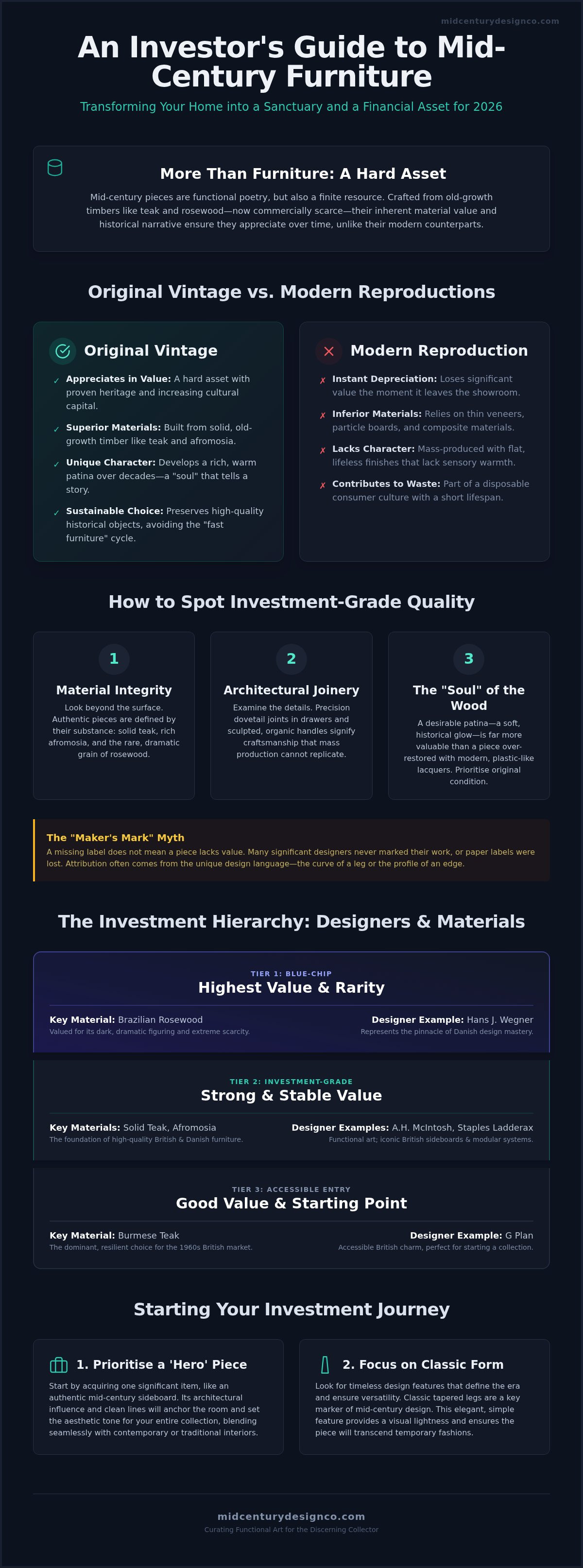
Mid-century modern design isn't just a fleeting trend. It represents a specific period of functional poetry that flourished from the 1940s through to the late 1960s. During these decades, designers moved away from the heavy, ornate styles of the past to embrace a new philosophy of light, form, and purpose. For the sophisticated homeowner, these pieces offer far more than a place to sit or store belongings. They are a bridge between history and the present. We are witnessing a profound shift in contemporary British homes, where the focus has moved from simply buying furniture to the thoughtful act of curating a collection. Each original piece carries a sixty-year narrative, a soul that resonates through the tactile grain of the timber and the deliberate precision of the joinery.
These objects remain a hard asset in the interior design world because they are finite. The old-growth timber used during the mid-twentieth century, particularly the rich, oily teaks and exotic rosewoods, is no longer available for commercial production on a large scale. When you identify the right mid century furniture designers to invest in, you are acquiring a piece of history with inherent material value. The craftsmanship of the era relied on human touch and structural integrity, ensuring these pieces were built to last for generations rather than a single season.
Why Vintage Outperforms Modern Reproductions
Original vintage pieces possess a depth of character that modern replicas cannot hope to mirror. While a high-street copy might mimic a silhouette, it often relies on flat, lifeless veneers and inferior composite materials that lack sensory warmth. These modern imitations suffer from instant depreciation the moment they leave the showroom. In contrast, an original piece carries immense heritage value. The soul of original teak develops a unique patina over decades, a soft glow that speaks of longevity and historical weight. Choosing the genuine article is an act of sustainability, favouring the preservation of high-quality timber over the "fast furniture" cycle.
The Aesthetic Versatility of Investment Pieces
The true power of a well-chosen investment piece lies in its ability to anchor a room. An authentic mid century modern sideboard serves as a perfect example of this architectural influence. Its clean lines and organic curves allow it to play well amongst both contemporary minimalist spaces and more traditional British interiors. This versatility is exactly why savvy collectors look for specific mid century furniture designers to invest in; their work transcends temporary fashions. Investment furniture is defined as a piece that retains its daily utility whilst steadily increasing in cultural capital and financial worth. It is functional art that turns a house into a sanctuary.
Defining Investment Grade: What to Look for in Vintage Pieces
Distinguishing between a "retro-style" piece and a true investment-grade asset requires a keen eye for material integrity. Whilst high-street reproductions often hide behind thin veneers and particle boards, authentic vintage pieces are defined by their substance. Solid teak, afromosia, and the elusive rosewood form the foundation of these historical objects. Architectural joinery is another hallmark of quality. Look for the precision of dovetail joints in drawers and the presence of organic, sculpted handles that appear to grow from the wood itself. These details signify a level of craftsmanship that mass production simply cannot replicate.
There is a common misconception that a piece must carry a label to be valuable. This "Maker Mark" myth often leads collectors to overlook incredible works. Many of the most significant mid century furniture designers to invest in produced pieces that were either never marked or lost their paper labels over the decades. In these cases, attribution comes through design language; the specific curve of a leg or the unique profile of a sideboard's edge tells the story of its origin. When assessing a piece, prioritise the "soul" of the wood. A desirable glow, or patina, is far more valuable than a piece that has been stripped and over-restored with modern, plastic-like lacquers.
The Hierarchy of Materials: From Teak to Rosewood
The "grain story" of a piece often dictates its final value at auction. Burmese teak was the dominant choice for the 1960s British market, prized for its warmth and resilience. However, Brazilian Rosewood remains the pinnacle for serious collectors. Its dark, dramatic figuring and scarcity make it a blue-chip material. Because international trade of this timber is now strictly regulated, original pieces represent a finite resource. The tactile warmth of these woods is a sensory experience that modern materials fail to provide.
Sourcing Authenticity in the UK Market
Finding genuine pieces requires patience and a trusted partner. Reputable dealers play a vital role in verifying the provenance and structural health of an item. It's essential to identify original mid century furniture pieces through their subtle design cues rather than relying solely on stamps. Avoid items that look "too new" or have been finished with harsh modern chemicals, as this destroys the historical narrative of the timber. If you are looking to start your collection with confidence, exploring a curated selection of authentic vintage furniture is often the safest path to securing a piece that will appreciate in value.
British Design Icons: From G Plan to Staples Ladderax
The British contribution to the mid-century movement is defined by a pragmatic elegance. Whilst Scandinavian designers often led with abstract form, British makers focused on the marriage of structural honesty and domestic utility. G Plan, the brand name of E. Gomme, remains the most accessible entry point for collectors. Their "Fresco" and "Danish" ranges are particularly noteworthy for those researching mid century furniture designers to invest in. These pieces offer the perfect balance of iconic silhouettes and robust construction, making them ideal for daily use in a modern home. For a more refined Scottish perspective, A.H. McIntosh of Kirkcaldy represents the pinnacle of sideboard manufacturing. Their Dunvegan model, with its signature sculpted handles, is a masterclass in teak craftsmanship.
Beyond the teak-heavy mainstream, Ercol provides a distinct investment profile. Lucian Ercolani’s use of solid elm and beech in the Windsor range creates a lighter, more organic feel that contrasts beautifully with the darker tones of the era. For the high-end collector, the architectural work of Robert Heritage for Archie Shine is a blue-chip choice. These pieces often feature exotic timbers and grander scales, serving as a sophisticated statement in any curated interior. Each of these makers represents a different facet of the British design soul, ensuring there is a piece to suit every collector's narrative.
The Rise of Staples Ladderax: Modular Investment
Modular systems represent one of the most exciting growth areas for contemporary collectors. The Staples Ladderax shelving unit is the ultimate flexible investment. Its genius lies in its adaptability. You can start with a simple two-bay system and expand as your space grows. There is a specific hierarchy of value here. Bronze or black ladders are often preferred for a moodier, industrial feel, whilst gold ladders offer a touch of mid-century glamour. Teak cabinets and bureaus remain the most sought-after components, holding their value because they serve as both storage and a striking visual anchor.
McIntosh and Younger: The Sideboard Specialists
When it comes to storage, the "long and low" silhouette is the definitive look of the period. Collectors often compare the sleek, minimalist lines of A.H. McIntosh sideboards with the heavier, high-quality feel of A. Younger pieces. Younger was known for its limited production runs and exceptional attention to detail, making their furniture a rarer find on the market today. These sideboards aren't just cupboards. They are functional art pieces that define the layout of a living room. Investing in these specialists ensures you own a piece that was designed specifically to elevate the British domestic experience during the golden age of design.
The Danish Influence: Why Nordic Craftsmanship Holds Its Value
The Danish Modern movement redefined the domestic landscape by treating timber as a living, breathing medium. It championed a human-centric philosophy. Organic curves were engineered to follow the body's natural contours rather than adhering to rigid, industrial lines. When you're researching mid century furniture designers to invest in, names like Hans J. Wegner and Kai Kristiansen are the "blue chip" assets of the collector's world. Their work represents a level of structural refinement that remains unsurpassed. This Nordic influence even crossed the North Sea. It resulted in iconic collaborations like Ib Kofod-Larsen’s work for G Plan, which combined British manufacturing scale with an unmistakable Danish soul. Whether you're seeking a minimalist desk or an authentic vintage Danish coffee table, these objects often serve as the crown jewel of a curated interior.
The Sculptural Language of Danish Seating
Danish chairs are perhaps the finest examples of how these designers turned utility into structural poetry. The investment value of seating by Niels Otto Møller, for instance, is heavily influenced by the condition of the original paper cord seats and the fluid transition between the legs and the frame. Every curved backrest was designed to provide comfort whilst maintaining a light, airy silhouette. The sensory experience of hand-finished Danish teak, with its velvet-like texture and deep, honeyed glow, remains a primary driver of its long-term investment value. These are pieces that invite touch and appreciation, standing as testament to a time when furniture was crafted with a slow, intentional rhythm.
Danish Desks and Workspaces
The demand for an authentic Danish desk in the UK has soared in recent years. This trend is driven by a desire for workspaces that feel like a sanctuary rather than a cold office. Collectors look for specific architectural features, such as "floating" tops that appear to hover above the drawer units and integrated, hand-carved pulls. These pieces often appreciate faster than standard office furniture because they offer a rare combination of practical storage and high-design pedigree. If you're ready to introduce this level of craftsmanship into your own home, you can browse our latest arrivals of original Danish furniture to find a piece with a genuine historical narrative.
Future-Proofing Your Interior: How to Start Your Investment Journey
Embarking on an investment journey requires a deliberate shift in perspective. You aren't merely filling a room; you're curating a legacy. The first step is to secure a "Hero Piece". Usually a substantial teak sideboard or a refined dining set, this item serves as the architectural anchor of your entire living space. When identifying the right mid century furniture designers to invest in, prioritise the classic "Teak and Tapered Legs" aesthetic. This silhouette is the most recognisable and resilient, ensuring your acquisition remains a sought-after asset for decades. It's equally vital to buy the best condition your budget allows. Avoid the "project" trap of damaged items that require extensive work, as the goal is to enjoy the object's soul immediately. For those navigating the smaller footprints of UK homes, look for "Small-Scale Soul". Bedside cabinets, dressing tables, or occasional tables offer a sophisticated entry point whilst providing the same historical weight as larger statement pieces.
Building a Cohesive Collection
A truly curated home doesn't need to be a showroom for a single manufacturer. You can seamlessly mix various mid century furniture designers to invest in whilst maintaining a unified The Mid Century Design Co. aesthetic that feels personal and lived-in. The secret lies in selecting "unfussy shapes". Simple, clean lines are the safest long-term bet for both resale value and visual harmony. It's essential to allow your investment pieces to breathe by embracing the concept of negative space. A room that isn't overcrowded allows the narrative of each object to shine through. This intentional approach ensures your collection feels like a sanctuary rather than a cluttered warehouse.
The Sustainability of the Vintage Choice
Choosing original vintage furniture is a deeply ethical act that aligns with the slow living philosophy. You're choosing to buy once and buy well. By preserving existing craftsmanship, you're making a carbon-neutral choice that respects the longevity of high-quality timber. There's a romantic resonance in the sustainability of pre-loved wood that has already stood the test of sixty years. These objects are more than just utility. They're functional art pieces and financial assets that will continue to appreciate. They represent a legacy to be passed down through generations, ensuring the spirit of mid-century design lives on in your home.
Securing Your Design Legacy
Investing in mid-century furniture is a journey of discovery that transcends simple home decor. By prioritising material integrity and the architectural soul of original pieces, you create a sanctuary that appreciates in value whilst offering daily tactile joy. Whether you are drawn to the modular brilliance of Staples Ladderax or the organic curves of a Danish sideboard, identifying the most resilient mid century furniture designers to invest in ensures your home becomes a curated portfolio of functional art. You are no longer just buying a table or a chair; you are preserving a narrative of craftsmanship.
At The Mid Century Design Co., we act as your expert partners in this pursuit. Based in West Sussex, our passionate collectors specialise in authentic Staples Ladderax systems and original Danish sideboards, ensuring every piece is a genuine historical asset. We offer nationwide UK delivery to help you anchor your interior with confidence and grace. It's time to move beyond the temporary and embrace the enduring spirit of the past. Explore our curated collection of authentic investment-grade mid-century furniture and begin your journey as a discerning collector today. Your home deserves a narrative that lasts for generations.
Frequently Asked Questions
Is mid-century furniture still a good investment in 2026?
Mid-century furniture remains a resilient investment in 2026 because it represents a finite resource of high-quality materials. The scarcity of old-growth timber, such as Burmese teak and Brazilian rosewood, ensures that original pieces hold their value against mass-produced alternatives. As homeowners increasingly prioritise sustainability and "slow living," the demand for these historical assets continues to grow. These objects serve as functional art that typically appreciates as the supply of well-preserved examples diminishes over time.
Which British mid-century brands are the most valuable?
When considering mid century furniture designers to invest in within the UK, A.H. McIntosh and Robert Heritage for Archie Shine sit at the top of the hierarchy. McIntosh sideboards are celebrated for their sleek, architectural lines, whilst Heritage’s work is prized for its high-end material choices and grander scale. G Plan remains a staple for collectors, particularly the "Danish" range designed by Ib Kofod-Larsen, which offers a sophisticated entry point into the investment market.
How can I tell if a mid-century piece is an original or a reproduction?
Authenticity is often found in the finer details of construction rather than just a maker's mark. Look for architectural joinery, such as dovetail joints in drawers, and the presence of solid wood edges rather than modern plastic banding. Original pieces from the 1960s use high-quality veneers over solid timber or ply, never the flimsy particle board found in modern replicas. The tactile warmth and deep, varied grain of aged teak are also clear indicators of a genuine historical piece.
Does the type of wood (Teak vs. Rosewood) affect the investment value?
Material choice significantly influences the investment tier of a piece. Brazilian rosewood is the most valuable due to its dramatic figuring and strict international trade regulations, making original examples extremely rare. Burmese teak is the quintessential mid-century material, favoured for its honeyed glow and resilience. Whilst both are excellent choices, rosewood pieces often command a higher premium at auction, whereas teak offers a more accessible but steadily appreciating investment for the contemporary British home.
What is the most sought-after mid-century furniture item right now?
Sideboards and Staples Ladderax modular systems are currently the most sought-after items in the UK market. The "long and low" silhouette of a teak sideboard provides an essential visual anchor for modern living rooms, whilst the flexibility of Ladderax allows collectors to build a bespoke storage solution. These pieces are particularly popular because they combine significant storage utility with a clear design pedigree, making them both practical household items and valuable financial assets.
Should I have my vintage furniture professionally restored to increase its value?
Preservation is usually more valuable than total restoration. Whilst it's important to keep a piece structurally sound, over-restoring with modern, high-gloss lacquers can strip away the desirable patina and historical soul of the wood. Collectors often prefer the "gentle glow" of aged timber over a piece that looks brand new. We recommend using traditional methods to maintain the surface, as maintaining the original finish is key to ensuring the piece remains an investment-grade asset.
Are unmarked mid-century pieces worth investing in?
Unmarked pieces are absolutely worth investing in if the quality of the design and materials is evident. Many mid century furniture designers to invest in used paper labels that have simply been lost over the last sixty years. In these cases, attribution is made through design cues like the specific curve of a leg, the profile of a handle, or the unique grain matching on a sideboard door. A piece’s structural integrity and aesthetic soul are often more important than a stamp.
How do I care for my investment furniture to ensure it appreciates?
Caring for your investment requires a gentle, intentional approach. Position your furniture away from direct sunlight and radiators to prevent the wood from fading or cracking over time. A light application of high-quality beeswax every few months will nourish the timber and enhance its natural patina. Avoiding harsh chemical cleaners is essential to preserving the original finish. By treating these objects with respect, you ensure they remain a beautiful and valuable legacy for future generations.