

The Allure of the Mid Century Modern Display Cabinet: A UK Collector’s Guide
A home without a story is merely a structure of bricks and mortar, yet a single piece of furniture can breathe life into the most sterile of rooms. You're likely searching for that perfect mid century modern display cabinet UK collectors dream of; something with a history that transcends its honeyed teak frame. It's natural to feel a sense of hesitation. The fear of accidentally investing in a modern reproduction, or the anxiety of seeing delicate vintage glass transit across the country, can often overshadow the joy of the hunt.
We understand that you're looking for more than just storage; you're seeking a piece of design history that brings a quiet, sophisticated soul to your lounge. This guide will help you identify the hallmarks of authentic craftsmanship, from the warmth of the grain to the prestige of the maker. You'll learn how to source these rare treasures with confidence, ensuring your investment remains a cherished focal point that appreciates in value whilst telling your unique story.
Key Takeaways
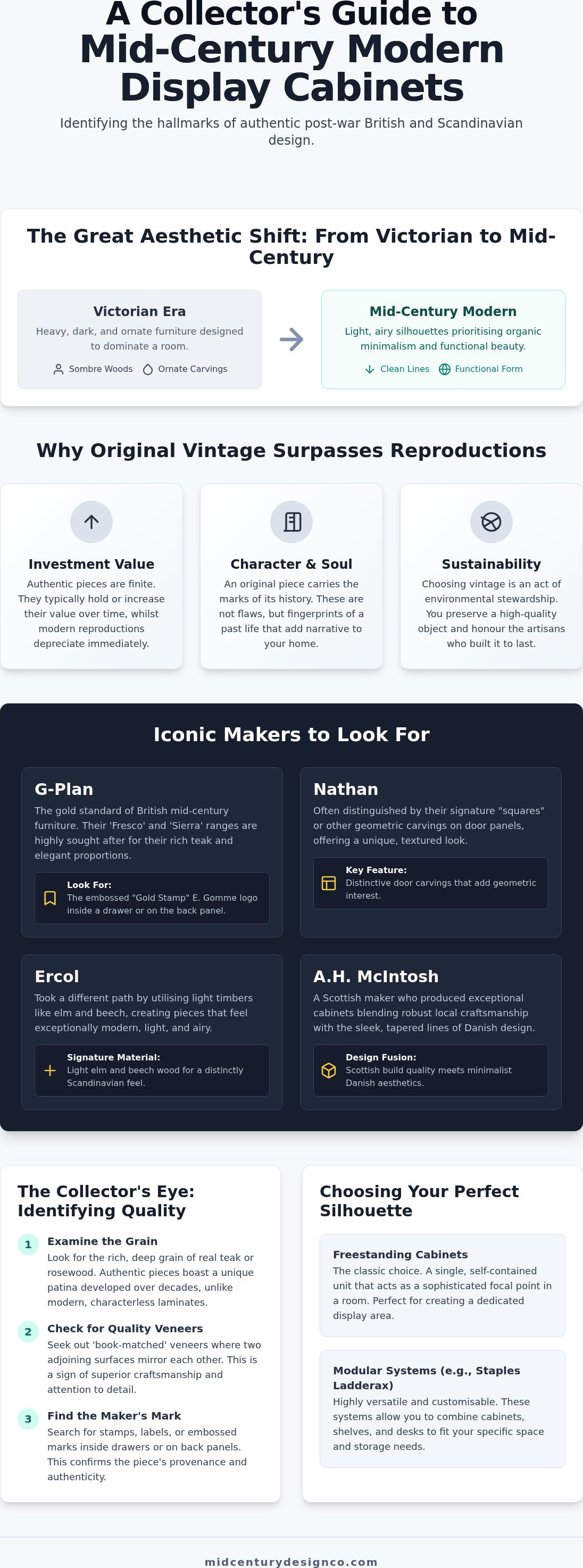
- Understand the historical shift from heavy, dark Victorian furniture to the light, airy silhouettes that defined the post-war era.
- Identify the hallmark designs of iconic British makers like G-Plan and Nathan to ensure your piece is a genuine fragment of design history.
- Learn how to select the ideal mid century modern display cabinet UK spaces require, comparing the versatility of Staples Ladderax modular systems with freestanding silhouettes.
- Develop a collector’s eye for quality by learning to identify authentic teak grains and the superior craftsmanship of book-matched veneers.
- Discover why investing in curated vintage furniture provides a sophisticated focal point that maintains its value and character over time.
More Than Just Storage: The Soul of a Mid Century Modern Display Cabinet
A display cabinet from the mid-twentieth century is rarely just a piece of storage; it's a physical manifesto of post-war optimism. Following the heavy, dark, and often sombre furniture of the Victorian era, the 1950s and 60s introduced a breath of fresh air into British homes. This period saw the rise of the Mid-century modern movement, which prioritised organic minimalism and functional beauty. These pieces weren't designed to hide possessions away. Instead, they were crafted to elevate them, turning everyday ceramics and glassware into curated exhibits.
In the mid-century home, the lounge transformed into a personal gallery. The transition from solid, opaque cupboards to cabinets with expansive glass was revolutionary. It allowed homeowners to showcase their personality through their collections, turning furniture into a narrative of their tastes and travels. For those who enjoy collecting period-accurate miniatures to populate their shelves, you can visit Darlington Diecast Models Limited to find exceptional die-cast vehicles. This was furniture as functional art, designed with a soul that modern alternatives simply cannot replicate.
The Aesthetic Shift of the 1950s and 60s
Designers of this era were obsessed with the concept of space. By using tapered legs and slender frames, they created a "floating" silhouette that helped the mid century modern display cabinet UK families favoured to fit seamlessly into smaller post-war rooms. Sliding glass doors became a hallmark feature, offering a sleek way to organise and view possessions without the bulk of swinging doors. The choice of timber was equally vital. Warm, honey-hued teak and deep, dramatic rosewood were used to bring a sense of the outdoors inside, providing a sensory warmth that feels as inviting today as it did sixty years ago.
Why Original Vintage Trumps Modern Reproductions
There's a specific, tactile magic in an original mid century modern display cabinet UK enthusiasts seek out, often described as the "spirit" of the wood. Unlike modern imitations, which often rely on thin, characterless laminates, vintage pieces boast a depth of grain that has developed a unique patina over decades.
- Investment Value: Authentic pieces are finite resources. Whilst a new reproduction depreciates the moment it's purchased, an original vintage cabinet is an investment that typically holds or increases its value over time.
- Character and Soul: An untouched vintage piece carries the marks of its history. These aren't flaws; they're the fingerprints of a previous life that add a layer of narrative to your home.
- Sustainability: Choosing original craftsmanship is an act of environmental stewardship. You're preserving a high-quality object and keeping it out of the landfill, honouring the artisans who built it to last a lifetime.
Iconic British and Scandinavian Makers to Look For in the UK
Identifying the maker is the most rewarding part of the hunt. In the UK, the 1960s market was dominated by a few prestigious names that defined the era's aesthetic. Whilst G-Plan is the most recognisable, other makers like Nathan and Ercol offered distinct variations on the theme. Nathan cabinets are often distinguished by their signature "squares" or door carvings; these provide a textured, geometric look that sits beautifully in a contemporary home. Ercol took a different path, utilising light elm and beech to create pieces that felt incredibly modern and airy. For those seeking a fusion of styles, A.H. McIntosh of Kirkcaldy produced exceptional cabinets that blended Scottish craftsmanship with the sleek, tapered lines of Danish design.
G-Plan: The Gold Standard of British Mid Century
G-Plan was the brand that brought Scandinavian sensibilities to the British high street. Their Fresco and Sierra ranges are particularly sought after for their rich teak finishes and elegant proportions. When inspecting a mid century modern display cabinet UK collectors should look for the embossed "Gold Stamp" inside a drawer or on the back panel. This mark confirms the piece's provenance and ensures it meets the high standards set by E. Gomme. Many G-Plan cabinets also featured integrated lighting. This was a luxury addition designed to make glassware sparkle during evening dinner parties, creating an atmosphere of sophisticated warmth.
Danish Influence: Minimalist Elegance
The higher end of the market was defined by imports from Denmark or British pieces heavily influenced by the Copenhagen school. This design movement was celebrated for A Modern Approach: Mid-Century Design, focusing on the marriage of efficiency and beauty. You'll notice the difference in the sculptural handles and seamless joinery found in authentic Danish modern furniture. Danish teak is often prized for its tighter grain and deeper, more consistent colour. Whilst teak was the standard, finding a display cabinet in rosewood is a rare triumph for any collector. If you're hunting for a specific maker, exploring our latest curated storage collection can provide a benchmark for quality. Makers like Dyrlund represent the pinnacle of this style, offering precision that modern mass-production cannot match.
Form, Function, and Modularity: Choosing Your Perfect Silhouette
Selecting the right silhouette for a mid century modern display cabinet UK homes often require is a delicate balance of architectural scale and personal curation. The choice between a freestanding statement piece and a modular system depends largely on how you intend to inhabit your space. A tall "highboy" cabinet creates a commanding vertical focal point, drawing the eye upwards and making the most of high ceilings. In contrast, a low-slung display credenza offers a more relaxed, horizontal line that works beautifully beneath a window or as a backdrop for a dining set, providing a surface for table lamps or a vintage record player.
The interior architecture of these cabinets is just as vital. Many pieces from the 1960s utilised glass shelves and mirrored back panels to centre the light within the room. This clever use of materials ensures the cabinet never feels like a dark void; instead, it becomes a luminous stage for your favourite objects. Versatility is often found in "room-divider" styles, which combine glass display areas with hidden cupboard storage below, allowing you to tuck away the clutter whilst keeping your prized ceramics in full view.
Staples Ladderax: The Ultimate Modular Display
For those who require a more bespoke approach, the Staples Ladderax shelving unit remains the most sought-after modular system in Britain. Its brilliance lies in its adaptability. You can combine glass-fronted cabinets with open shelves, drop-down bureaux, and solid drawers to create a configuration that fits your life perfectly. Whether you need a small, single-bay unit for a reading nook or a wall-to-wall library that acts as a sophisticated room divider, Ladderax offers a sculptural quality that freestanding furniture cannot match. It’s a system that grows with your collection, allowing for endless reorganisation as your tastes evolve.
Glass, Lighting, and Detail
The method of access also defines the cabinet's character. Sliding glass doors were a practical revolution in post-war design, allowing for easy viewing in tight spaces without the obstruction of swinging doors. Traditional hinged "vitrine" styles offer a more classic feel but require more clearance. When sourcing an original mid century modern display cabinet UK wide, consider the safety of the vintage glass. Whilst original panes have a beautiful, slight ripple, many collectors choose to modernise the internal lighting with discreet LEDs. This preserves the evocative glow of the original design whilst ensuring the electrical systems are safe for contemporary use, casting a warm light over your curated treasures.
The Collector’s Eye: Identifying Authenticity and Quality in Vintage Teak
Authenticity isn’t just about a label. It’s written in the grain. When hunting for a mid century modern display cabinet UK collectors often worry about accidentally purchasing a modern reproduction. To avoid this, start with the wood itself. Authentic teak has a rich, oily depth that develops a unique character over decades. Most high-quality pieces from the 1960s use a thick teak veneer over a solid timber or high-grade plywood core. This was a deliberate choice by master craftsmen to prevent warping and to allow for "book-matching". This sophisticated technique involves mirroring the wood grain across two adjacent panels, creating a symmetrical, fluid pattern that flows across the cabinet doors. Inferior modern laminates or "paper" veneers lack this organic soul; they feel cold, flat, and repetitive to the eye.
Inspect the joinery with a critical eye. Pull out a drawer and look at the corners. Dovetail joints are the definitive hallmark of a quality mid century cabinet. These interlocking wedges ensure the structure remains sturdy for generations, unlike the staples or glue found in mass-produced furniture. Original hardware is another vital clue. Whether it’s a sculpted teak handle or a recessed brass pull, the metal should have a soft, aged patina. If the handles look suspiciously bright or the screws are modern Phillips heads, the piece may have been altered or poorly repaired.
A Masterclass in Wood Grain
Consistency is the soul of authentic mid century storage solutions. The grain should flow logically from one panel to the next, telling a story of the tree it came from. Watch out for over-sanding. If a piece has been treated harshly, you might see "ghosting" where the veneer has been sanded so thin that the underlying substrate becomes visible. A well-maintained teak surface feels warm and slightly textured under the fingertips. It’s a sensory experience that synthetic finishes simply cannot replicate.
Provenance and Labels
Provenance adds the final layer of certainty to your investment. Check inside the top drawers, on the backboard, or even underneath the base for maker’s marks. Beyond the famous G-Plan gold stamps, look for labels from prestigious retailers like Heals or Chapmans of Newcastle. These stickers often indicate that the piece was originally sold as a high-end luxury item. If a cabinet is "unattributed" but the joinery is sharp and the teak is beautifully book-matched, it’s still a piece of functional art. Quality speaks for itself, regardless of a name.
If you're ready to find a piece with a verified history and exceptional craftsmanship, explore our original mid-century collection to discover your next heirloom.
Curation Over Consumption: Finding Your Statement Piece at The Mid Century Design Co.
Choosing a piece of furniture is an act of storytelling. At The Mid Century Design Co., we don't view ourselves as mere retailers; we're curators of history. Every mid century modern display cabinet UK collectors discover in our collection has been hand-selected for its unique soul and structural integrity. We believe that your home should be a reflection of your journey, filled with objects that carry a narrative weight from the past into the present.
Our selection process is incredibly rigorous. Whether we are evaluating a vintage coffee table or a soaring teak display unit, we look for pieces that have retained their original character. We focus exclusively on original vintage items, intentionally avoiding the soulless uniformity of modern reproductions. By preserving the spirit of the 1960s, we ensure that the piece you bring into your home is a genuine fragment of design history. We also understand the logistical anxieties of sourcing vintage glass. Our national UK delivery expertise ensures that even the most fragile mid century modern display cabinet UK wide arrives safely, handled with the reverence it deserves.
An Expert Friend in Your Search
We've always positioned ourselves as an expert friend to our clients. We want to help you envision how a specific grain of teak or a modular Ladderax configuration will transform your personal sanctuary. Our commitment to transparency is absolute. We provide honest, detailed descriptions of each item's condition and history. We don't want to just make a sale; we want to share the joy of discovery. We invite you to explore our latest curated finds online, where you can linger over the details of each piece at your own pace.
The Investment in Heritage
Sourcing from a specialist dealer provides a level of security that open marketplaces simply cannot offer. When you choose a piece from our collection, you're investing in heritage. These aren't temporary fixtures; they're future heirlooms that will be passed down through your family for generations. There is a profound satisfaction in owning furniture that holds its value whilst bringing a sophisticated, tactile warmth to your daily life. Your home deserves a narrative that evolves over time. It's a place for slow living and deep appreciation, where every object tells a story of craftsmanship and care.
Bringing the Soul of the Sixties into Your Home
Finding the perfect mid century modern display cabinet UK wide is a journey of discovery that transforms a living space into a sanctuary. You've learned how to look past the surface, identifying the warm depth of teak veneers, the precision of dovetail joinery, and the sculptural elegance of iconic makers like G-Plan or Nathan. Whether you choose a commanding freestanding unit or the versatile modularity of a shelving system, you're investing in a piece that carries the spirit of post-war optimism and enduring quality.
At The Mid Century Design Co., we act as your expert partner in this search. As specialists in original Staples Ladderax and expertly curated Danish furniture, we ensure every piece in our collection is an authentic fragment of history. We handle the logistical anxieties for you, providing national UK delivery with the expert care required for delicate vintage glass. It's time to move beyond mass-produced furniture and embrace a home that tells a story of craftsmanship and character. Explore our curated collection of authentic mid century modern display cabinets and find the statement piece your lounge deserves. Your home's next narrative is waiting to be discovered.
Frequently Asked Questions
How can I tell if a mid century display cabinet is authentic or a reproduction?
You can verify authenticity by searching for maker's marks or gold stamps inside drawers and on backboards. Look for dovetail joinery and the presence of book-matched teak veneers, which indicate high-end 1960s craftsmanship. At The Mid Century Design Co., we exclusively curate original vintage items. We never stock modern reproductions, ensuring every mid century modern display cabinet UK collectors find in our collection is a genuine piece of design history with a verified soul.
Is teak the best wood for a mid century modern display cabinet?
Teak is the most celebrated wood of the era due to its exceptional durability and warm, honey-toned grain. Its natural oils protect the timber, allowing it to develop a beautiful patina over decades. Whilst teak is the classic choice, other hardwoods like rosewood offer a more dramatic, darker aesthetic, and Ercol’s use of light elm provides a brighter alternative. Each wood type offers a different sensory experience whilst maintaining the structural integrity collectors expect.
How do you safely deliver a glass display cabinet across the UK?
We utilise a national UK delivery network that specialises in the transportation of fragile vintage furniture. Each glass display cabinet is handled with extreme care, using professional-grade protective materials and secure transit methods to prevent damage. Our couriers understand the unique requirements of transporting original 1960s glass and mirrors. We manage the entire process from our base to your door, ensuring your investment arrives in the same pristine condition it left our collection.
Can Staples Ladderax systems be customised for display purposes?
Yes, the Staples Ladderax system is designed for complete customisation to suit your specific display needs. As specialists in these modular units, we help you configure a layout that incorporates glass-fronted cabinets alongside open shelving or drop-down bureaux. You can adjust the height of each component within the steel ladders, making it an ideal solution for showcasing diverse collections of ceramics or glassware whilst maintaining a sleek, modern silhouette in your home.
What is the difference between a sideboard and a display cabinet?
The primary difference lies in visibility and height. A sideboard is typically a low-slung unit with solid doors designed for discreet storage in a dining room. In contrast, a mid century modern display cabinet UK enthusiasts prefer is often taller and features glass panels or sliding doors. Its purpose is to showcase curated objects and catch the light, acting as a luminous focal point rather than a purely functional storage piece.
How should I clean and maintain the glass and teak on my vintage cabinet?
Maintain the glass using a soft microfibre cloth and a gentle, non-abrasive glass cleaner to avoid scratches. For the teak, a light dusting with a soft cloth is usually sufficient. To preserve the wood's lustre, apply a high-quality teak oil once or twice a year, following the direction of the grain. Avoid using modern silicone-based aerosol sprays, as these can build up a sticky residue that dulls the natural spirit and warmth of the vintage timber.
Why are some mid century cabinets more expensive than others?
Pricing is determined by a combination of the maker's prestige, the rarity of the materials, and the piece's overall condition. A cabinet by an iconic Danish designer or a rare rosewood unit will typically command a higher price than a standard British teak piece. Provenance also plays a role. Items with original labels from high-end retailers like Heals carry a historical premium. We focus on sourcing only the finest examples that represent a true investment in quality.
Do mid century display cabinets hold their value as an investment?
Authentic mid-century pieces are a finite resource, meaning they generally hold or increase their value as global demand for original design grows. Unlike mass-produced modern furniture that depreciates immediately, a well-chosen vintage cabinet is a tangible asset. Investing in a piece with a verified maker and excellent structural integrity ensures you own a slice of heritage that remains desirable. It’s a sustainable way to furnish a home whilst building a collection of functional art.