

Vintage Mid Century Coffee Table UK: The Expert Collector’s Buying Guide
A mass-produced coffee table might serve a physical purpose, but it will never tell a story. In a world of flat-pack convenience, the search for a genuine vintage mid century coffee table UK wide is often a search for soul, character, and a tangible connection to design history. You've likely felt the frustration of scrolling through endless digital marketplaces, unsure if a piece is genuine rosewood or a tired veneer, or perhaps you're worried that a 1960s relic won't harmonise with your modern layout. It is a common hesitation amongst collectors who value craftsmanship over quick fixes.
We believe your home deserves a centrepiece that acts as a functional investment rather than a temporary fixture. This guide will show you exactly how to identify, evaluate, and source an authentic design that holds its value whilst bringing a sophisticated energy to your space. We'll explore the nuances of maker's marks, the tactile differences between timber types, and the secrets to finding a table that serves as a beautiful, enduring bridge between the past and the present.
Key Takeaways
- Understand why an authentic vintage mid century coffee table UK serves as a soulful anchor for your interior whilst holding its investment value far better than modern copies.
- Learn to distinguish between the warm, tactile grains of teak and the dramatic, dark-veined luxury of rosewood to find your ideal aesthetic match.
- Master the art of spatial flow by choosing the correct silhouette, whether a social round table or a classic rectangular centrepiece, for your specific room layout.
- Build your collector’s eye by discovering where to find elusive maker’s marks and how to separate honest vintage patina from actual structural damage.
The Soul of the Living Room: Why Choose a Vintage Mid Century Coffee Table?
The coffee table is more than a convenience. It is the silent anchor of the lounge. In a mid-century interior, it defines the space, drawing the eye towards the centre of the room and inviting conversation. This role emerged during the transformative 1950s and 60s. During this era, British homes moved away from the stiff, formal parlours of the past. They embraced relaxed, open-plan living. The coffee table became the new hearth, a gathering point for coffee, cocktails, and culture. To complement this tradition, you might explore Kenya AA Supreme from The Roast Haus Coffee Co. to enjoy an artisan brew on your new centrepiece.
Choosing a vintage mid century coffee table UK homeowners can cherish means opting for materials with a pulse. Unlike modern, flat-pack alternatives that rely on flimsy MDF and paper-thin laminates, original pieces used rich, solid teak and expertly applied veneers. These materials don't just endure; they evolve. A vintage table is a piece of functional art. It gains a unique patina over decades, a glow that only time and care can bestow. It carries the spirit of its era whilst remaining remarkably relevant in a contemporary setting.
The Investment Value of Original Design
Authentic furniture from the 1960s doesn't just hold its place in a room; it holds its value. Whilst new high-street furniture begins to lose its worth the moment it leaves the showroom, investment grade vintage furniture often appreciates over time. Scarcity is a significant driver here. Original British and Danish pieces are becoming increasingly rare amongst UK collectors. When you source a table by a renowned maker, you are securing a slice of history that remains in high demand. It is a purchase that rewards the owner both aesthetically and financially.
Sustainability Through Longevity
Sustainability is often discussed in modern design, yet the most ecological choice is already here. Buying vintage supports a circular economy. It prevents high-quality timber from entering landfills and reduces the need for new, carbon-heavy manufacturing. The "buy once, buy well" philosophy is a hallmark of sophisticated British taste. It prioritises longevity over the fleeting appeal of disposable trends. A well-chosen vintage mid century coffee table UK offers a sanctuary for the home, providing beauty that lasts for generations without the environmental cost of modern mass production.
Materials and Makers: Identifying Quality in 20th-Century Design
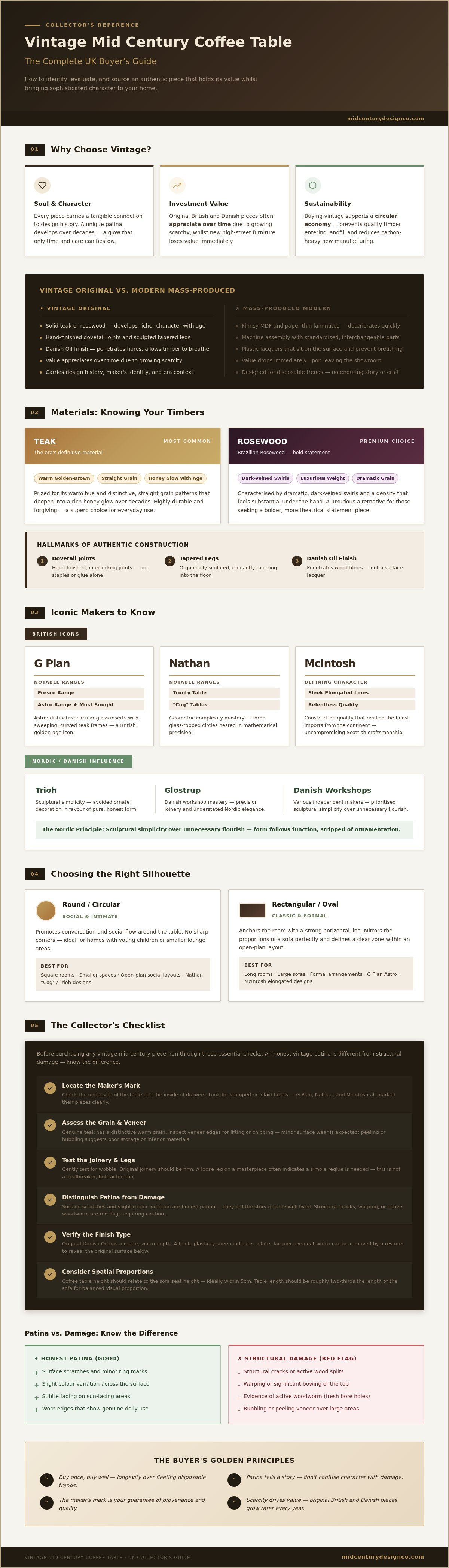
Quality in mid-century design begins with the choice of timber. Teak was the era's definitive material, prized for its warm, golden-brown hue and distinctive, straight grain patterns that age into a deep honey glow. For those seeking a bolder statement, Brazilian Rosewood offered a luxurious alternative. It's characterised by dramatic, dark-veined swirls and a density that feels substantial under the hand. These materials were chosen for their durability and their ability to become more beautiful as they aged.
Identifying a genuine vintage mid century coffee table UK requires looking beneath the surface at the construction. Original pieces often retain their soul through the application of Danish Oil. This finish penetrates the wood fibres rather than sitting on top like modern plastic lacquers, allowing the timber to breathe and develop its character. When inspecting a potential find, look for authentic joinery. Hand-finished dovetail joints and seamlessly sculpted, organic legs that taper elegantly into the floor are hallmarks of a master craftsman's hand. These details distinguish a piece of history from a modern imitation.
British Icons: G Plan, Nathan, and McIntosh
British manufacturing saw a golden age led by G Plan. Their Fresco and Astro ranges remain highly sought after, particularly the Astro with its distinctive circular glass inserts and sweeping, curved teak frames. Nathan furniture followed a different path, mastering geometric complexity with the "Trinity" or "Cog" tables. These pieces are masterpieces of interlocking design, where three glass-topped circles nestle together in a display of mathematical precision, making them a standout choice for anyone sourcing a vintage mid century coffee table UK. McIntosh produced pieces defined by sleek, elongated lines and a relentless focus on construction quality that rivalled the best imports from the continent.
Danish Mastery: The Nordic Influence
The Nordic influence redefined British tastes during the 1960s. Understanding the characteristics of vintage Danish coffee tables is essential for any serious collector. Makers such as Trioh, Glostrup, and various Danish workshops prioritised sculptural simplicity over unnecessary flourish. These designs avoid ornate decoration, instead letting the silhouette and the quality of the wood speak for themselves. This aesthetic often features "floating" tops or recessed handles, creating a sense of lightness and air. You might find a piece amongst our curated occasional tables that perfectly captures this minimalist spirit.
Choosing the Right Silhouette for Your Space
Selecting the silhouette of your vintage mid century coffee table UK is an exercise in spatial geometry. It isn't just about what looks beautiful; it's about how the piece interacts with the room's energy and the traffic flow of your home. Round tables, such as the G Plan Astro mentioned previously, are ideal for encouraging movement in high-traffic lounges. They soften the hard angles of a room and prevent the "bottleneck" effect often found in smaller spaces. Conversely, long rectangular tables provide a sturdy visual anchor for larger sofas, offering a generous surface for books and coffee. For those living in more compact British terrace homes, glass-topped designs are a revelation. They offer the necessary surface area without the visual weight, allowing light to pass through and creating an illusion of a more expansive, airy floor.
The Art of the Cocktail Table
A common mistake amongst new collectors is overlooking the vertical relationship between furniture pieces. Understanding the art of the mid century modern cocktail table is crucial for achieving a balanced, sophisticated layout. These pieces were designed specifically to be lower than their Victorian or Edwardian predecessors, mirroring the low-slung, relaxed profile of 1960s seating. The cocktail table was born from the era's shift toward hosting and informal gatherings, prioritising a height that made reaching for a drink from a deep sofa effortless. When styling your table, keep the "tablescape" intentional and rhythmic. A single art book, a hand-crafted ceramic bowl, or a small vase of seasonal greenery should complement the table's organic lines rather than obscure them. This curated approach ensures the table remains a piece of functional art rather than a dumping ground for daily clutter.
Occasional and Side Tables
Sometimes a single central piece isn't the most practical solution for the varied demands of modern life. Integrating vintage teak occasional tables allows for a more flexible and layered living space. The "nest of tables" is a particularly ingenious British design staple from the mid-20th century. It offers three separate surfaces for entertaining guests that can be tucked away into a single, compact footprint whilst not in use. Beyond the centre of the room, use side tables to frame a reading nook or a well-worn mid-century armchair. This creates small pockets of purpose and sensory warmth throughout the home, ensuring every corner feels considered and soulful. These smaller items are perfect for those who want to introduce the mid-century aesthetic without committing to a large central statement piece.
The Collector’s Checklist: What to Look for Before You Buy
Every successful acquisition begins with a discerning eye. When you are hunting for a vintage mid century coffee table UK, the first step is to seek out the maker's mark. These signatures of quality are often tucked away on the underside of the tabletop or along the inner frame. You might discover a subtle heat stamp, a delicate paper label from G Plan, or even a small gold medallion. If a mark is missing, look at the construction. Authentic pieces from this era used solid wood for legs and high-quality veneers for surfaces, never the lightweight, hollow materials found in modern replicas.
Assess the condition with a balance of realism and romance. Honest wear, such as faint surface scratches or a slight darkening of the timber, tells the story of a piece's life. However, you should avoid structural damage. Check for "chip-outs" along the veneer edges or lifting sections that suggest the table was stored in a damp environment. These flaws are difficult to rectify and can compromise the table's integrity. Beware the "reproduction trap" where modern, mass-produced items masquerade as vintage. These imitations lack the tactile warmth and historical weight of a genuine centrepiece.
Measuring for Scale and Clearance
The physical presence of the table must harmonise with your seating. A helpful golden rule is to choose a table that is roughly two-thirds the length of your sofa. This ensures the proportions feel intentional rather than accidental. Clearance is equally vital for comfort. Aim for 35cm to 45cm of space between the table and the sofa to allow for ample legroom. Finally, consider the height. Your table should be level with or slightly lower than your sofa cushions to maintain that signature low-slung mid-century profile.
Buying Online with Confidence
Sourcing furniture digitally requires a specific set of skills. We recommend consulting our detailed guide on buying a vintage coffee table online in the UK before you place a bid. High-resolution photography is non-negotiable. You need to see the grain, the joinery, and the legs from multiple angles to truly understand the piece's spirit. Ultimately, the safest path is to source from a specialist curator who understands the history and soul of their inventory. If you are ready to begin your journey, you can browse our hand-picked collection of authentic coffee tables today.
Find Your Centrepiece at The Mid Century Design Co.
Finding the perfect vintage mid century coffee table UK wide is a journey of discovery. At The Mid Century Design Co., we act as passionate curators rather than mere retailers. Our collection is a hand-picked assembly of history, sourced with care from across the British Isles and the design hubs of Scandinavia. Every item in our curated gallery has been chosen for its unique spirit, its structural integrity, and its ability to bring a sense of sanctuary to your home. We treat each table as a piece of functional art, valuing the narrative it carries from the 20th century into the modern day.
We believe in the power of the original. Our commitment is absolute: you'll find no modern reproductions or mass-produced fakes amongst our inventory. Each piece is a genuine relic, carrying the honest patina and craftsmanship of its era. Whether you're in the Scottish Highlands or the Cornish coast, our national delivery service ensures these curated treasures arrive safely at your doorstep. We take pride in bringing design history directly to you, ensuring the process of acquiring an investment piece is as calm and inspired as the furniture itself.
Standout Pieces from Our Current Collection
Our current selection often features the iconic G Plan Astro tables. These pieces are celebrated for their sweeping teak frames and circular glass inserts, offering a visual lightness that suits any modern lounge. For those who appreciate the Nordic touch, we showcase rare Danish teak designs. These often include thoughtful, tactile details like integrated magazine racks or woven rattan shelves that speak to the era's focus on utility and beauty. If your taste leans toward geometric mastery, our Nathan Trinity tables provide three interlocking surfaces. They serve as a captivating focal point for those who value mathematical precision in design.
Complete the Look
A coffee table rarely stands alone. To create a truly cohesive environment, consider pairing your new acquisition with an authentic mid century sideboard. The key to a sophisticated home is balance. You want to evoke the era's elegance whilst avoiding the clinical, cold feel of a museum display. Mix your vintage finds with contemporary textiles, personal art, and warm lighting to create a space that feels lived-in and loved. When you're ready to find that perfect anchor for your room, we invite you to browse our full range of Coffee & Occasional Tables.
Investing in a Design Legacy for Your Home
A well-chosen vintage mid century coffee table UK is more than just a surface for books. It is a testament to an era of craftsmanship that modern mass production simply cannot replicate. By focusing on authentic materials like teak and rosewood, and verifying the marks of iconic makers such as G Plan or Nathan, you ensure your centrepiece remains a valuable asset. Remember to prioritise scale and flow to create a space that feels both curated and comfortable. This approach transforms a room into a sanctuary where every object carries a story and a sense of purpose.
At The Mid Century Design Co., we act as your passionate curator. Each piece in our collection is hand-selected for its authenticity and soul, including works by specialists like McIntosh. We offer national UK delivery to bring these design stories directly to your door. Explore our curated collection of authentic vintage coffee tables and find the centrepiece that speaks to your home's unique character. Your journey toward a more soulful, sophisticated interior begins with a single, beautiful discovery.
Frequently Asked Questions
How can I tell if a mid-century coffee table is made of solid teak or veneer?
Examine the edges and the end-grain of the tabletop. Solid teak shows a continuous grain pattern that flows seamlessly from the top surface around the edge. Veneer will show a distinct, thin line where the decorative wood layer meets the core material. High-quality mid-century pieces often used veneers over solid frames for stability. This was a deliberate choice by master craftsmen to prevent warping whilst allowing for beautiful, mirrored grain patterns.
What is the best way to clean and maintain a vintage teak coffee table?
Use a soft, lint-free cloth and a dedicated teak or Danish oil to maintain the timber's natural lustre. Avoid modern aerosol polishes or silicone-based cleaners; these can create a sticky residue that suffocates the wood. For daily care, a slightly damp cloth followed by a dry one is sufficient. Re-oiling once or twice a year keeps the fibres hydrated and preserves the iconic, warm golden-brown glow that defines the era's aesthetic.
Are G Plan coffee tables a good investment?
G Plan coffee tables, particularly from the Astro or Fresco ranges, are considered excellent investments. They consistently hold or increase their value due to their robust construction and iconic silhouettes. As original pieces become scarcer amongst collectors, well-maintained examples by such a reputable British maker represent a secure acquisition. They successfully combine functional art with long-term financial stability, making them a favourite choice for those looking to anchor a sophisticated living space.
What should I pay for an authentic vintage mid century coffee table UK wide?
Pricing for a vintage mid century coffee table UK wide varies significantly based on the maker, rarity, and condition of the piece. A common British piece will be priced differently than a rare, signed Danish import or a dramatic rosewood statement table. Rather than seeking a fixed number, focus on the quality of the timber and the reputation of the curator. Investing in a professionally vetted piece ensures you are paying for authenticity and longevity.
How do I identify a Nathan "Cog" or "Trinity" coffee table?
Look for the distinctive interlocking design featuring three separate, glass-topped circular tables that nest together. The Trinity table is a masterpiece of mid-century geometry, often featuring solid teak frames with a warm, reddish-brown hue. You can verify authenticity by checking for the Nathan brand label, usually found on the underside of the frame. The unique, sculptural joinery that allows the three segments to sit perfectly flush is a hallmark of this specific design.
Can I use a vintage coffee table in a home with children or pets?
Mid-century furniture was originally designed for the rigours of family life. Solid teak and high-quality veneers are remarkably resilient compared to modern alternatives. Using coasters for drinks and felt pads under heavy objects will protect the finish. If a scratch does occur, the beauty of real timber is that it can often be lightly sanded and re-oiled. This allows the piece to grow and age gracefully alongside your family whilst maintaining its soul.
Why should I buy an original vintage table instead of a modern reproduction?
Choosing an original vintage mid century coffee table UK collectors value ensures you own a piece with genuine history and weight. Modern reproductions often use inferior materials like MDF or plastic-coated laminates that lose value immediately. An original piece supports a circular economy and offers a level of craftsmanship that is rarely matched today. It is a choice that prioritises longevity and character over the fleeting convenience of disposable, mass-produced furniture.
Does The Mid Century Design Co. offer national delivery for coffee tables?
Yes, we provide a dedicated national delivery service across the UK for every item in our curated collection. We understand that these pieces are delicate historical treasures, so we use experienced couriers who specialise in handling vintage furniture. Whether you have chosen a heavy rosewood centrepiece or a delicate nest of tables, we ensure your acquisition arrives safely at your home. Our goal is to bring design history directly to your doorstep.